by Nicola, staff writer of japan-guide.com
|
|
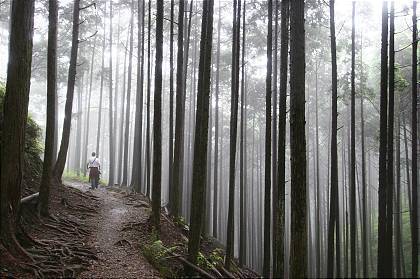
The Kumano Sanzan are three sacred shrines in the southeastern Kii Peninsula. They date back to the origins of Japan, and are now part of the Unesco World Heritage Sacred Sites and Pilgrimage Routes in the Kii Mountain Range. The area became a Unesco site in 2004 but is still not particularly well known, even in Japan. This is a shame, because it's a really spectacular place.
At first, the scope of Kumano's history and religion makes it seem daunting. Much of Japan's religious history centers around the Kumano Sanzan; so much so that sorting out the significance of the shrines and temples can feel like taking a course in Japanese religion, culture and history all at once. However, rather than leaving travelers discouraged, Kumano offers an excellent introduction to these subjects.

The Kumano Sanzan were a destination for pilgrims as early as 1000 years ago. Originally, only those with considerable money and time could afford the 30 to 40 day trip from Kyoto so the pilgrimage was undertaken mainly by aristocrats and emperors. Today, the area attracts all sorts of visitors, from those looking to relax at an onsen, to visitors on casual day hikes, to the adventurous few completing difficult multi day mountain treks.
My visit to the Kumano region involved walking a few sections of the paths between the three Kumano Sanzan; Hongu Taisha, Nachi Taisha and Hayatama Taisha. These three shrines are connected to one another via a series of pilgrimage trails called the Kumano Kodo.
Besides linking the three shrines, the Kumano Kodo also link the area to Ise Shrine in Mie Prefecture, Koyasan in Wakayama Prefecture and Yoshinoyama in Nara Prefecture. The trails then continue on to Kyoto and Osaka, where most of the pilgrims originated.

Walking the trails, even in small sections, is a really pleasant experience. It rained throughout my visit, making the stone paths slippery, the foliage bright green and giving the air a weighty mist. When Hongu taisha finally appeared out of this mist, the image was breathtaking. It was not difficult to imagine the awe and relief of coming upon these impressive structures after a dozen days of walking.
Kumano is now undergoing something of a refreshening in order to attract foreign tourists. With relatively few travelers and an abundance of services, it is a nice alternative to big-city Japan. Walking through the quiet, almost otherworldly countryside is a unique and satisfying experience that even the rainy season does not hamper.

|
|
| List of Posts: |