The Inner Shrine (“à‹{, Naikū) is one of the two main shrines making up the Ise Shrines in Ise City. Formally known as Kotai Jingu, the Inner Shrine enshrines Shinto's most venerated deity, the Sun Goddess (Amaterasu Omikami), and is considered Japan's most sacred shrine.
The Inner Shrine is believed to have been established over 2000 years ago. Its main buildings resemble ancient rice granaries and are built in an architectural style that shows almost no influence from the Asian mainland, as they predate the introduction of Buddhism. Both, the Inner and Outer Shrine, are rebuilt from scratch every 20 years. The 62nd rebuilding was completed in 2013. The 63rd rebuilding will take place in 2033.
A typical visit to the Inner Shrine takes between 60 and 90 minutes and starts from the Uji Bridge, an approximately 100 meter long, wooden bridge across the Isuzugawa River. The bridge has two large torii gates, one at each end, which are made from the former shrine building's main pillars. The shrine grounds fascinate through their simplicity, as visitors encounter little more than gravel-covered walkways and wooden, barely painted shrine structures, surrounded by a serene forest.

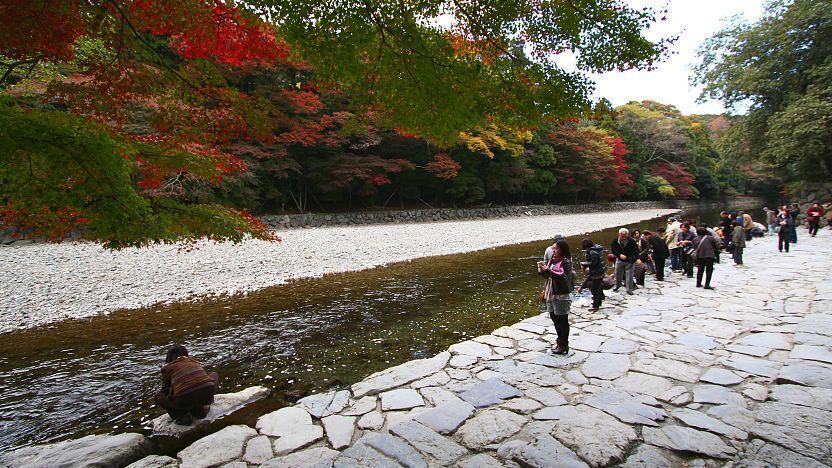
After passing the purification trough and one more torii gate, visitors have a unique additional opportunity to cleanse and purify themselves at a riverside site, using the water of the sacred Isuzugawa River. Further along the approach to the main sanctuary, visitors pass the Kaguraden, a building complex where charms and amulets can be acquired.
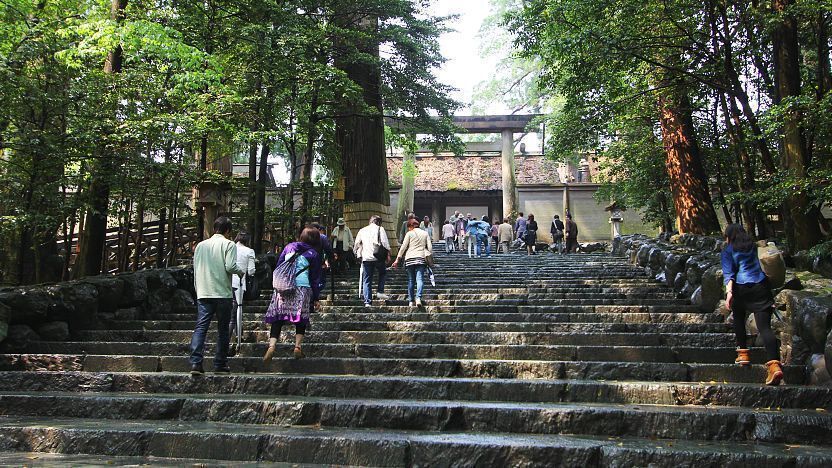
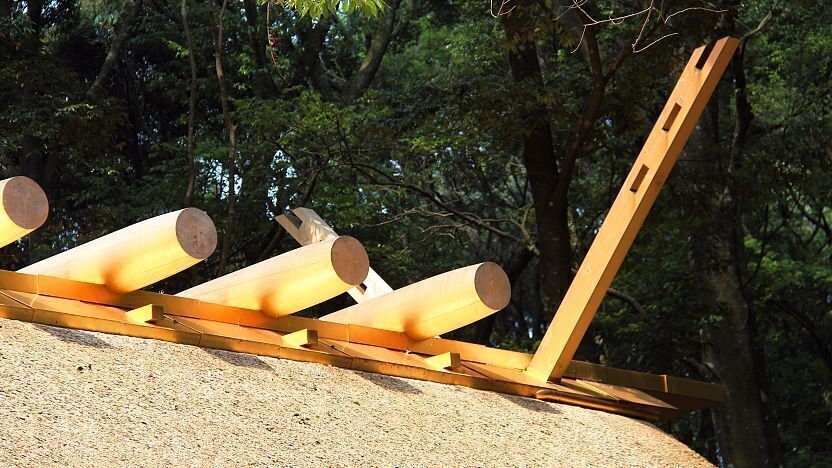
The main sanctuary is found at the top of a flight of stone stairs. The main hall enshrines the Sun Goddess and is surrounded by multiple sets of fences. Visitors are only allowed to go beyond the outermost of them where photography is not allowed. Only partially visible, the main hall features forked roof finishings (chigi) that are cut horizontally at their tips and have ten decorative wooden beams (katsuogi), differing slightly from the Outer Shrine.
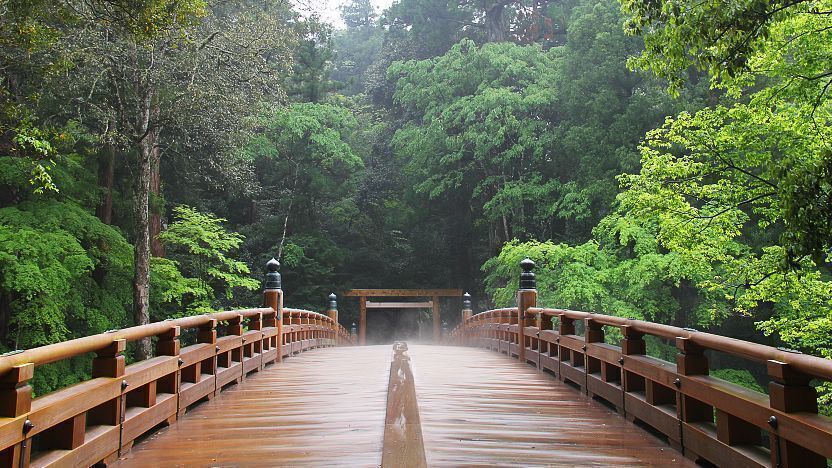
There are a number of auxiliary shrines on the grounds of the Inner Shrine: a beautiful wooden bridge (shown on this page's top picture) leads from the Kaguraden building to the Kazahinominomiya which enshrines two wind deities. On a small hill next to the main shrine stands Aramatsurinomiya which enshrines the spirit of the Sun Goddess. Furthermore, there is an ancient rice granary called Mishinenomikura where the rice used for offerings is stored.
Getting there and around
The Inner Shrine stands several kilometers outside of central Ise and can be reached by bus from Iseshi Station, Ujiyamada Station and the Outer Shrine in 10-15 minutes and for 520 yen one way. It is also served by the CAN bus.
Alternatively, it can be reached from Isuzugawa Station by bus (6 minutes, 300 yen one way, frequent departures) or on foot (about two kilometers or 30 minutes).
How to get to and around the Shima Peninsula

Hours and Fees
Hours
5:00 to 19:00 (May to August)
5:00 to 17:00 (October to December)
Closed
Admission
Questions? Ask in our forum.
Links and Resources
English
Japanese
Hotels around Ise Shima
-
-
![]() SponsoredKamenoi Hotel TobaA luxury hotel with 13 types of guestrooms and lavish dining options featuring fresh seafood, Japanese spiny lobster, and Matsuzaka beef. Located near popular sites in Ise-Shima, including Ise Shrine.View siteSponsored
SponsoredKamenoi Hotel TobaA luxury hotel with 13 types of guestrooms and lavish dining options featuring fresh seafood, Japanese spiny lobster, and Matsuzaka beef. Located near popular sites in Ise-Shima, including Ise Shrine.View siteSponsored
-

-
-
![]() Guesthouse Ise FutamiView on Booking.com
Guesthouse Ise FutamiView on Booking.comComfortable Accommodations
Guesthouse Ise Futami in Ise offers adults-only rooms with free WiFi, private check-in and check-out, a lounge, shared kitchen, daily housekeeping, laundry service, bicycle parking, bike hire, tour desk, and luggage storage.Guest Amenities
Each room includes a bidet, work desk, free toiletries, shower, and slippers. Additional facilities include a laundry service, bicycle parking, bike hire, tour desk, and luggage storage.Local Attractions
Futamiokitama Shrine is 1.9 km away, Ise Grand Shrine 9 km, Oharai-machi 8 km, Sun Arena 2.5 km, Ise Azuchi-Momoyama Culture Village 2.7 km, Matsushita Shrine 3.3 km, Makonde Art Museum 6 km, and ?minato-k? 9 km.Guest Satisfaction
Guests highly rate the bike/bicycle, room cleanliness, and host. -
![]() HoshidekanLocated 500 metres from Kintetsu Iseshi Train Station, Hoshidekan Ryokan (a member of the Japanese Inn Group) is a wooden building that was built in the 1920's and provides Japanese-style rooms with free WiFi, an LCD TV and traditional futon bedding. It has shared bath and a courtyard garden. Rooms at Hoshidekan have paper screens, a tatami (woven-straw) floor and a low wooden table. An air conditioner, slippers and green tea are provided. Bathrooms, toilets and washroom are shared. The Geku Ise Shrine is a 18-minute walk from the hotel. On-site parking is free and requires a reservation. The hotel has baths that can be reserved for private use, and a free-use internet station is provided at the lobby. A coin launderette is available. Guests staying with a meal plan will be served Japanese breakfast in the dining room.View on Booking.com
HoshidekanLocated 500 metres from Kintetsu Iseshi Train Station, Hoshidekan Ryokan (a member of the Japanese Inn Group) is a wooden building that was built in the 1920's and provides Japanese-style rooms with free WiFi, an LCD TV and traditional futon bedding. It has shared bath and a courtyard garden. Rooms at Hoshidekan have paper screens, a tatami (woven-straw) floor and a low wooden table. An air conditioner, slippers and green tea are provided. Bathrooms, toilets and washroom are shared. The Geku Ise Shrine is a 18-minute walk from the hotel. On-site parking is free and requires a reservation. The hotel has baths that can be reserved for private use, and a free-use internet station is provided at the lobby. A coin launderette is available. Guests staying with a meal plan will be served Japanese breakfast in the dining room.View on Booking.com -
![]() Ise Guest House SoraView on Booking.com
Ise Guest House SoraView on Booking.comComfortable Accommodations
Ise Guest House Sora in Ise offers recently renovated rooms with air-conditioning, free WiFi, and river views. Each room includes a shared bathroom, seating area, free toiletries, slippers, and a wardrobe.Convenient Facilities
Guests enjoy free use of bicycles and free WiFi. The property provides daily housekeeping service, a coffee shop, bicycle parking, and luggage storage. Free on-site private parking is available.Prime Location
Located 143 km from Nagoya Airport, the guest house is a 17-minute walk from Ise Shrine Geku. Nearby attractions include Ise Grand Shrine (5 km), Oharai-machi (4.2 km), and Ise-Shima Nat'l Park (5 km). Guests appreciate the room cleanliness, host, and quietness of the area. -
![]() Hinode RyokanConveniently located just a 2-minute walk from Iseshi Train Station, Hinode Ryokan is Japanese-style accommodation with a historic charm. Ise-jingu Shrine�fs Geku (outer shrine) is a 5-minute walk away. Free Wi-Fi is available throughout the property. Ise-jingu Shrine�fs Naiku (inner shrine) is a 20-minute bus ride away. Futami Sea Paradise Aquarium can be reached within a 25-minute walk. Fitted with tatami (woven-straw) flooring and traditional futon bedding, each room comes with facilities like a flat-screen TV, a fridge and an electric kettle. Guests can unwind at a seating area with a low table and cushions. Bathroom and toilets are shared with other guests. Ryokan Hinode offers bicycle rental services on a first-come, first-served basis. Guests can enjoy playing table tennis on site, and drinks vending machines are available. Traditional Japanese set meal can be served for breakfast in the privacy of the guestroom. There are many restaurants around the property, as well.View on Booking.com
Hinode RyokanConveniently located just a 2-minute walk from Iseshi Train Station, Hinode Ryokan is Japanese-style accommodation with a historic charm. Ise-jingu Shrine�fs Geku (outer shrine) is a 5-minute walk away. Free Wi-Fi is available throughout the property. Ise-jingu Shrine�fs Naiku (inner shrine) is a 20-minute bus ride away. Futami Sea Paradise Aquarium can be reached within a 25-minute walk. Fitted with tatami (woven-straw) flooring and traditional futon bedding, each room comes with facilities like a flat-screen TV, a fridge and an electric kettle. Guests can unwind at a seating area with a low table and cushions. Bathroom and toilets are shared with other guests. Ryokan Hinode offers bicycle rental services on a first-come, first-served basis. Guests can enjoy playing table tennis on site, and drinks vending machines are available. Traditional Japanese set meal can be served for breakfast in the privacy of the guestroom. There are many restaurants around the property, as well.View on Booking.com -
![]() Ryoso UminochoLocated less than 200 m from the sea shore, Ryoso Uminocho offers tranquil getaway spot with free-access private beach, seasonal outdoor pool and sauna. On-site dining and en suite private baths are provided for guests�f convenience. There are indoor and outdoor public bathrooms from which guests can enjoy views of surrounding greeneries. Here, guests can use the karaoke machines and table tennis facilities for entertainment or request a massage for relaxation. Free WiFi is accessible in the lobby and on-site parking is possible also free of charge. Featuring nature views, all rooms at Ryoso Uminocho are fitted with a refrigerator, electric kettle and a flat-screen TV. En suite bathrooms include a bath, a shower and free toiletries. Selected rooms boast a private open-air bath. Japanese set breakfast is served in the dining area every morning. Dinner is served in either guest rooms or private dining room as a Japanese Kaiseki course meal featuring fresh local ingredients. From the hotel, Ikenoura Seaside Station is 11 minutes on foot whilte Toba Station is a 7 minutes away on the free shuttle bus. Toba Aquarium is a 10-minute drive and Ise Shrine is a 30-minute drive away.View on Booking.com
Ryoso UminochoLocated less than 200 m from the sea shore, Ryoso Uminocho offers tranquil getaway spot with free-access private beach, seasonal outdoor pool and sauna. On-site dining and en suite private baths are provided for guests�f convenience. There are indoor and outdoor public bathrooms from which guests can enjoy views of surrounding greeneries. Here, guests can use the karaoke machines and table tennis facilities for entertainment or request a massage for relaxation. Free WiFi is accessible in the lobby and on-site parking is possible also free of charge. Featuring nature views, all rooms at Ryoso Uminocho are fitted with a refrigerator, electric kettle and a flat-screen TV. En suite bathrooms include a bath, a shower and free toiletries. Selected rooms boast a private open-air bath. Japanese set breakfast is served in the dining area every morning. Dinner is served in either guest rooms or private dining room as a Japanese Kaiseki course meal featuring fresh local ingredients. From the hotel, Ikenoura Seaside Station is 11 minutes on foot whilte Toba Station is a 7 minutes away on the free shuttle bus. Toba Aquarium is a 10-minute drive and Ise Shrine is a 30-minute drive away.View on Booking.com -
![]() Comfort Hotel ERA IseView on Booking.com
Comfort Hotel ERA IseView on Booking.comComfortable Accommodations
Comfort Hotel ERA Ise in Ise offers family rooms with air-conditioning, private bathrooms, and free WiFi. Each room includes a work desk, TV, and soundproofing for a pleasant stay.Convenient Facilities
Guests can enjoy free bicycles, a lift, 24-hour front desk, daily housekeeping, and full-day security. Additional amenities include a child-friendly buffet, bicycle parking, and luggage storage.Delicious Breakfast
A buffet breakfast is served with local specialities, fresh pastries, pancakes, fruits, and juice. The breakfast is highly praised by guests for its quality and variety.Prime Location
Located less than 1 km from Ise Shrine Geku and 6 km from Ise Grand Shrine, the hotel is near attractions such as Oharai-machi and Ise-Shima Nat'l Park. Nagoya Airport is 143 km away. -
![]() Taikoji Shukubo HostelView on Booking.com
Taikoji Shukubo HostelView on Booking.comComfortable Accommodation
Taikoji Shukubo Hostel in Ise offers a garden and free WiFi. Guests can relax in the lounge or enjoy the inner courtyard view.Convenient Facilities
The property features air-conditioning, a hairdryer, tatami floors, and a shared bathroom. Additional amenities include bicycle parking and free off-site private parking.Local Attractions
Matsushita Shrine is less than 1 km away, Futamiokitama Shrine is a 12-minute walk, and Ise Grand Shrine is 11 km distant. Other attractions include Makonde Art Museum and Ise Azuchi-Momoyama Culture Village.Guest Satisfaction
Guests appreciate the value for money, attentive staff, and comfortable rooms. -
![]() Weekly Mansion Ise No.6View on Booking.com
Weekly Mansion Ise No.6View on Booking.comComfortable Accommodations
Weekly Mansion Ise No.6 in Ise offers aparthotel-style rooms with air-conditioning, kitchenettes, and private bathrooms. Each room includes a washing machine, refrigerator, TV, and free toiletries.Convenient Facilities
Guests enjoy free WiFi and complimentary bicycles. Additional amenities include an electric vehicle charging station, laundry service, family rooms, and luggage storage.Prime Location
Located 143 km from Nagoya Airport, the aparthotel is a 12-minute walk from Ise Shrine Geku. Nearby attractions include Ise Grand Shrine (6 km) and Ise-Shima National Park (6 km).Guest Satisfaction
Highly rated for its public transport options, convenient location, and room comfort. -
![]() Sanco Inn Iseshi-Ekimae ShikinoyuView on Booking.com
Sanco Inn Iseshi-Ekimae ShikinoyuView on Booking.comComfortable Accommodations
Sanco Inn Iseshi-Ekimae Shikinoyu in Ise offers air-conditioned rooms with free WiFi, balconies, and sofas. Each room includes a bath, bidet, hairdryer, yukata, refrigerator, work desk, free toiletries, shower, slippers, carpeted floors, TV, and electric kettle.Convenient Facilities
Guests can enjoy a lounge, public bath, lift, 24-hour front desk, daily housekeeping service, full-day security, and luggage storage. A buffet breakfast is available each morning.Prime Location
Located 9 minutes from Ise Shrine Geku, the hotel is 5 km from Ise Grand Shrine and 143 km from Nagoya Airport. Nearby attractions include Oharai-machi (4.1 km), Matsuo Kannonji Temple (3.3 km), and Ise-Shima Nat'l Park (5 km). -
![]() Ise Pearl Pier HotelView on Booking.com
Ise Pearl Pier HotelView on Booking.comComfortable Accommodations
Rooms feature private bathrooms with free toiletries, air-conditioning, and modern amenities. Guests enjoy bathrobes, tea and coffee makers, and work desks for added convenience.Dining Experience
The family-friendly restaurant serves Japanese cuisine with vegetarian and dairy-free options. A buffet breakfast includes local specialities, warm dishes, juice, and fruits.Relaxation and Wellness
The hotel offers a sauna, massage services, and free WiFi. Additional facilities include a public bath, lift, 24-hour front desk, and free on-site private parking.Prime Location
Located in Ise, the hotel is 143 km from Nagoya Airport. Nearby attractions include Ise Shrine Geku (17-minute walk) and Ise Grand Shrine (6 km). Guests appreciate the sauna, breakfast, and bathroom comfort.
-