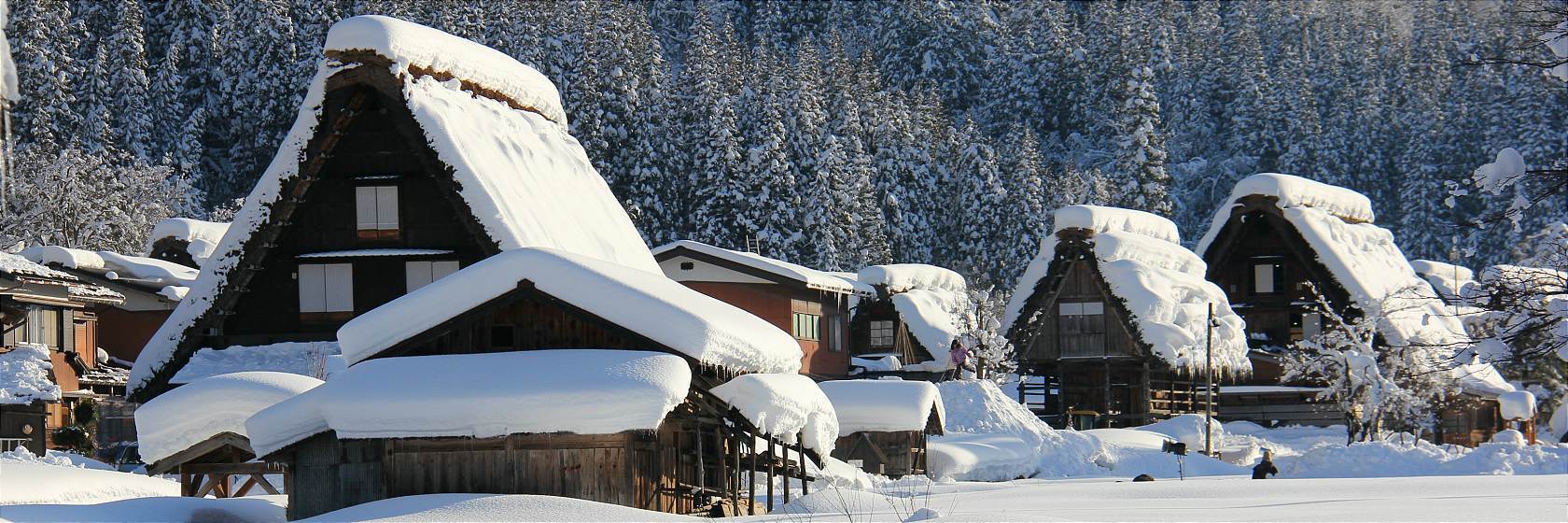
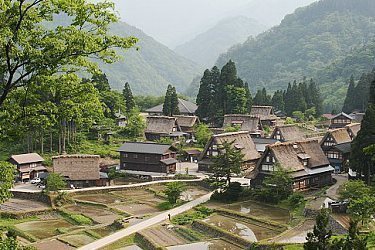
The Shirakawa-go (”’�싽, Shirakawagō) and neighboring Gokayama (ŒÜ‰ÓŽR) regions line the Shogawa River Valley in the remote mountains that span from Gifu to Toyama Prefectures. Declared a UNESCO world heritage site in 1995, they are famous for their traditional gassho-zukuri farmhouses, some of which are more than 250 years old.
Gassho-zukuri means "constructed like hands in prayer", as the farmhouses' steep thatched roofs resemble the hands of Buddhist monks pressed together in prayer. The architectural style developed over many generations and is designed to withstand the large amounts of heavy snow that falls in the region during winter. The roofs, made without nails, provided a large attic space used for cultivating silkworms.
Ogimachi, Shirakawa-go's largest village and main attraction, makes a good day trip from Takayama, or a stop on the bus journey between Takayama and Kanazawa. The best way to experience the town, however, is to stay overnight at one of the farmhouses, many of which now serve as minshuku.
Gokayama is a little more difficult to access and requires a change of buses in Ogimachi. Less developed and less crowded than Shirakawa-go, its villages are smaller, more intimate and with less intrusion from modern buildings. Gokayama's nicest villages are Suganuma and Ainokura.
Top attractions in Shirakawago & Gokayama
-
![]() 1
1 -
![]() 2
2 -
![]() 3
3 -
![]() 4
4 -
![]() 5
5



Getting there and around
Questions? Ask in our forum.
Links and Resources
English
Hotels around Shirakawago & Gokayama

-
-
![]() ShiroyamakanView on Booking.com
ShiroyamakanView on Booking.comHistoric Setting
Shiroyamakan in Shirakawa offers a 4-star ryokan experience within a historic building. Guests enjoy river views and a tranquil garden setting.Comfortable Accommodations
Rooms feature air-conditioning, private bathrooms, and tatami floors. Additional amenities include yukata, slippers, and free WiFi.Dining Experience
A local breakfast is served each morning, including local specialities. Dinner options are highly praised by guests.Leisure Facilities
The ryokan provides a hot tub, family rooms, and free bicycles for exploring the area. Free on-site private parking is available.Nearby Attractions
Shirakawago is a 16-minute walk away. Other points of interest include Hida Minzoku Mura Folk Village (47 km) and Takayama Station (48 km). Toyama Airport is 83 km from the property. -
![]() Onyado Yuinosho, ShirakawagoView on Booking.com
Onyado Yuinosho, ShirakawagoView on Booking.comComfortable Accommodations
Onyado Yuinosho in Shirakawa offers traditional Japanese rooms with tatami floors and mountain views. Each room includes air-conditioning, a private bathroom, and free WiFi.Relaxing Facilities
Guests can enjoy a hot spring bath, sauna, and open-air bath. The ryokan also features a restaurant serving Japanese cuisine in a traditional ambience, a bar, and a lounge.Dining Experience
The on-site restaurant offers Asian breakfast with local specialities. Dinner is highly praised by guests for its quality and comfort.Convenient Location
Located less than 1 km from Shirakawago, the ryokan is 81 km from Toyama Airport. Nearby attractions include Hida Minzoku Mura Folk Village (45 km) and Takayama Station (46 km). -
![]() Shirakawago Guest House Kei600 metres from Shirakawago, Shirakawago Guest House Kei is set in Shirakawa and offers rooms with free WiFi. All rooms feature a kitchen and a shared bathroom. The accommodation provides a shared kitchen and luggage storage space for guests. All guest rooms in the guest house are fitted with a coffee machine. The units will provide guests with a microwave. The nearest airport is Komatsu Airport, 46 km from the property.View on Booking.com
Shirakawago Guest House Kei600 metres from Shirakawago, Shirakawago Guest House Kei is set in Shirakawa and offers rooms with free WiFi. All rooms feature a kitchen and a shared bathroom. The accommodation provides a shared kitchen and luggage storage space for guests. All guest rooms in the guest house are fitted with a coffee machine. The units will provide guests with a microwave. The nearest airport is Komatsu Airport, 46 km from the property.View on Booking.com -
![]() CURIO ShirakawagoView on Booking.com
CURIO ShirakawagoView on Booking.comElegant Accommodation
CURIO Shirakawago in Shirakawa offers a 5-star hotel experience with free WiFi, air-conditioning, and private bathrooms. Each room includes a refrigerator, microwave, and free toiletries.Comfortable Amenities
Guests can enjoy free on-site private parking, bicycle parking, and luggage storage. Additional facilities include a hairdryer, yukata, shower, slippers, and carpeted floors.Prime Location
Located a few steps from Shirakawago, the hotel is 82 km from Toyama Airport. Nearby attractions include Hida Minzoku Mura Folk Village (46 km) and Takayama Station (47 km). Guests appreciate the room cleanliness, comfort, and convenient location. -
![]() Minsyuku KoshiyamaView on Booking.com
Minsyuku KoshiyamaView on Booking.comComfortable Accommodations
Minsyuku Koshiyama in Shirakawa offers family rooms with air-conditioning, shared bathrooms, and free WiFi. Each room includes a TV, work desk, and wardrobe, ensuring a pleasant stay.Convenient Facilities
Guests can enjoy a lounge, daily housekeeping service, bike hire, and luggage storage. Free on-site private parking is available, along with mountain views and a quiet street setting.Prime Location
Located less than 1 km from Shirakawago, the property is 83 km from Toyama Airport. Nearby attractions include Hida Minzoku Mura Folk Village (46 km) and Takayama Station (48 km).Guest Satisfaction
Highly rated for its friendly host, convenient location, and excellent staff support, Minsyuku Koshiyama provides excellent service and comfort.
-


