|
|
Related Questions
|
Kamikochi to Tsumago
1 reaction, last updated 11 days ago
Accomodation in Tsumago
3 reactions, last updated 88 days ago
Night at Tsumago
5 reactions, last updated 202 days ago
Narai lodging
1 reaction, last updated 4 days ago
Matsumoto-Narai worth
5 reactions, last updated 27 days ago
Magome to Tsumago trail
1 reaction, last updated 105 days ago
Nakasendo hiking trail in winter?...
2 reactions, last updated 132 days ago
Kiso Valley from Nagoya Intl...
16 reactions, last updated 163 days ago
Bus timetable Nakatsugawa to...
4 reactions, last updated 175 days ago
Buses in Magome and Tsumago
1 reaction, last updated 184 days ago
|
|
japan-guide.com newsletter
|
|
Keeping you up to date on Japan travel and living related issues and site updates. Click here to subscribe!
|
|
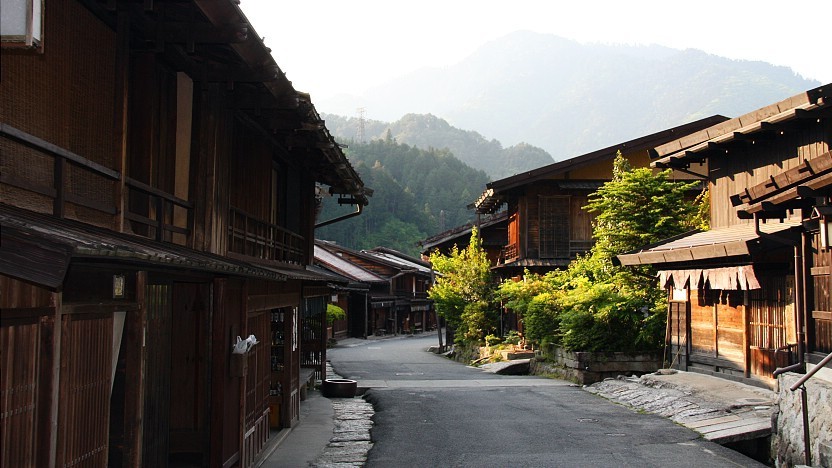
Tsumago was a post town on the Nakasendo route between Kyoto and Edo. It is known today as one of the best preserved post towns in Japan. The town and its residents go to great lengths to recreate the ambiance of the Edo Period. Cars are prohibited on the main street in the day and phone lines and power cables are kept concealed, allowing visitors to imagine they have slipped back to an earlier time.
Tsumago also recreates the post town atmosphere by maintaining its Honjin and Wakihonjin. In all post towns, the Honjin was the principal inn and served government officials who were traveling through. When more lodging was required, the Wakihonjin served to accommodate the travelers of lower status. Tsumago also maintains the office where laborers and horses were rented to aid in travel.
Many minshuku and ryokan are located in the town, and a stay at one of them will greatly add to the illusion of having left the modern era. If time permits, it is highly recommended to hike a preserved trail of the former Nakasendo from Tsumago to Magome. It is well maintained and well marked in both Japanese and English.
|
|
Honjin
|
Hours: 9:00 to 17:00
Closed: Dec 29 to Jan 1
Admission: 300 yen
|
|
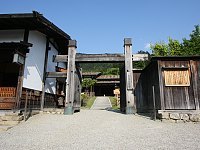
Tsumago's Honjin was reconstructed in the 1990s, but great efforts have been taken so that it resembles its condition in the 1830s, when it served as an inn.
|
|
|
|
Wakihonjin
|
Hours: 9:00 to 17:00
Closed:Dec 29 to Jan 1
Admission: 700 yen, includes entry to Rekishi Shiryokan
|
|
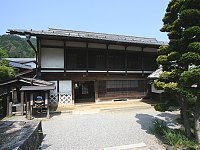
In contrast to the Honjin, the antiquity of the Wakihonjin is entirely genuine; the building dates back to the 19th century. It now serves as a museum, and tours are held in Japanese.
|
|
|
|
Rekishi Shiryokan
|
Hours: 9:00 to 17:00
Closed: Dec 29 to Jan 1
Admission: 700 yen, includes entry to Wakihonjin
|
|
A rather extensive historical museum on Tsumago and the Kiso Valley. Most of the museum is translated into English, and many models and artifacts are on display.
|
|
|
|
Kotoku Temple
|
Hours: 8:30 to 17:00
Admission: optional donation
|
|
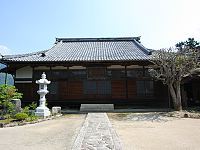
Kotoku Temple (Kotokuji) is a Buddhist temple which is believed to have been built in 1500. It is not particularly remarkable, but still quite pleasant.
|
|
|
|
Notice Board
|
|
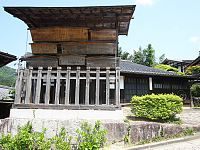
In former times the notice board was the means of pronouncing decrees from the shogunate. This notice board is in quite good condition, and with some Japanese linguistic abilities certain prohibitions and warnings can be read.
|
|
|
|
Castle Grounds
|
|
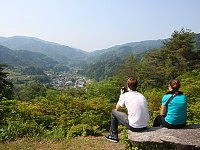
Tsumago Castle was demolished hundreds of years ago, but the site of its ruins affords an exceptional view onto the city below. The former castle site is located on a hill about a kilometer north of Tsumago's main street.
|
|
|
|
Travel Community
|
Popularity of Tsumago:
Users who have been to Kiso Valley: 101
Users who have been to Tsumago: 651st of 5 most visited sights in Kiso Valley. 281st of 591 most visited sights nationwide.
Ratings for Tsumago:
|
japan-guide.com Rating:
|
|
best of Japan
| |
User Rating (by 45 users):
|
87/100
|
recommended
|
|
|
  |