Perry’s Black Ships
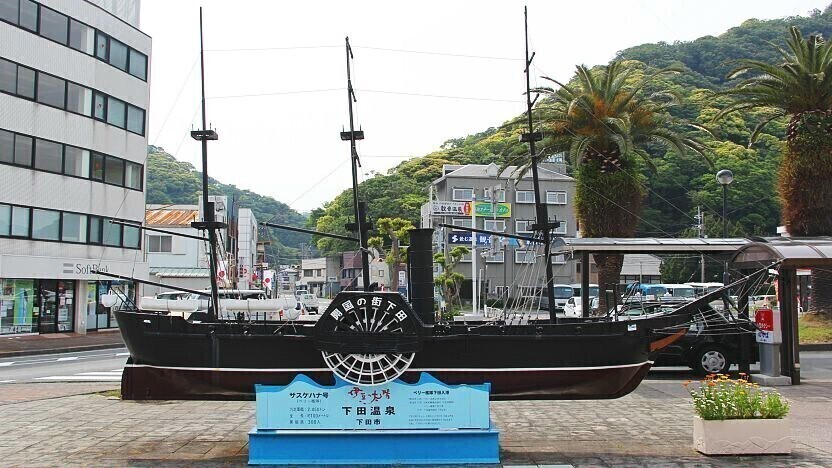
In 1853, when Japan still maintained a policy of self-isolation towards the rest of the world, Commodore Matthew C. Perry sailed to Japan in order to request the opening of Japanese ports to US ships. The following year Perry returned to Japan with a squadron of nine war ships, the so called black ships (黒船, kurofune), to force his request upon the Japanese. In the spring of 1854, the Shimoda Treaty was concluded which opened the ports of Shimoda and Hakodate to American ships.
Despite having been a humiliating event for Japan at the time, Perry's arrival has become Shimoda's major tourist attraction, and the commodore and his black ships are omnipresent sights around the city today. A monument commemorating Perry and the start of US-Japanese diplomatic relations stands in Shimoda Park.

Other Perry related attractions include Ryosenji Temple (了仙寺, Ryōsenji) where the Shimoda Treaty was signed in 1854. The temple's treasure house exhibits several Perry-related articles. In addition, there is Perry Road (ペリーロード, Perī Rōdo), a picturesque street that connects Shimoda Park with Ryosenji Temple. It runs along a canal lined with cafes, boutiques and willow trees. The shops along Perry Road - and all across Shimoda - sell various Perry-related souvenirs and foods.
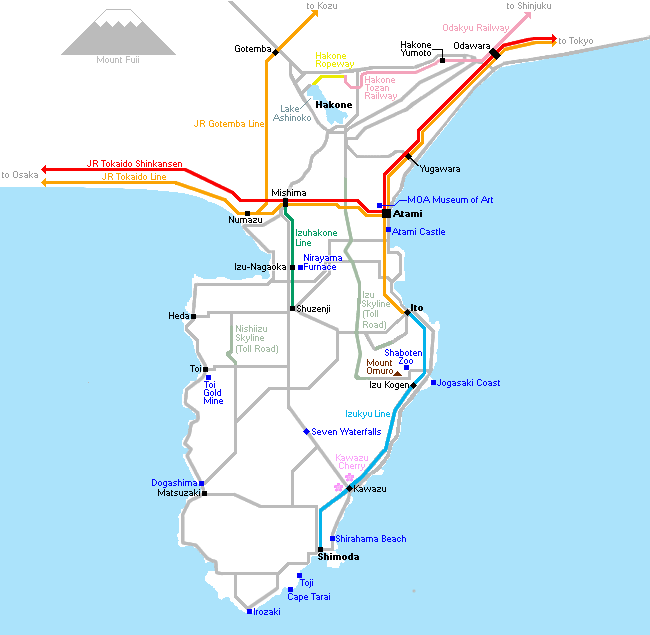
Visitors can also join 25-minute sightseeing cruises around Shimoda Port in a ship designed to look like a black ship. The boarding point for the sightseeing cruise is a 15 minute walk from Izukyu-Shimoda Station (see map below). There is also the Kurofune Matsuri, an annual festival held in mid May, which commemorates the arrival of Perry with a parade and various other festive events.

Getting there and around

The various sights related to Perry and his black ships are spread out around the city of Shimoda. Shimoda Park, Ryosenji Temple and Perry Road can be reached in a 15-20 minute walk south of Izukyu-Shimoda Station or in about five minutes by buses bound for the Shimoda Aquarium (海中水族館, Kaichū Suizokukan). Get off at the Ryosenji (了仙寺, Ryōsenji) bus stop (200 yen one way, hourly).
How to get to and around Shimoda
How to get to and around the Izu Peninsula
Hours and Fees
Black Ship Sightseeing Cruises
Hours
Closed
Admission
Questions? Ask in our forum.
Links and Resources
Hotels around Izu Peninsula

-
-
![]() Watei KazekomichiFeaturing sea views, Watei Kazekomichi provides accommodation with balcony, around 2.2 km from Atami Sun Beach. There is an on-site restaurant, plus free private parking and free WiFi are available. Guests can use the hot spring bath and the open-air bath, or enjoy mountain views. The ryokan will provide guests with air-conditioned units offering a wardrobe, a coffee machine, a fridge, a safety deposit box, a flat-screen TV, a terrace and a private bathroom with a hot tub. The ryokan offers certain units with garden views, and each unit is equipped with a kettle. At the ryokan, all units include bed linen and towels. Guests at the ryokan can enjoy an Asian breakfast. Guests can also relax in the garden or in the shared lounge area. Hakone-Yumoto Station is 28 km from Watei Kazekomichi, while Shuzen-ji Temple is 33 km away.View on Booking.com
Watei KazekomichiFeaturing sea views, Watei Kazekomichi provides accommodation with balcony, around 2.2 km from Atami Sun Beach. There is an on-site restaurant, plus free private parking and free WiFi are available. Guests can use the hot spring bath and the open-air bath, or enjoy mountain views. The ryokan will provide guests with air-conditioned units offering a wardrobe, a coffee machine, a fridge, a safety deposit box, a flat-screen TV, a terrace and a private bathroom with a hot tub. The ryokan offers certain units with garden views, and each unit is equipped with a kettle. At the ryokan, all units include bed linen and towels. Guests at the ryokan can enjoy an Asian breakfast. Guests can also relax in the garden or in the shared lounge area. Hakone-Yumoto Station is 28 km from Watei Kazekomichi, while Shuzen-ji Temple is 33 km away.View on Booking.com -
![]() Furuya RyokanBuilt in 1806, Furuya is the oldest ryokan in the Atami hot-springs area. A 3-minute walk to Atami Sun Beach, it boasts a variety of beautiful hot-spring baths and features traditional Japanese rooms, some with their own private hot-spring bath. Rooms at Furuya Ryokan are decorated in Japan’s famous minimalistic style, and include an LCD TV and a low table with floor cushions. Each room is air-conditioned and includes an en suite bathroom. A 2-minute walk to the Atami Ginza shopping area, the ryokan is a 5-minute drive or 15-minute walk from JR Atami Train Station. On-site parking is free. Guests can soak in the indoor bath, which uses pure hot-spring water pumped directly from the source. Guests can also unwind with a massage or check out the unique local wares at the gift shop. Multiple courses of gorgeously presented Japanese cuisine are served for the Kaiseki dinner, and breakfast is a traditional set menu. In-room dinners are served at 18:00.View on Booking.com
Furuya RyokanBuilt in 1806, Furuya is the oldest ryokan in the Atami hot-springs area. A 3-minute walk to Atami Sun Beach, it boasts a variety of beautiful hot-spring baths and features traditional Japanese rooms, some with their own private hot-spring bath. Rooms at Furuya Ryokan are decorated in Japan’s famous minimalistic style, and include an LCD TV and a low table with floor cushions. Each room is air-conditioned and includes an en suite bathroom. A 2-minute walk to the Atami Ginza shopping area, the ryokan is a 5-minute drive or 15-minute walk from JR Atami Train Station. On-site parking is free. Guests can soak in the indoor bath, which uses pure hot-spring water pumped directly from the source. Guests can also unwind with a massage or check out the unique local wares at the gift shop. Multiple courses of gorgeously presented Japanese cuisine are served for the Kaiseki dinner, and breakfast is a traditional set menu. In-room dinners are served at 18:00.View on Booking.com -
![]() Atami SekaieAtami Sekaie is set in Atami, 2.5 km from Atami Sun Beach, 25 km from Hakone-Yumoto Station, as well as 35 km from Shuzen-ji Temple. There is an on-site restaurant, plus free private parking and free WiFi are available. The accommodation offers a 24-hour front desk. At the ryokan, each unit comes with a private bathroom. Mount Daruma is 49 km from the ryokan, while Hakone Checkpoint is 22 km away.View on Booking.com
Atami SekaieAtami Sekaie is set in Atami, 2.5 km from Atami Sun Beach, 25 km from Hakone-Yumoto Station, as well as 35 km from Shuzen-ji Temple. There is an on-site restaurant, plus free private parking and free WiFi are available. The accommodation offers a 24-hour front desk. At the ryokan, each unit comes with a private bathroom. Mount Daruma is 49 km from the ryokan, while Hakone Checkpoint is 22 km away.View on Booking.com -
![]() SOKI ATAMISOKI ATAMI features a sauna and a hot spring bath, as well as air-conditioned accommodation in Atami, 1.7 km from Atami Sun Beach. This 4-star ryokan offers a 24-hour front desk and a lift. There is a restaurant serving Japanese cuisine, and free private parking is available. At the ryokan, all units include a balcony. Each unit is fitted with a kettle, a flat-screen TV, a safety deposit box and free WiFi, while some rooms are fitted with a terrace and some have sea views. All units have a private bathroom, slippers and bed linen. The ryokan offers a buffet or Asian breakfast. There is a coffee shop on-site. Guests can relax in the garden at the property. Hakone-Yumoto Station is 27 km from SOKI ATAMI, while Shuzen-ji Temple is 33 km from the property.View on Booking.com
SOKI ATAMISOKI ATAMI features a sauna and a hot spring bath, as well as air-conditioned accommodation in Atami, 1.7 km from Atami Sun Beach. This 4-star ryokan offers a 24-hour front desk and a lift. There is a restaurant serving Japanese cuisine, and free private parking is available. At the ryokan, all units include a balcony. Each unit is fitted with a kettle, a flat-screen TV, a safety deposit box and free WiFi, while some rooms are fitted with a terrace and some have sea views. All units have a private bathroom, slippers and bed linen. The ryokan offers a buffet or Asian breakfast. There is a coffee shop on-site. Guests can relax in the garden at the property. Hakone-Yumoto Station is 27 km from SOKI ATAMI, while Shuzen-ji Temple is 33 km from the property.View on Booking.com -
![]() Pearl Star Hotel ATAMIFacing the beachfront, Pearl Star Hotel ATAMI offers 5-star accommodation in Atami and features a fitness centre, terrace and restaurant. The property is set 600 metres from Atami Sun Beach, 26 km from Hakone-Yumoto Station and 30 km from Shuzen-ji Temple. The hotel has a sauna, room service and free WiFi throughout the property. The hotel will provide guests with air-conditioned rooms offering a wardrobe, a coffee machine, a fridge, a minibar, a safety deposit box, a flat-screen TV and a private bathroom with a bidet. All rooms are equipped with a kettle, while some rooms come with a balcony and others also have sea views. A buffet breakfast is available at Pearl Star Hotel ATAMI. The accommodation offers a hot spring bath. Guests can make use of the business centre or relax in the bar. With staff speaking English, Japanese and Chinese, information is available at the reception. Mount Daruma is 44 km from Pearl Star Hotel ATAMI, while Hakone Checkpoint is 24 km away.View on Booking.com
Pearl Star Hotel ATAMIFacing the beachfront, Pearl Star Hotel ATAMI offers 5-star accommodation in Atami and features a fitness centre, terrace and restaurant. The property is set 600 metres from Atami Sun Beach, 26 km from Hakone-Yumoto Station and 30 km from Shuzen-ji Temple. The hotel has a sauna, room service and free WiFi throughout the property. The hotel will provide guests with air-conditioned rooms offering a wardrobe, a coffee machine, a fridge, a minibar, a safety deposit box, a flat-screen TV and a private bathroom with a bidet. All rooms are equipped with a kettle, while some rooms come with a balcony and others also have sea views. A buffet breakfast is available at Pearl Star Hotel ATAMI. The accommodation offers a hot spring bath. Guests can make use of the business centre or relax in the bar. With staff speaking English, Japanese and Chinese, information is available at the reception. Mount Daruma is 44 km from Pearl Star Hotel ATAMI, while Hakone Checkpoint is 24 km away.View on Booking.com -
![]() Atami Onsen Sakuraya RyokanOffering a garden and quiet street view, Atami Onsen Sakuraya Ryokan is located in Atami, 26 km from Hakone-Yumoto Station and 34 km from Shuzen-ji Temple. The air-conditioned accommodation is 1.1 km from Atami Sun Beach, and guests can benefit from private parking available on site and free WiFi. Guests also enjoy access to the sauna and hot spring bath, as well as the public bath and open-air bath. The ryokan comes with a flat-screen TV. Additional in-room amenities include wine or champagne. Mount Daruma is 49 km from the ryokan, while Hakone Checkpoint is 24 km away.View on Booking.com
Atami Onsen Sakuraya RyokanOffering a garden and quiet street view, Atami Onsen Sakuraya Ryokan is located in Atami, 26 km from Hakone-Yumoto Station and 34 km from Shuzen-ji Temple. The air-conditioned accommodation is 1.1 km from Atami Sun Beach, and guests can benefit from private parking available on site and free WiFi. Guests also enjoy access to the sauna and hot spring bath, as well as the public bath and open-air bath. The ryokan comes with a flat-screen TV. Additional in-room amenities include wine or champagne. Mount Daruma is 49 km from the ryokan, while Hakone Checkpoint is 24 km away.View on Booking.com -
![]() TaiseikanOffering an open-air bath and sea view, Taiseikan is set in Atami, 1.8 km from Nagahama Beach and 24 km from Shuzen-ji Temple. Ideally located in the Ajiro Onsen district, this ryokan offers a shared lounge, as well as a hot spring bath and a public bath. Free WiFi is available and private parking can be arranged at an extra charge. The units in the ryokan are fitted with a kettle. There is a private bathroom with bidet in some units, along with slippers, a hair dryer and free toiletries. All units will provide guests with air conditioning, a safety deposit box and a flat-screen TV. The ryokan is located in a geothermal area, with a number of hot springs nearby for guests to relax in. Hakone-Yumoto Station is 33 km from the ryokan, while Mount Daruma is 38 km from the property.View on Booking.com
TaiseikanOffering an open-air bath and sea view, Taiseikan is set in Atami, 1.8 km from Nagahama Beach and 24 km from Shuzen-ji Temple. Ideally located in the Ajiro Onsen district, this ryokan offers a shared lounge, as well as a hot spring bath and a public bath. Free WiFi is available and private parking can be arranged at an extra charge. The units in the ryokan are fitted with a kettle. There is a private bathroom with bidet in some units, along with slippers, a hair dryer and free toiletries. All units will provide guests with air conditioning, a safety deposit box and a flat-screen TV. The ryokan is located in a geothermal area, with a number of hot springs nearby for guests to relax in. Hakone-Yumoto Station is 33 km from the ryokan, while Mount Daruma is 38 km from the property.View on Booking.com -
![]() Syukaen YunohanazenSyukaen Yunohanazen is set in Atami, 27 km from Hakone-Yumoto Station, 29 km from Shuzen-ji Temple, and 43 km from Mount Daruma. The 4-star ryokan features sea views and is 1.2 km from Atami Sun Beach. Free WiFi is available and private parking can be arranged at an extra charge. The ryokan will provide guests with air-conditioned units offering a tatami, a kettle, a fridge, a safety deposit box, a flat-screen TV and a private bathroom with a bidet. Hakone Checkpoint is 25 km from the ryokan, while Hakone Shrine is 28 km away.View on Booking.com
Syukaen YunohanazenSyukaen Yunohanazen is set in Atami, 27 km from Hakone-Yumoto Station, 29 km from Shuzen-ji Temple, and 43 km from Mount Daruma. The 4-star ryokan features sea views and is 1.2 km from Atami Sun Beach. Free WiFi is available and private parking can be arranged at an extra charge. The ryokan will provide guests with air-conditioned units offering a tatami, a kettle, a fridge, a safety deposit box, a flat-screen TV and a private bathroom with a bidet. Hakone Checkpoint is 25 km from the ryokan, while Hakone Shrine is 28 km away.View on Booking.com -
![]() Hotel Kan-ichiOffering a bar and city view, Hotel Kan-ichi is set in Atami, 300 metres from Atami Sun Beach and 26 km from Hakone-Yumoto Station. Featuring an open-air bath, the 4-star ryokan has air-conditioned rooms with free WiFi. The ryokan has private parking, a hot spring bath and a 24-hour front desk. At the ryokan, the units are equipped with a desk and a flat-screen TV. Each unit has a safety deposit box and selected rooms also offer sea views. At the ryokan, the units include bed linen and towels. Guests at the ryokan can enjoy an Asian breakfast. Shuzen-ji Temple is 34 km from Hotel Kan-ichi, while Mount Daruma is 48 km from the property.View on Booking.com
Hotel Kan-ichiOffering a bar and city view, Hotel Kan-ichi is set in Atami, 300 metres from Atami Sun Beach and 26 km from Hakone-Yumoto Station. Featuring an open-air bath, the 4-star ryokan has air-conditioned rooms with free WiFi. The ryokan has private parking, a hot spring bath and a 24-hour front desk. At the ryokan, the units are equipped with a desk and a flat-screen TV. Each unit has a safety deposit box and selected rooms also offer sea views. At the ryokan, the units include bed linen and towels. Guests at the ryokan can enjoy an Asian breakfast. Shuzen-ji Temple is 34 km from Hotel Kan-ichi, while Mount Daruma is 48 km from the property.View on Booking.com -
![]() Yuyado IchibanchiSituated in Atami, 1.3 km from Atami Sun Beach, Yuyado Ichibanchi features accommodation with a hot spring bath, a public bath and an open-air bath. This 3-star ryokan offers a lift and luggage storage space. Free WiFi is available and private parking can be arranged at an extra charge. A car rental service is available at the ryokan. Hakone-Yumoto Station is 26 km from Yuyado Ichibanchi, while Shuzen-ji Temple is 35 km from the property.View on Booking.com
Yuyado IchibanchiSituated in Atami, 1.3 km from Atami Sun Beach, Yuyado Ichibanchi features accommodation with a hot spring bath, a public bath and an open-air bath. This 3-star ryokan offers a lift and luggage storage space. Free WiFi is available and private parking can be arranged at an extra charge. A car rental service is available at the ryokan. Hakone-Yumoto Station is 26 km from Yuyado Ichibanchi, while Shuzen-ji Temple is 35 km from the property.View on Booking.com
-


