Dining out
Japan has a large selection of restaurants. While every place is different, the following points will help make dining out in Japan a smooth and enjoyable experience.
Entering the restaurant
Many restaurants in Japan display plastic or wax replicas of their dishes in a window near their entrance. These replicas serve both to entice and inform patrons of the restaurant's menu and tend to offer an accurate, visual description of the style and price of meals found inside. The displays are especially helpful for foreign tourists who do not read and speak Japanese. For if all other forms of communication fail, you can go outside and point to what you want to order.
Upon entering a restaurant, customers are greeted with the expression "irasshaimase" meaning "welcome, please come in". The waiter or waitress will ask you how many people are in your party and then lead you to your table. Only in rare cases are customers expected to seat themselves.
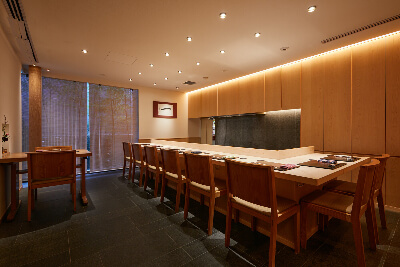
While a majority of restaurants in Japan provide Western-style tables and chairs, low traditional tables with cushions to sit on the floor are also common and referred to as zashiki. Some restaurants feature both styles, and you may be asked which you prefer. In case of zashiki-style seating, you should remove your shoes at the entrance to the restaurant or before stepping onto the sitting area.
Smoking is generally prohibited at restaurants in Japan; however, small-sized restaurants that predate the anti-smoking law of 2020 may allow smoking if they display a sign at the entrance stating that smoking is allowed.


Ordering and eating
After you are seated, each diner is usually served with a free glass of water or tea. If it is not served, free water or tea is usually available for self service somewhere in the restaurant. Everyone will also receive a wet towel (oshibori) which is used to clean your hands before eating. If chopsticks are not already set, you can usually find some in a box on the table. Most often, they are disposable wooden chopsticks that need to be separated into two before use.
While many restaurants provide illustrated menus, others may have only Japanese menus, or the restaurant's offerings may instead be posted on the walls. If you are ever in doubt on what to order or find that you cannot read the menu, try asking for the recommendations (osusume) or the chef's choice (omakase). The latter will often get you good, prix fixe style meals, but be prepared to be adventurous and do not expect it to be cheap.
Once you are ready to order, you can signal the restaurant staff by saying "sumimasen" (excuse me), or if available, press the call button at the table. Once you have finished ordering, the waitress will often repeat your order back to you for confirmation.
Since the Coronavirus pandemic, ordering through a tablet computer or touch screen at the table or through one's own mobile phone after scanning a QR code has become common at a considerable number of restaurants. Many of these systems are multilingual and illustrated, and a few also handle the payment procedure.
At some restaurants, such as izakaya, it is common for everyone in the party to share dishes. At other establishments, however, each diner is expected to order individually.


Paying
The bill will be presented face down either as you receive the meal or after you have finished eating. In most restaurants you are supposed to bring your bill to the cashier near the exit when leaving, as it is not common to pay at the table. Paying in cash remains common, but many restaurants also accept payment by credit cards and IC cards such as Suica.
Some restaurants, especially cheaper ones, have slightly different systems for ordering and paying. In many ramen and gyudon restaurants, for example, "meal tickets" are bought at a vending machine near the store's entrance upon entering and handed over to the staff who then prepare and serve the meal.
It is not customary to tip in Japan, and if you do, you will probably find the restaurant staff chasing you down in order to give back any money left behind. Instead, it is polite to say "gochisosama deshita" ("thank you for the meal") when leaving.

Questions? Ask in our forum.
Links and Resources
Restaurants

-
-
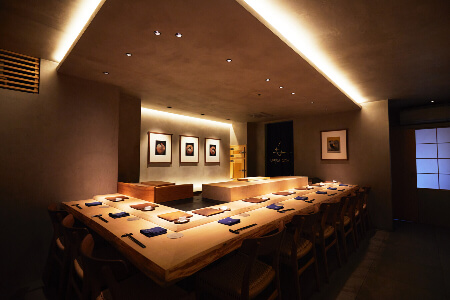
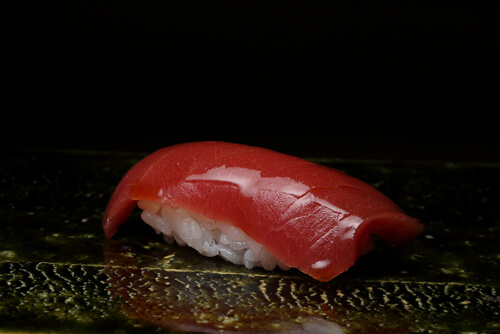
![]() Udatsu Sushi (Tokyo)Awarded One Star in 2024 - People from around the world visit to experience Mr. Udatsu's sushi. Inside the restaurant, which resembles an art gallery with its modern decor and numerous artworks, guests can enjoy sushi crafted from the highest quality ingredients. While the foundation is traditional nigiri, the menu also features original creations born from the chef's relentless curiosity and innovation.View on JapanEatinerary
Udatsu Sushi (Tokyo)Awarded One Star in 2024 - People from around the world visit to experience Mr. Udatsu's sushi. Inside the restaurant, which resembles an art gallery with its modern decor and numerous artworks, guests can enjoy sushi crafted from the highest quality ingredients. While the foundation is traditional nigiri, the menu also features original creations born from the chef's relentless curiosity and innovation.View on JapanEatinerary -
![]() Waketokuyama (Tokyo)Awarded One Star in 2025 - With a meticulous focus on allowing guests to enjoy seasonal ingredients at their peak, the menu changes approximately every two weeks. The signature dish, "Grilled Abalone with Seaweed Aroma," features thick slices of abalone generously coated in a rich liver sauce, offering an exquisite taste of the sea.View on JapanEatinerary
Waketokuyama (Tokyo)Awarded One Star in 2025 - With a meticulous focus on allowing guests to enjoy seasonal ingredients at their peak, the menu changes approximately every two weeks. The signature dish, "Grilled Abalone with Seaweed Aroma," features thick slices of abalone generously coated in a rich liver sauce, offering an exquisite taste of the sea.View on JapanEatinerary -
![]() Sushiroku (Osaka)Awarded One Star in 2024 - A cozy, family-run restaurant managed by a husband and wife. They are deeply committed to perfecting their shari (sushi rice) and use two types of vinegared rice tailored to complement each topping. Since 2019, the restaurant has consistently earned stars.View on JapanEatinerary
Sushiroku (Osaka)Awarded One Star in 2024 - A cozy, family-run restaurant managed by a husband and wife. They are deeply committed to perfecting their shari (sushi rice) and use two types of vinegared rice tailored to complement each topping. Since 2019, the restaurant has consistently earned stars.View on JapanEatinerary -
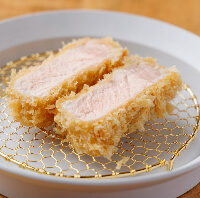
![]() Fry-ya (Tokyo)Exquisite fried dishes crafted by a head chef with experience earning stars in both Switzerland and Japan. The remarkably light tonkatsu is a favorite not only among Japanese diners but also among visitors to Japan. With the theme of "small portions, many varieties," guests can enjoy sampling a wide selection of tonkatsu in smaller portions.View on JapanEatinerary
Fry-ya (Tokyo)Exquisite fried dishes crafted by a head chef with experience earning stars in both Switzerland and Japan. The remarkably light tonkatsu is a favorite not only among Japanese diners but also among visitors to Japan. With the theme of "small portions, many varieties," guests can enjoy sampling a wide selection of tonkatsu in smaller portions.View on JapanEatinerary -
![]() Sushi Hayashi (Kyoto)Awarded One Star in 2024 - A unique sushi restaurant that blends traditional Edomae (Tokyo-style) sushi with Kyoto-style sushi, such as mackerel sushi and steamed sushi, in its courses. The head chef, who trained as a sushi artisan in Switzerland, carefully selects Swiss wines, making them a perfect pairing to enjoy with the meal.View on JapanEatinerary
Sushi Hayashi (Kyoto)Awarded One Star in 2024 - A unique sushi restaurant that blends traditional Edomae (Tokyo-style) sushi with Kyoto-style sushi, such as mackerel sushi and steamed sushi, in its courses. The head chef, who trained as a sushi artisan in Switzerland, carefully selects Swiss wines, making them a perfect pairing to enjoy with the meal.View on JapanEatinerary -
![]() Hikarimono (Tokyo)With a prime location and quality that rivals high-end sushi restaurants, this restaurant maintains the goal of being a place for everyday dining. It offers a casual and relaxed atmosphere, free from stiffness or formality. The signature "Hikari-maki," featuring ingredients such as sardines, pickled plum, and bettarazuke (sweet pickled radish), boasts unique flavors that are especially popular among international visitors.View on JapanEatinerary
Hikarimono (Tokyo)With a prime location and quality that rivals high-end sushi restaurants, this restaurant maintains the goal of being a place for everyday dining. It offers a casual and relaxed atmosphere, free from stiffness or formality. The signature "Hikari-maki," featuring ingredients such as sardines, pickled plum, and bettarazuke (sweet pickled radish), boasts unique flavors that are especially popular among international visitors.View on JapanEatinerary -
![]() Noguchi Tsunagu (Kyoto)Awarded One Star in 2024 - The sister restaurant of the highly exclusive Japanese cuisine establishment, Kyotenjin Noguchi. While maintaining the culinary essence of the main branch, this kappo-style restaurant incorporates ingredients from the chef窶冱 hometown in the Goto Islands. Its signature dish, Nikusui, is a masterpiece made from carefully prepared, top-quality A5-grade sirloin.View on JapanEatinerary
Noguchi Tsunagu (Kyoto)Awarded One Star in 2024 - The sister restaurant of the highly exclusive Japanese cuisine establishment, Kyotenjin Noguchi. While maintaining the culinary essence of the main branch, this kappo-style restaurant incorporates ingredients from the chef窶冱 hometown in the Goto Islands. Its signature dish, Nikusui, is a masterpiece made from carefully prepared, top-quality A5-grade sirloin.View on JapanEatinerary -
![]() TEMPURA & WINE SHINO (Tokyo)The kind of restaurant that is known only to true gourmets, serving as a sort of 'Hidden gem'. In a chic space with black walls and a ceiling adorned in gold, you can enjoy tempura with a light and elegant texture, delicately fried using refined techniques to achieve a thin, white batter that minimizes the aroma of oil. Savor tempura that maximizes the flavors of the ingredients, paired with Champagne and Burgundy wines carefully selected by the sommelier.View on JapanEatinerary
TEMPURA & WINE SHINO (Tokyo)The kind of restaurant that is known only to true gourmets, serving as a sort of 'Hidden gem'. In a chic space with black walls and a ceiling adorned in gold, you can enjoy tempura with a light and elegant texture, delicately fried using refined techniques to achieve a thin, white batter that minimizes the aroma of oil. Savor tempura that maximizes the flavors of the ingredients, paired with Champagne and Burgundy wines carefully selected by the sommelier.View on JapanEatinerary -
![]() Ginza Nominokoji Yamagishi (Tokyo)Tominokoji Yamagishi, an exclusive kaiseki restaurant from Kyoto, has opened its first location in Tokyo. Unlike its main branch, this establishment adopts an izakaya-style format, allowing diners to enjoy a more relaxed テ la carte dining experience. Despite being located in Tokyo, the restaurant meticulously sources ingredients and even water from Kyoto, dedicating itself to faithfully recreating Kyoto窶冱 culinary traditions.View on JapanEatinerary
Ginza Nominokoji Yamagishi (Tokyo)Tominokoji Yamagishi, an exclusive kaiseki restaurant from Kyoto, has opened its first location in Tokyo. Unlike its main branch, this establishment adopts an izakaya-style format, allowing diners to enjoy a more relaxed テ la carte dining experience. Despite being located in Tokyo, the restaurant meticulously sources ingredients and even water from Kyoto, dedicating itself to faithfully recreating Kyoto窶冱 culinary traditions.View on JapanEatinerary -
![]() Kitashinchi Kushikatsu Bon (Osaka)A restaurant that elevates Osaka's soul food, kushikatsu, to a luxurious level. Skilled chefs meticulously prepare each skewer using carefully selected premium ingredients such as Chateaubriand and foie gras. The skewers are fried in a custom copper pot using a unique oil blend based on cottonseed oil, enhancing the natural flavors of the ingredients.View on JapanEatinerary
Kitashinchi Kushikatsu Bon (Osaka)A restaurant that elevates Osaka's soul food, kushikatsu, to a luxurious level. Skilled chefs meticulously prepare each skewer using carefully selected premium ingredients such as Chateaubriand and foie gras. The skewers are fried in a custom copper pot using a unique oil blend based on cottonseed oil, enhancing the natural flavors of the ingredients.View on JapanEatinerary
-