Tsurugaoka Hachimangu
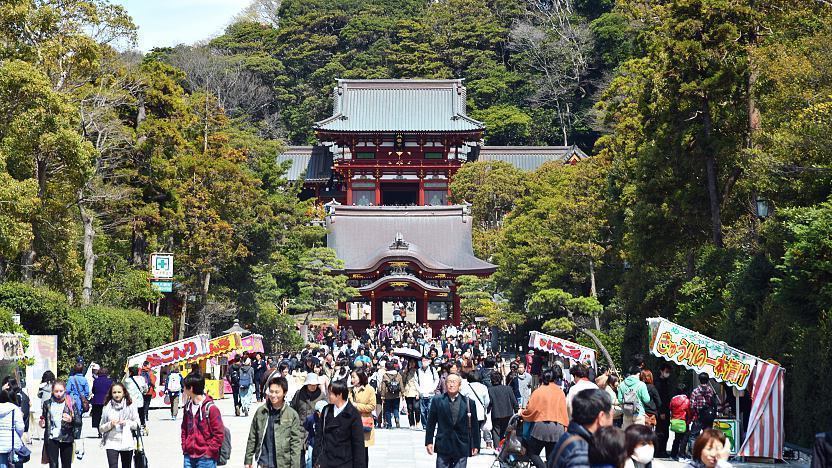
Tsurugaoka Hachimangu (’߉ª”ª”¦‹{, Tsurugaoka Hachimangū) is Kamakura's most important shrine. It was founded by Minamoto Yoriyoshi in 1063, and enlarged and moved to its current site in 1180 by Minamoto Yoritomo, the founder and first shogun of the Kamakura government.
The shrine is dedicated to Hachiman, the patron god of the Minamoto family and of the samurai in general. The deified spirits of the ancient Emperor Ojin who has been identified with Hachiman, Hime-gami and Empress Jingu are enshrined at Tsurugaoka Hachimangu Shrine.

The shrine is reached via a long, wide approach that leads from Kamakura's waterfront through the entire city center, with multiple torii gates along the way. The main hall (Hongu or Jogu) stands on a terrace at the top of a wide stairway. The main hall includes a small museum, which displays various treasures owned by the shrine, such as swords, masks and documents.
To the left of the stairway stood until 2010 a large ginkgo tree, which predated the shrine, and was once used as a hideout in an ambush attack on a shogun. Every autumn, the tree turned beautifully golden, but it did not survive a winter storm in March 2010. At the base of the stairway stands the Maiden, a stage for dance and music performances. Other structures on the shrine grounds include the Wakamiya Shrine, a secondary shrine to the right of the stairway and various auxiliary buildings.

Flanking the main approach to the shrine are two ponds. One pond represents the Minamoto Clan and has three islands, while the other represents the Taira Clan, the Minamoto's arch rivals, and has four islands, as the number four can be pronounced the same as "death" in Japanese. A garden, known for its peonies, surrounds the Minamoto Pond halfway. It is open seasonally in spring and winter and costs 500 yen to enter.
Various events are held at the shrine throughout the year. During the New Year holidays, it registers over two million visitors, making it one of the country's most popular shrines for hatsumode (the year's first visit to a shrine). In mid April and mid September, horseback archery (yabusame) is performed along the main approach to the shrine.

Getting there and around
Tsurugaoka Hachimangu Shrine can be reached from Kamakura Station either through the busy Komachi-dori shopping street, or along the Dankazura, a pedestrian path in the center of Wakamiya Oji Street that is lined with several hundred cherry trees. Via either route, the walk from Kamakura Station to the shrine takes about 10-15 minutes.
How to get to and around Kamakura

Hours and Fees
Hachimangu Shrine
Hours
Closed
Admission
Treasure hall (at the main hall)
Hours
Closed
Admission
Questions? Ask in our forum.
Links and Resources
Hotels around Kamakura

-
-
![]() HOTEL AO KAMAKURAFeaturing 4-star accommodation, HOTEL AO KAMAKURA is situated in Kamakura, 50 metres from Koshigoe Beach and 7.6 km from Tsurugaoka Hachimangu Shrine. Among the facilities of this property are a restaurant, room service and a 24-hour front desk, along with free WiFi. Private parking is available on site. Complete with a private bathroom fitted with a bidet and a hairdryer, all rooms at the hotel have a flat-screen TV and air conditioning, and some rooms have a terrace. All guest rooms will provide guests with a fridge. Sankeien is 24 km from HOTEL AO KAMAKURA, while Yokohama Marine Tower is 24 km from the property. Tokyo Haneda Airport is 43 km away.View on Booking.com
HOTEL AO KAMAKURAFeaturing 4-star accommodation, HOTEL AO KAMAKURA is situated in Kamakura, 50 metres from Koshigoe Beach and 7.6 km from Tsurugaoka Hachimangu Shrine. Among the facilities of this property are a restaurant, room service and a 24-hour front desk, along with free WiFi. Private parking is available on site. Complete with a private bathroom fitted with a bidet and a hairdryer, all rooms at the hotel have a flat-screen TV and air conditioning, and some rooms have a terrace. All guest rooms will provide guests with a fridge. Sankeien is 24 km from HOTEL AO KAMAKURA, while Yokohama Marine Tower is 24 km from the property. Tokyo Haneda Airport is 43 km away.View on Booking.com -
![]() Hotel Metropolitan KamakuraFeaturing 4-star accommodation, Hotel Metropolitan Kamakura is located in Kamakura, 1.3 km from Yuigahama Beach and less than 1 km from Tsurugaoka Hachimangu Shrine. Featuring a 24-hour front desk, this property also provides guests with a restaurant. Free WiFi is available and private parking can be arranged at an extra charge. The hotel will provide guests with air-conditioned rooms offering a wardrobe, a kettle, a safety deposit box, a flat-screen TV and a private bathroom with a bidet. Sankeien is 21 km from Hotel Metropolitan Kamakura, while Yokohama Marine Tower is 21 km away. Tokyo Haneda Airport is 40 km from the property.View on Booking.com
Hotel Metropolitan KamakuraFeaturing 4-star accommodation, Hotel Metropolitan Kamakura is located in Kamakura, 1.3 km from Yuigahama Beach and less than 1 km from Tsurugaoka Hachimangu Shrine. Featuring a 24-hour front desk, this property also provides guests with a restaurant. Free WiFi is available and private parking can be arranged at an extra charge. The hotel will provide guests with air-conditioned rooms offering a wardrobe, a kettle, a safety deposit box, a flat-screen TV and a private bathroom with a bidet. Sankeien is 21 km from Hotel Metropolitan Kamakura, while Yokohama Marine Tower is 21 km away. Tokyo Haneda Airport is 40 km from the property.View on Booking.com -
![]() WeBase KAMAKURAWeBase Kamakura is a resort hotel and restaurant in the ancient capital of Kamakura, one minute from the Shonan sea and one hour from the city. WeBase Kamakura is a 3 minutes walk from Yuigahama Station and there are many tourist attractions within walking distance, such as the Kamakura Great Buddha, Tsurugaoka Hachimangu Shrine, and Kamakura Komachi Street. There are 8 sophisticated guest room types with high ceilings and a total of 22 guest rooms. Free Wi-Fi is available. We offer a breakfast course that includes sparkling wine, a choice of two types of galettes, a salad with plenty of Kamakura vegetables, amuse-bouche, and soup. Enjoy a luxurious breakfast that starts with sparkling wine and freshly baked galette, grilled right in front of you. There is a large communal bath with a sauna which offers a self Loyly style sauna. At our on-site restaurant, "Restaurant Co," we provide a fusion of teppanyaki and Italian cuisine that allows you to enjoy the seasonal flavors of local Kamakura with all your senses. Savor modern Italian cuisine incorporating teppanyaki techniques, along with wine pairings. There is also a kids' menu for children of elementary school age and younger.View on Booking.com
WeBase KAMAKURAWeBase Kamakura is a resort hotel and restaurant in the ancient capital of Kamakura, one minute from the Shonan sea and one hour from the city. WeBase Kamakura is a 3 minutes walk from Yuigahama Station and there are many tourist attractions within walking distance, such as the Kamakura Great Buddha, Tsurugaoka Hachimangu Shrine, and Kamakura Komachi Street. There are 8 sophisticated guest room types with high ceilings and a total of 22 guest rooms. Free Wi-Fi is available. We offer a breakfast course that includes sparkling wine, a choice of two types of galettes, a salad with plenty of Kamakura vegetables, amuse-bouche, and soup. Enjoy a luxurious breakfast that starts with sparkling wine and freshly baked galette, grilled right in front of you. There is a large communal bath with a sauna which offers a self Loyly style sauna. At our on-site restaurant, "Restaurant Co," we provide a fusion of teppanyaki and Italian cuisine that allows you to enjoy the seasonal flavors of local Kamakura with all your senses. Savor modern Italian cuisine incorporating teppanyaki techniques, along with wine pairings. There is also a kids' menu for children of elementary school age and younger.View on Booking.com -
![]() KIYAZA RESORT KamakuraLocated within 200 metres of Zaimokuza Beach and 2.3 km of Tsurugaoka Hachimangu Shrine, KIYAZA RESORT Kamakura provides rooms with air conditioning and a private bathroom in Kamakura. The property features pool and quiet street views, and is 22 km from Sankeien. Guests can make use of the sun terrace or the seasonal outdoor pool, or enjoy views of the garden and inner courtyard. At the guest house, each unit comes with a wardrobe and a flat-screen TV. With a private bathroom equipped with a bidet and slippers, units at the guest house also offer free WiFi, while selected rooms are equipped with a balcony. At the guest house, every unit has bed linen and towels. The area is popular for cycling, and bike hire is available at this 2-star guest house. Guests can also relax in the garden or in the shared lounge area. Yokohama Marine Tower is 22 km from the guest house, while Nissan Stadium is 31 km away. Tokyo Haneda Airport is 41 km from the property.View on Booking.com
KIYAZA RESORT KamakuraLocated within 200 metres of Zaimokuza Beach and 2.3 km of Tsurugaoka Hachimangu Shrine, KIYAZA RESORT Kamakura provides rooms with air conditioning and a private bathroom in Kamakura. The property features pool and quiet street views, and is 22 km from Sankeien. Guests can make use of the sun terrace or the seasonal outdoor pool, or enjoy views of the garden and inner courtyard. At the guest house, each unit comes with a wardrobe and a flat-screen TV. With a private bathroom equipped with a bidet and slippers, units at the guest house also offer free WiFi, while selected rooms are equipped with a balcony. At the guest house, every unit has bed linen and towels. The area is popular for cycling, and bike hire is available at this 2-star guest house. Guests can also relax in the garden or in the shared lounge area. Yokohama Marine Tower is 22 km from the guest house, while Nissan Stadium is 31 km away. Tokyo Haneda Airport is 41 km from the property.View on Booking.com -
![]() CASA Kamakura Espresso&BEDOffering quiet street views, CASA Kamakura Espresso&BED is an accommodation situated in Kamakura, 500 metres from Yuigahama Beach and 2.8 km from Tsurugaoka Hachimangu Shrine. The 2-star guest house has air-conditioned rooms with a private bathroom and free WiFi. The accommodation features full-day security, and luggage storage for guests. At the guest house, each unit includes bed linen and towels. Sankeien is 22 km from the guest house, while Yokohama Marine Tower is 23 km from the property. Tokyo Haneda Airport is 42 km away.View on Booking.com
CASA Kamakura Espresso&BEDOffering quiet street views, CASA Kamakura Espresso&BED is an accommodation situated in Kamakura, 500 metres from Yuigahama Beach and 2.8 km from Tsurugaoka Hachimangu Shrine. The 2-star guest house has air-conditioned rooms with a private bathroom and free WiFi. The accommodation features full-day security, and luggage storage for guests. At the guest house, each unit includes bed linen and towels. Sankeien is 22 km from the guest house, while Yokohama Marine Tower is 23 km from the property. Tokyo Haneda Airport is 42 km away.View on Booking.com -
![]() BIRD HOTELLocated in Kamakura, 200 metres from Yuigahama Beach, BIRD HOTEL provides accommodation with a garden, private parking, a restaurant and a bar. With free WiFi, this 3-star hotel offers room service and luggage storage space. Yokohama Marine Tower is 23 km from the hotel and Nissan Stadium is 31 km away. The units in the hotel are fitted with a kettle. Complete with a private bathroom equipped with a bidet and free toiletries, guest rooms at BIRD HOTEL have a flat-screen TV and air conditioning, and selected rooms are equipped with a balcony. All guest rooms will provide guests with a fridge. Breakfast is available, and includes ? la carte, continental and Italian options. The accommodation offers a sun terrace. Tsurugaoka Hachimangu Shrine is 2.8 km from BIRD HOTEL, while Sankeien is 22 km away. Tokyo Haneda Airport is 42 km from the property.View on Booking.com
BIRD HOTELLocated in Kamakura, 200 metres from Yuigahama Beach, BIRD HOTEL provides accommodation with a garden, private parking, a restaurant and a bar. With free WiFi, this 3-star hotel offers room service and luggage storage space. Yokohama Marine Tower is 23 km from the hotel and Nissan Stadium is 31 km away. The units in the hotel are fitted with a kettle. Complete with a private bathroom equipped with a bidet and free toiletries, guest rooms at BIRD HOTEL have a flat-screen TV and air conditioning, and selected rooms are equipped with a balcony. All guest rooms will provide guests with a fridge. Breakfast is available, and includes ? la carte, continental and Italian options. The accommodation offers a sun terrace. Tsurugaoka Hachimangu Shrine is 2.8 km from BIRD HOTEL, while Sankeien is 22 km away. Tokyo Haneda Airport is 42 km from the property.View on Booking.com -
![]() KAMAKURA HotelBoasting a bar, KAMAKURA Hotel is situated in Kamakura in the Kanagawa region, 1.4 km from Yuigahama Beach and 1.1 km from Tsurugaoka Hachimangu Shrine. This 4-star hotel offers a 24-hour front desk, a concierge service and free WiFi. Some units at the property have a terrace with a city view. The hotel will provide guests with air-conditioned rooms offering a wardrobe, a kettle, a fridge, a safety deposit box, a flat-screen TV and a private bathroom with a bidet. An Asian breakfast is available at KAMAKURA Hotel. Sankeien is 21 km from the accommodation, while Yokohama Marine Tower is 21 km from the property. Tokyo Haneda Airport is 40 km away.View on Booking.com
KAMAKURA HotelBoasting a bar, KAMAKURA Hotel is situated in Kamakura in the Kanagawa region, 1.4 km from Yuigahama Beach and 1.1 km from Tsurugaoka Hachimangu Shrine. This 4-star hotel offers a 24-hour front desk, a concierge service and free WiFi. Some units at the property have a terrace with a city view. The hotel will provide guests with air-conditioned rooms offering a wardrobe, a kettle, a fridge, a safety deposit box, a flat-screen TV and a private bathroom with a bidet. An Asian breakfast is available at KAMAKURA Hotel. Sankeien is 21 km from the accommodation, while Yokohama Marine Tower is 21 km from the property. Tokyo Haneda Airport is 40 km away.View on Booking.com -
![]() Guest House Kamakura Zen-jiLocated in Kamakura, just 300 metres from Yuigahama Beach, Guest House Kamakura Zen-ji provides beachfront accommodation with a garden, a shared lounge and free WiFi. The 2-star guest house features garden views and is 3.5 km from Tsurugaoka Hachimangu Shrine. The guest house has facilities for disabled guests. Certain units in the guest house have private entrance and are equipped with desk and dressing room. Units are complete with a shared bathroom, while some units at the guest house also offer a seating area. At the guest house, some units are soundproof. Guests at the guest house can make the most of yoga classes offered on-site. Guests at Guest House Kamakura Zen-ji will be able to enjoy activities in and around Kamakura, like cycling and hiking. Sankeien is 23 km from the accommodation, while Yokohama Marine Tower is 23 km away. Tokyo Haneda Airport is 43 km from the property.View on Booking.com
Guest House Kamakura Zen-jiLocated in Kamakura, just 300 metres from Yuigahama Beach, Guest House Kamakura Zen-ji provides beachfront accommodation with a garden, a shared lounge and free WiFi. The 2-star guest house features garden views and is 3.5 km from Tsurugaoka Hachimangu Shrine. The guest house has facilities for disabled guests. Certain units in the guest house have private entrance and are equipped with desk and dressing room. Units are complete with a shared bathroom, while some units at the guest house also offer a seating area. At the guest house, some units are soundproof. Guests at the guest house can make the most of yoga classes offered on-site. Guests at Guest House Kamakura Zen-ji will be able to enjoy activities in and around Kamakura, like cycling and hiking. Sankeien is 23 km from the accommodation, while Yokohama Marine Tower is 23 km away. Tokyo Haneda Airport is 43 km from the property.View on Booking.com -
![]() Tosei Hotel Cocone KamakuraSet within 1 km of Yuigahama Beach and 1.5 km of Tsurugaoka Hachimangu Shrine, Tosei Hotel Cocone Kamakura offers rooms in Kamakura. With a restaurant, the 3-star hotel has air-conditioned rooms with free WiFi, each with a private bathroom. Private parking can be arranged at an extra charge. The units in the hotel are equipped with a kettle. All guest rooms in Tosei Hotel Cocone Kamakura are fitted with a flat-screen TV and free toiletries. American and Asian breakfast options are available at the accommodation. At Tosei Hotel Cocone Kamakura guests are welcome to take advantage of a hot tub. Languages spoken at the reception include English and Japanese. Sankeien is 21 km from the hotel, while Yokohama Marine Tower is 22 km from the property. Tokyo Haneda Airport is 41 km away.View on Booking.com
Tosei Hotel Cocone KamakuraSet within 1 km of Yuigahama Beach and 1.5 km of Tsurugaoka Hachimangu Shrine, Tosei Hotel Cocone Kamakura offers rooms in Kamakura. With a restaurant, the 3-star hotel has air-conditioned rooms with free WiFi, each with a private bathroom. Private parking can be arranged at an extra charge. The units in the hotel are equipped with a kettle. All guest rooms in Tosei Hotel Cocone Kamakura are fitted with a flat-screen TV and free toiletries. American and Asian breakfast options are available at the accommodation. At Tosei Hotel Cocone Kamakura guests are welcome to take advantage of a hot tub. Languages spoken at the reception include English and Japanese. Sankeien is 21 km from the hotel, while Yokohama Marine Tower is 22 km from the property. Tokyo Haneda Airport is 41 km away.View on Booking.com -
![]() guesthouse SHIBAFUSituated in Kamakura, 600 metres from Yuigahama Beach and 2.8 km from Tsurugaoka Hachimangu Shrine, guesthouse SHIBAFU features accommodation with air conditioning and access to a garden. This 1-star guest house offers luggage storage space and a shared lounge. Nissan Stadium is 32 km away and Higashiyamata Park is 37 km from the guest house. Units have a kettle, a flat-screen TV and free WiFi, while some rooms also boast a terrace and some have garden views. At the guest house, each unit has bed linen and towels. A modern restaurant, coffee shop and bar can be found on-site. Sankeien is 22 km from the guest house, while Yokohama Marine Tower is 23 km from the property. Tokyo Haneda Airport is 42 km away.View on Booking.com
guesthouse SHIBAFUSituated in Kamakura, 600 metres from Yuigahama Beach and 2.8 km from Tsurugaoka Hachimangu Shrine, guesthouse SHIBAFU features accommodation with air conditioning and access to a garden. This 1-star guest house offers luggage storage space and a shared lounge. Nissan Stadium is 32 km away and Higashiyamata Park is 37 km from the guest house. Units have a kettle, a flat-screen TV and free WiFi, while some rooms also boast a terrace and some have garden views. At the guest house, each unit has bed linen and towels. A modern restaurant, coffee shop and bar can be found on-site. Sankeien is 22 km from the guest house, while Yokohama Marine Tower is 23 km from the property. Tokyo Haneda Airport is 42 km away.View on Booking.com
-


Experiences around Kamakura
-
-
![]() SponsoredMake Modern, Beautiful Wagashi With an Artisan in a Kamakura TeahouseAt the teahouse Temari in Hase, Kamakura, you can learn to make traditional Japanese sweets, nerikiri, from a skilled wagashi artisan. After crafting your sweets, watch the artisan demonstrate advanced techniques up close, then enjoy your freshly made treats with matcha you prepared yourself.View experienceSponsored
SponsoredMake Modern, Beautiful Wagashi With an Artisan in a Kamakura TeahouseAt the teahouse Temari in Hase, Kamakura, you can learn to make traditional Japanese sweets, nerikiri, from a skilled wagashi artisan. After crafting your sweets, watch the artisan demonstrate advanced techniques up close, then enjoy your freshly made treats with matcha you prepared yourself.View experienceSponsored
-
