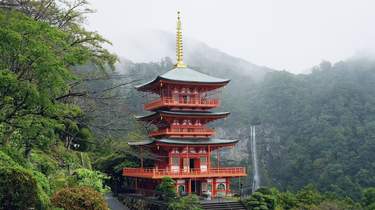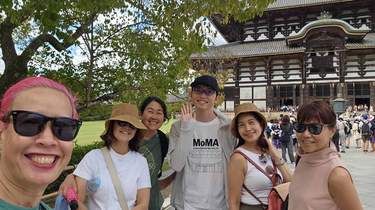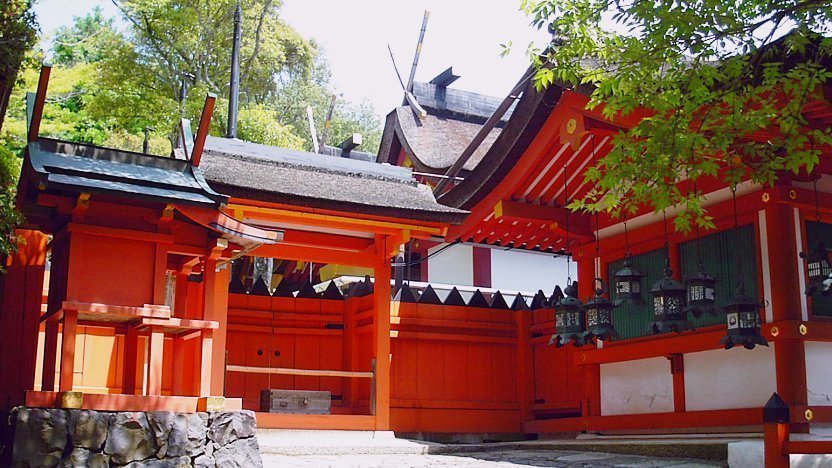
Kasuga Taisha (�t“ú‘åŽÐ) is Nara's most celebrated shrine. It was established at the same time as the capital and is dedicated to the deity responsible for the protection of the city. Kasuga Taisha was also the tutelary shrine of the Fujiwara, Japan's most powerful family clan during most of the Nara and Heian Periods. Like the Ise Shrines, Kasuga Taisha had been periodically rebuilt every 20 years for many centuries. In the case of Kasuga Taisha, however, the custom was discontinued at the end of the Edo Period.
Beyond the shrine's offering hall, which can be visited free of charge, there is a paid inner area which provides a closer view of the shrine's inner buildings. Furthest in is the main sanctuary, containing multiple shrine buildings that display the distinctive Kasuga style of shrine architecture, characterized by a sloping roof extending over the front of the building.

Kasuga Taisha is famous for its lanterns, which have been donated by worshippers. Hundreds of bronze lanterns can be found hanging from the buildings, while as many stone lanterns line its approaches. The lanterns are only lit twice a year during two Lantern Festivals, one in early February and one in mid August.
There are many smaller auxiliary shrines in the woods around Kasuga Taisha, twelve of which are located along a path past the main shrine complex and are dedicated to the twelve lucky gods. Among them are Wakamiya Shrine, an important cultural property known for its dance festival, and Meoto Daikokusha, which enshrines married deities and is said to be fortuitous to matchmaking and marriage.

Located a short walk from the Kasuga Shrine main complex is the Kasuga Taisha Shinen Manyo Botanical Garden. This garden displays about 250 kinds of plants described in the Manyoshu, Japan's oldest collection of poems which dates to the Nara Period. A large part of the garden is dedicated to wisteria flowers which usually bloom from late April to early May.
The shrine grounds also contain the Kasuga Taisha Museum, a treasure hall near the main complex which displays some of the shrine's relics. These include two sets of large ornate drums. Additionally, the Kasuga Primeval Forest, a sacred old-growth forest belonging to the shrine, covers the mountain behind Kasuga Taisha, however, it is closed to the public.

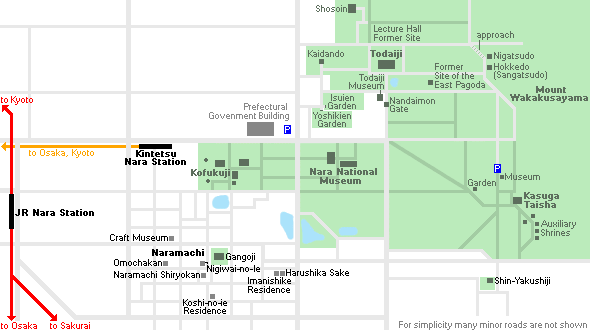
Getting there and around
Hours and Fees
Kasuga Taisha
Hours
7:00 to 17:00 (November to February)
Inner area: 9:00 to 16:00
Closed
Admission
Kasuga Taisha Museum
Hours
Closed
Admission
Botanical Garden
Hours
Closed
Admission
Questions? Ask in our forum.
Links and Resources
English
Japanese
Hotels around Nara

-
-
![]() Nara Kasugaokuyama TsukihiteiNara Kasugaokuyama Tsukihitei is located in the Kasugayama Primeval Forest, a UNESCO World Heritage site. Each guest room has a Japanese-style decor and offer panoramic forest views, traditional tatami (woven-straw) floors, and shoji paper screens. All guest rooms are equipped with Japanese-style futon beds. The rooms have an en suite bathroom. Kasuga Taisha Shrine is 400 metres away from the property. Todaiji Temple is about a 10-minute walk away. Kintetsu Nara Train Station and JR Nara Train Station are both less than a 10-minute drive away. Japanese-style breakfast and a set meal course dinners are prepared by the Japanese chef using seasonal specialities.View on Booking.com
Nara Kasugaokuyama TsukihiteiNara Kasugaokuyama Tsukihitei is located in the Kasugayama Primeval Forest, a UNESCO World Heritage site. Each guest room has a Japanese-style decor and offer panoramic forest views, traditional tatami (woven-straw) floors, and shoji paper screens. All guest rooms are equipped with Japanese-style futon beds. The rooms have an en suite bathroom. Kasuga Taisha Shrine is 400 metres away from the property. Todaiji Temple is about a 10-minute walk away. Kintetsu Nara Train Station and JR Nara Train Station are both less than a 10-minute drive away. Japanese-style breakfast and a set meal course dinners are prepared by the Japanese chef using seasonal specialities.View on Booking.com -
![]() Guest House OkuView on Booking.com
Guest House OkuView on Booking.comComfortable Accommodations
Guest House Oku in Nara offers family rooms with air-conditioning, tatami floors, and free WiFi. Each room includes a washing machine, slippers, and a shared bathroom.Convenient Facilities
The guest house provides bicycle parking, luggage storage, and a washing machine. Additional amenities include a washing machine and a shared bathroom.Prime Location
Located 1.8 km from Nara Station and 53 km from Itami Airport, the property is near attractions such as Iwafune Shrine (18 km) and Nippon Christ Kyodan Shijonawate Church (23 km).Guest Satisfaction
Highly rated by guests for its friendly host, convenient location, and comfortable beds. -
![]() Kotonoyado MusashinoKotono yado Musashino offers accommodation in Nara, and is located a 11-minute drive from Nara Station on the Kintetsu Nara Line. Free WiFi is provided throughout the property and free private parking is available on site. Every room includes a flat-screen TV. You will find a kettle in the room. Room facilities vary by room type. Some rooms include a private bath, while others use the property's shared bath facilities. For your comfort, you will find slippers and a hair dryer. There is luggage storage space at the property. Kofuku-ji is 1.1 km from Musashino, while Kasuga Taisha is 300 metres from the property. The nearest airport is Osaka Itami Airport, 39 km from the property.View on Booking.com
Kotonoyado MusashinoKotono yado Musashino offers accommodation in Nara, and is located a 11-minute drive from Nara Station on the Kintetsu Nara Line. Free WiFi is provided throughout the property and free private parking is available on site. Every room includes a flat-screen TV. You will find a kettle in the room. Room facilities vary by room type. Some rooms include a private bath, while others use the property's shared bath facilities. For your comfort, you will find slippers and a hair dryer. There is luggage storage space at the property. Kofuku-ji is 1.1 km from Musashino, while Kasuga Taisha is 300 metres from the property. The nearest airport is Osaka Itami Airport, 39 km from the property.View on Booking.com -
![]() SLOW HOUSE NARAView on Booking.com
SLOW HOUSE NARAView on Booking.comComfortable Accommodations
SLOW HOUSE NARA in Nara offers family rooms with air-conditioning, private bathrooms, bidets, and free WiFi. Each room includes a work desk, shower, and free toiletries.Convenient Facilities
Guests can enjoy a shared kitchen, bicycle parking, and an inner courtyard view. Additional amenities include a ground-floor unit with tatami floors and a quiet street setting.Prime Location
Located a 15-minute walk from Nara Station, the guest house is near attractions such as Iwafune Shrine (19 km) and Nippon Christ Kyodan Shijonawate Church (23 km). Itami Airport is 54 km away.Guest Satisfaction
Highly rated for its convenient location, attentive staff, and clean rooms. -
![]() Yuzan GuesthouseView on Booking.com
Yuzan GuesthouseView on Booking.comComfortable Accommodations
Yuzan Guesthouse in Nara offers a sun terrace, garden, and free WiFi. Guests enjoy air-conditioning, garden views, and parquet floors.Convenient Facilities
The hostel features a shared kitchen, private check-in and check-out, full-day security, bicycle parking, and luggage storage. Additional amenities include a hairdryer, shared bathroom, shower, and work desk.Prime Location
Nearby Attractions Nara Station is a 15-minute walk away. Nearby attractions include Iwafune Shrine (18 km) and Nara Park (6 km). Itami Airport is 53 km from the property.Guest Satisfaction
Highly rated for its convenient location, attentive staff, and well-equipped kitchen. -
![]() Hotel RokuneView on Booking.com
Hotel RokuneView on Booking.comComfortable Accommodations
Hotel Rokune in Nara offers comfortable rooms with air-conditioning, balconies, and private bathrooms. Guests enjoy amenities such as bathrobes, free WiFi, and soundproofing.Convenient Facilities
The hotel features a terrace, lift, laundry service, and free toiletries. Additional amenities include a work desk, TV, and soundproofing, ensuring a pleasant stay.Prime Location
Located 52 km from Itami Airport, Hotel Rokune is an 8-minute walk from Nara Station. Nearby attractions include Iwafune Shrine (18 km) and Nippon Christ Kyodan Shijonawate Church (22 km).Guest Satisfaction
Highly rated for room comfort, convenient location, and room cleanliness, Hotel Rokune provides excellent service and a pleasant environment. -
![]() Mountain Home Lodge in Deer ParkView on Booking.com
Mountain Home Lodge in Deer ParkView on Booking.comComfortable Accommodations
Mountain Home Lodge in Deer Park offers family rooms with air-conditioning, private bathrooms, and fully equipped kitchens. Each room includes a washing machine, dining area, and free WiFi.Convenient Facilities
Guests benefit from daily housekeeping, luggage storage, and a dining table. Additional amenities include a sofa bed, wardrobe, and free toiletries.Local Attractions
Located 3.3 km from Nara Station and 20 km from Iwafune Shrine, the lodge provides easy access to nearby attractions. Itami Airport is 55 km away.Guest Favorites
Visitors appreciate the convenient location for nature trips, fully equipped kitchen, and excellent service. -
![]() Hilo HostelView on Booking.com
Hilo HostelView on Booking.comComfortable Accommodations
Hilo Hostel in Nara offers air-conditioned rooms with tatami floors, work desks, and sofas. Each room includes a bidet, shower, and slippers.Essential Facilities
Guests enjoy free WiFi, a lounge, shared kitchen, full-day security, and luggage storage. Additional amenities include a hairdryer and shared bathrooms.Convenient Location
Located less than 1 km from Nara Station, the hostel is 53 km from Itami Airport. Nearby attractions include Iwafune Shrine (18 km) and Nippon Christ Kyodan Shijonawate Church (22 km).Guest Satisfaction
Highly rated for its friendly host, excellent public transport options, and convenient location. -
![]() Hotel New WakasaA 12-minute walk from the Kintetsu Nara Train Station, Hotel New Wakasa offers Japanese-style rooms with tatami (woven-straw) flooring. A spacious public bath and foot bath is available for guests to relax in. Free luggage before and after check-in is available on site. Free WiFi is available at the entire building. The air-conditioned rooms feature Japanese futon bedding and a separate seating area. Each provides a flat-screen TV, a refrigerator, and an electric kettle with green tea bags. The en suite bathroom includes a hairdryer. Guests can go to the roof terrace for a beautiful view of the Mount Wakakusa and the Todaiji Temple. A private spa pool with the same view can be requested with an extra cost. A Japanese dinner and breakfast are served in the dining room. New Wakasa Hotel is an 5-minute walk from the Todaiji Temple, and a 15-minute walk from the Nara Park. It is also an 8-minute walk from Isuien and an 80-minute bus ride from Kansai Airport. The property provides free guided tours in English to guests as a service. English maps and information are available on site as well.View on Booking.com
Hotel New WakasaA 12-minute walk from the Kintetsu Nara Train Station, Hotel New Wakasa offers Japanese-style rooms with tatami (woven-straw) flooring. A spacious public bath and foot bath is available for guests to relax in. Free luggage before and after check-in is available on site. Free WiFi is available at the entire building. The air-conditioned rooms feature Japanese futon bedding and a separate seating area. Each provides a flat-screen TV, a refrigerator, and an electric kettle with green tea bags. The en suite bathroom includes a hairdryer. Guests can go to the roof terrace for a beautiful view of the Mount Wakakusa and the Todaiji Temple. A private spa pool with the same view can be requested with an extra cost. A Japanese dinner and breakfast are served in the dining room. New Wakasa Hotel is an 5-minute walk from the Todaiji Temple, and a 15-minute walk from the Nara Park. It is also an 8-minute walk from Isuien and an 80-minute bus ride from Kansai Airport. The property provides free guided tours in English to guests as a service. English maps and information are available on site as well.View on Booking.com -
![]() Ryokan Asukasou at the entrancne of Nara parkView on Booking.com
Ryokan Asukasou at the entrancne of Nara parkView on Booking.comComfortable Accommodations
Ryokan Asukasou in Nara offers family rooms with private bathrooms, air-conditioning, and modern amenities. Each room includes a kitchenette, balcony, and free WiFi.Relaxing Facilities
Guests can unwind on the terrace or enjoy the open-air bath. Additional amenities include a lounge, public bath, and free on-site private parking.Delicious Breakfast
A daily Asian breakfast featuring local specialities is served, highly praised by guests for its quality and variety.Prime Location
Located 1.8 km from Nara Station, the ryokan is near attractions such as Iwafune Shrine (20 km) and Itami Airport (54 km). Guests appreciate the friendly staff and convenient location.
-