Naramachi (奈良町, literally "Nara Town") is the former merchant district of Nara, where several traditional residential buildings and warehouses are preserved and open to the public. Boutiques, shops, cafes, restaurants and a few museums now line the district's narrow lanes.
Many of Naramachi's buildings in the Edo Period and earlier were machiya, long, narrow "townhouses" that served both as shops and as the living quarters of the local merchants. The store fronts of machiya were often kept narrow in order to save on taxes, which used to be calculated on a property's street access rather than its total area. Today, a handful of machiya have been preserved and made open to the public as museums.

Before its development into a merchant district around the 15th century, the area that is Naramachi today used to be occupied almost entirely by the once-spacious grounds of Gangoji Temple. Gangoji was one of Japan's most important temples during the Nara Period and has been registered as a Unesco World Heritage Site. Though once a sprawling complex, today, only a couple of temple buildings remain.
Below is a list of Naramachi's main attractions:


Getting there and around
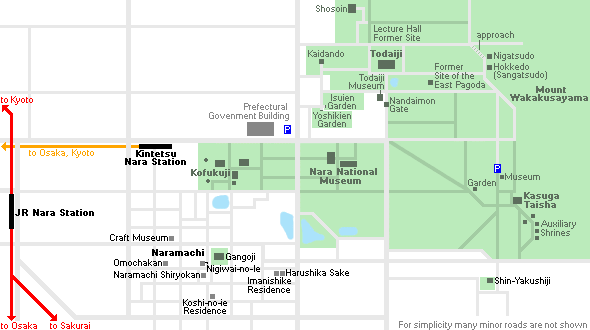
Naramachi is located about a 10-15 minute walk to the south of Kintetsu Nara Station. From JR Nara Station, it is about a 20 minute walk to the southeast. Nara's loop buses number 1 and 2 serve Kintetsu Nara Station and JR Nara Station and run along the southern border of Naramachi.
Questions? Ask in our forum.
Links and Resources
English
Hotels around Nara

-
-
![]() Nara Kasugaokuyama TsukihiteiNara Kasugaokuyama Tsukihitei is located in the Kasugayama Primeval Forest, a UNESCO World Heritage site. Each guest room has a Japanese-style decor and offer panoramic forest views, traditional tatami (woven-straw) floors, and shoji paper screens. All guest rooms are equipped with Japanese-style futon beds. The rooms have an en suite bathroom. Kasuga Taisha Shrine is 400 metres away from the property. Todaiji Temple is about a 10-minute walk away. Kintetsu Nara Train Station and JR Nara Train Station are both less than a 10-minute drive away. Japanese-style breakfast and a set meal course dinners are prepared by the Japanese chef using seasonal specialities.View on Booking.com
Nara Kasugaokuyama TsukihiteiNara Kasugaokuyama Tsukihitei is located in the Kasugayama Primeval Forest, a UNESCO World Heritage site. Each guest room has a Japanese-style decor and offer panoramic forest views, traditional tatami (woven-straw) floors, and shoji paper screens. All guest rooms are equipped with Japanese-style futon beds. The rooms have an en suite bathroom. Kasuga Taisha Shrine is 400 metres away from the property. Todaiji Temple is about a 10-minute walk away. Kintetsu Nara Train Station and JR Nara Train Station are both less than a 10-minute drive away. Japanese-style breakfast and a set meal course dinners are prepared by the Japanese chef using seasonal specialities.View on Booking.com -
![]() Kotonoyado MusashinoKotono yado Musashino offers accommodation in Nara, and is located a 11-minute drive from Nara Station on the Kintetsu Nara Line. Free WiFi is provided throughout the property and free private parking is available on site. Every room includes a flat-screen TV. You will find a kettle in the room. Room facilities vary by room type. Some rooms include a private bath, while others use the property's shared bath facilities. For your comfort, you will find slippers and a hair dryer. There is luggage storage space at the property. Kofuku-ji is 1.1 km from Musashino, while Kasuga Taisha is 300 metres from the property. The nearest airport is Osaka Itami Airport, 39 km from the property.View on Booking.com
Kotonoyado MusashinoKotono yado Musashino offers accommodation in Nara, and is located a 11-minute drive from Nara Station on the Kintetsu Nara Line. Free WiFi is provided throughout the property and free private parking is available on site. Every room includes a flat-screen TV. You will find a kettle in the room. Room facilities vary by room type. Some rooms include a private bath, while others use the property's shared bath facilities. For your comfort, you will find slippers and a hair dryer. There is luggage storage space at the property. Kofuku-ji is 1.1 km from Musashino, while Kasuga Taisha is 300 metres from the property. The nearest airport is Osaka Itami Airport, 39 km from the property.View on Booking.com -
![]() Guest House OkuView on Booking.com
Guest House OkuView on Booking.comComfortable Accommodations
Guest House Oku in Nara offers family rooms with air-conditioning, tatami floors, and slippers. Each room includes a shared bathroom and free WiFi.Convenient Facilities
The guest house provides bicycle parking, luggage storage, and washing machines. Additional amenities include a washing machine and a tatami floor.Guest Satisfaction
Guests highly rate the host, convenient location, and bed comfort. Reception staff speak English, Italian, and Japanese.Local Attractions
Located 53 km from Itami Airport, the guest house is near Nara Park and Todaiji Temple. -
![]() SLOW HOUSE NARAView on Booking.com
SLOW HOUSE NARAView on Booking.comComfortable Accommodations
SLOW HOUSE NARA in Nara offers family rooms with air-conditioning, private bathrooms, and free WiFi. Each room includes a bidet, shower, hairdryer, and free toiletries.Convenient Facilities
Guests can enjoy a shared kitchen, bicycle parking, and an inner courtyard view. The ground-floor units feature tatami floors, providing a relaxing environment.Prime Location
Located 54 km from Itami Airport, the property is situated on a quiet street. Highly rated for its convenient location, attentive staff, and immaculate rooms. -
![]() Yuzan GuesthouseView on Booking.com
Yuzan GuesthouseView on Booking.comComfortable Accommodations
Yuzan Guesthouse in Nara offers a 1-star hostel experience with a sun terrace, garden, and free WiFi. Guests enjoy air-conditioning, garden views, and parquet floors in ground-floor units.Convenient Facilities
The property features private check-in and check-out, a shared kitchen, full-day security, bicycle parking, and luggage storage. Additional amenities include a hairdryer, shared bathroom with shower, and a work desk.Prime Location
Located 53 km from Itami Airport, the hostel is highly rated for its convenient location, attentive staff, and well-equipped kitchen. Guests appreciate the inner courtyard views and tatami floors. -
![]() Hotel RokuneView on Booking.com
Hotel RokuneView on Booking.comComfortable Accommodations
Hotel Rokune in Nara offers comfortable rooms with air-conditioning, balconies, and private bathrooms. Guests enjoy amenities such as bathrobes, free toiletries, and soundproofing for a restful stay.Essential Facilities
The hotel features a terrace and free WiFi, ideal for relaxation and connectivity. Additional facilities include a lift, laundry service, and a work desk, ensuring convenience for all visitors.Convenient Location
Located 52 km from Itami Airport, Hotel Rokune provides easy access to Nara attractions. The quiet street setting offers a peaceful environment, enhancing the overall guest experience.Guest Satisfaction
Highly rated by guests for its room comfort, convenient location, and impeccable cleanliness, Hotel Rokune consistently delivers excellent service and hospitality. -
![]() Mountain Home Lodge in Deer ParkView on Booking.com
Mountain Home Lodge in Deer ParkView on Booking.comComfortable Accommodations
Mountain Home Lodge in Deer Park offers family rooms with air-conditioning, private bathrooms, and fully equipped kitchens. Each room includes a washing machine, dining area, and free WiFi.Convenient Facilities
Guests benefit from daily housekeeping, luggage storage, and a dining table. Additional amenities include a sofa bed, wardrobe, and free toiletries.Activities and Location
Located in Nara, the lodge is 55 km from Itami Airport. Hiking enthusiasts can explore nearby trails. The convenient location is highly rated for nature trips and the well-equipped kitchen. -
![]() Hilo HostelView on Booking.com
Hilo HostelView on Booking.comComfortable Accommodations
Hilo Hostel in Nara offers a 3-star hostel experience with free WiFi, air-conditioning, and a lounge. Guests can relax in the shared kitchen, enjoy the tatami floors, and utilise the work desks and sofas.Convenient Facilities
The hostel provides full-day security, luggage storage, and a lounge. Additional amenities include a bidet, hairdryer, shared bathroom, shower, and slippers, ensuring a comfortable stay.Prime Location
Located 53 km from Itami Airport, the hostel is highly rated for its friendly host, excellent public transport options, and convenient location. -
![]() Hotel New WakasaHotel New Wakasa was renovated in 2025 and offers a modern Japanese ryokan experience just a short walk from Todaiji Temple and Nara Park. Free WiFi is available throughout the property, and luggage storage is available before check-in and after check-out. Each guest room has its own unique design and character, blending traditional Japanese style with modern comfort. Many rooms feature tatami flooring and Japanese futon bedding, while selected rooms include private open-air baths. Special rooms are also available with private saunas and cold plunge baths. Guests can relax in the public bath or enjoy a private bath for an additional charge. From the rooftop terrace, guests can enjoy beautiful views of Todaiji Temple and Mt. Wakakusa, creating a memorable setting to experience the atmosphere of Nara. Hotel New Wakasa carries on the culinary traditions of the former Uomoto Ryokan, which was long known for its fish cuisine. Dinner is a traditional Japanese kaiseki multi-course meal featuring seasonal seafood, Yamato vegetables and other local ingredients from Nara. For breakfast, guests can choose between a Japanese-style breakfast and a Western-style breakfast. Todaiji Temple and Nara Park are approximately a 5-minute walk from the property. Kintetsu Nara Station is approximately a 15-minute walk away, making Hotel New Wakasa a convenient base for exploring historic Nara.View on Booking.com
Hotel New WakasaHotel New Wakasa was renovated in 2025 and offers a modern Japanese ryokan experience just a short walk from Todaiji Temple and Nara Park. Free WiFi is available throughout the property, and luggage storage is available before check-in and after check-out. Each guest room has its own unique design and character, blending traditional Japanese style with modern comfort. Many rooms feature tatami flooring and Japanese futon bedding, while selected rooms include private open-air baths. Special rooms are also available with private saunas and cold plunge baths. Guests can relax in the public bath or enjoy a private bath for an additional charge. From the rooftop terrace, guests can enjoy beautiful views of Todaiji Temple and Mt. Wakakusa, creating a memorable setting to experience the atmosphere of Nara. Hotel New Wakasa carries on the culinary traditions of the former Uomoto Ryokan, which was long known for its fish cuisine. Dinner is a traditional Japanese kaiseki multi-course meal featuring seasonal seafood, Yamato vegetables and other local ingredients from Nara. For breakfast, guests can choose between a Japanese-style breakfast and a Western-style breakfast. Todaiji Temple and Nara Park are approximately a 5-minute walk from the property. Kintetsu Nara Station is approximately a 15-minute walk away, making Hotel New Wakasa a convenient base for exploring historic Nara.View on Booking.com -
![]() Wakasa AnnexWakasa Annex features an outdoor hot public bath and free WiFi. Other facilities include a 24-hour reception, drinks vending machines and free parking. Todai-ji Temple is only an 8-minute walk. Soundproof rooms feature a serene interior with a tatami (woven-straw) floor, low furniture and shoji paper screens. Amenities include a flat-screen TV with satellite channels, a fridge and toiletries. Guests sleep in Japanese futon bedding, and the rooms come with an all-wooden bathroom. Luggage storage is offered before and after check-in/check-out. English maps for exploring the area are available, and the property staff organises free tours guided in English for staying guests. Annex Wakasa serves Japanese cuisine for breakfast and dinner at the dining area. Dinner is a traditional kaiseki multi-course meal featuring seasonal dishes. The hotel is an 8-minute walk from Japanese garden Isui-en, and a 15-minute walk from Nara Park. Nara Train Station is a 12-minute walk, while Kansai Airport is 80 minutes by bus.View on Booking.com
Wakasa AnnexWakasa Annex features an outdoor hot public bath and free WiFi. Other facilities include a 24-hour reception, drinks vending machines and free parking. Todai-ji Temple is only an 8-minute walk. Soundproof rooms feature a serene interior with a tatami (woven-straw) floor, low furniture and shoji paper screens. Amenities include a flat-screen TV with satellite channels, a fridge and toiletries. Guests sleep in Japanese futon bedding, and the rooms come with an all-wooden bathroom. Luggage storage is offered before and after check-in/check-out. English maps for exploring the area are available, and the property staff organises free tours guided in English for staying guests. Annex Wakasa serves Japanese cuisine for breakfast and dinner at the dining area. Dinner is a traditional kaiseki multi-course meal featuring seasonal dishes. The hotel is an 8-minute walk from Japanese garden Isui-en, and a 15-minute walk from Nara Park. Nara Train Station is a 12-minute walk, while Kansai Airport is 80 minutes by bus.View on Booking.com
-