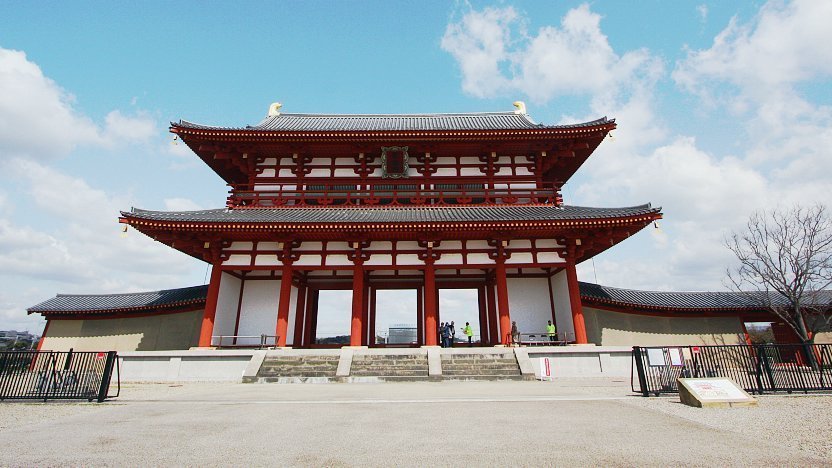
During most of the Nara Period (710-794), Nara served as the capital of Japan and was known as Heijo-kyo. The Heijo Palace extended about one kilometer wide and one kilometer long and served as the site of the emperor's residence and government offices. For its great historical and cultural importance, the palace site is included as one of the World Heritage Sites of Nara.
Although the palace once stood as the majestic center of the ancient capital, all of its original buildings were eventually lost, with the exception of a single hall that was moved in the 8th century and now stands at Toshodaiji Temple. When the capital was moved away from Heijo-kyo in 784, Heijo Palace and a large part of the city were abandoned as officials and other citizens flocked to the new capital. The temples on the outskirts of the former capital, however, retained their importance, and the city of Nara eventually resumed its growth around these temples, while the palace grounds were used for nothing but rice fields.

In more recent times, interest in rediscovering and celebrating Nara's past has revitalized the area. The lack of development on the grounds of the former Heijo Palace made it particularly easy for conducting archaeological research, which has been ongoing since the 1950s. Visitors to Heijo Palace nowadays will still find a rural atmosphere, but the government has gone to considerable lengths to showcase the history of Heijo Palace for visitors with historical reconstructions and museums.
Several major structures of the former palace complex have been reconstructed in recent decades. Foremost among them is the Former Audience Hall (Daigokuden), the largest building on the palace grounds, which was reconstructed for the occasion of the 1300th anniversary of Nara Capital in 2010.

The large audience hall was used for important ceremonies and meetings. Its ceiling is decorated by the four animals of the direction on the compass and the twelve animals of the lunar calendar. A throne stands in the center of the hall. The building is called the "former" audience hall, because it was replaced by the "latter" audience hall in the second half of the Nara Period. The latter audience hall's foundations are visible to the east of the former audience hall.
Three more full-scale reconstructions are the Suzaku Gate and Daigoku Gate, two gates leading to the audience hall, and the East Palace Garden (Toin Teien), which features a pond, streams and bridges, and was used by the imperial family for banquets. Also partially reconstructed were the offices of the Imperial Household Agency (Kunaicho).

The Suzaku Hiroba is a square just outside the Suzaku Gate that features an attractive museum with artefacts and displays about the Nara Period and the former palace grounds. There are also various sightseeing facilities, such as a tourist information center, a restaurant, a cafe, a souvenir shop and a virtual reality theater with an observation deck that overlooks the palace grounds.
Furthermore there are various building foundations scattered across the palace grounds, some of which are highlighted by bushes, poles or low walls to indicate the former locations of other palace structures, such as the imperial living quarters and administrative offices.
At the northeast corner of the palace grounds stands the Excavation Site Exhibition Hall, where exposed excavation sites are left open to be viewed by the public. At the western end of the grounds is the Nara Palace Site Museum, a moderately sized, very informative museum with artifacts, models, photographs and maps on display, including several wooden tablets that were widely used as an alternative to more expensive paper during the Nara Period.

Getting there and around
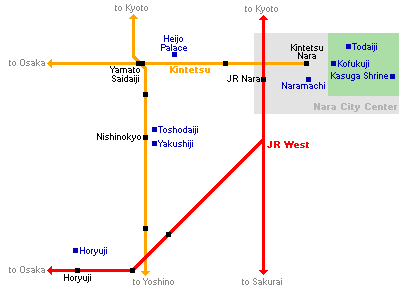
Heijo Palace is located a 15 minute walk east from Yamato-Saidaiji Station, which can be easily reached from Kintetsu Nara Station by Kintetsu trains (5 minutes, 240 yen, frequent departures).
Alternatively, the palace grounds can be reached by bus number 14 bound for Yamato-Saidaiji Station from both JR Nara Station (about 25 minutes) and Kintetsu Nara Station (about 15 minutes). The Excavation Site Exhibition Hall is located near Heijokyuseki (•½�é‹{�Õ, 290 yen) bus stop, the Imperial Audience Hall is located near Sakicho (�²‹I’¬, 330 yen) bus stop, and the Nara Palace Site Museum is located near Nijocho (“ñ�ð’¬, 330 yen) bus stop. There are two buses per hour.
Hours and Fees
The reconstructions and museums of Heijo Palace
Hours
Closed
December 29 to January 3
Admission
Heijokyu Izanai-kan
Hours
Closed
Admission
Questions? Ask in our forum.
Links and Resources
English
Hotels around Nara

-
-
![]() Nara Kasugaokuyama TsukihiteiNara Kasugaokuyama Tsukihitei is located in the Kasugayama Primeval Forest, a UNESCO World Heritage site. Each guest room has a Japanese-style decor and offer panoramic forest views, traditional tatami (woven-straw) floors, and shoji paper screens. All guest rooms are equipped with Japanese-style futon beds. The rooms have an en suite bathroom. Kasuga Taisha Shrine is 400 metres away from the property. Todaiji Temple is about a 10-minute walk away. Kintetsu Nara Train Station and JR Nara Train Station are both less than a 10-minute drive away. Japanese-style breakfast and a set meal course dinners are prepared by the Japanese chef using seasonal specialities.View on Booking.com
Nara Kasugaokuyama TsukihiteiNara Kasugaokuyama Tsukihitei is located in the Kasugayama Primeval Forest, a UNESCO World Heritage site. Each guest room has a Japanese-style decor and offer panoramic forest views, traditional tatami (woven-straw) floors, and shoji paper screens. All guest rooms are equipped with Japanese-style futon beds. The rooms have an en suite bathroom. Kasuga Taisha Shrine is 400 metres away from the property. Todaiji Temple is about a 10-minute walk away. Kintetsu Nara Train Station and JR Nara Train Station are both less than a 10-minute drive away. Japanese-style breakfast and a set meal course dinners are prepared by the Japanese chef using seasonal specialities.View on Booking.com -
![]() Guest House OkuView on Booking.com
Guest House OkuView on Booking.comComfortable Accommodations
Guest House Oku in Nara offers family rooms with air-conditioning, tatami floors, and slippers. Each room includes a shared bathroom and free WiFi.Convenient Facilities
The guest house provides bicycle parking, luggage storage, and washing machines. Additional amenities include a washing machine and a tatami floor.Guest Satisfaction
Guests highly rate the host, convenient location, and bed comfort. Reception staff speak English, Italian, and Japanese.Local Attractions
Located 53 km from Itami Airport, the guest house is near Nara Park and Todaiji Temple. -
![]() SLOW HOUSE NARAView on Booking.com
SLOW HOUSE NARAView on Booking.comComfortable Accommodations
SLOW HOUSE NARA in Nara offers family rooms with air-conditioning, private bathrooms, and free WiFi. Each room includes a bidet, shower, hairdryer, and free toiletries.Convenient Facilities
Guests can enjoy a shared kitchen, bicycle parking, and an inner courtyard view. The ground-floor units feature tatami floors, providing a relaxing environment.Prime Location
Located 54 km from Itami Airport, the property is situated on a quiet street. Highly rated for its convenient location, attentive staff, and immaculate rooms. -
![]() Yuzan GuesthouseView on Booking.com
Yuzan GuesthouseView on Booking.comComfortable Accommodations
Yuzan Guesthouse in Nara offers a 1-star hostel experience with a sun terrace, garden, and free WiFi. Guests enjoy air-conditioning, garden views, and parquet floors in ground-floor units.Convenient Facilities
The property features private check-in and check-out, a shared kitchen, full-day security, bicycle parking, and luggage storage. Additional amenities include a hairdryer, shared bathroom with shower, and a work desk.Prime Location
Located 53 km from Itami Airport, the hostel is highly rated for its convenient location, attentive staff, and well-equipped kitchen. Guests appreciate the inner courtyard views and tatami floors. -
![]() Hotel RokuneView on Booking.com
Hotel RokuneView on Booking.comComfortable Accommodations
Hotel Rokune in Nara offers comfortable rooms with air-conditioning, balconies, and private bathrooms. Guests enjoy amenities such as bathrobes, free toiletries, and soundproofing for a restful stay.Essential Facilities
The hotel features a terrace and free WiFi, ideal for relaxation and connectivity. Additional facilities include a lift, laundry service, and a work desk, ensuring convenience for all visitors.Convenient Location
Located 52 km from Itami Airport, Hotel Rokune provides easy access to Nara attractions. The quiet street setting offers a peaceful environment, enhancing the overall guest experience.Guest Satisfaction
Highly rated by guests for its room comfort, convenient location, and impeccable cleanliness, Hotel Rokune consistently delivers excellent service and hospitality. -
![]() Mountain Home Lodge in Deer ParkView on Booking.com
Mountain Home Lodge in Deer ParkView on Booking.comComfortable Accommodations
Mountain Home Lodge in Deer Park offers family rooms with air-conditioning, private bathrooms, and fully equipped kitchens. Each room includes a washing machine, dining area, and free WiFi.Convenient Facilities
Guests benefit from daily housekeeping, luggage storage, and a dining table. Additional amenities include a sofa bed, wardrobe, and free toiletries.Activities and Location
Located in Nara, the lodge is 55 km from Itami Airport. Hiking enthusiasts can explore nearby trails. The convenient location is highly rated for nature trips and the well-equipped kitchen. -
![]() Hilo HostelView on Booking.com
Hilo HostelView on Booking.comComfortable Accommodations
Hilo Hostel in Nara offers a 3-star hostel experience with free WiFi, air-conditioning, and a lounge. Guests can relax in the shared kitchen, enjoy the tatami floors, and utilise the work desks and sofas.Convenient Facilities
The hostel provides full-day security, luggage storage, and a lounge. Additional amenities include a bidet, hairdryer, shared bathroom, shower, and slippers, ensuring a comfortable stay.Prime Location
Located 53 km from Itami Airport, the hostel is highly rated for its friendly host, excellent public transport options, and convenient location. -
![]() Ryokan Asukasou at the entrancne of Nara parkView on Booking.com
Ryokan Asukasou at the entrancne of Nara parkView on Booking.comComfortable Accommodations
Ryokan Asukasou in Nara offers family rooms with private bathrooms, air-conditioning, and modern amenities. Each room includes a kitchenette, balcony, and free WiFi.Relaxing Facilities
Guests can unwind on the terrace or enjoy the open-air bath. Additional amenities include a loungees: terrace: terrace and open-air bath.Delicious Breakfast
A daily Asian breakfast featuring local specialities is served, highly praised by guests.Convenient Location
Located 54 km from Itami Airport, the ryokan is situated on a quiet street with a tatami floor. Free on-site private parking is available.Exceptional Service
Highly rated for its attentive staff and excellent service support, the property ensures a comfortable and memorable stay. -
![]() Wakasa AnnexWakasa Annex features an outdoor hot public bath and free WiFi. Other facilities include a 24-hour reception, drinks vending machines and free parking. Todai-ji Temple is only an 8-minute walk. Soundproof rooms feature a serene interior with a tatami (woven-straw) floor, low furniture and shoji paper screens. Amenities include a flat-screen TV with satellite channels, a fridge and toiletries. Guests sleep in Japanese futon bedding, and the rooms come with an all-wooden bathroom. Luggage storage is offered before and after check-in/check-out. English maps for exploring the area are available, and the property staff organises free tours guided in English for staying guests. Annex Wakasa serves Japanese cuisine for breakfast and dinner at the dining area. Dinner is a traditional kaiseki multi-course meal featuring seasonal dishes. The hotel is an 8-minute walk from Japanese garden Isui-en, and a 15-minute walk from Nara Park. Nara Train Station is a 12-minute walk, while Kansai Airport is 80 minutes by bus.View on Booking.com
Wakasa AnnexWakasa Annex features an outdoor hot public bath and free WiFi. Other facilities include a 24-hour reception, drinks vending machines and free parking. Todai-ji Temple is only an 8-minute walk. Soundproof rooms feature a serene interior with a tatami (woven-straw) floor, low furniture and shoji paper screens. Amenities include a flat-screen TV with satellite channels, a fridge and toiletries. Guests sleep in Japanese futon bedding, and the rooms come with an all-wooden bathroom. Luggage storage is offered before and after check-in/check-out. English maps for exploring the area are available, and the property staff organises free tours guided in English for staying guests. Annex Wakasa serves Japanese cuisine for breakfast and dinner at the dining area. Dinner is a traditional kaiseki multi-course meal featuring seasonal dishes. The hotel is an 8-minute walk from Japanese garden Isui-en, and a 15-minute walk from Nara Park. Nara Train Station is a 12-minute walk, while Kansai Airport is 80 minutes by bus.View on Booking.com -
![]() ANDO HOTEL NARA Wakakusayama -DLIGHT LIFE & HOTELS-Perched atop a hill overlooking the cityscape of Nara, ANDO HOTEL NARA Wakakusayama is just a brief 15-minute shuttle ride from JR Nara Station. Featuring an on-site restaurant, guests can indulge in traditional breakfast and dinner offerings. Additionally, guests can unwind in the rooftop open-air bath. Each room is equipped with air conditioning, a flat-screen TV, refrigerator, complimentary green tea, and a private bathroom with slippers. Some rooms offer views of the cityscape. Advance reservation is required for shuttle service from Nara Station, and complimentary parking is available. Nara Park and Kasugataisha Shrine are a 10-minute drive away, while Todaiji Temple and the Nara National Museum are reachable within 7 minutes by car. During your stay, relax in the large communal bath or enjoy activities such as night views and stargazing tours at the summit of Mount Wakakusa, hiking, and even firewood chopping experiences. The hotel offers set menu breakfast and Japanese course dinner options for guests to enjoy.View on Booking.com
ANDO HOTEL NARA Wakakusayama -DLIGHT LIFE & HOTELS-Perched atop a hill overlooking the cityscape of Nara, ANDO HOTEL NARA Wakakusayama is just a brief 15-minute shuttle ride from JR Nara Station. Featuring an on-site restaurant, guests can indulge in traditional breakfast and dinner offerings. Additionally, guests can unwind in the rooftop open-air bath. Each room is equipped with air conditioning, a flat-screen TV, refrigerator, complimentary green tea, and a private bathroom with slippers. Some rooms offer views of the cityscape. Advance reservation is required for shuttle service from Nara Station, and complimentary parking is available. Nara Park and Kasugataisha Shrine are a 10-minute drive away, while Todaiji Temple and the Nara National Museum are reachable within 7 minutes by car. During your stay, relax in the large communal bath or enjoy activities such as night views and stargazing tours at the summit of Mount Wakakusa, hiking, and even firewood chopping experiences. The hotel offers set menu breakfast and Japanese course dinner options for guests to enjoy.View on Booking.com
-