Local Buses
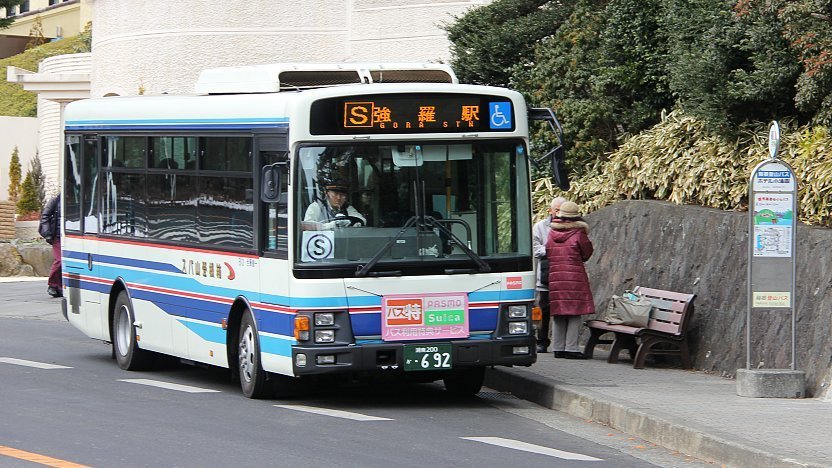
This page is about local and short-distance buses in Japan and how to use them. Visit our highway bus page for more information on long-distance bus travel.
In Tokyo, Osaka and some other large cities, buses serve as a secondary means of public transportation, complementing the train and subway networks. In cities with less dense train networks like Kyoto, buses are the main means of public transportation. Buses also serve smaller towns, the countryside and national parks.
How to use buses
Using buses in Japan can be intimidating to foreign tourists (and even Japanese people) because there are different ticketing systems depending on the company, and recognizing the stop that you want to get off can be challenging. While some bus companies do a good job at providing English signs, timetables and announcements, many buses lack English information. Below is a description of the most common system, followed by notes about exceptions:

- Enter the bus through the back door.
- When boarding, pick up a ticket from a small machine near the door. A number is printed on the ticket, which you will later use to determine your fare. If you use an IC card to pay the fare, you don't need to pick up a ticket and instead should touch your IC card against the card reader near the door.
- A display above the driver shows the next stop and the fares for that stop in yen. To determine your fare, match the number on your ticket with the number and fare on the display. If you use an IC card, then you do not have to worry about this.
- When your stop is approaching, press one of the buttons on the wall to signal the driver that you wish to get off.
- If you do not have the exact fare, use the changing machine next to the driver to get small coins.
- When getting off, put your ticket and the exact fare into the box next to the driver. If you use an IC card, touch the card against the card reader.
In many cities or city centers, for example in central Kyoto, a flat fare applies, i.e. you always pay the same price regardless of how far you travel. This means that you do not have to worry about steps 2) and 3) in the above description.
Of course, there are a few exceptions to the above outlined system. The most prominent exception are buses which you are supposed to enter through the front door, pay a flat fare when entering, and exit through the rear door, for example, city buses in Tokyo.
Luggage on local buses
Although policies vary, many bus companies ask that passengers do not bring large pieces of luggage onto local buses and limit themselves to small or medium bags of up to 10 kilograms. Travelers with larger suitcases are encouraged to use taxis and luggage delivery services. Airport and long-distance buses have less restrictive luggage policies.

Questions? Ask in our forum.