The many appetites of Osaka

It's time to recognize it at last: Osaka is not the same city it once was. Seen for too long as a mere gateway into the Kansai Region or at best a lively second fiddle to Tokyo, it has emerged instead as a top-tier destination in its own right and the signs are everywhere: soaring new architecture, world-class international events, whole neighborhoods transformed, and then there's the surging visitor numbers.
But while cities like Tokyo and Kyoto come with a ready-made template for visitors - futuristic architecture here, a bit of temple-hopping or a cultural experience there - Osaka can be harder to pin down. How do you really engage with a place like this, that feels less about a collection of spots to visit than a certain vibe, a way of living?
Speaking as someone who lived for years in the city and can never quite move on, the answer is all about appetite - and I'm not just talking about its reputation as the "kitchen of Japan". From its biggest entertainment district to bustling markets, cheering with the crowd at Boat Race Suminoe Stadium or rubbing shoulders with locals at celebrated watering holes, here is a one-day introduction to the spirit of this always-exciting city.
10:00-12:00 Dotonbori
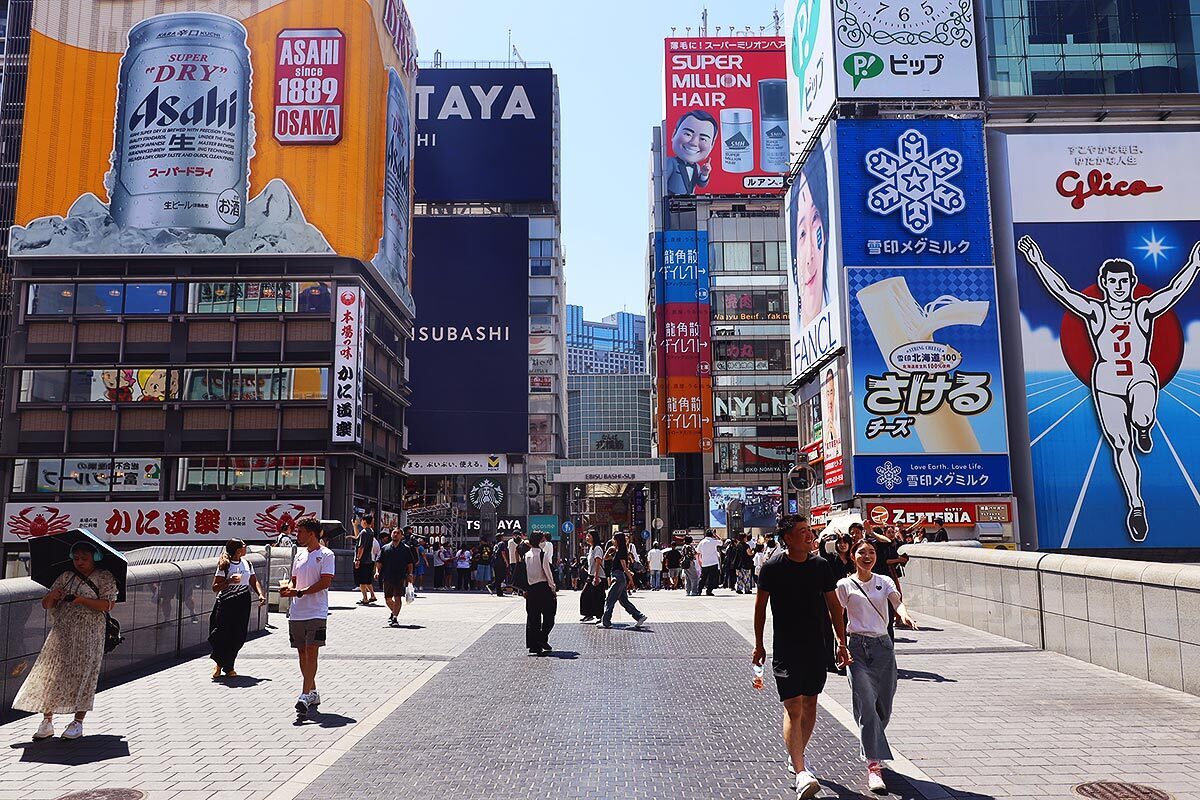
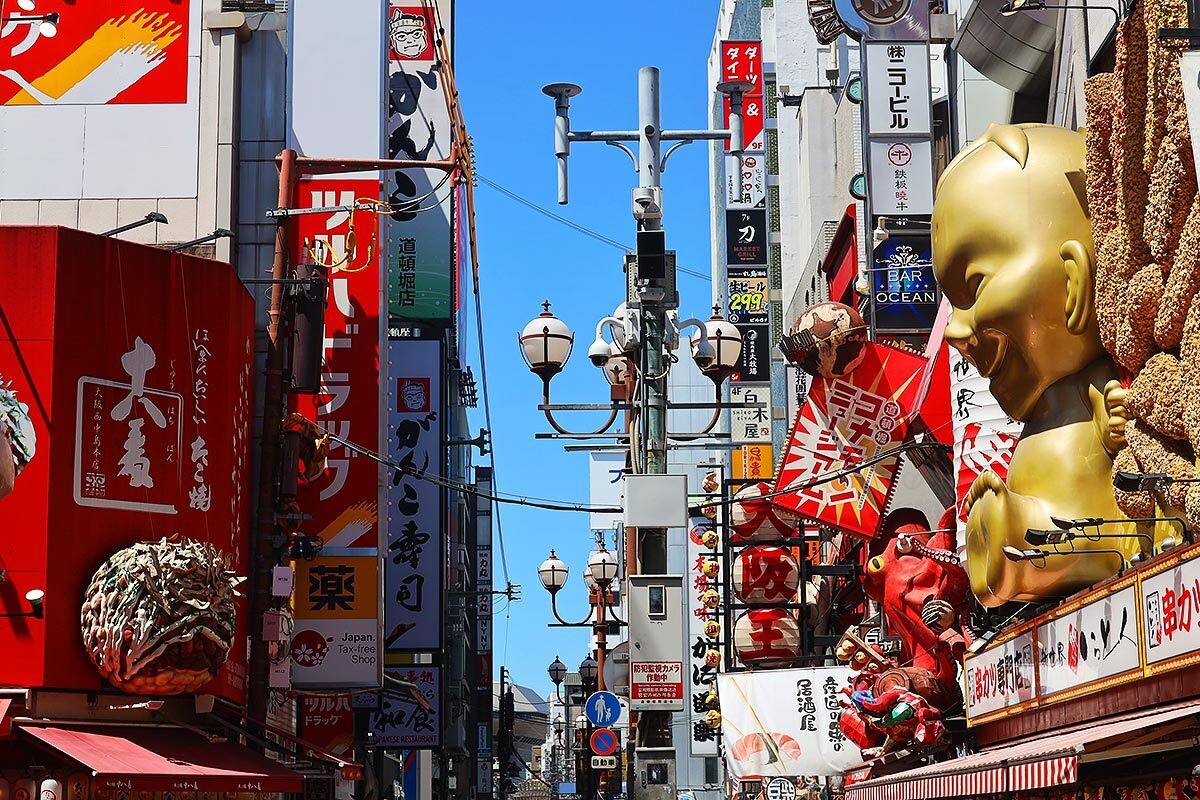
My first stop was at Dotonbori, the main entertainment hub for Osaka's busy Namba area - rather than one street, it refers to the area around the Dotonbori Canal, centered on the Ebisubashi Bridge. It's a curious sight to be sure - rows of boxy, concrete buildings, every inch of vertical space plastered over with screens, giant characters and huge, glowing signs.
Among these, one in particular has taken on a life of its own - the famous "running man" sign by local confectionery giant Ezaki Glico has been here in at least some form since 1935, running and cheering as the original boast was that their caramel sweets would give you enough energy to run 300 meters. The current one - the sixth - dates to 2014, and you can usually spot a few tourists copying the pose for cameras.
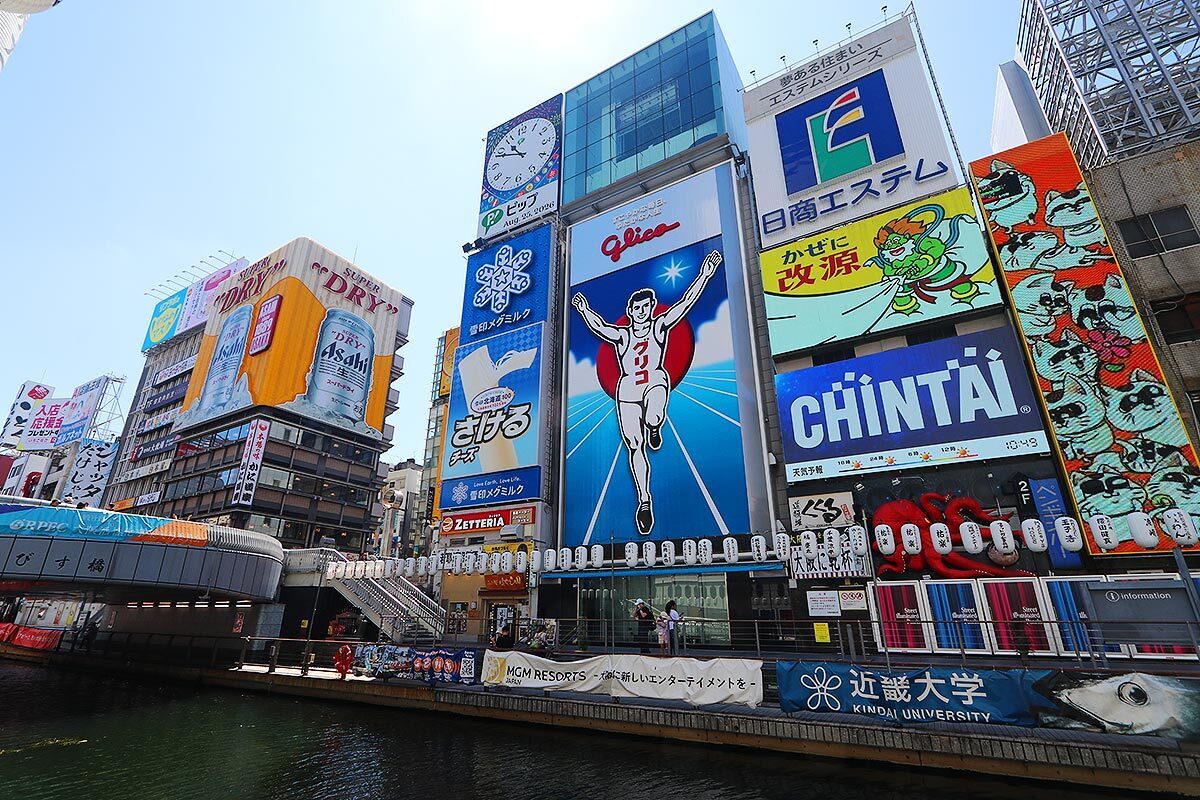
Once something akin to Osaka's Broadway, the surrounding area was one of the most popular spots where performing arts developed and competed for an audience. The canal itself dates all the way back to 1612-15, when it was constructed in a rapid expansion of the city's waterways.
At the center of everything is the Ebisubashi Bridge, important from the very beginning not only to theatregoers but for the crowds of pilgrims on their way to Ebisu Imamiya Shrine some 20 minutes to the south. Today, it's well-known as a locus for spontaneous street celebrations - especially during the annual Tenjin Matsuri festival or when the city's beloved Hanshin Tigers baseball team comes out on top of the Japan Central League.
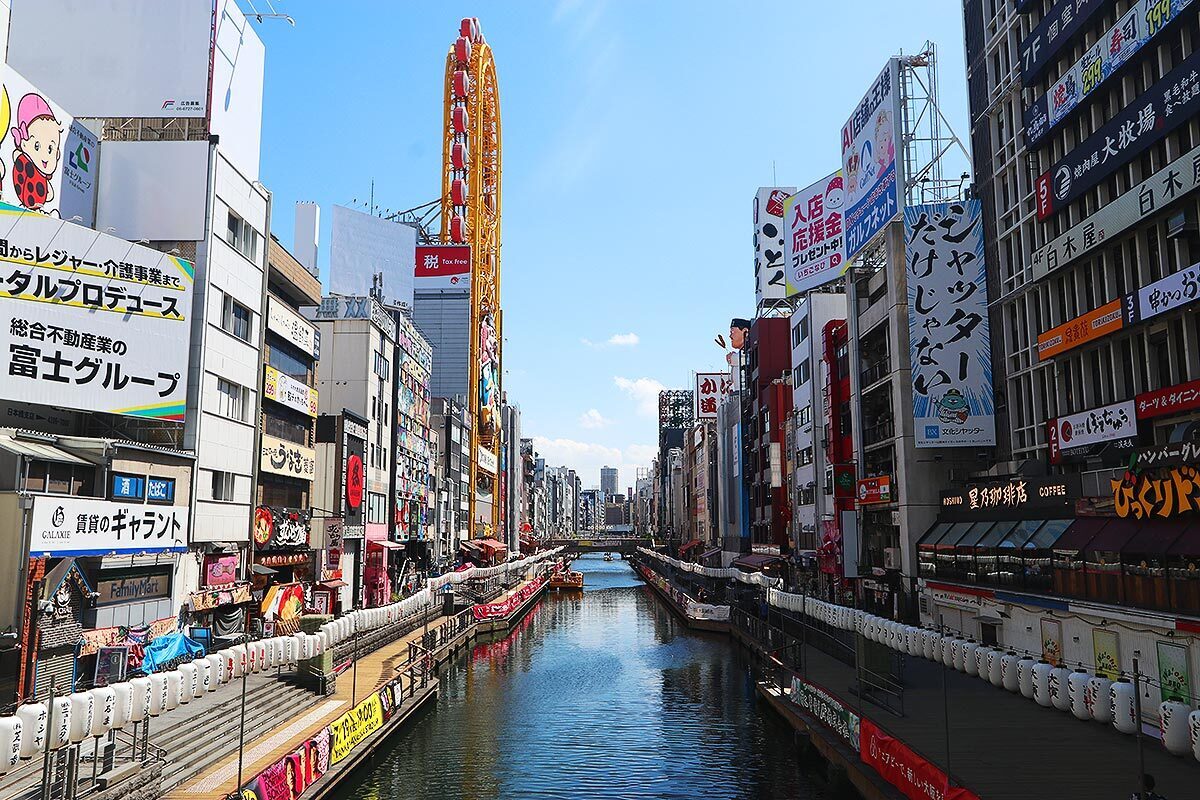
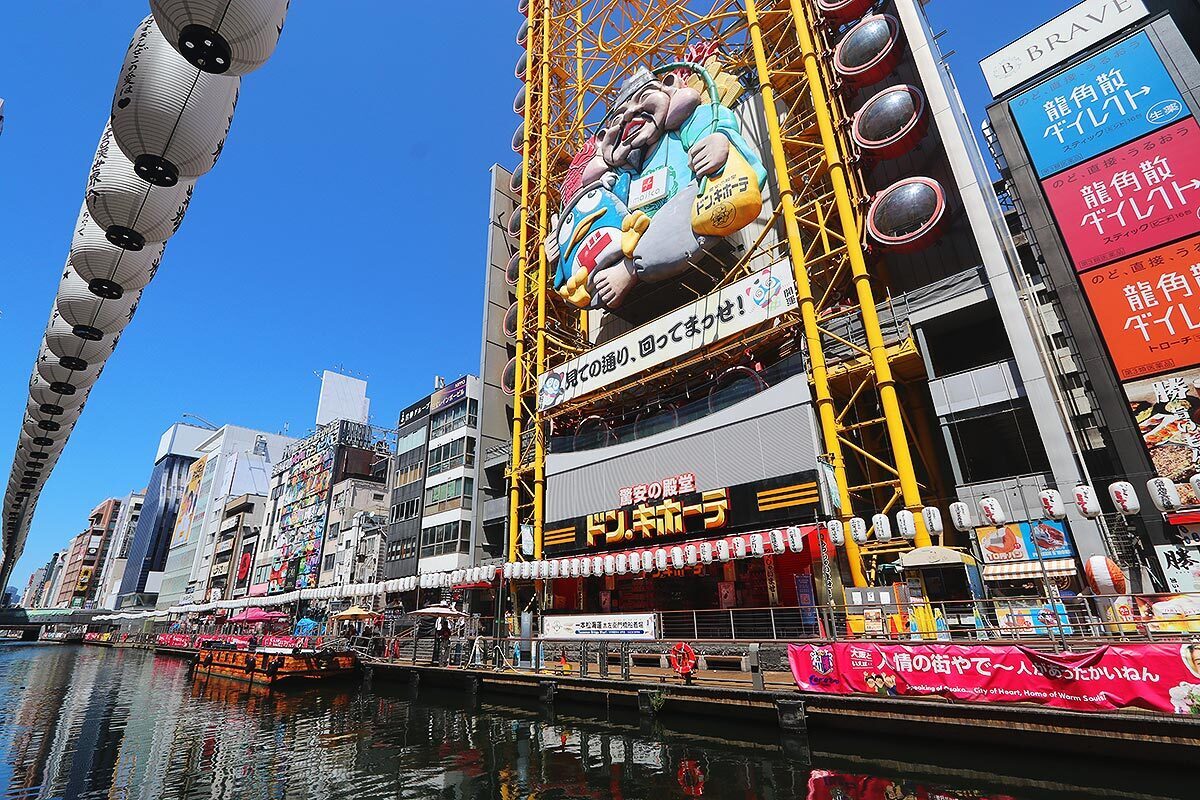
Spend just a few minutes exploring the area and you can't fail to notice the many garish, oversized signs, excitedly announcing the wares of each shop. As modern as these may seem, they are in fact quite in keeping with the original spirit of the place - commerce as spectacle and street theatre.
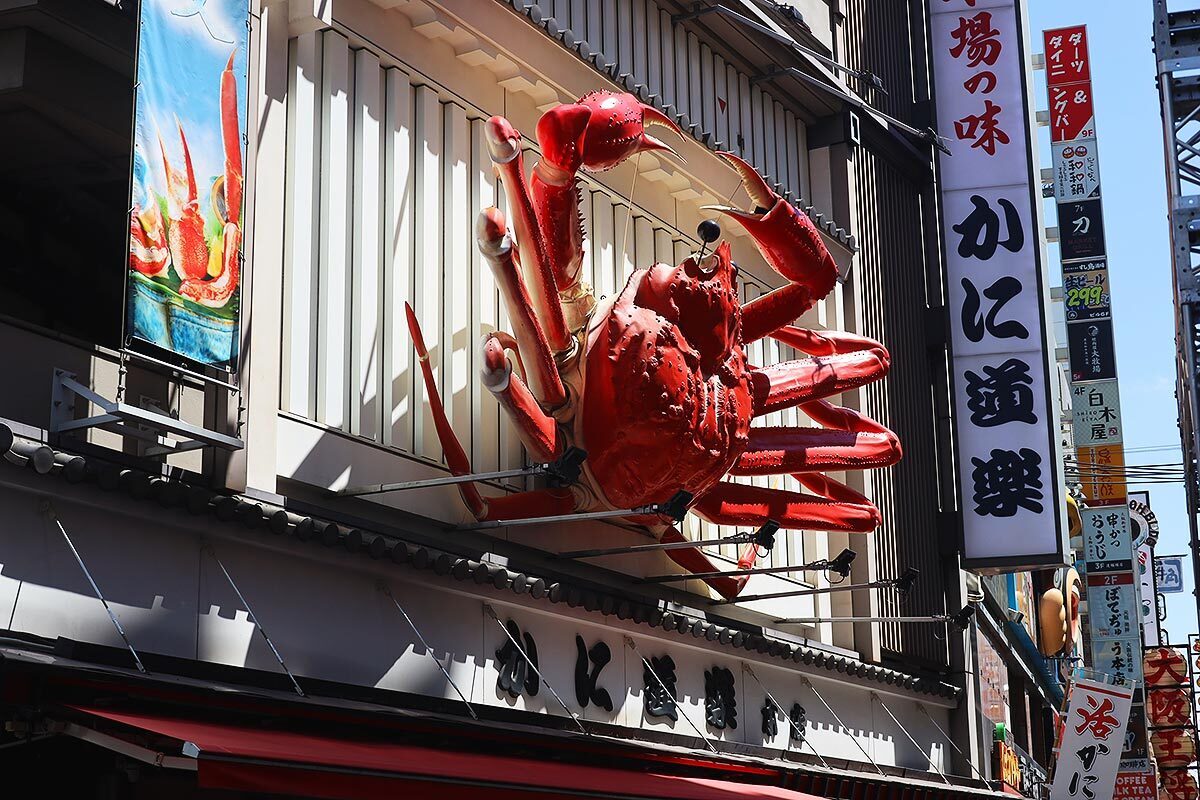
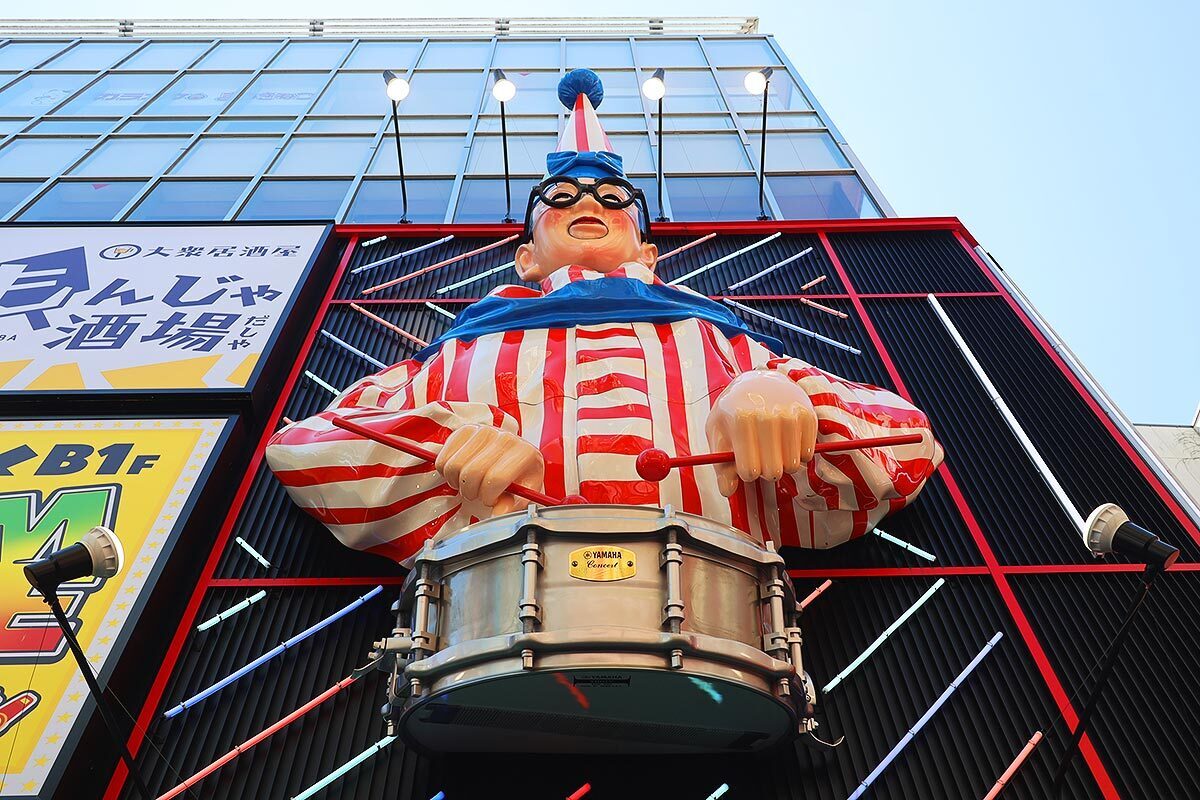
If Dotonbori had a motto it might be "kuidaore", from an old Kansai saying contrasting the region's two biggest cities - Kyoto goes broke on clothes, Osaka on food. Osakans themselves seem to have embraced the idea, and today one of the area's most popular informal mascots is the figure of Kuidaore Taro, a bespectacled drummer boy in a stripy clown suit who represented a long-demolished local restaurant, and was later appropriated by the Nakaza Kuidaore Building that stands on the same spot.
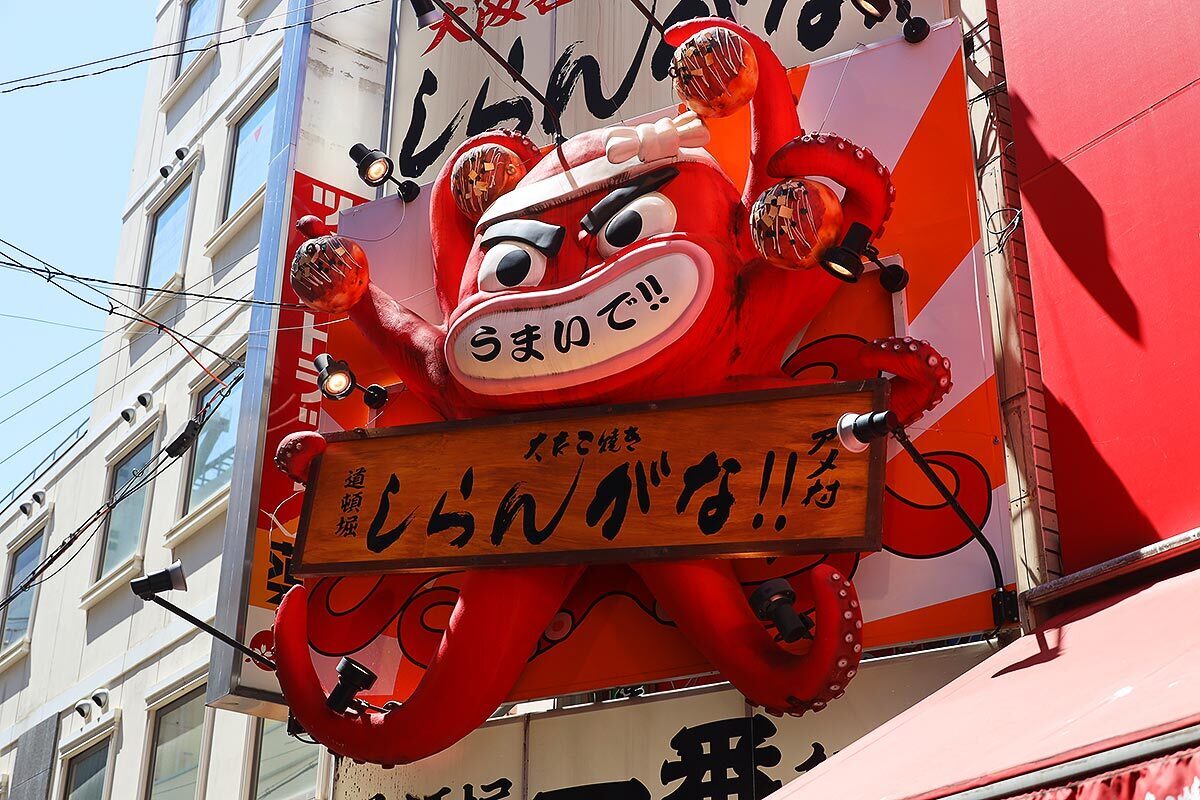
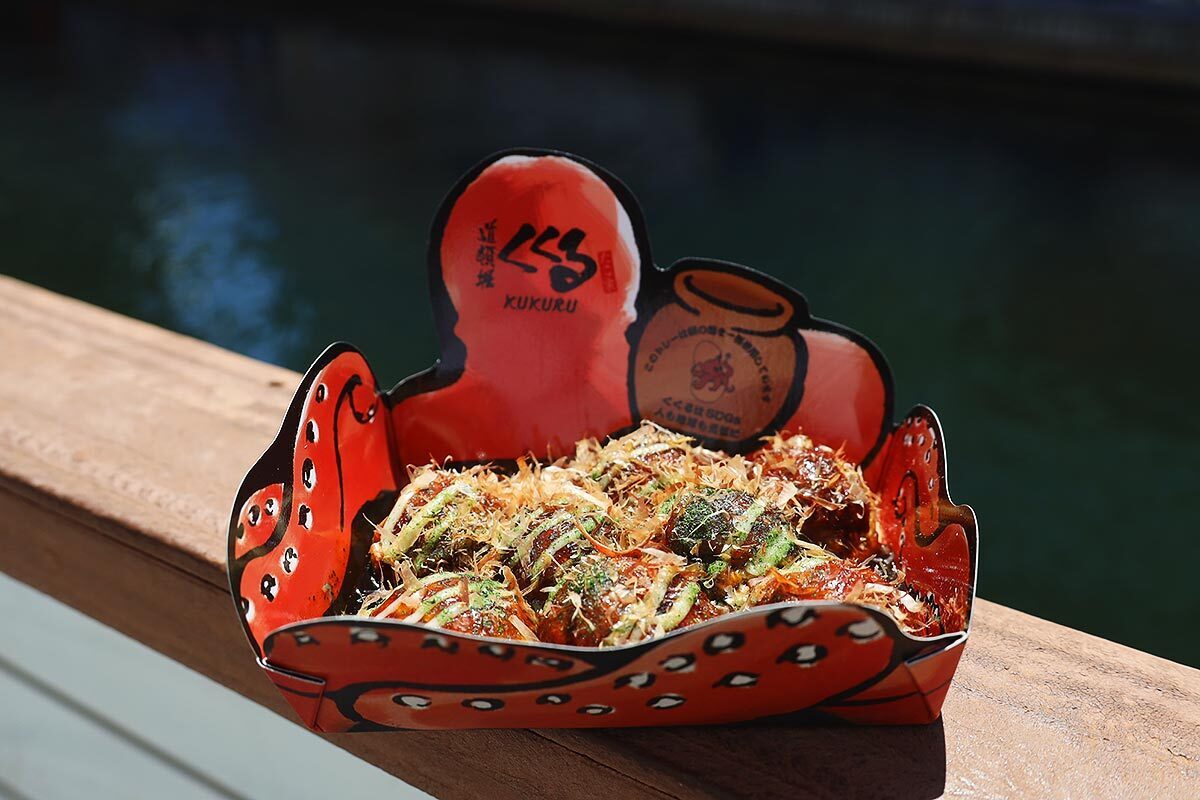
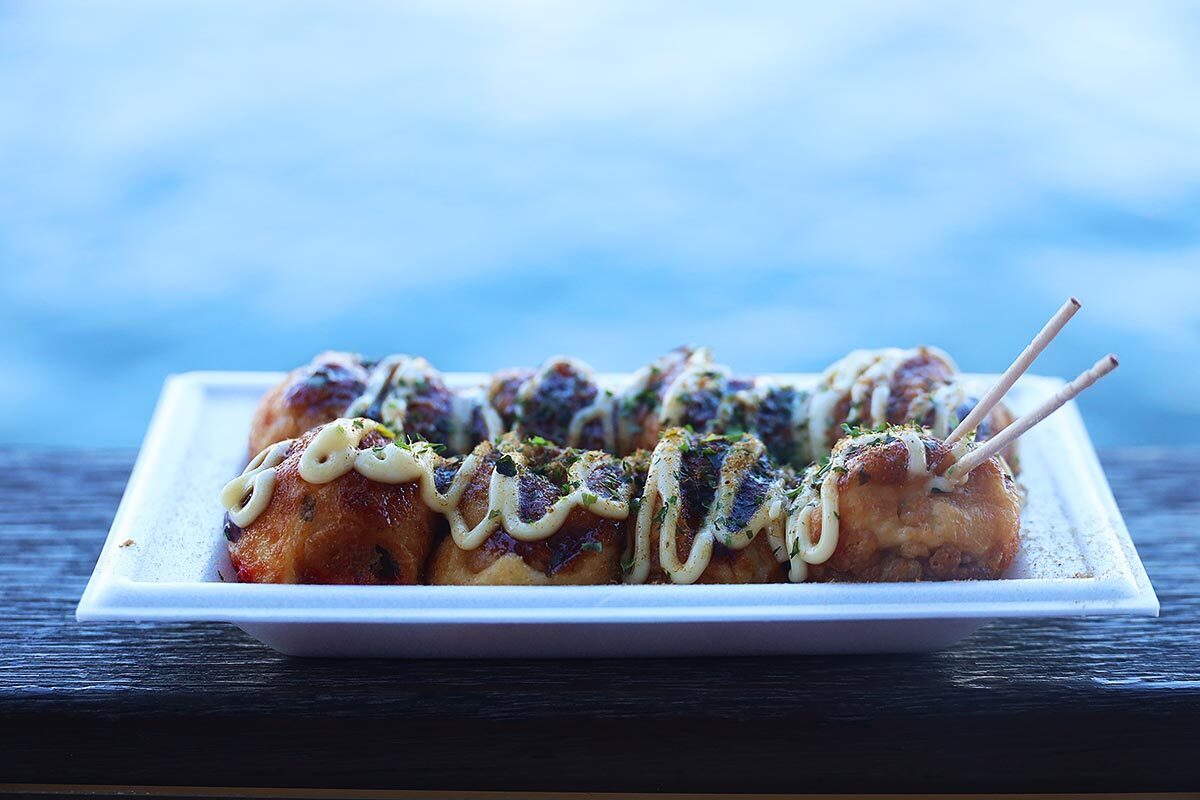
Osaka is known for a few distinctive dishes but nothing quite so iconic as takoyaki - a little ball of batter enclosing a single piece of octopus, almost bitesized, gooey on the inside with just a thin layer of crust and smothered in tangy sauce and bonito flakes. There are a few different stories of how it came to be, but the generally accepted version credits one Endo Tomekichi back in 1935 with combining the essentials of two early-20th century Kansai dishes - Akashiyaki from the Kobe area and Osaka's own intriguingly named radioyaki.
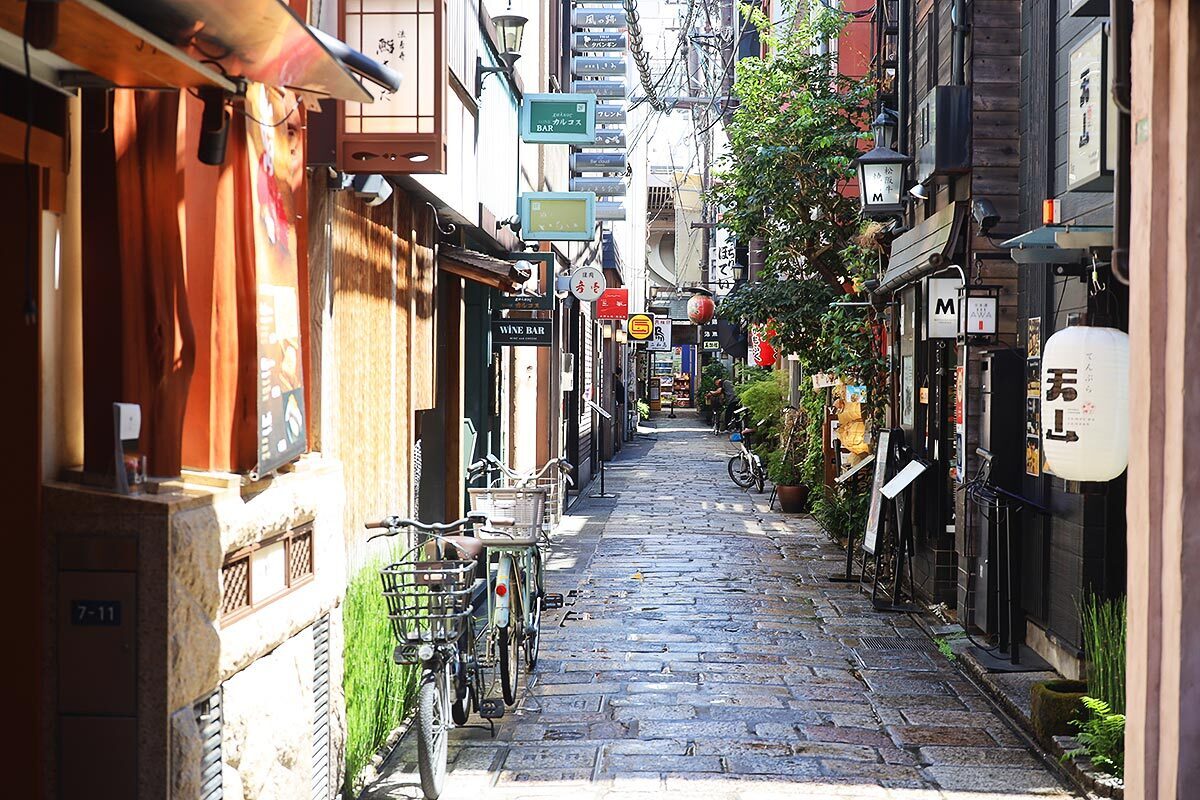
One of my own favorite spots can be found tucked away at the end of a quiet side street just a couple of blocks south of the Ebisubashi Bridge. Originally located in Uji, Kyoto, Hozenji Temple moved to its current spot in 1637 and was popular enough that the surrounding area came to thrive as a quieter, more refined retreat just outside of the busy main strip. The street itself later became known for restaurants specialising in fugu or blowfish, and for drinking establishments where actors and other performers from nearby theaters mixed freely with the public.
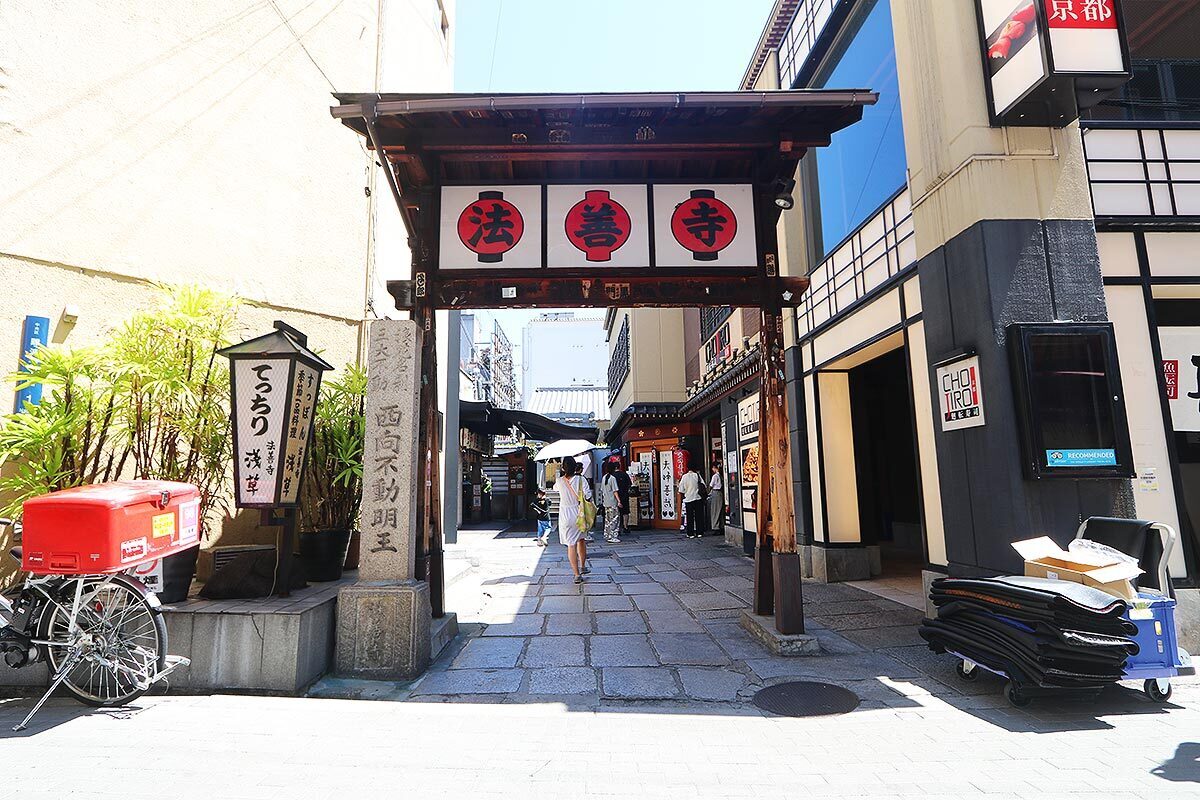
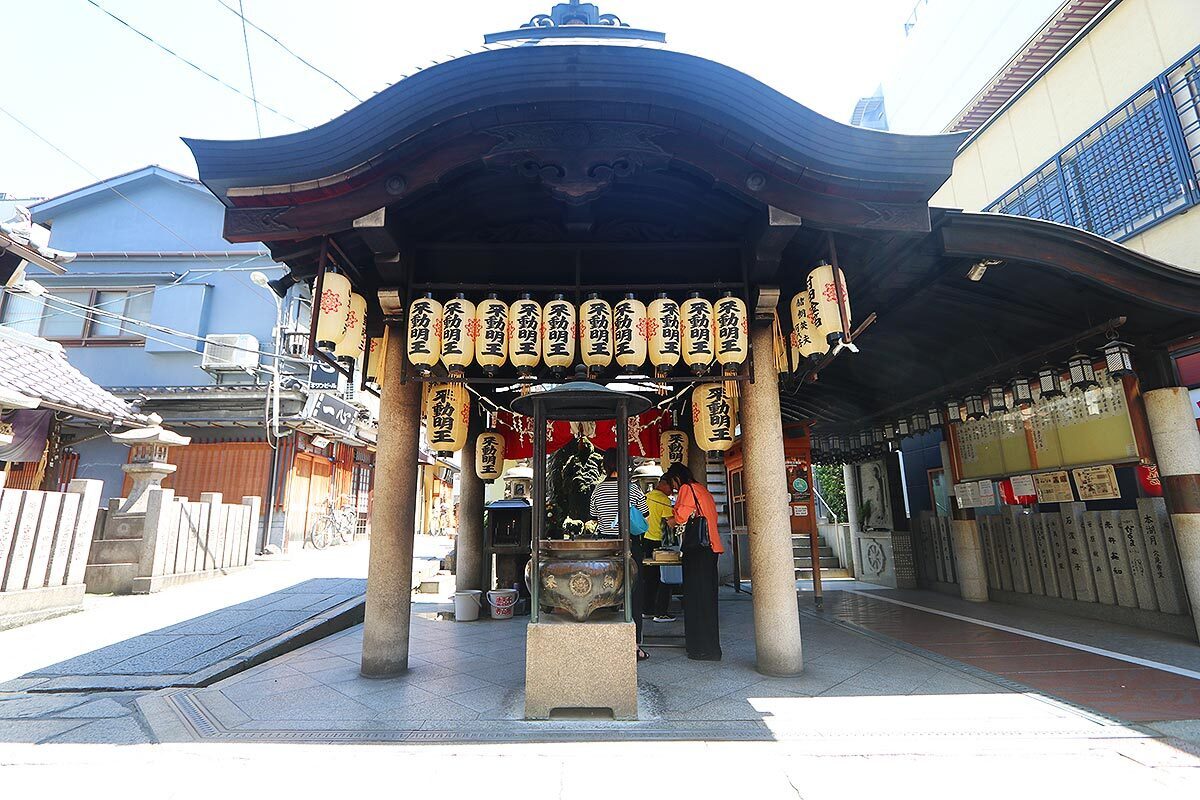
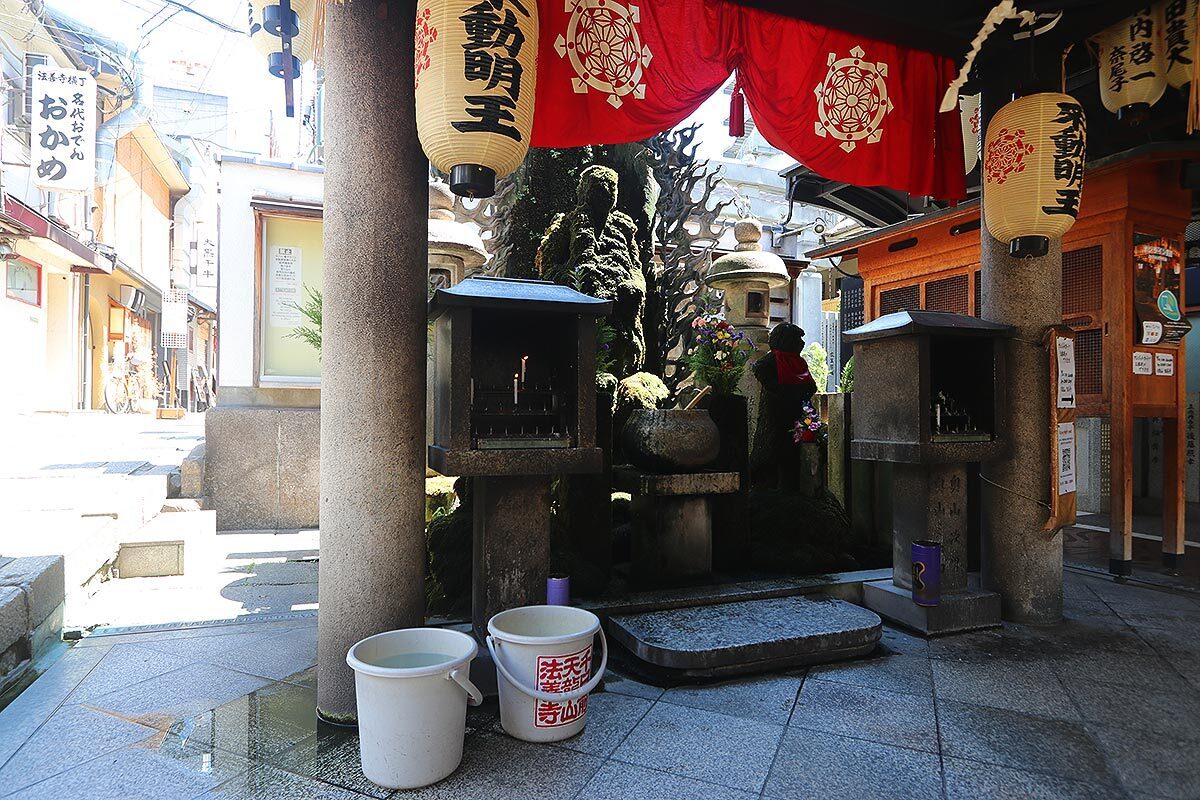
Though much reduced in size, the temple's little precinct still feels like a peaceful oasis in the middle of the city, and a steady stream of visitors - many of them owners of local businesses - can be seen paying their respects to Fudo Myoo, a protector of Buddhist teachings who helps people overcome obstacles and temptation. In an unusual quirk that can be traced to the close of the Second World War, worshippers cast water over the statue to feed the thick coat of moss that now completely covers it.
12:00-13:00 The Doguyasuji Arcade
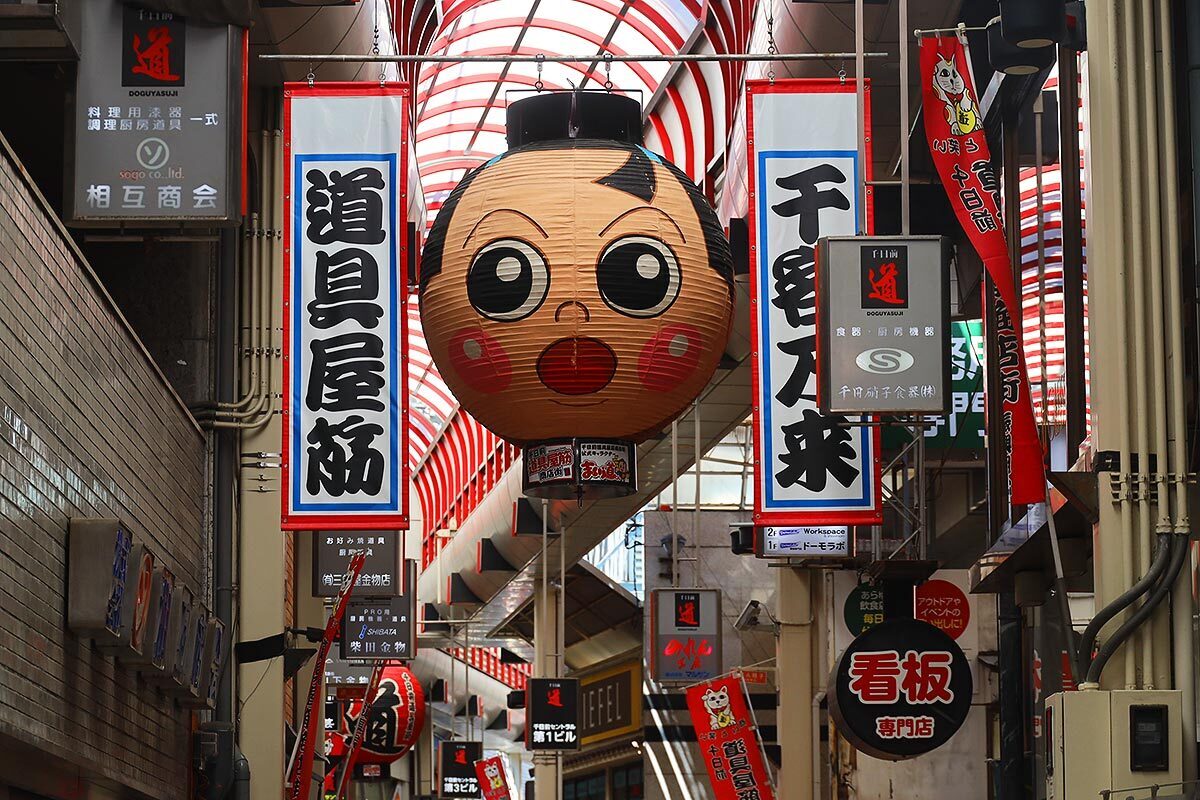
Leaving the temple behind, I took a zigzagging path through the warren of shopping streets east of Namba Station until I reached the Doguyasuji Arcade - a 150-meter stretch of specialist kitchenware shops, packed together along a narrow, covered lane.
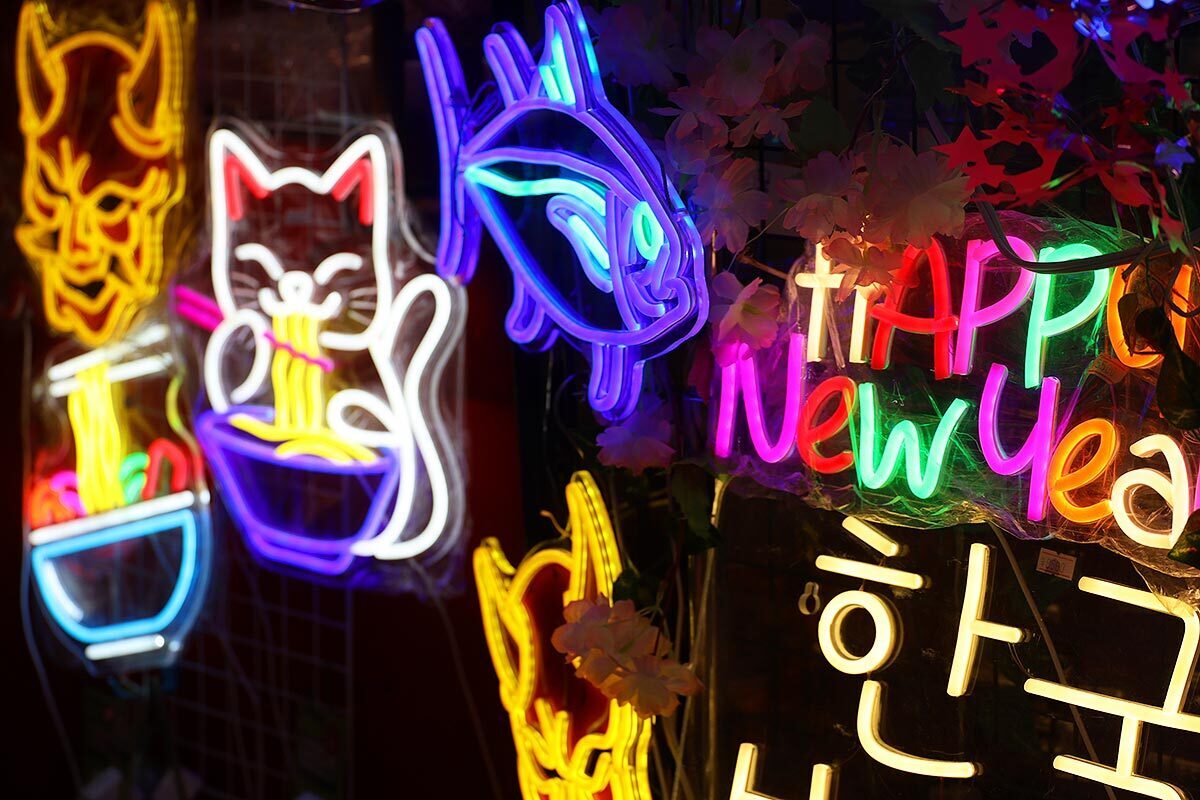
Despite its small size, the shops here are a major pillar in the city's nocturnal economy, supplying bars and restaurants with everything from tableware to neon signage. Drawing on a pretty broad cross-section of Osaka's inhabitants, it's a great spot either to people-watch or just to feel the pulse of the city ticking along around you.
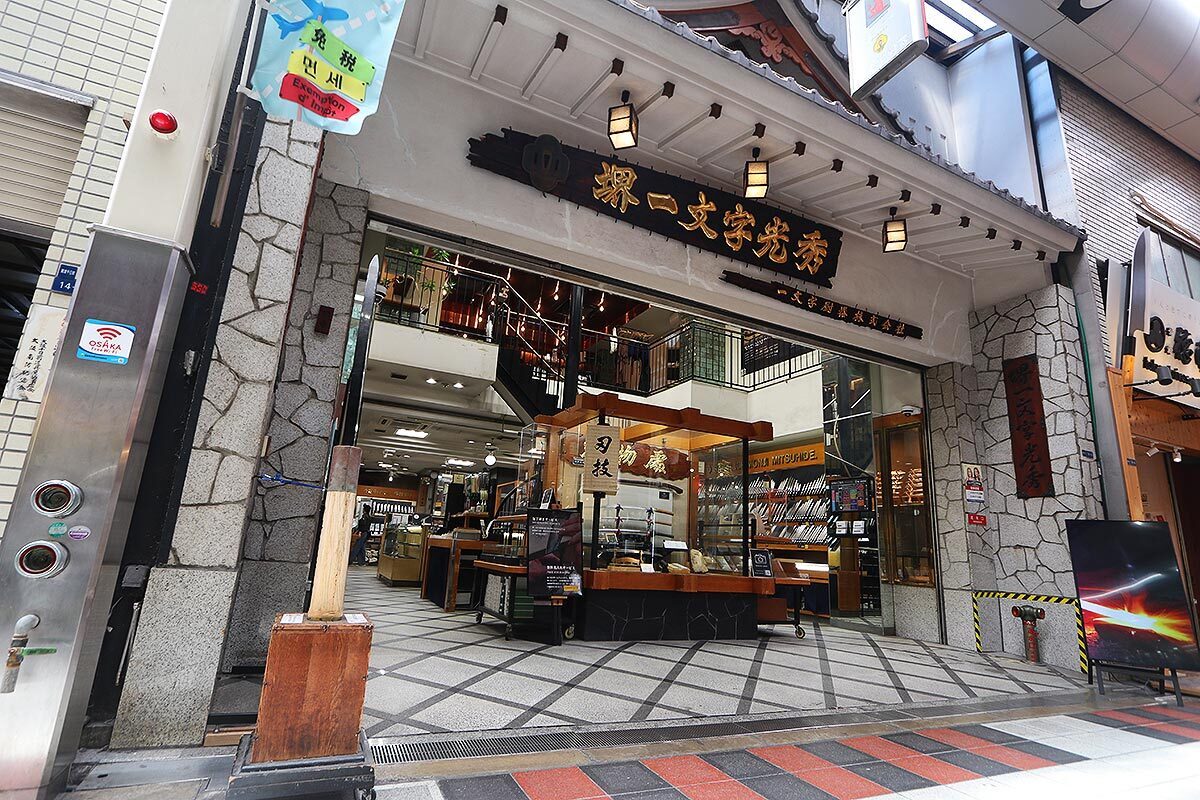
For visitors considering a leap into Japanese cuisine, one fascinating stop to make here is Sakai Ichimonji Mitsuhide, a family-run knife business founded in 1952 and tapping into a centuries-old tradition of blade craftsmanship out of Sakai City in the southern half of the prefecture. Since their beginnings, Sakai knives have been known for their highly refined cutting edges, forming one small but crucial part of Osaka's wider culinary reputation.
Legend has it that Sakai's ancient kofun tombs required a massive number of iron tools so specialist smiths were brought in and ultimately settled there, though the truth may be more to do with that city's importance as a major commercial port. Interestingly though, we know it was a major producer of swords, and later guns with expertise gleaned from the Portuguese.
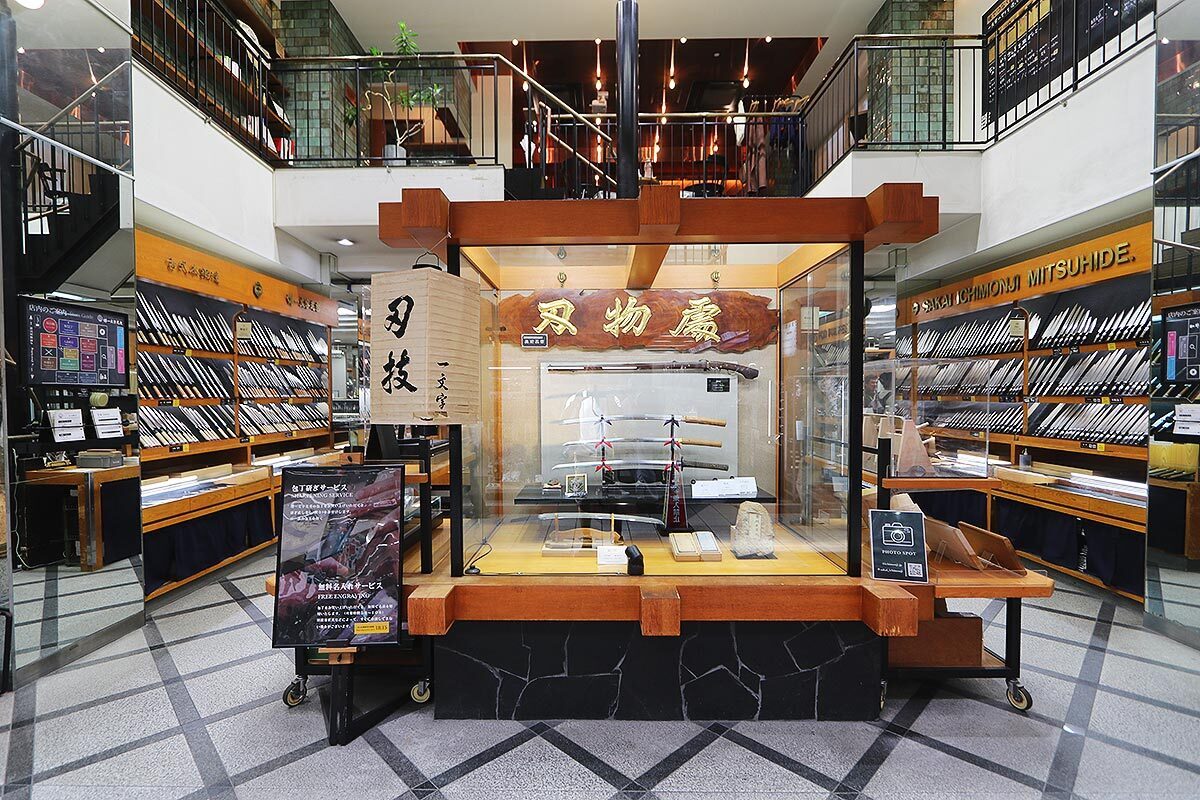
Inside, visitors can browse a massive selection of knives in just about every size, shape and category of steel, from industry workhorses to heirloom pieces. Among the most exciting items on display, I found blades engraved with intricate traditional designs and others made from tamahagane, a kind of iron sand used to make the steel in authentic Japanese swords.
If all this feels a bit overwhelming, luckily the store has English-speaking staff on hand to explain the different types, how to properly maintain the high-quality steel, and - if you have the budget for it - find your own ideal piece to take home.
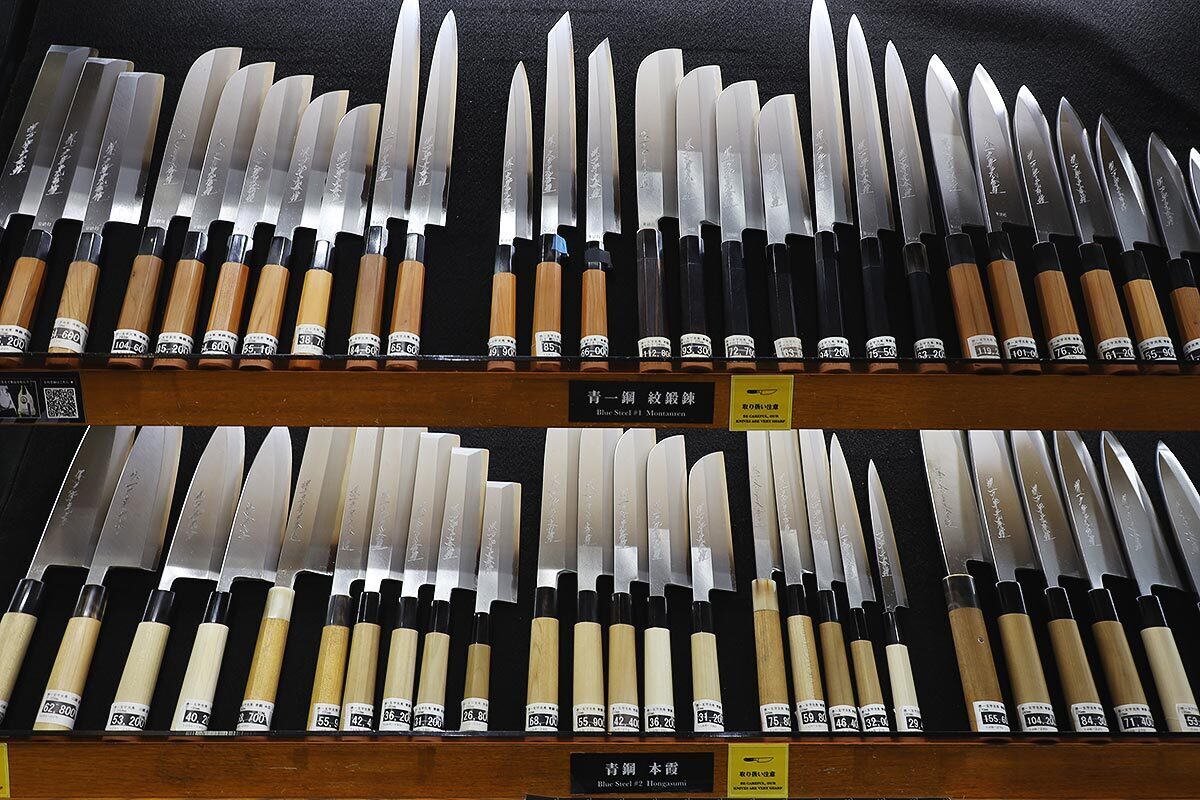
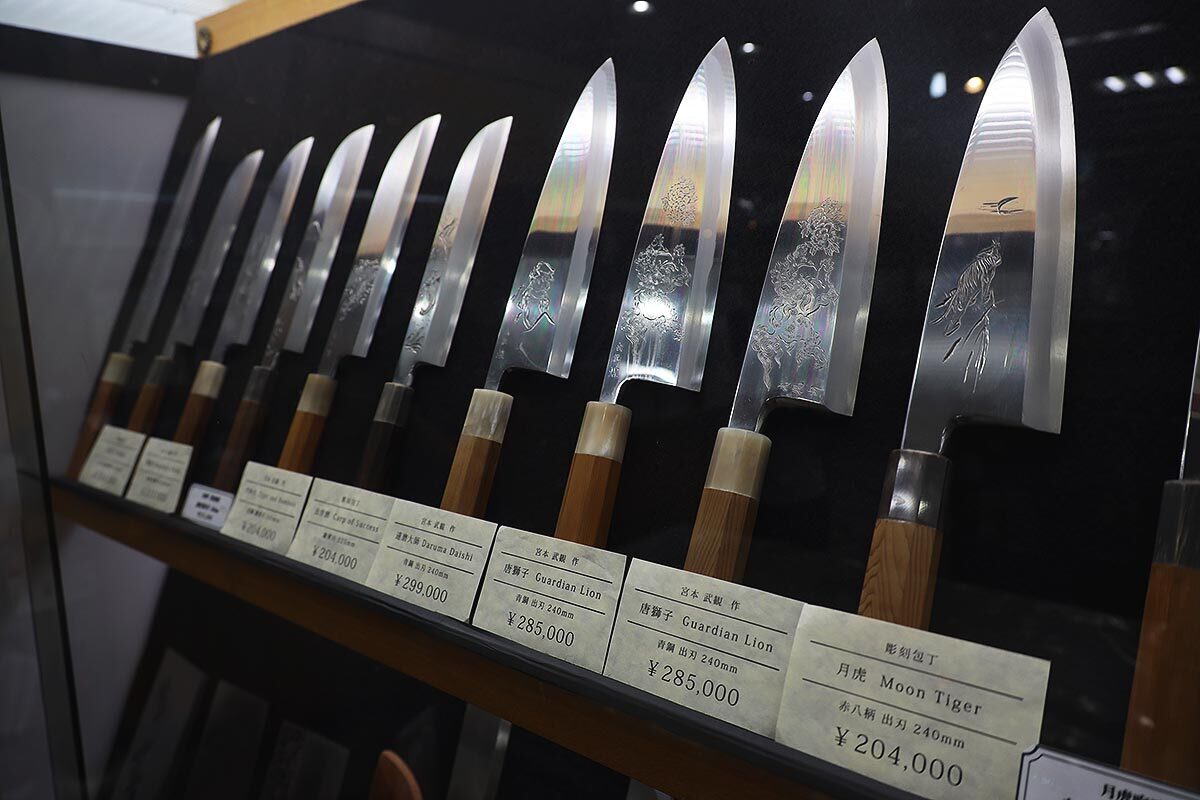
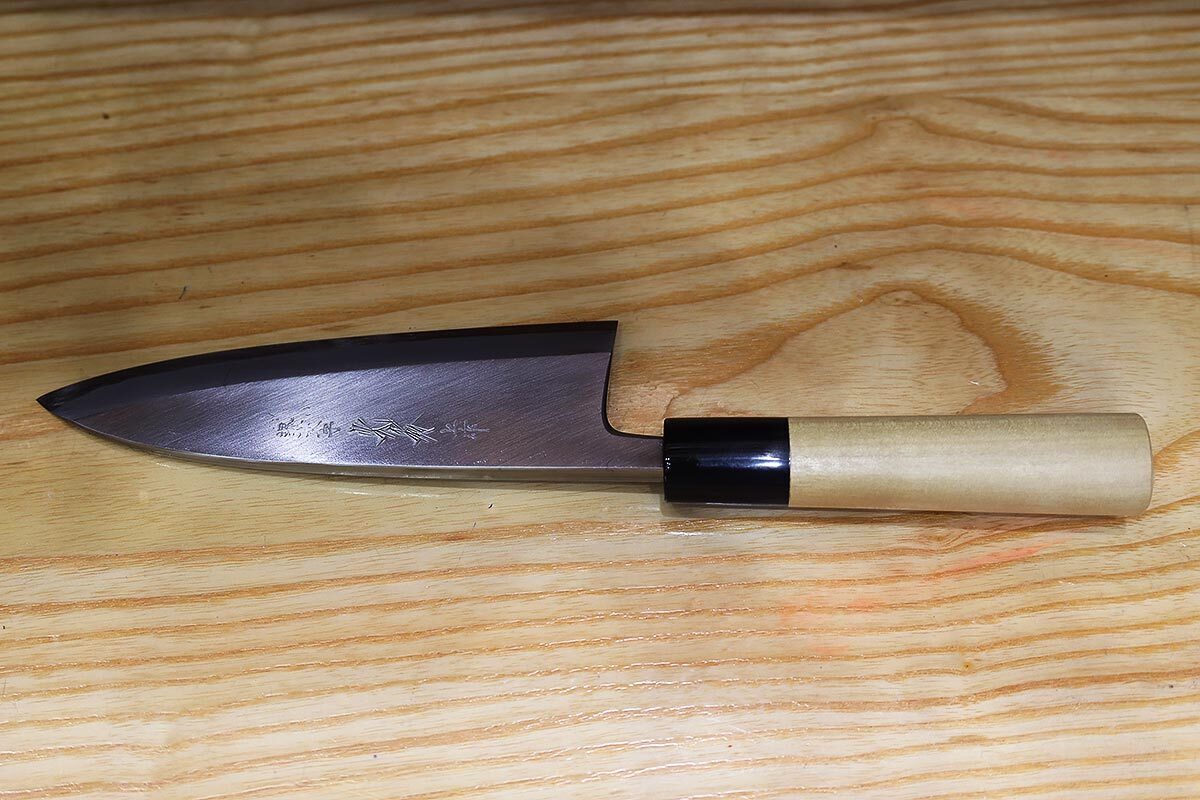
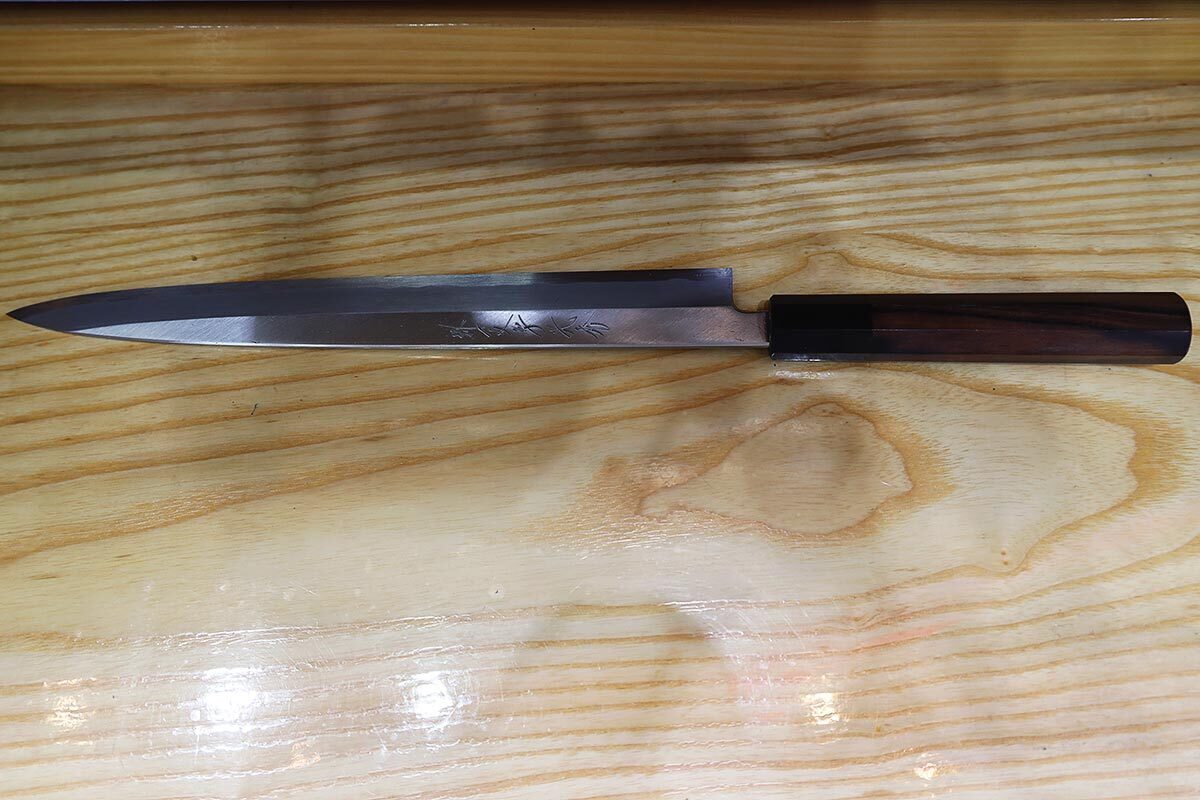
The various kinds of Japanese knives is no small topic in and of itself, but if you can remember four you're already off to a good start: the deba is heavy and almost comically thick, with a spine curving down towards the tip - this is the tool you want to break down whole fish. Next up is the yanagiba or "willow blade", a long, supple knife, perfect for slicing fish in a single, smooth cut. The third, and a good first-time pick is the gyuto - an all-purpose chef's knife suited to a wide range of ingredients, from meat to vegetables. The santoku is another excellent first-time choice, a shorter all-purpose knife especially well-suited to home kitchens.
Interestingly, while the deba is a standard shape across all of Japan, the yanagiba can look quite different depending on what part of the country you're in - while the Kansai version has a pointed or even slightly hooked tip, in Kanto the tip is squared, creating a surprising number of differences in its use.
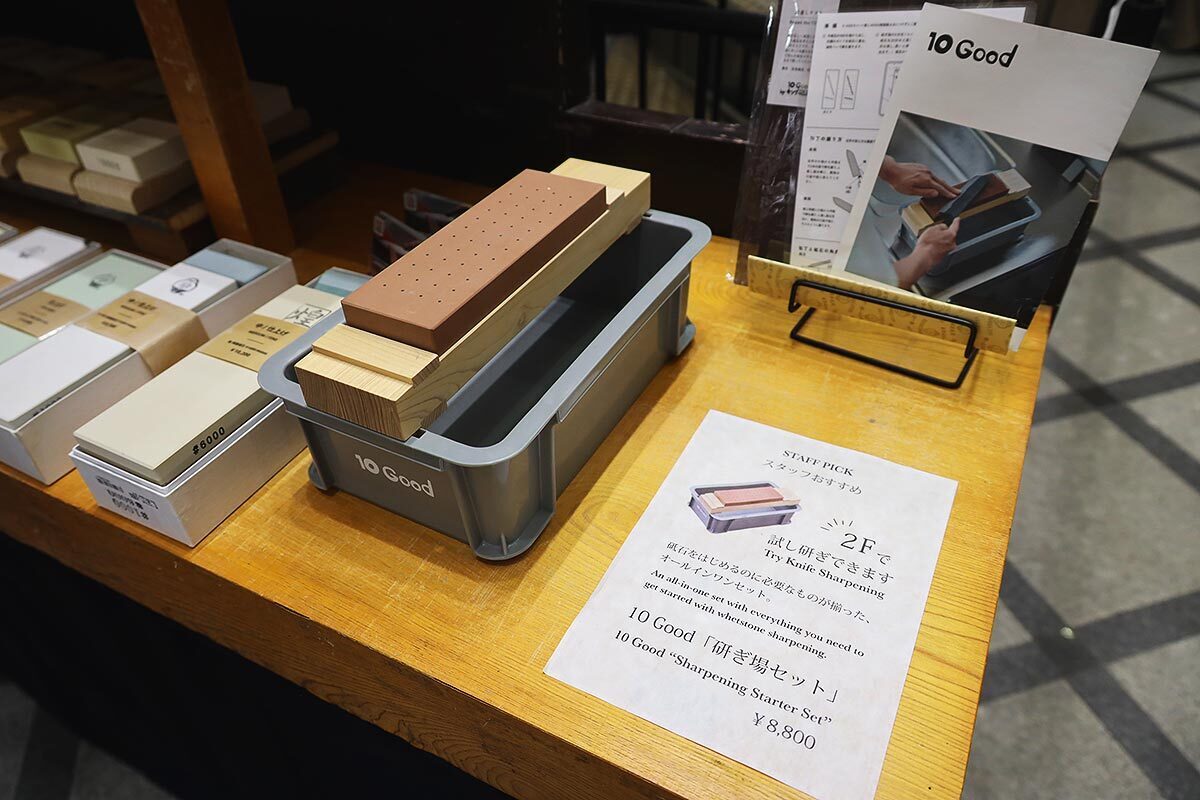
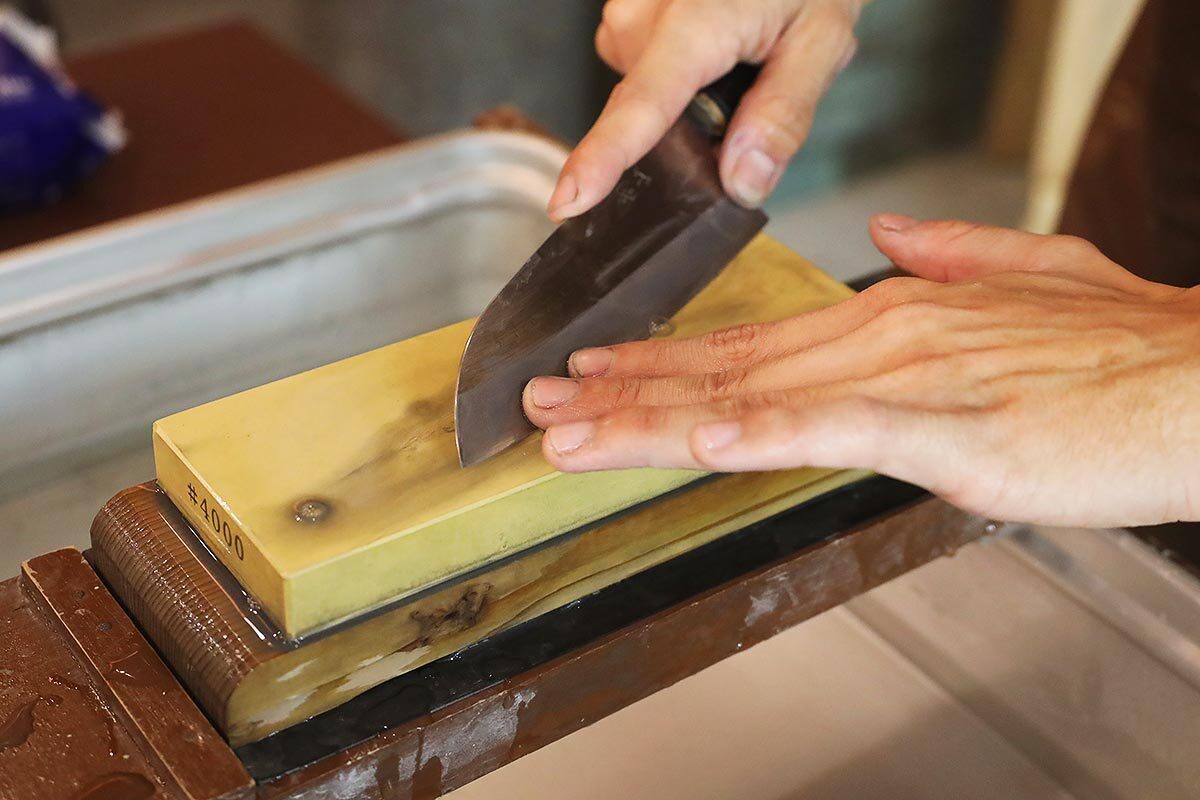
For those at the start of their journey in Japanese cooking and perhaps not quite ready for a significant investment just yet, the store also offers regular sharpening workshops in an upstairs cafe area, available to reserve on request.
13:00-15:00 Kuromon Market
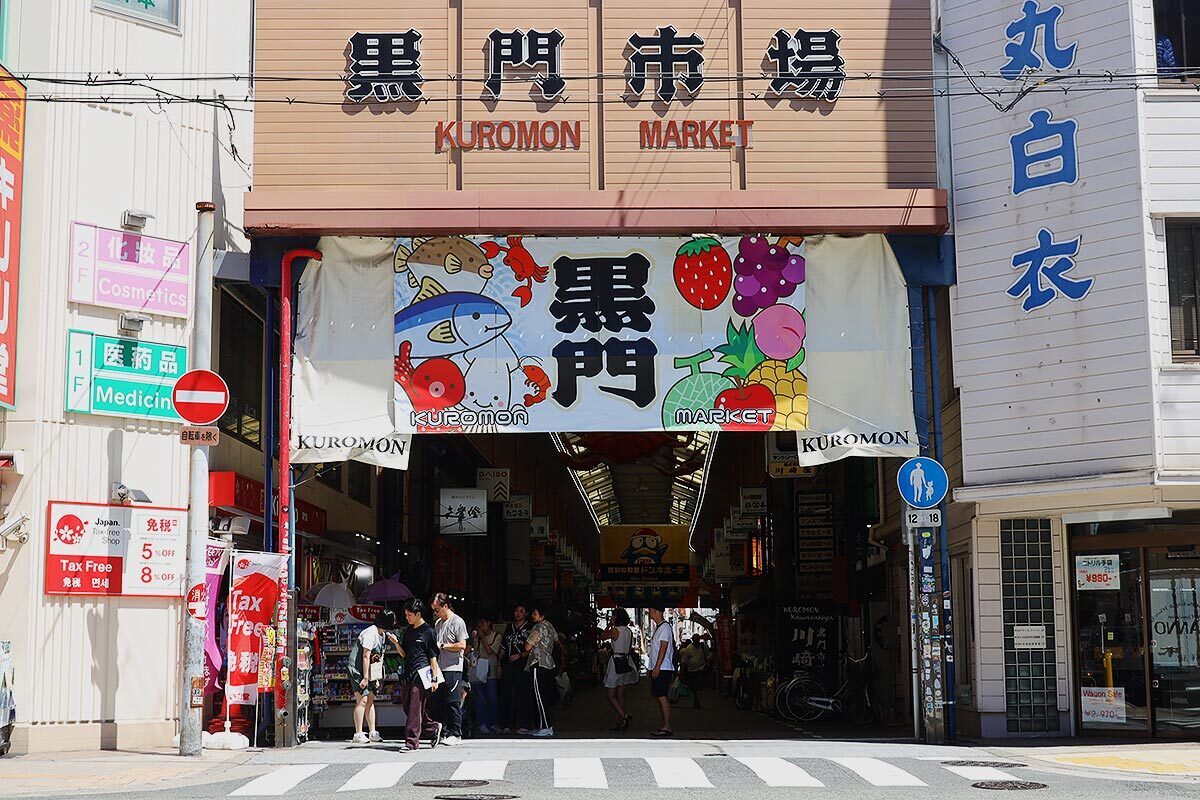
Leaving the shop behind, I took an easy 5-minute stroll northeast to another of the city's most important culinary hubs, the Kuromon Market. It's been an Osaka fixture ever since the 1820s, when fish sellers used to gather by the back gate to Enmyoji Temple - the "black gate" of its name. Today, it comprises about 150 individual stores, stalls and hole-in-the-wall restaurants, arranged along a 580-meter warren of covered lanes and sidestreets.
Pulling double duty for wholesale and retail, the market serves homes and restaurants across the city and has developed an informal timetable of its own - professional chefs or itamae first thing in the morning, then tourists and regulars until three in the afternoon when a new cohort arrives to prepare for the evening trade. Arriving just after the lunchhour rush, I found it a touch quieter than usual but still alive with a constant buzz, vendors calling out their wares, proffering samples or mingling and chatting with one another.
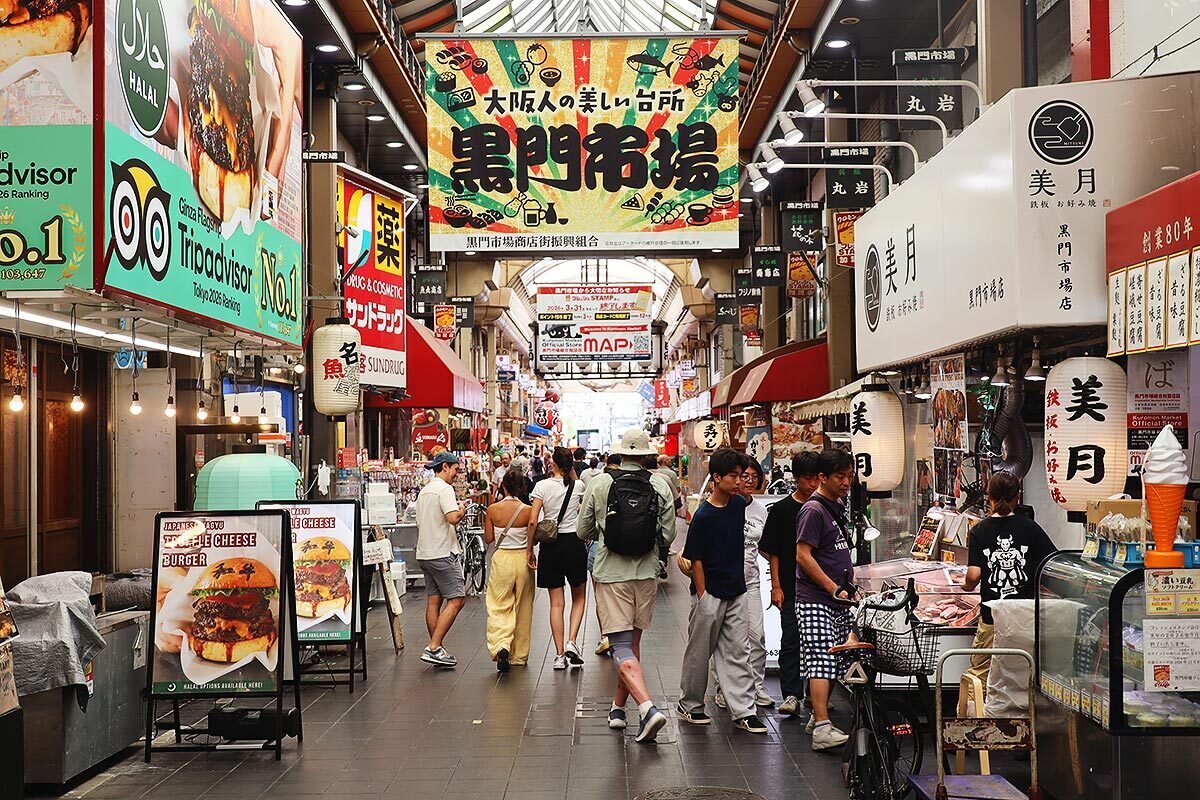
The sheer depth and scale of what's on offer - seafood of course, but also meat, vegetables and all manner of specialty ingredients - reveals a robust and remarkably far reaching supply chain: kombu from Hokkaido, snow crab from the Sea of Japan, fugu from the Seto Inland Sea and tuna from fishing grounds in the Pacific.
Visitors to the market will find all manner of light bites offered as snacks or free samples, but one item not to miss - especially if you have the opportunity to compare it with local varieties in other parts of the country - is dashi, or stock. Though subtle, it's often the key ingredient in Japanese cuisine that pulls everything together, and reveals an important regional difference: while Tokyo's is often made with soy sauce and bonito for darker, more assertive taste, Kansai's tends to be lighter and more kombu-forward.
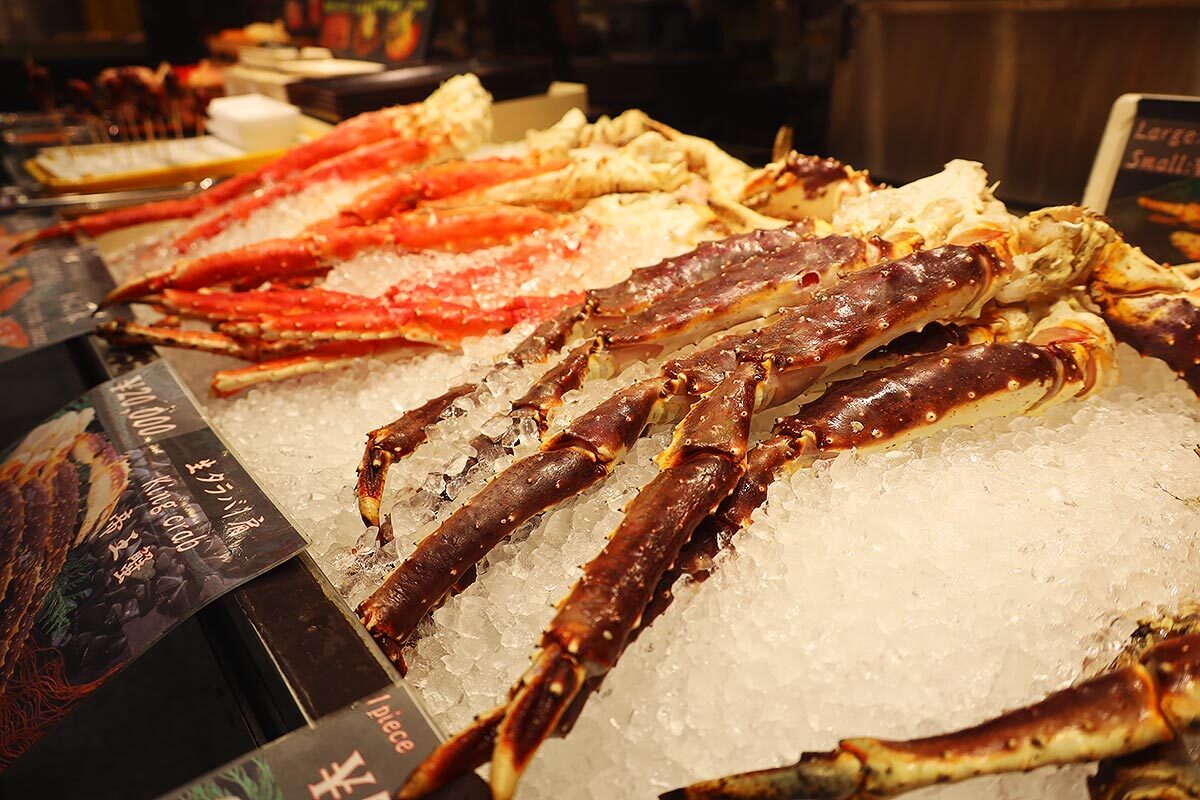
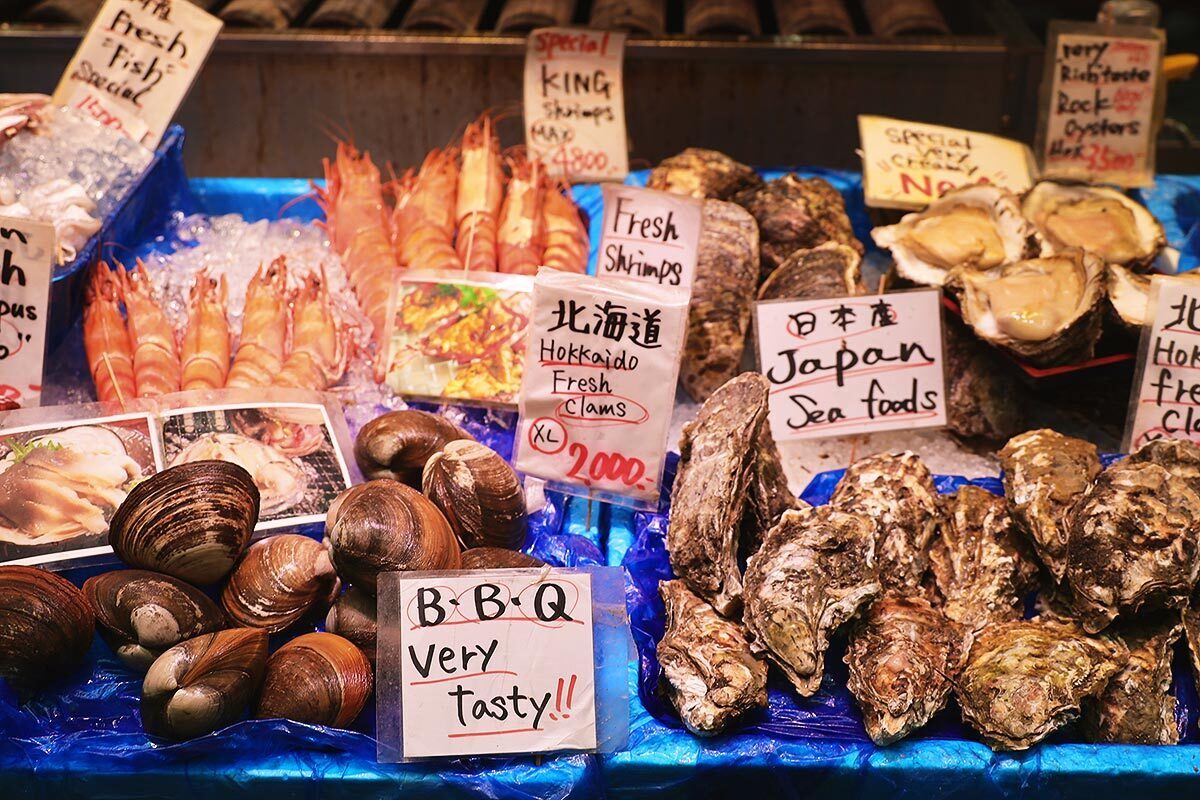
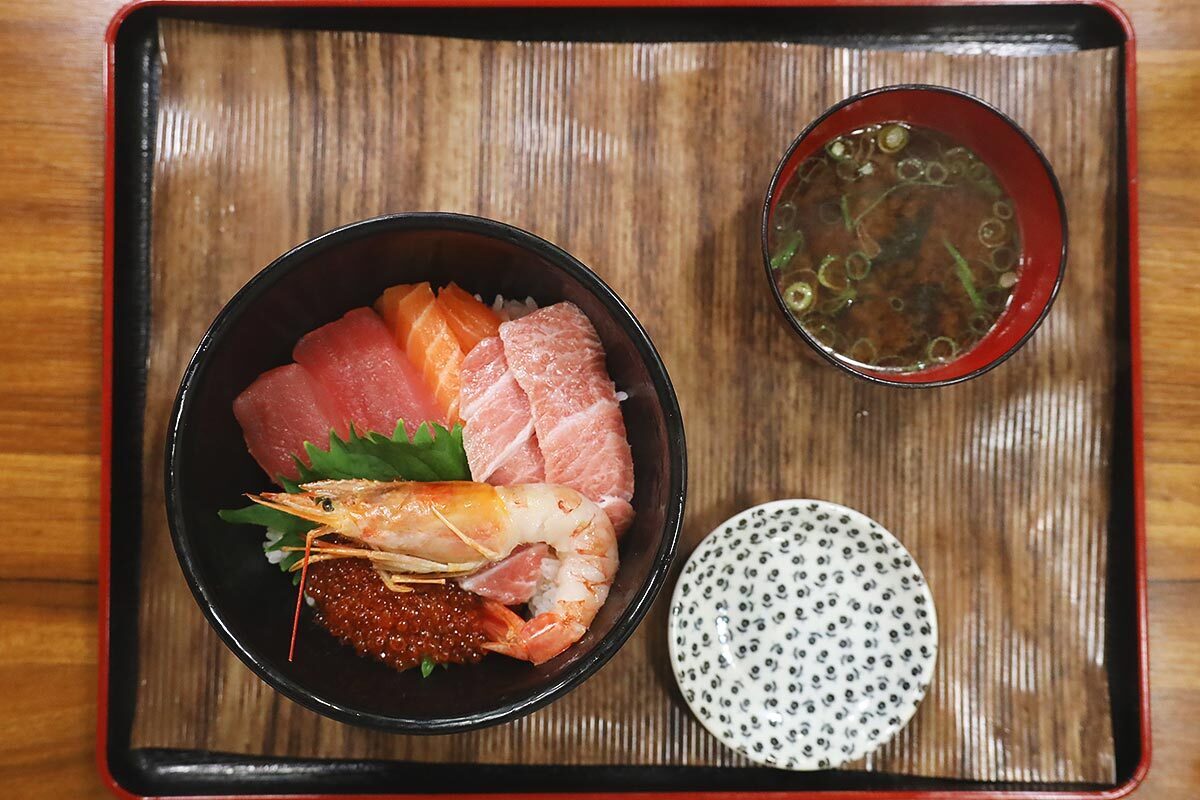
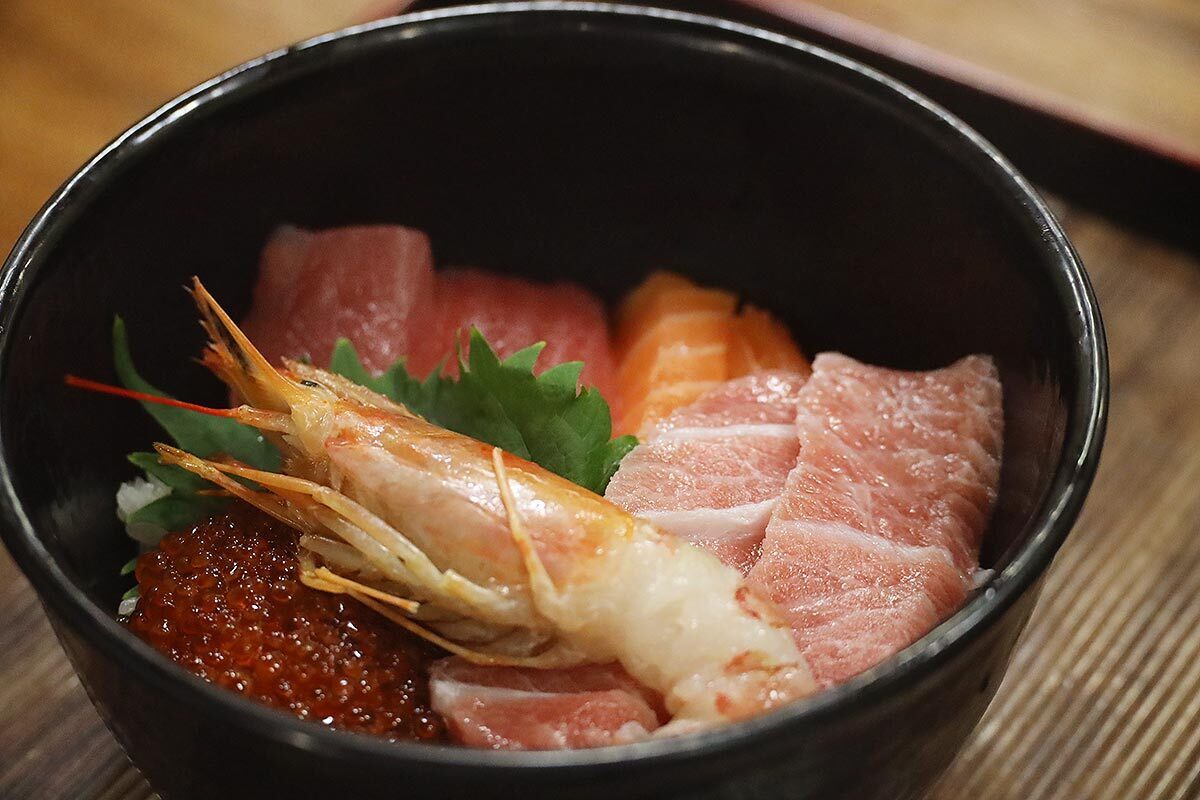
For those looking for something a bit more substantial, the market also contains a number of restaurants, each with their own specialities from sushi to wagyu beef on sticks. Though it may not be the most polished, my favorite for its freshness and cheery service is Kuromon Kuragin, where the signature dish is kaisendon or rice bowls topped with fresh seafood.
15:00-20:45 Boat Race Suminoekoen Stadium
With lunch out of the way, I'd already felt the lively, eccentric pulse of the city at Dotonbori and experienced one small but crucial way that the massive commercial engine powering it all actually comes together. Now, it was time to turn to an altogether different appetite - a bit of fast-paced entertainment and an excited crowd at the Boat Race Suminoe Stadium.
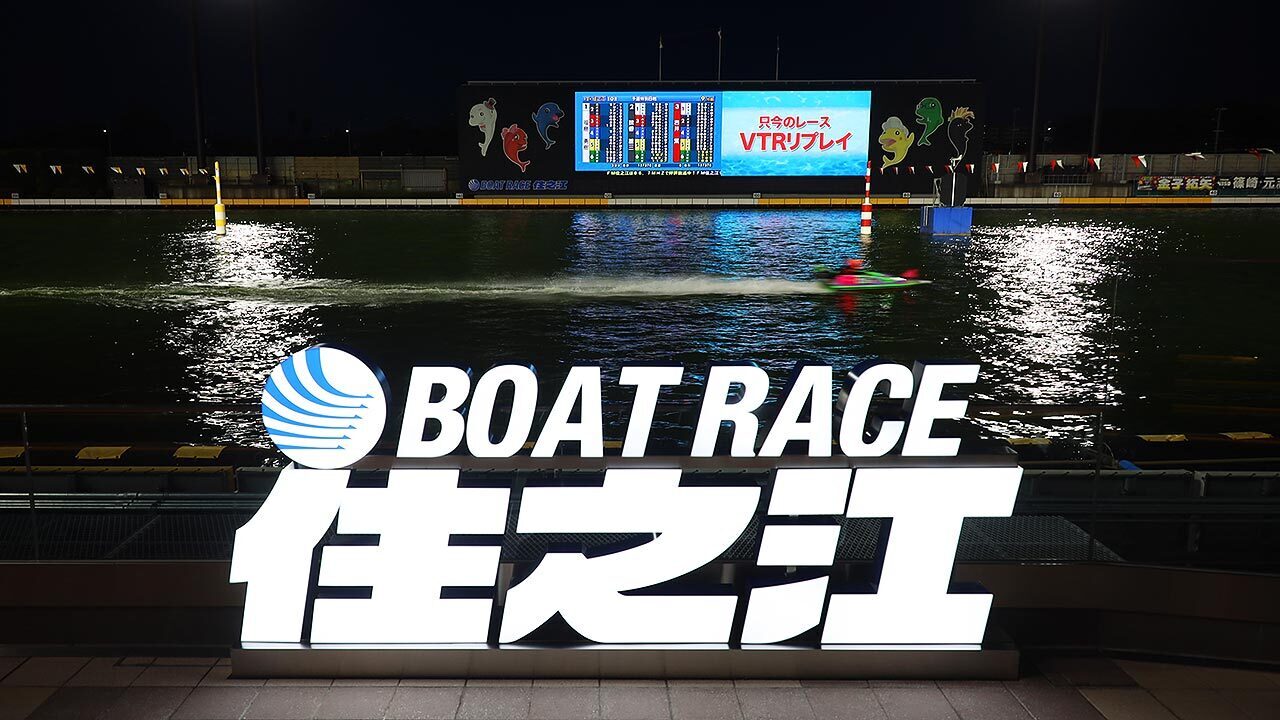
Located a short walk from Suminoekoen Station, itself a fifteen-minute ride from Namba on the Midosuji then Yotsubashi lines, the stadium ranks among the biggest of its kind in Japan and hosts the sport's end-of-year SG Grand-Prix more often than any other. For my part, I thought it looked a bit more polished and sparkly than others I've been to, but it also stands out in a few less obvious ways - in its unusually large contingent of racers, currently around 110, and as the only venue in the Kansai Region to hold races late into the evening.
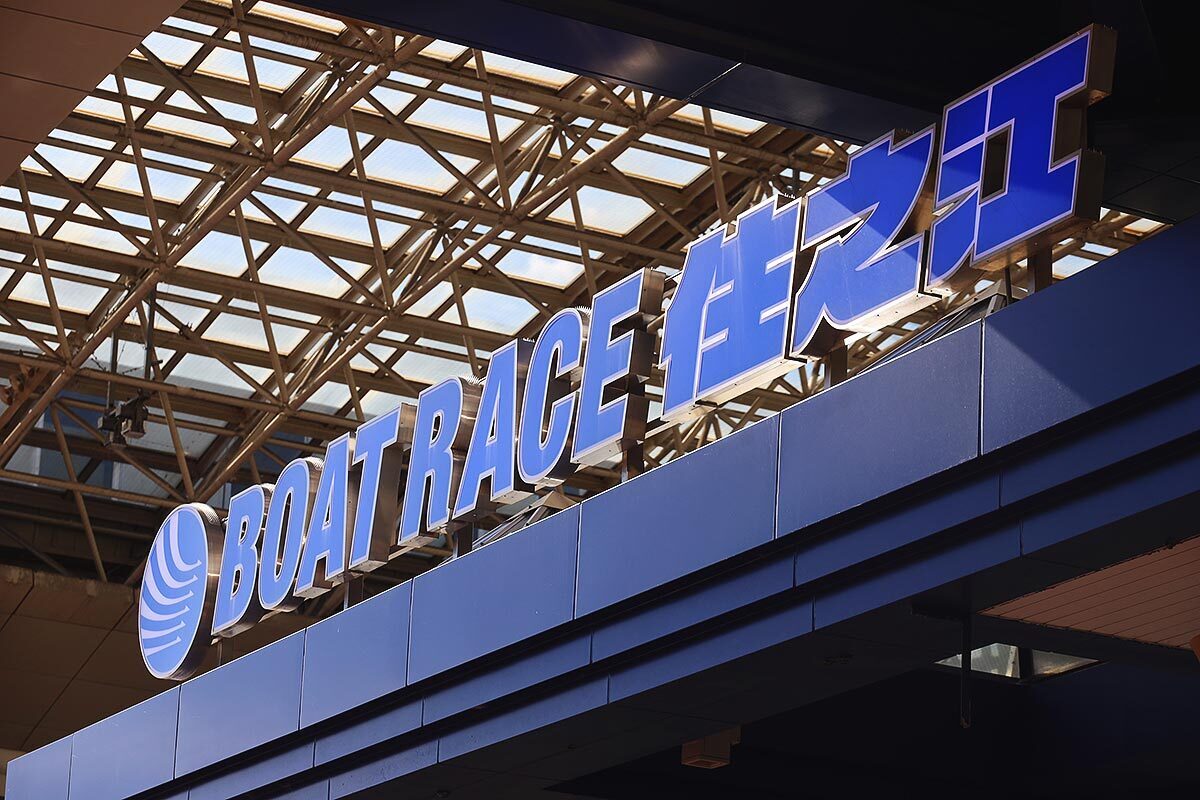
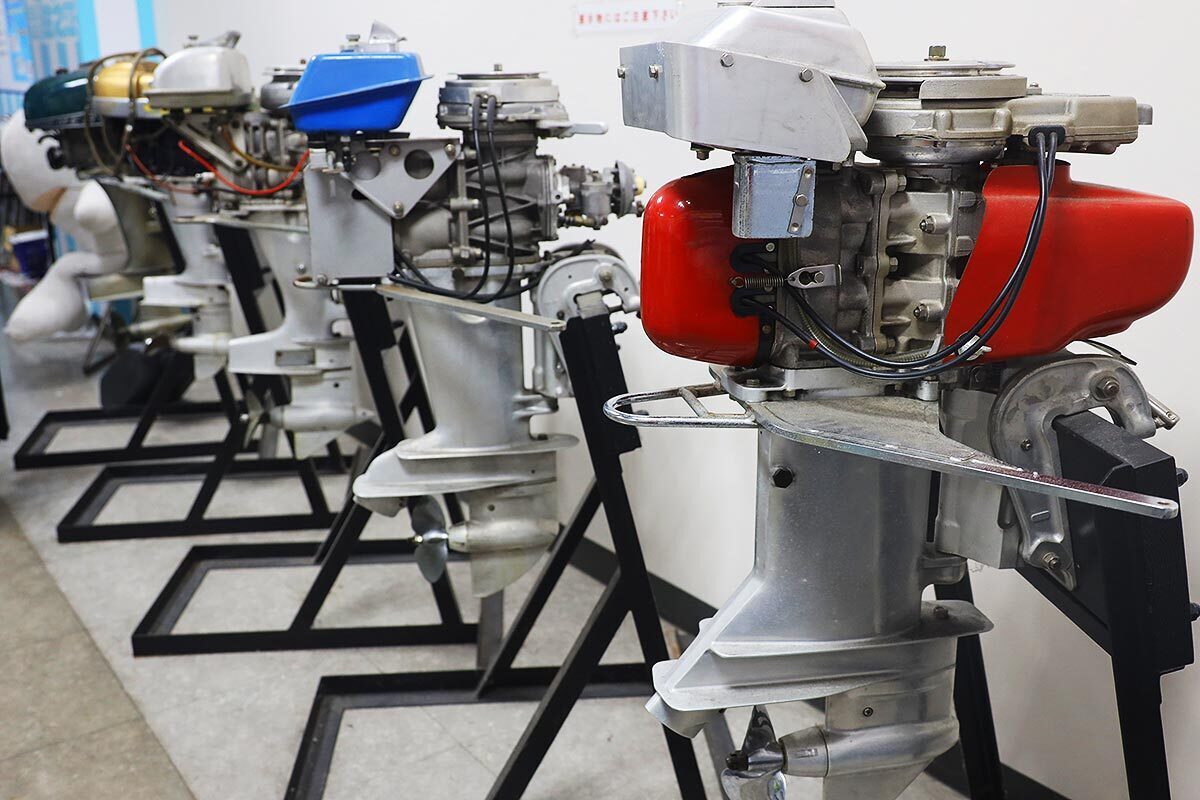
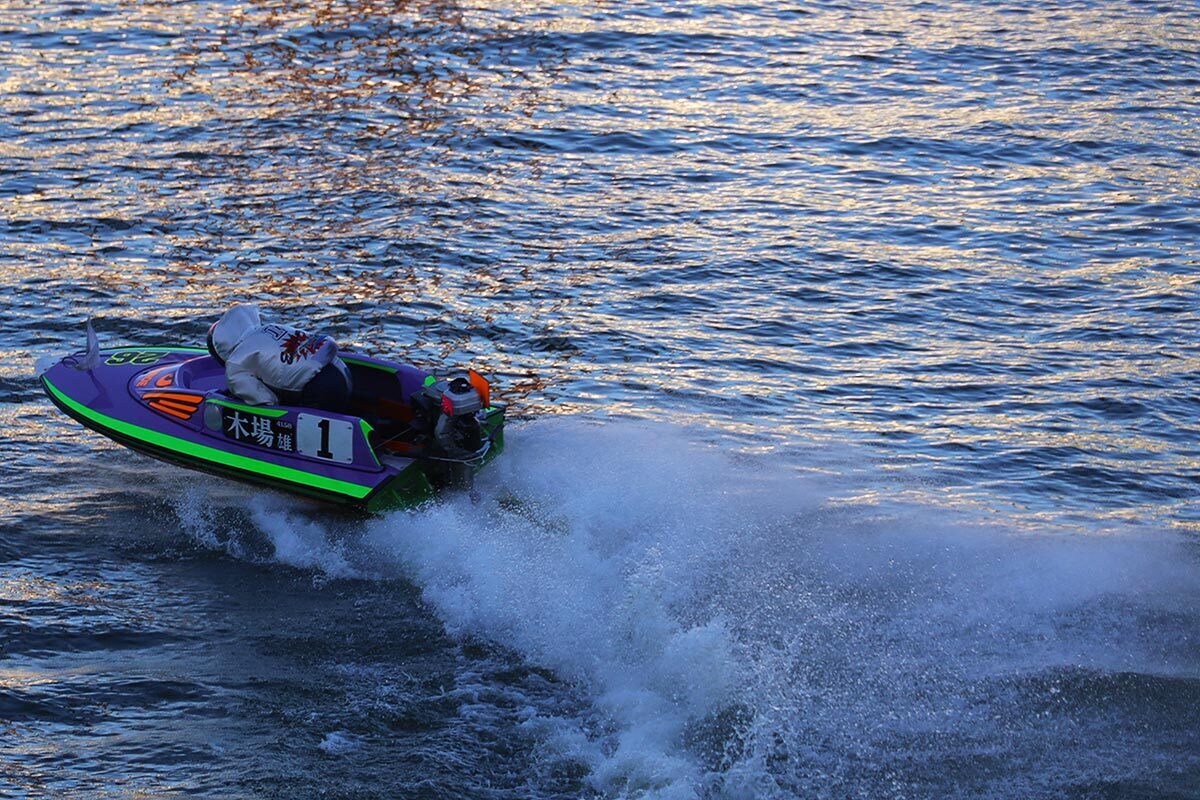
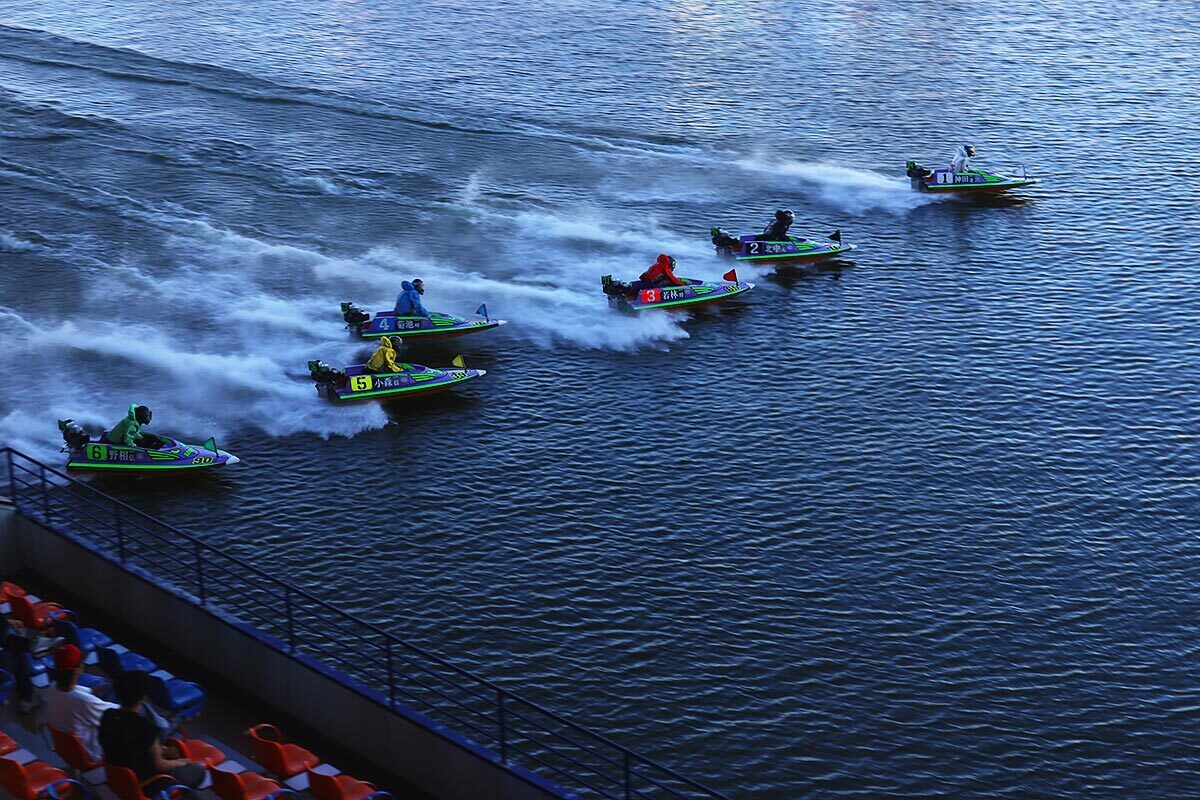
Inside, I got my first look at the water course from ground level, where an expansive wooden deck makes for the perfect up-close viewing spot. Though the fundamentals are the same - six boats, three 600-metre laps around two floating turn markers - each stadium has its own unique characteristics, and everything from the quality of water to the dimensions of the course will come into play.
Suminoe is a relatively narrow, artificial pool surrounded by concrete, filled with fresh rather than salt water that reduces buoyancy and can cause boats to bounce at top speeds. Because the water is so tightly enclosed, waves can rebound off the concrete back into the course, creating particularly tricky conditions around the all-important second turn.
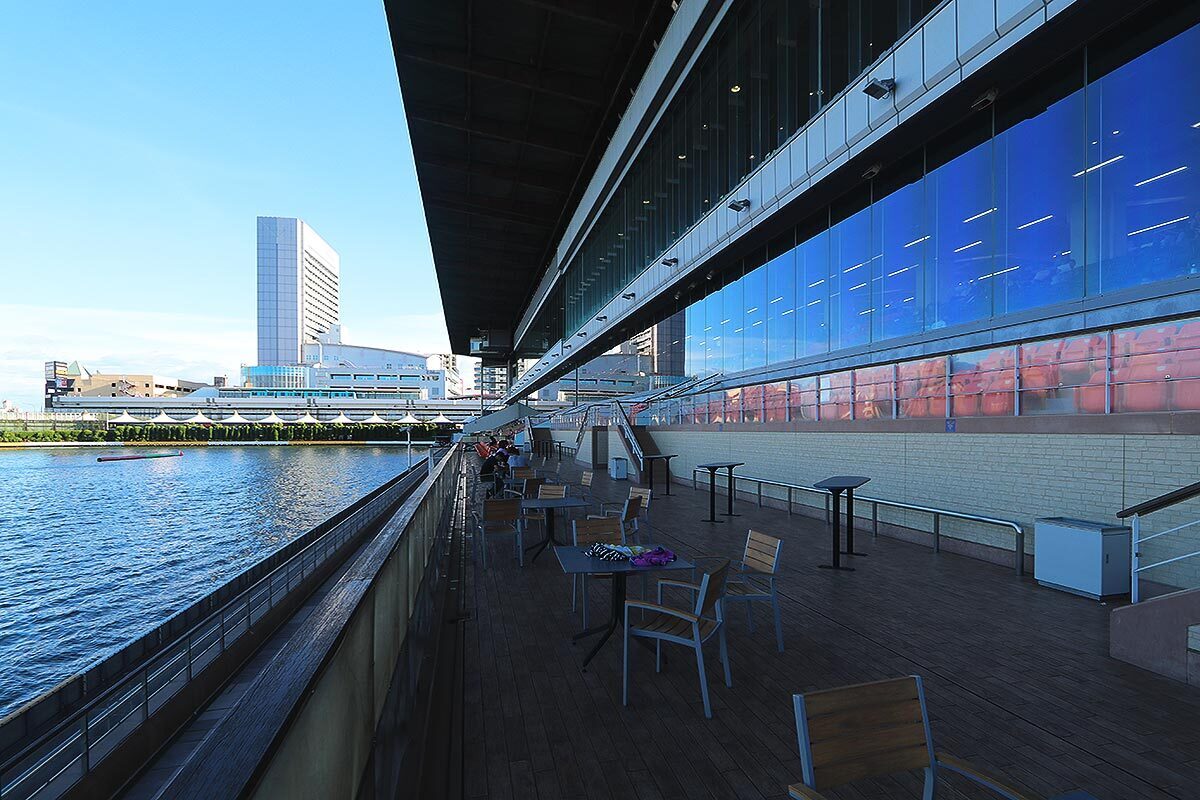
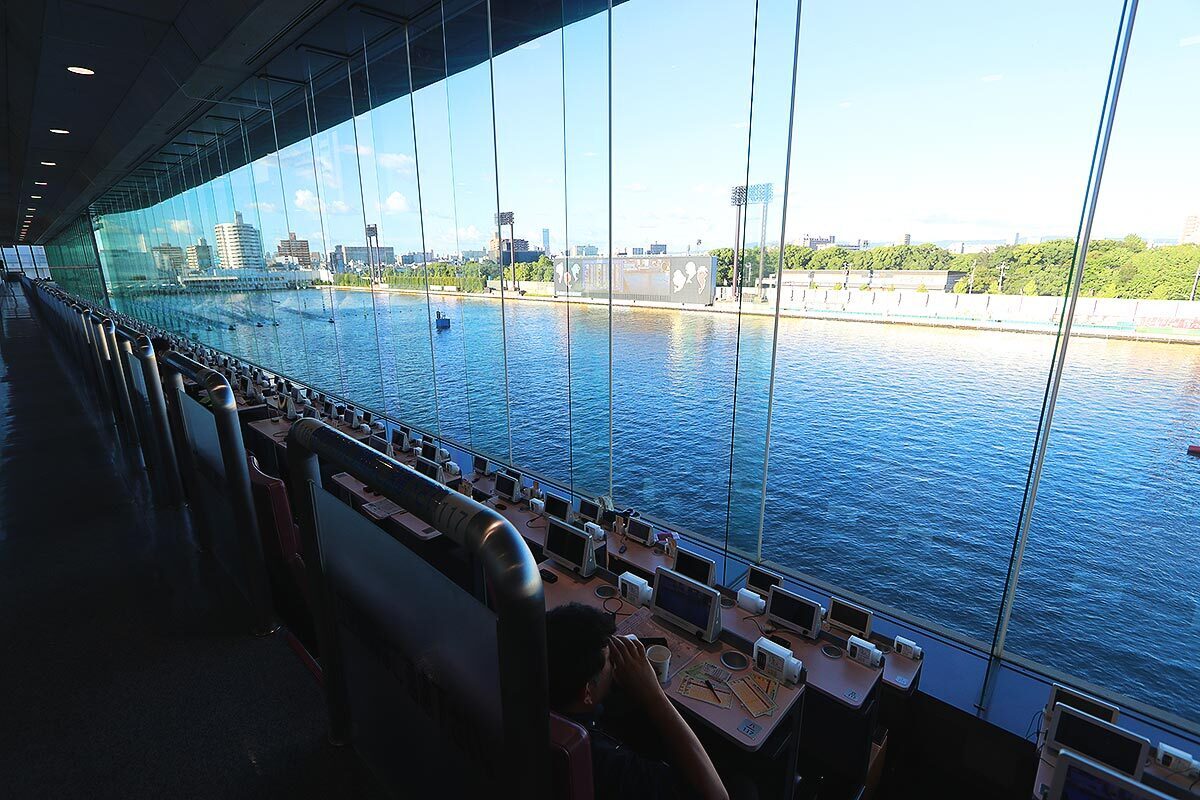
The second floor is where you'll find the regular seating and a commanding view across the full length of the water course. The long row of indoor seats is a great place to sit comfortably out of the elements, but for me the best view is from the south stand's outdoor area.
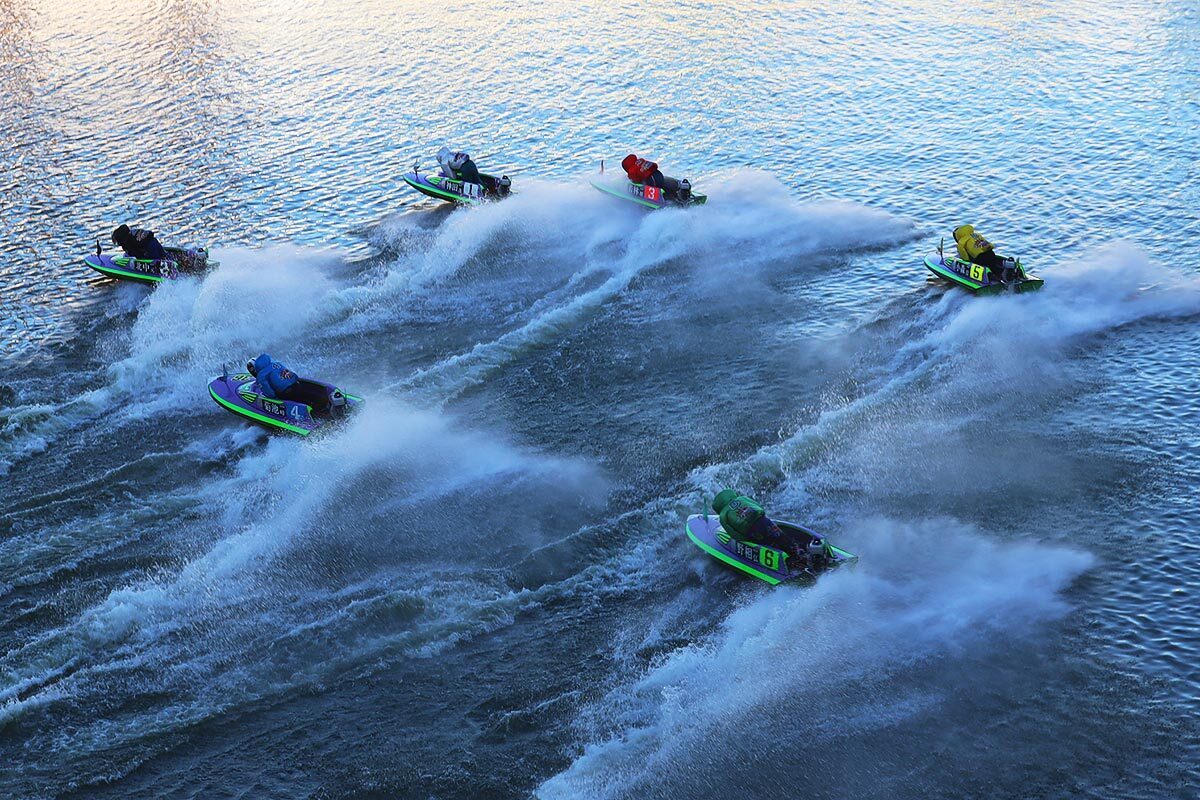
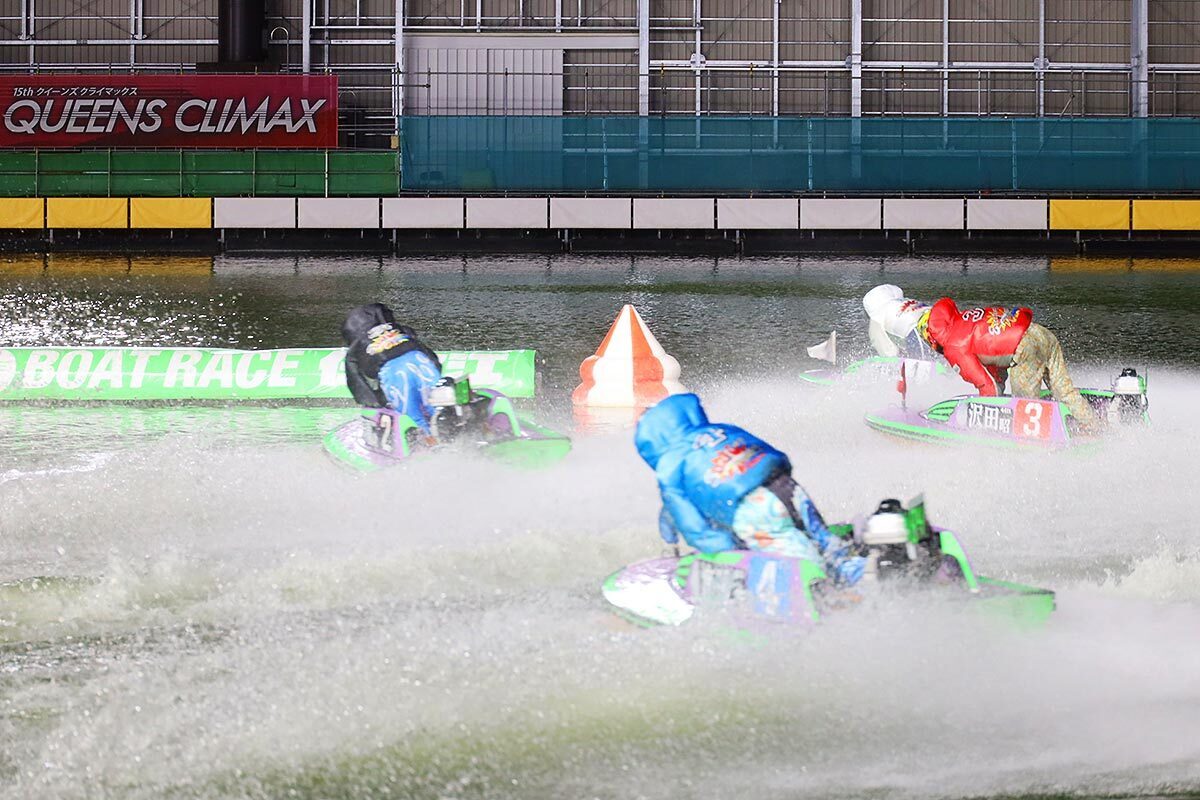
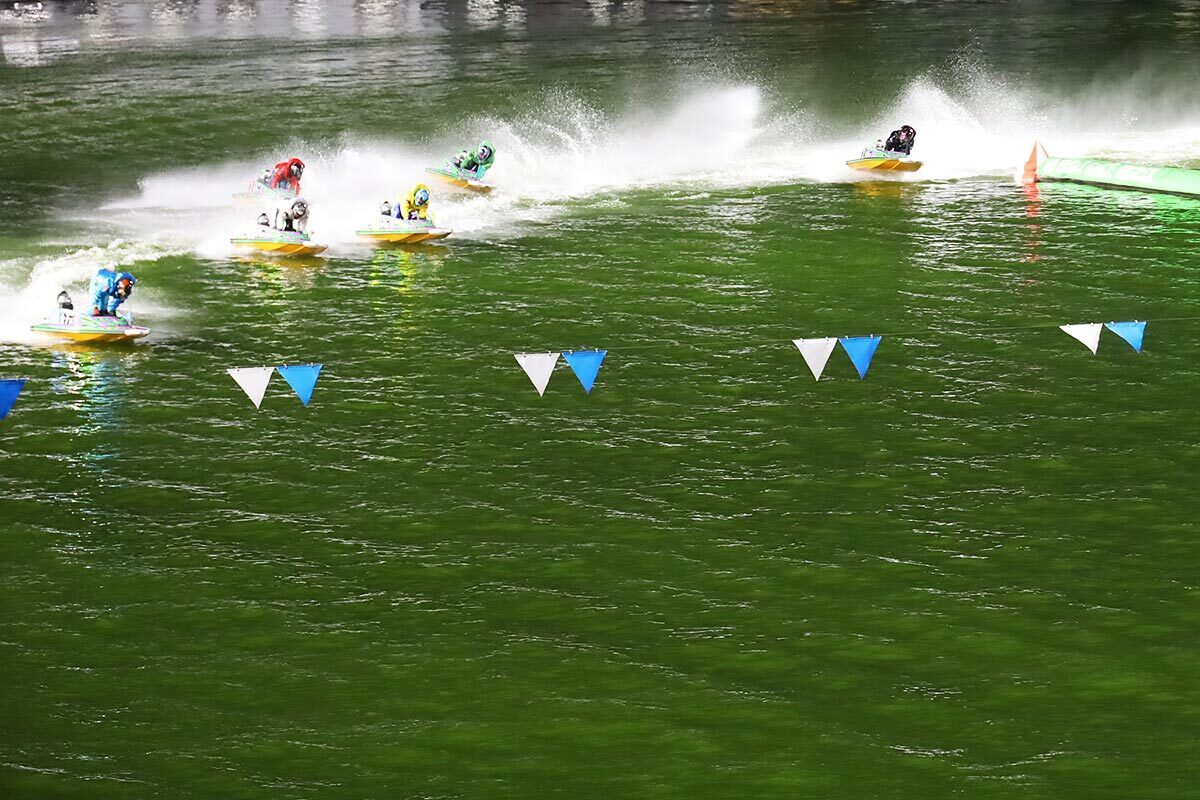
Stepping out onto the terrace just in time for the second race of the afternoon, I was able to look down on all six racers piling around the first turn, known as "1-mark", in a great churn of foam. It was probably the most violently energetic display the sport had shown me until then - the racers looking sure to all collide, then heaving their bodies into the turn at the last possible moment.
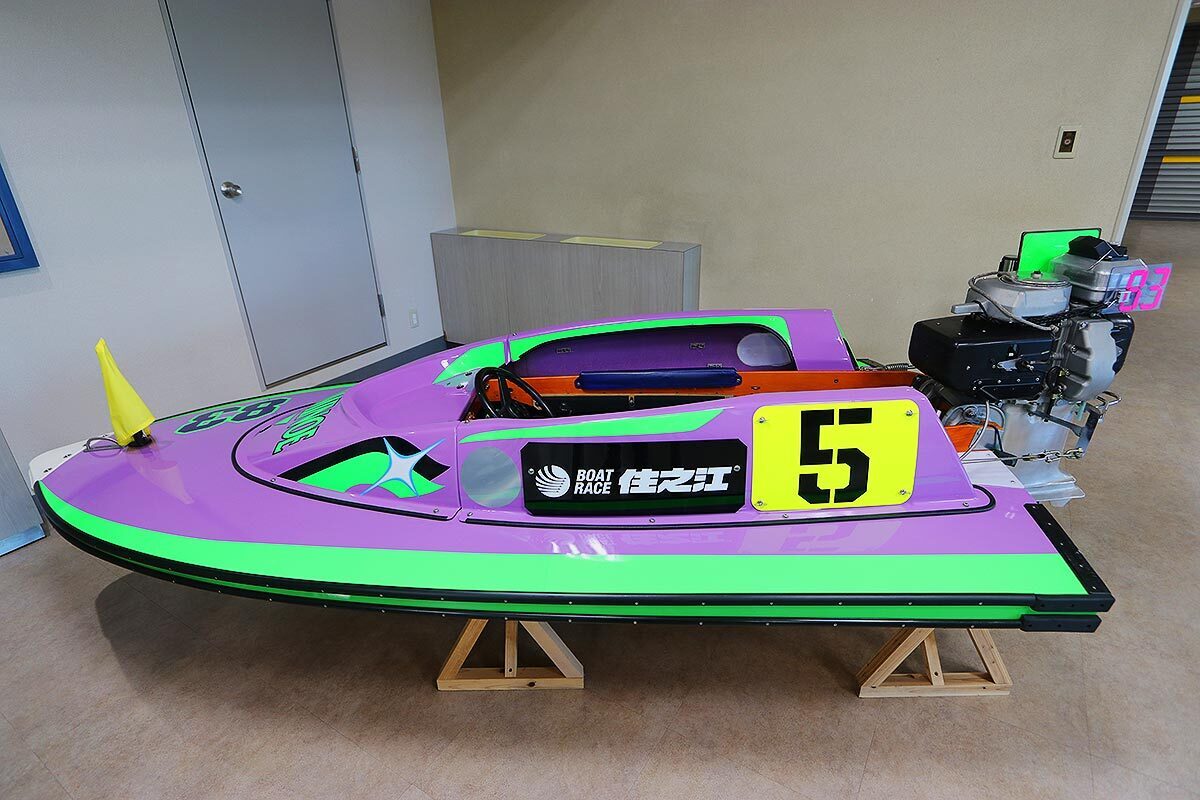
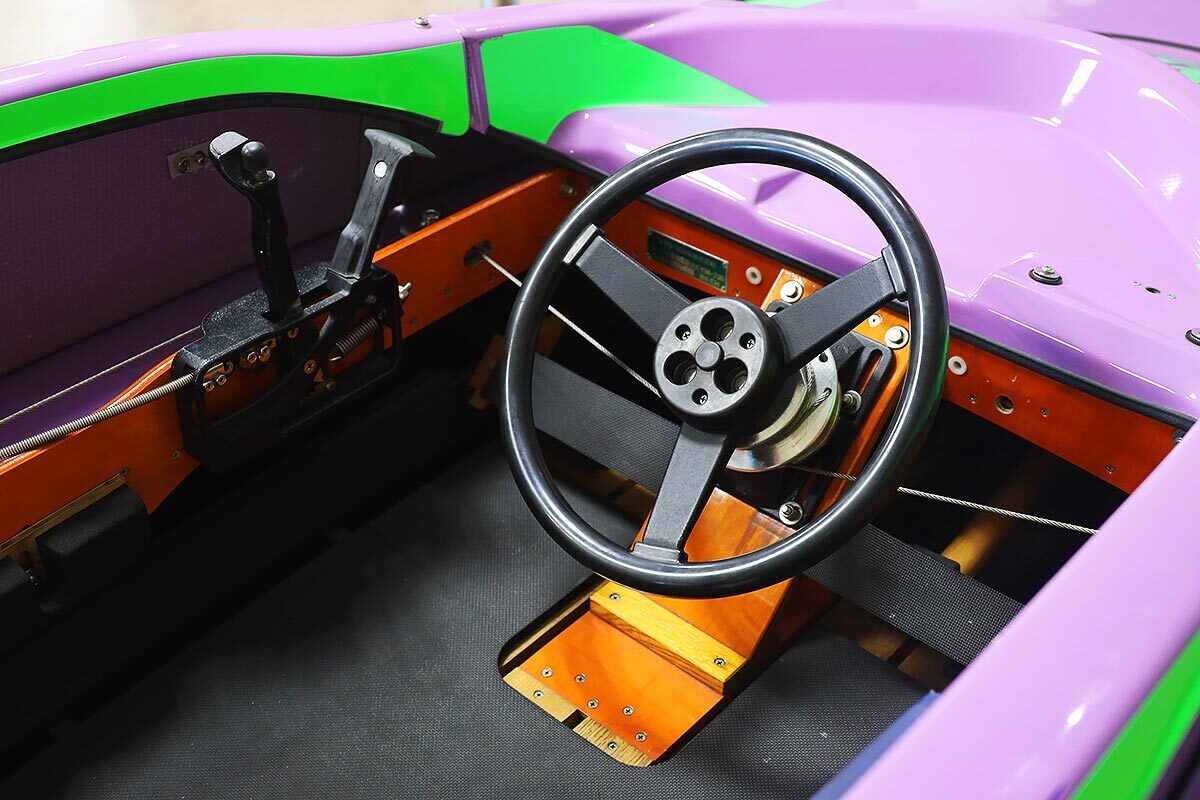
The reason for all this physicality became clear later when I got to take a closer look at an actual race boat on display. As a staff member explained, every racer uses essentially the same lightweight hull and 400cc two-stroke engine, with even the motor assigned by lottery before each race meeting. Though nominally identical, individual motors will develop subtly different characteristics as they are run in. Racers can tune the motor themselves and, fascinatingly, reshape their propeller to suit their own preferences or the day's conditions.
The result is a machine stripped right down to the essentials - a steering wheel, a simple lever to control acceleration and no brakes, leaving only water resistance and the skillful use of one' s own bodyweight to control speed at crucial moments
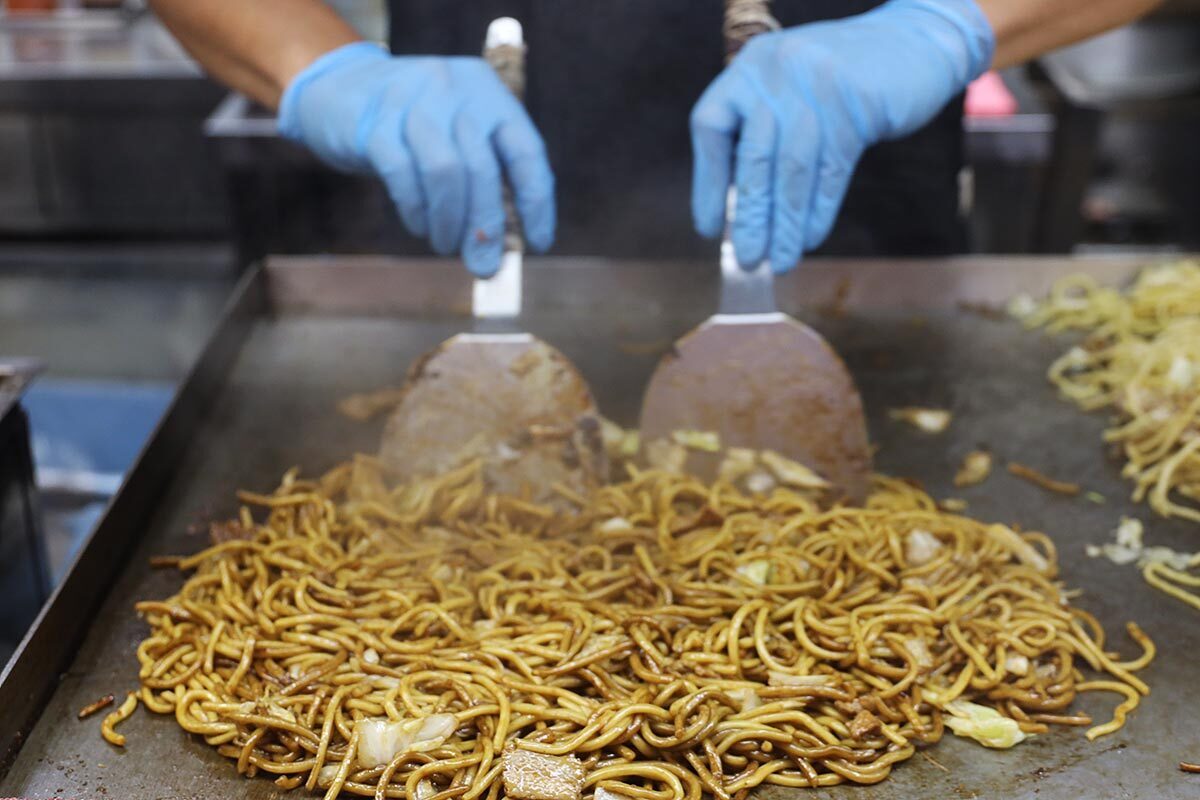
If you while away a few hours by the track, sooner or later you're going to get hungry - not surprisingly for an Osaka stadium, this is where Suminoe shines, with six different eateries to choose from plus an additional two inside the third and fourth floor special paid areas. Feeling just a bit peckish, I made a quick stop at V&S, a hole-in-the-wall on the second floor specializing in hearty Kansai-style streetfood, for the day's second helping of takoyaki.
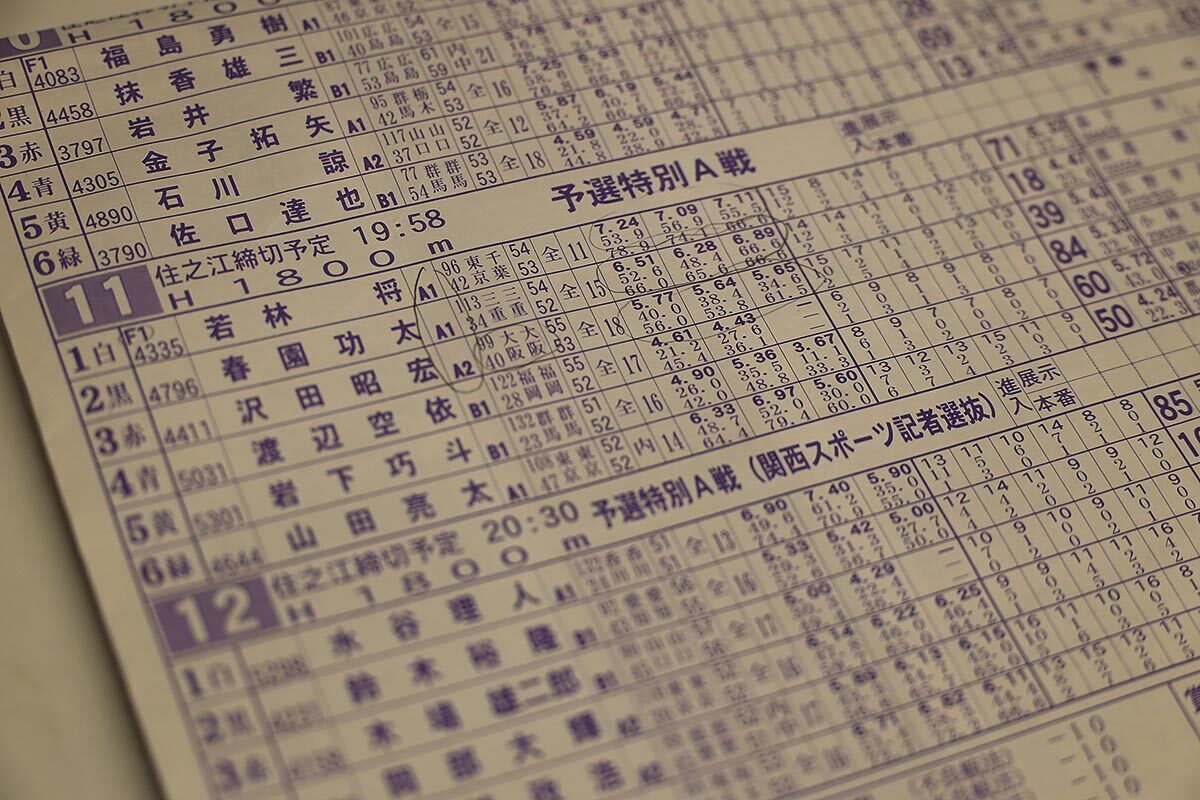
With full dark approaching, it was time to study the race card and place a bet or two ahead of the day's final two races at around 20:00 and 20:30 respectively. Known as a shussohyo, this is a document that can seem bewildering at first but contains just about every bit of information a data-hound could want, from the players' own details and winning record to a whole suite of statistics about each motor.
If you're anything like me, all those numbers and characters might be enough to make your vision start to swirl, but stick with it and you'll notice subtle details that reveal more than you think: a start time of 0.12 of a second might be the sign of an aggressive racer, but just one false start (given as F/L) next to their name could change everything - fouls of any kind are so severely punished that most will err on the side of caution.
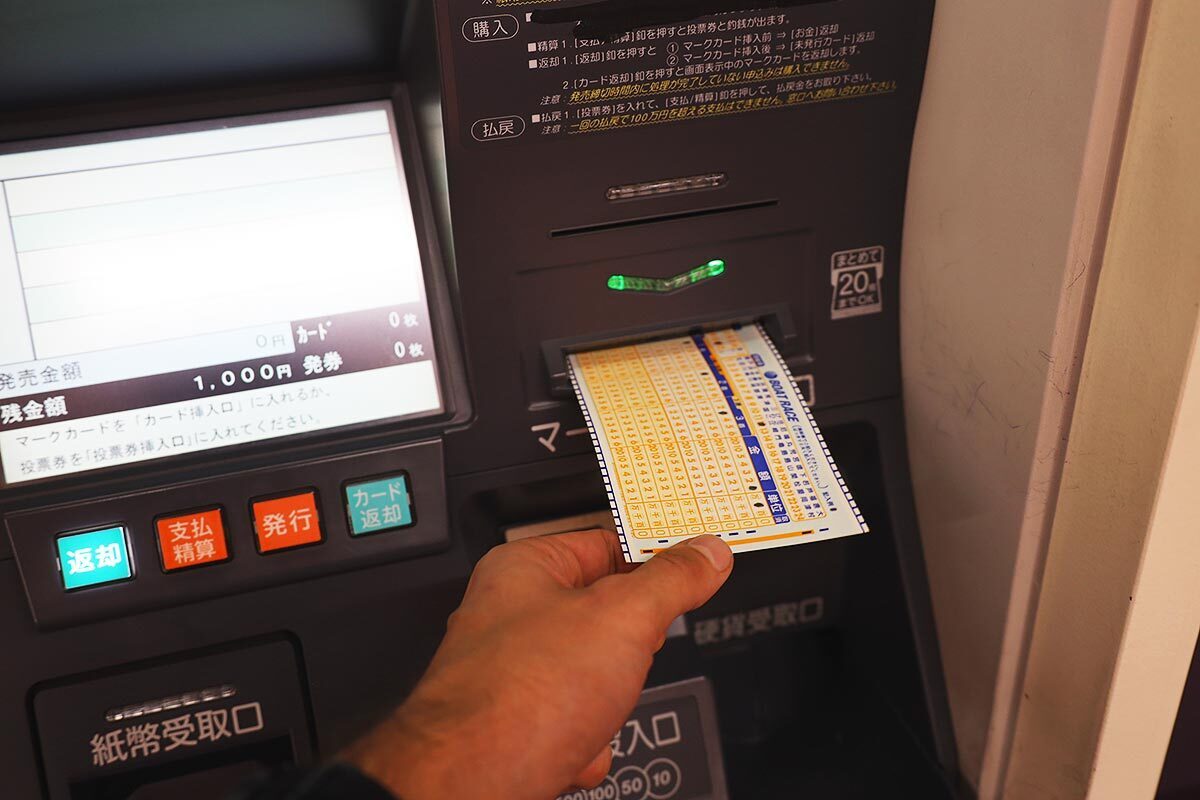
At last, I spotted what looked like a sure thing in the second to last race - three players on the inside of the track, two of the very top rank and one in the second, all with an impressive record nationally and here at Suminoe. Repeating the words "cannot possibly fail" through gritted teeth, I fed a completed slip into one of the nearby betting terminals along with a single thousand yen note.
Guessing the top three racers without specifying an order is called sanrenpuku and perfectly illustrates the byzantine nature of the game - simply picking the winner would soon get stale, so betting tends to coalesce around precise orders and combinations. Skin firmly in the game, it was time to make my way back downstairs to greet my victory from close-up. It was inevitable. It could not possibly fail.
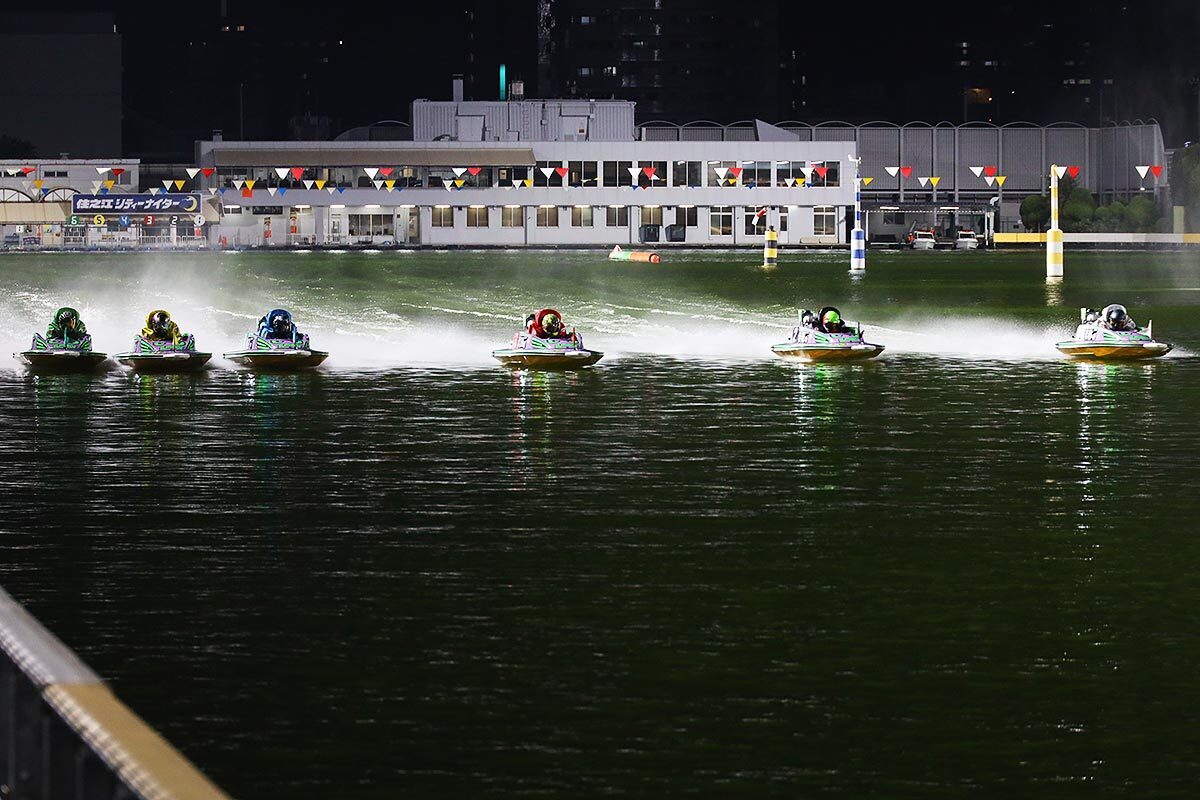
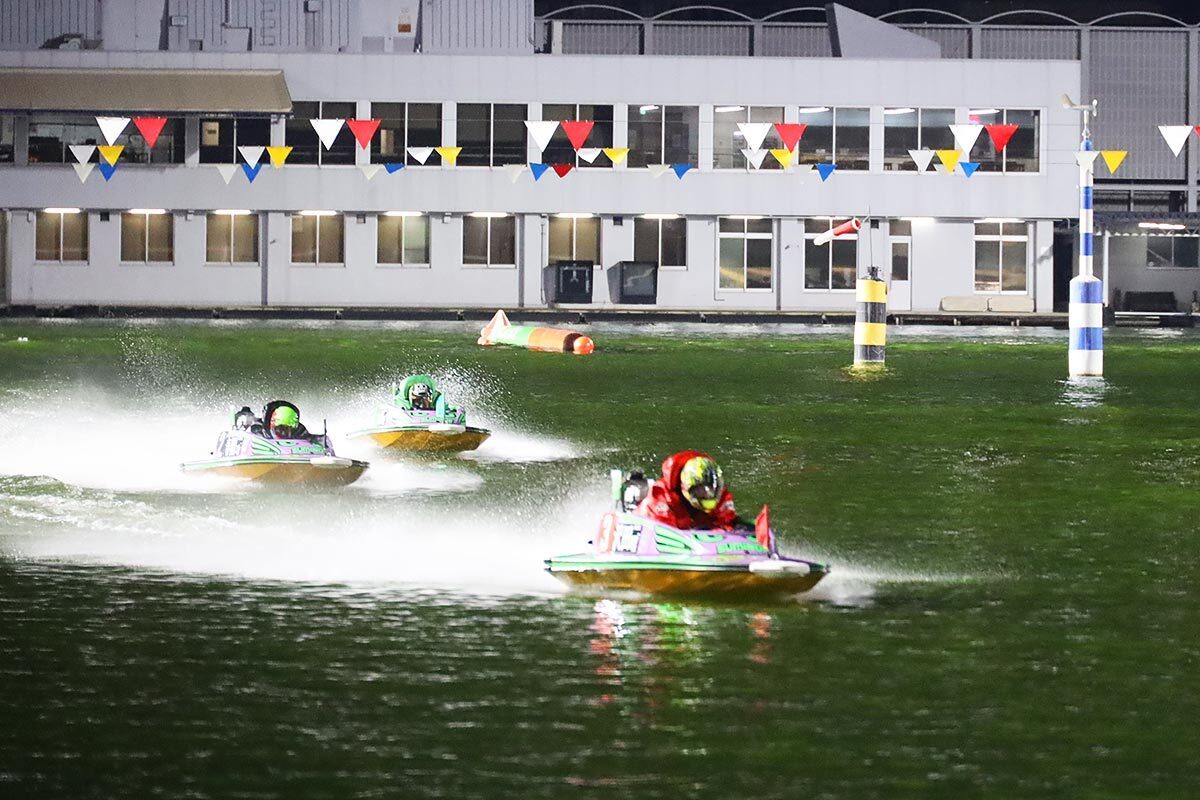
This was my first time watching a race after dark, and the combination of bright floodlights with sparkling water instantly created a sense of tension and theatricality, further heightened as the crowd pumped fists and cheered for their favorites by name. In a moment, the boats roared through their rolling starts and took off, laps seeming to fall away in the time it took to blink.
It all began smoothly enough, with boats one, two and three neck and neck as they tore through turn after turn. Then, the cheers rising to a fever pitch, triumph gave way to tragedy as the other second division racer outpaced my number two - a stunning upset in the dying moments of the race. The crowd reached a crescendo. I did not yet know how to pick a winner.
20:45-23:00 Yellow Craft Ape
Feeling energised, I left the stadium and retraced my steps to Suminoe Station, from where a twenty-minute ride on the Yotsubashi and Midosuji subway lines brought me to Yodoyabashi, three stops north of Namba and the sprawling nightlife districts surrounding it. Those may be the places that still draw the lion's share of visitors, but for something a little quieter, stylish and more intimate, I like to recommend the many smaller, up and coming neighborhoods.
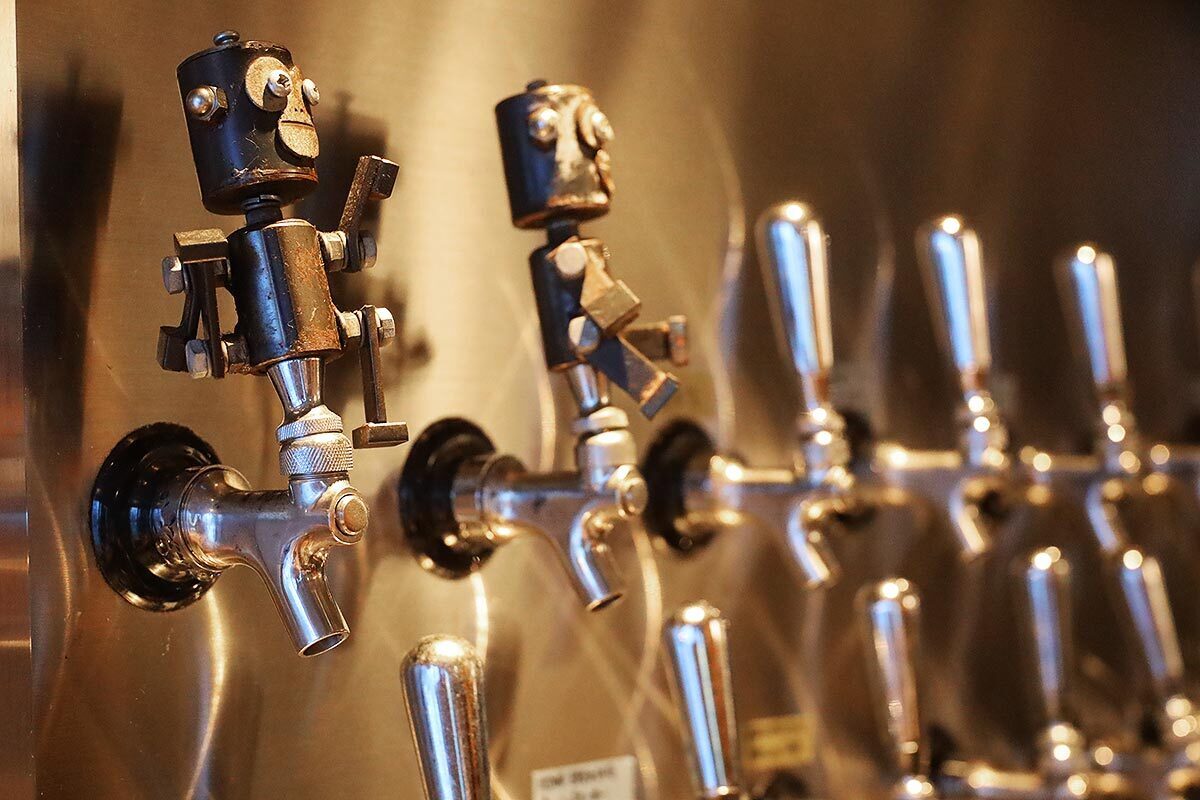
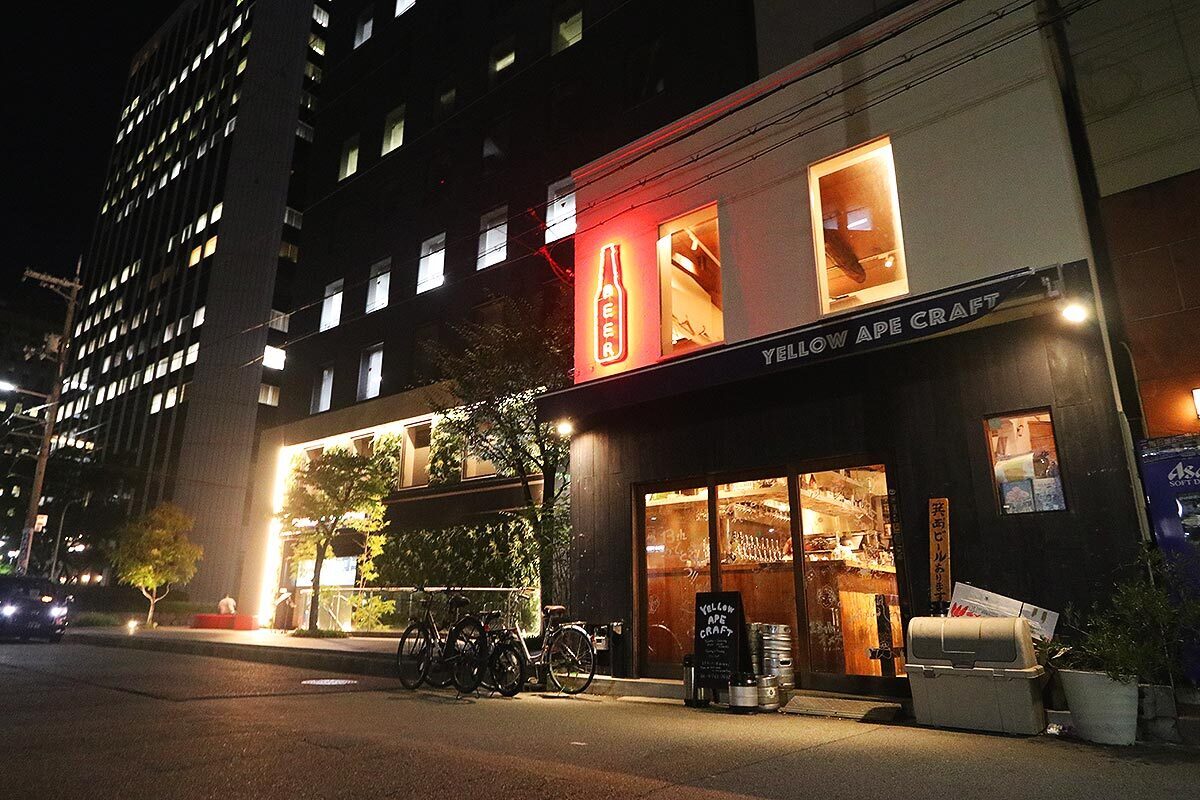
Just take Yellow Craft Ape, a small, solitary taproom surrounded by the looming office towers of Yodoyabashi's financial district. Founded back in 2012 - the same year the city's craft beer scene exploded into being - this cozy spot has been serving an impressive number of brews ever since, alongside a menu of light, Italian-inflected dishes.
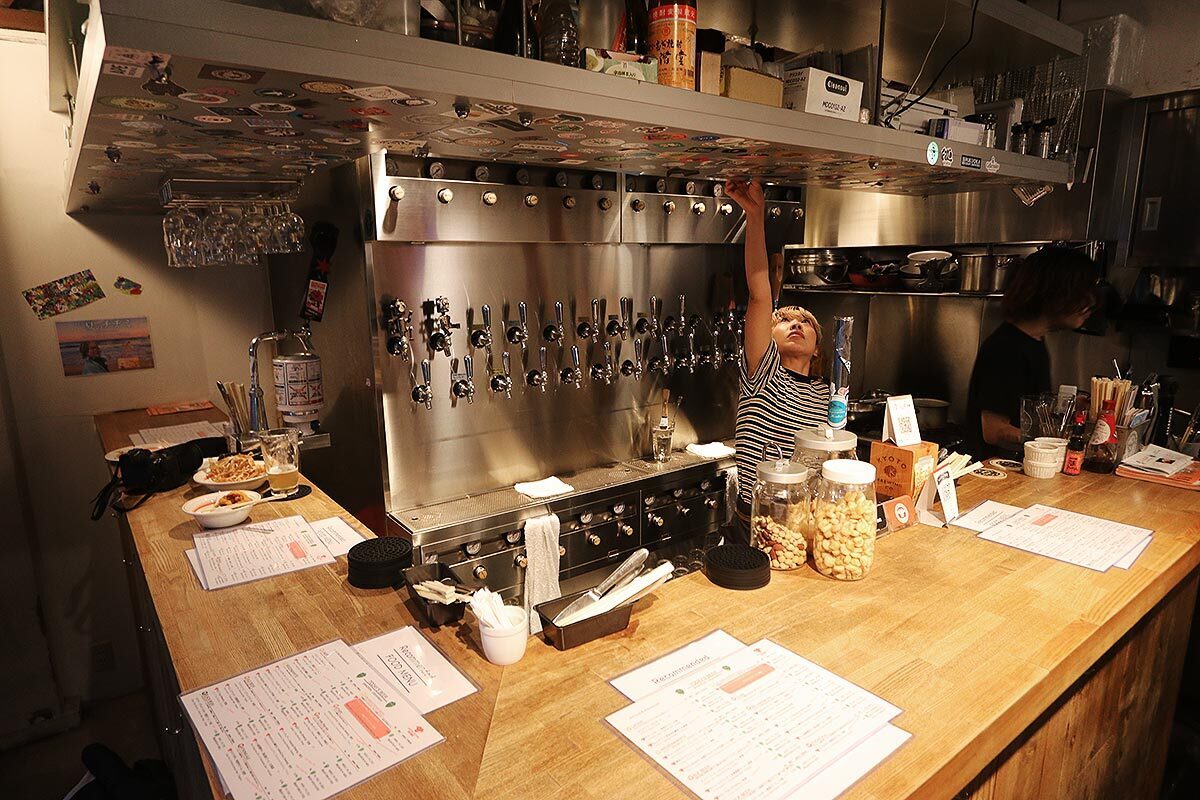
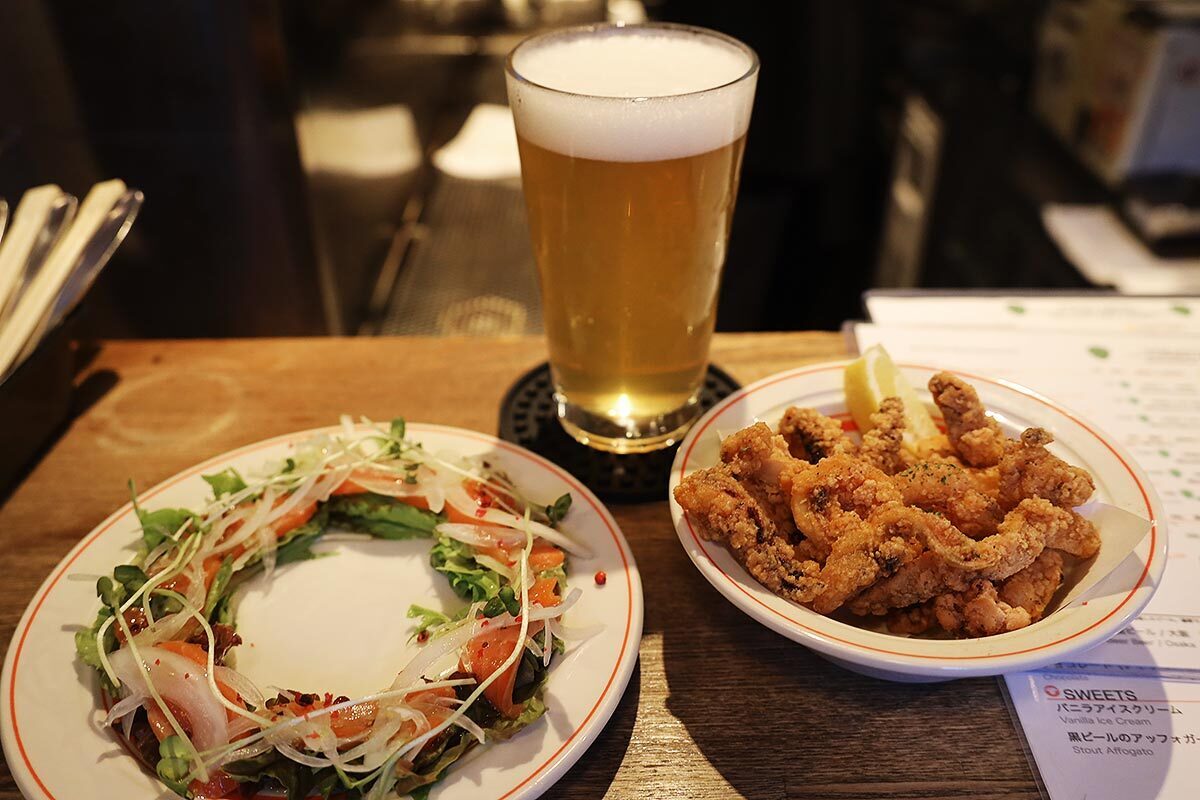
Inside, you have the choice of tables upstairs or something like "semi-standing" around the bar. Feeling chatty for a change, I opted for the bar and was soon getting to know the locals as small plates began to pile up in front of me - today's carpaccio, burdock fries and squid karaage for starters, all of it delicious with an unusually delicate touch.
Reflecting on the day I'd had, it occurred to me that I hadn't covered the city at all in the usual sense - instead of climbing a tower or ticking off some grand cultural landmark, I had explored, eaten, gambled, eaten some more and talked. Honestly, I'm not sure how it gets more Osaka than that.