Visiting three workshops of Kurume Kasuri, a traditional Japanese textile
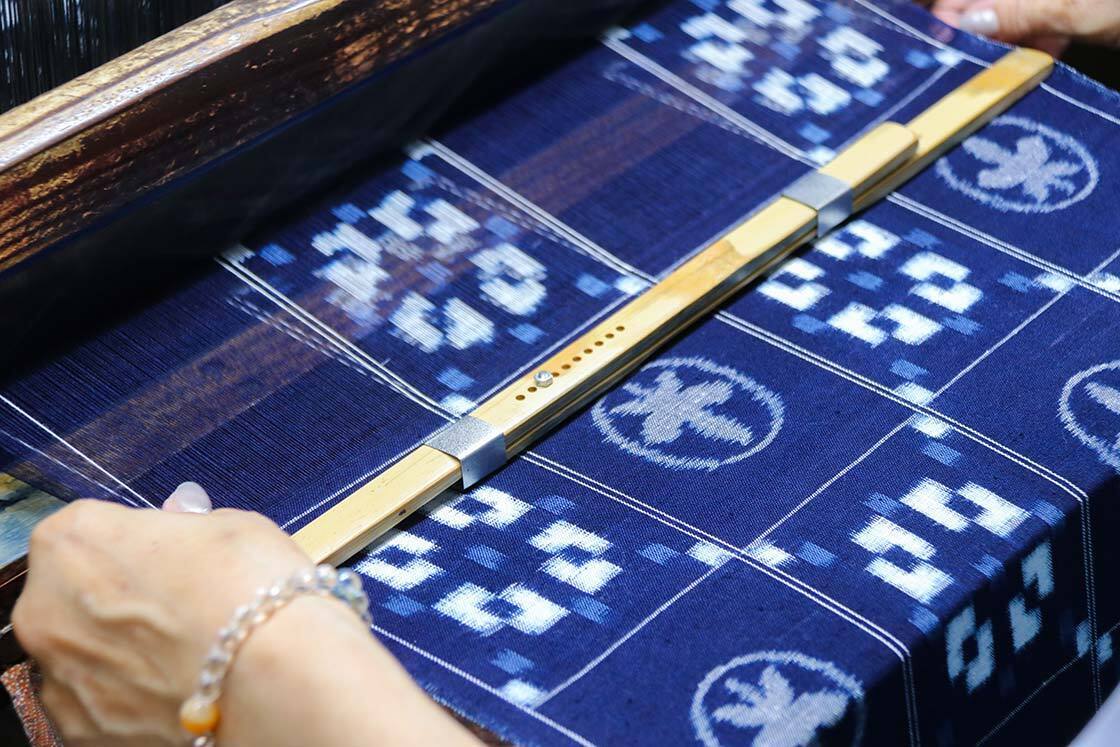

Kurume Kasuri is a traditional Japanese textile from Fukuoka Prefecture in Kyushu that creates patterns by tying and dyeing yarn before it is woven. The technique originated more than 200 years ago, when a young woman born and raised in the Kurume castle town (modern-day Kurume City in southern Fukuoka Prefecture, Kyushu) was curious about the faded patterns on her indigo-dyed kimono. Her curiosity led her to explore binding techniques that block dye and weaving patterns out of the dyed yarn. These became the building blocks of modern-day Kurume Kasuri.
The best way to understand Kurume Kasuri is to see the process firsthand. In this two-article series, I went to Hirokawa and Yame, and visited six workshops in total - three per article -, each offering a different perspective on the craft. I also took the time to do some sightseeing in Yame, a city about an hour south of central Hakata, and most well-known for its tea.
All six workshops are open to the public, and some even offer kasuri-related activities. Note that while it may be possible to visit without a reservation, workshop tours are subject to staff availability. It is better to book a tour or activity in advance and request an English interpreter to get the most out of your visit. Some of the terminology can be difficult to grasp even in English.
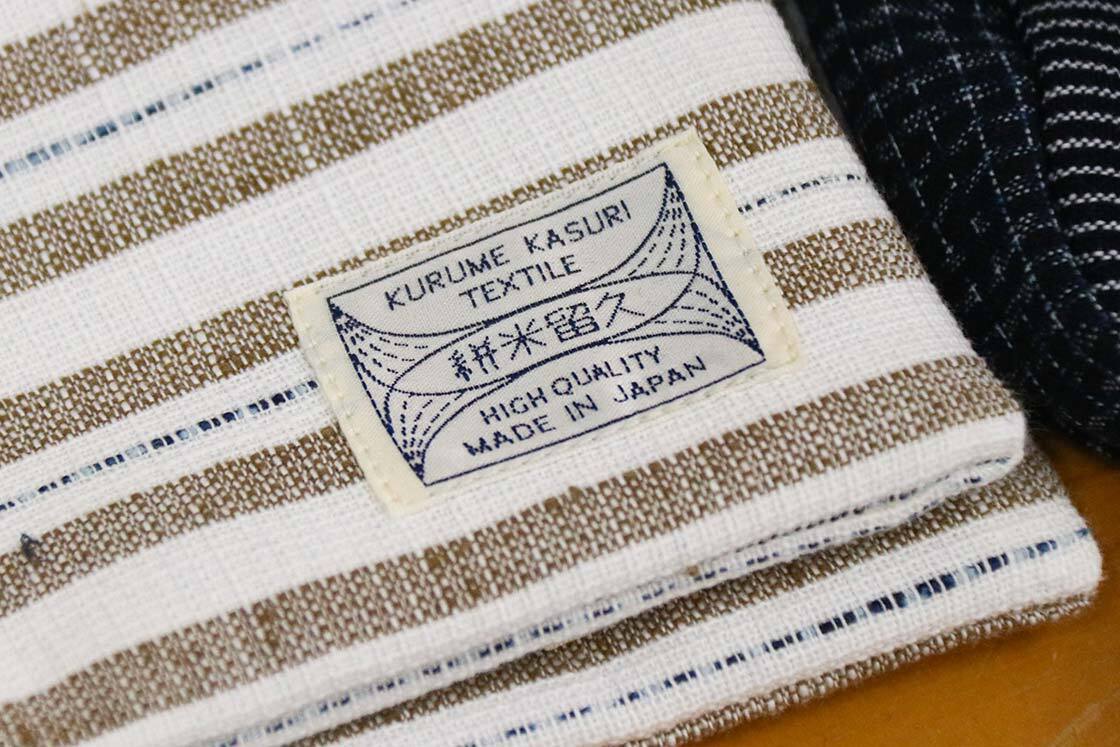
What is Kurume Kasuri?
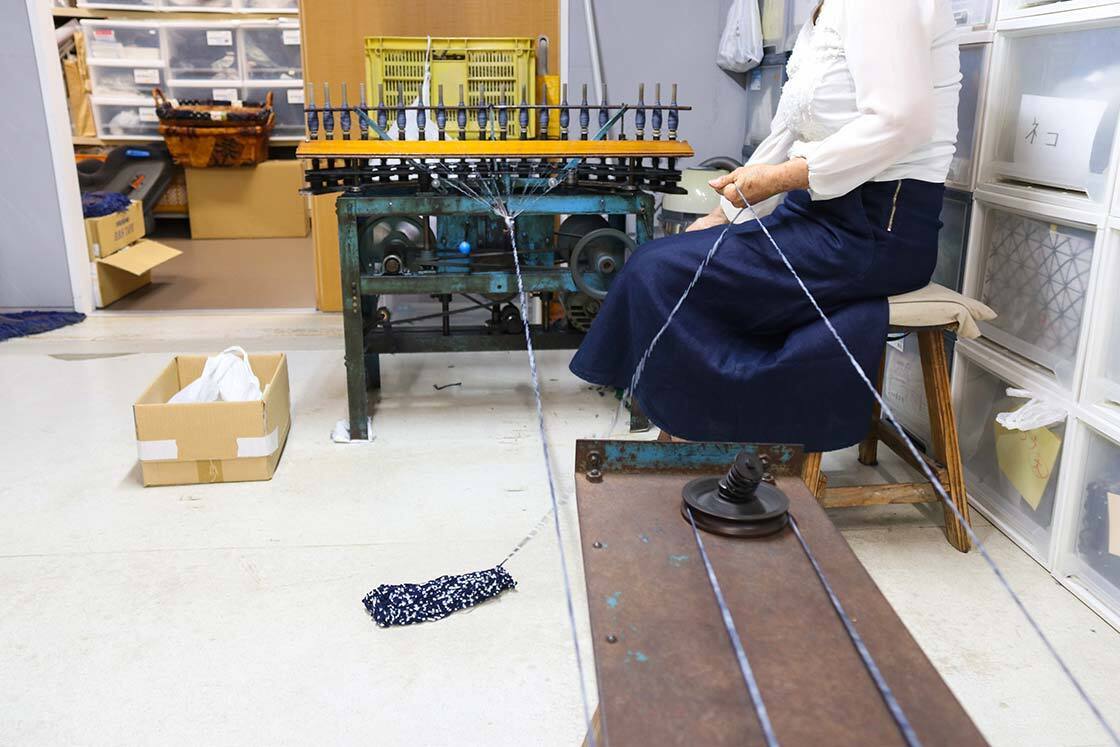
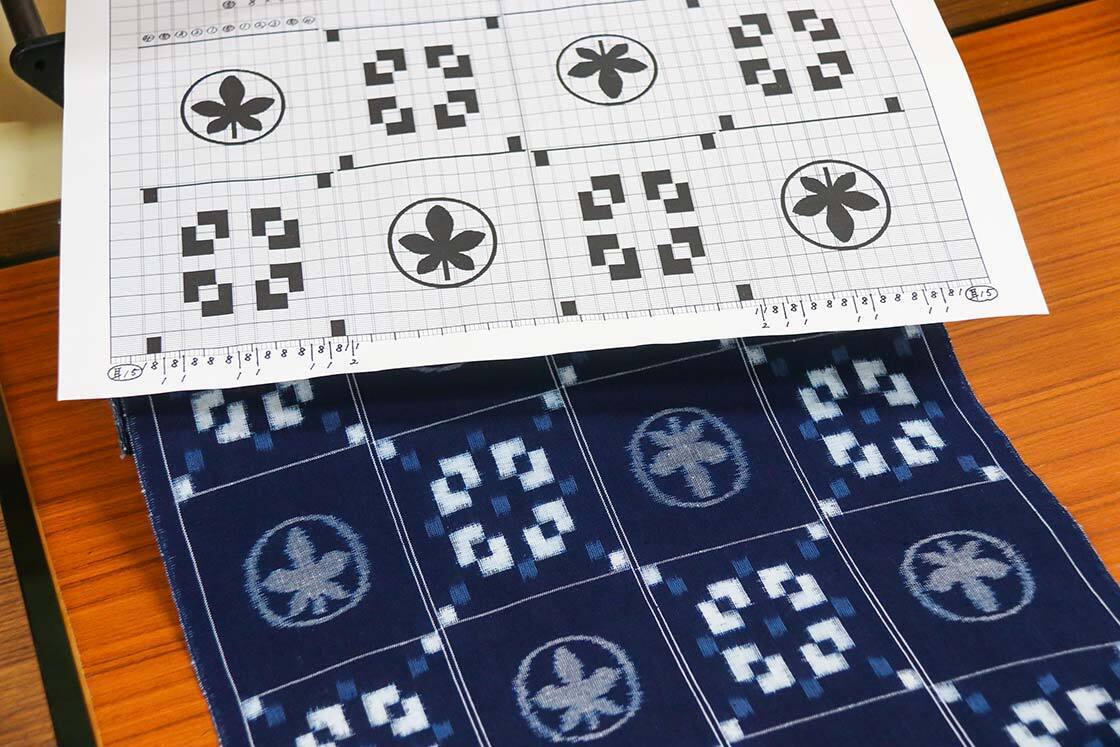
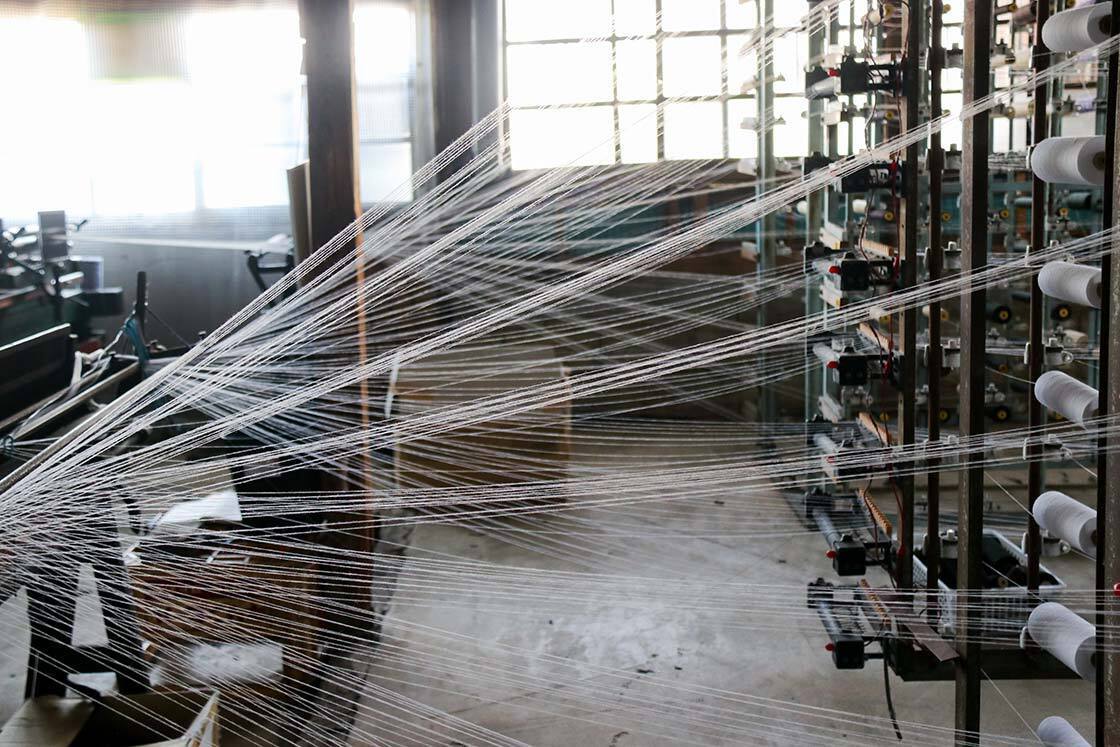
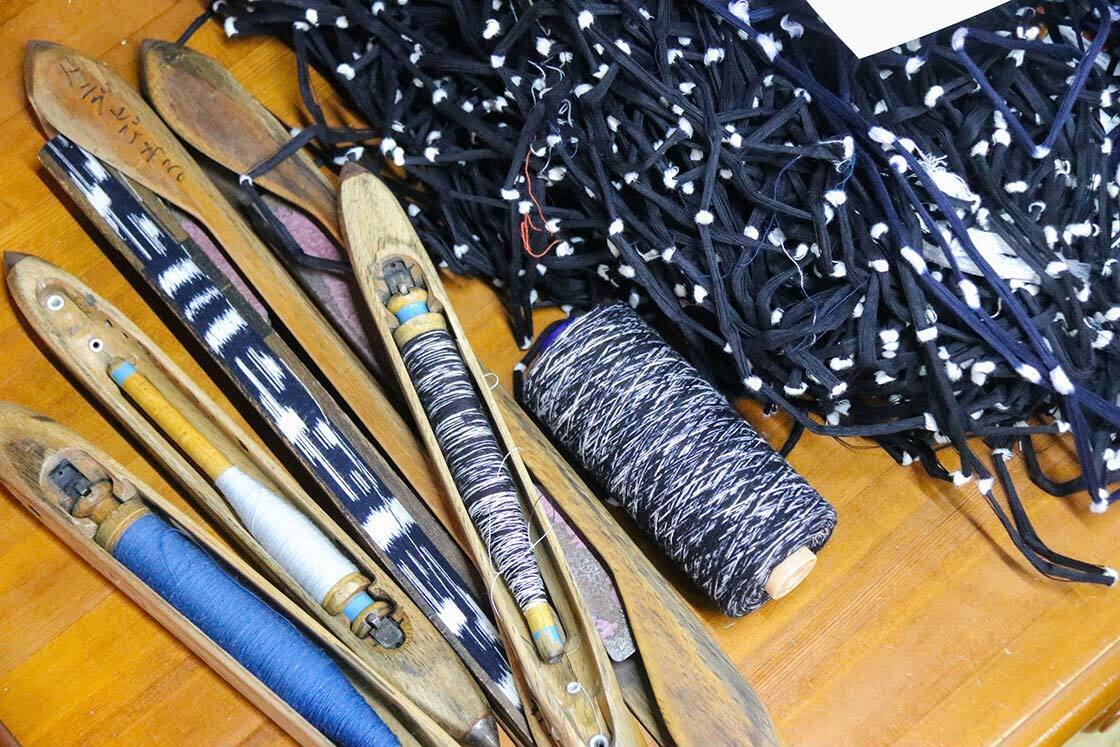
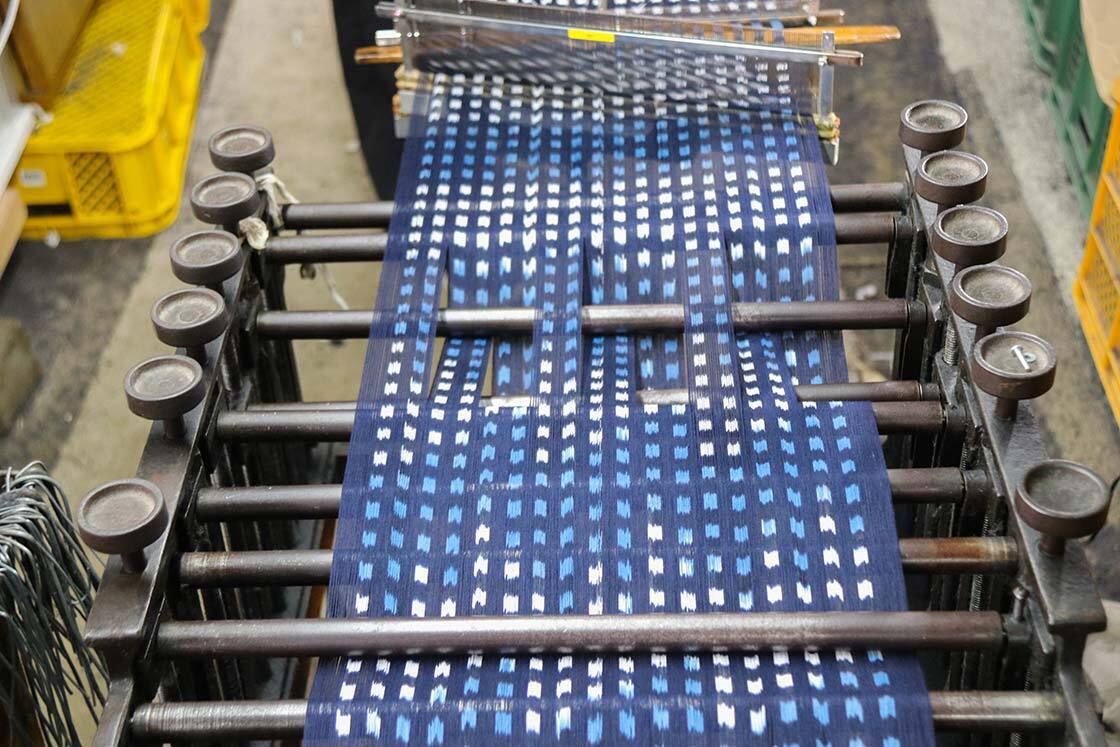
What makes Kurume Kasuri distinctive is that the pattern is created in the yarn before the cloth is woven. The process of creating Kurume Kasuri involves over 30 steps, with three main stages: tying the yarn, dyeing and weaving. The first step is pattern design, which is drawn up like a blueprint. Then, sections of undyed yarn are tightly bound with strings (kukuri process) according to the pattern. A handful of workshops still do this kukuri process by hand, but most outsource this labor intensive work to specialized kukuri tying machines.
Next, the bound yarn is dyed, with the tied sections remaining undyed as they are protected by the kukuri strings. The bindings are then removed, leaving yarn that alternates between dyed and undyed sections. Finally, the yarn is woven together to form the pattern.
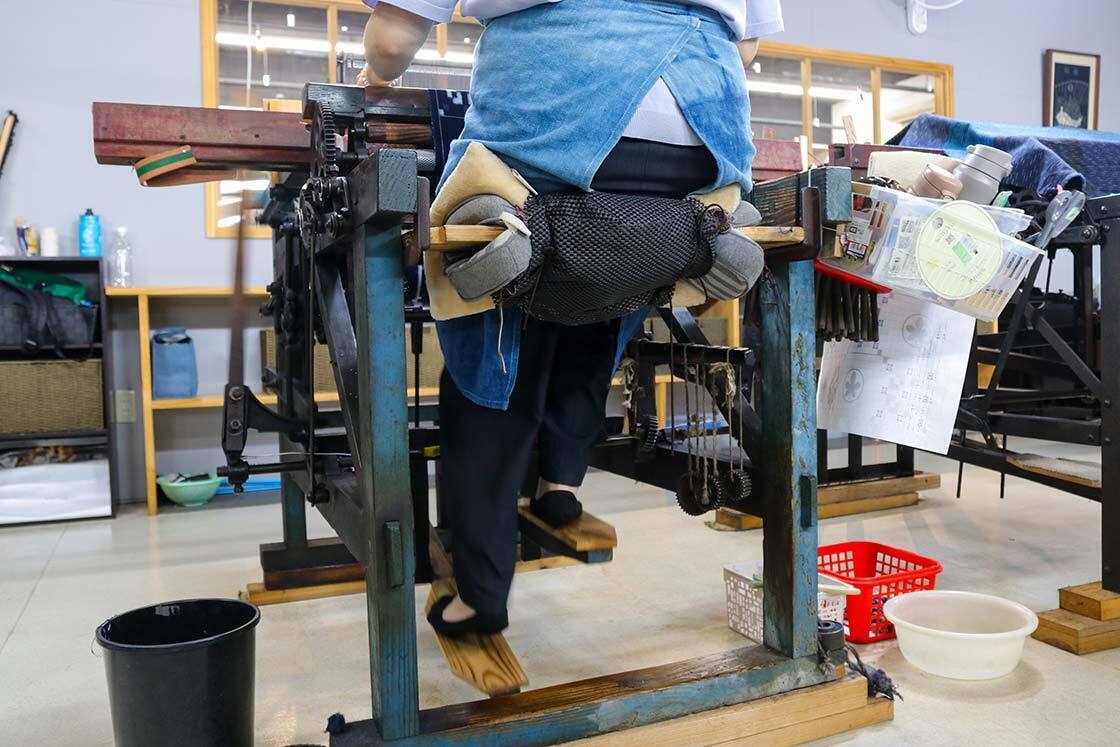
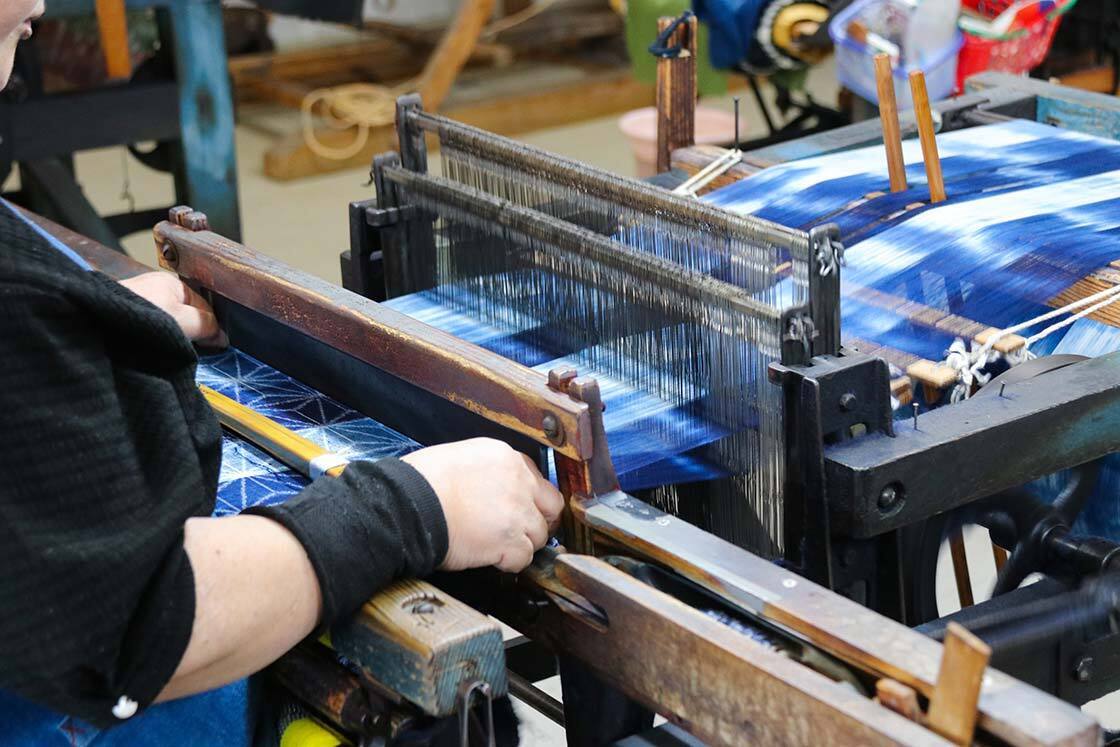
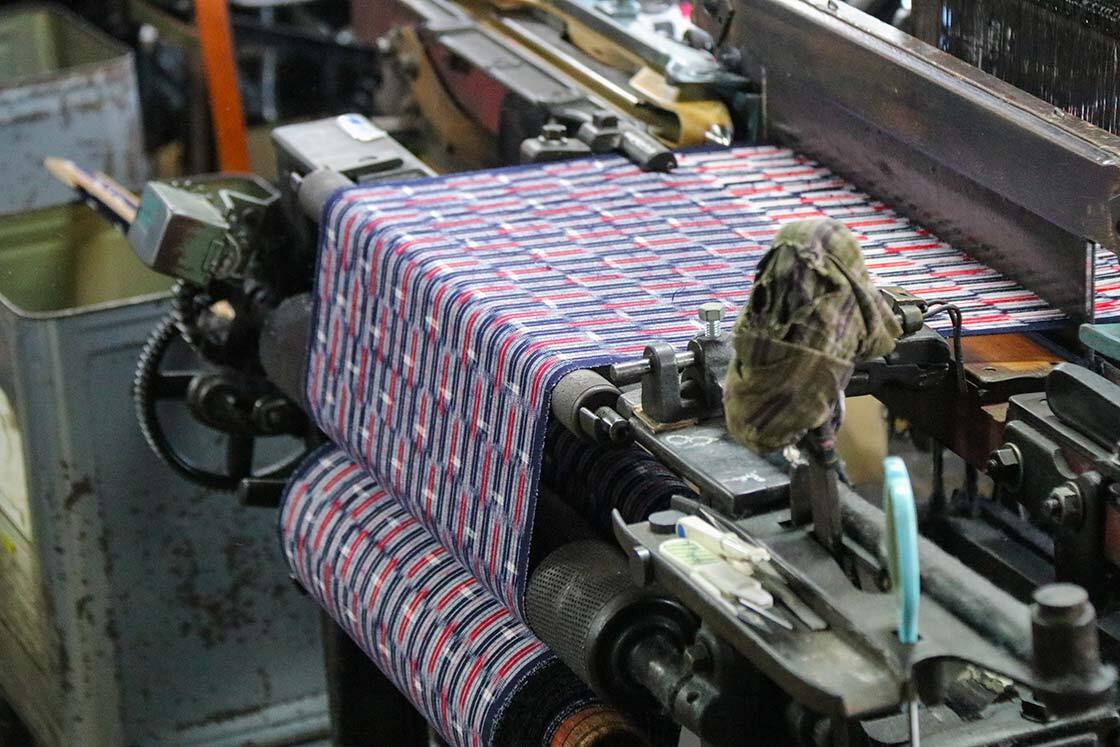
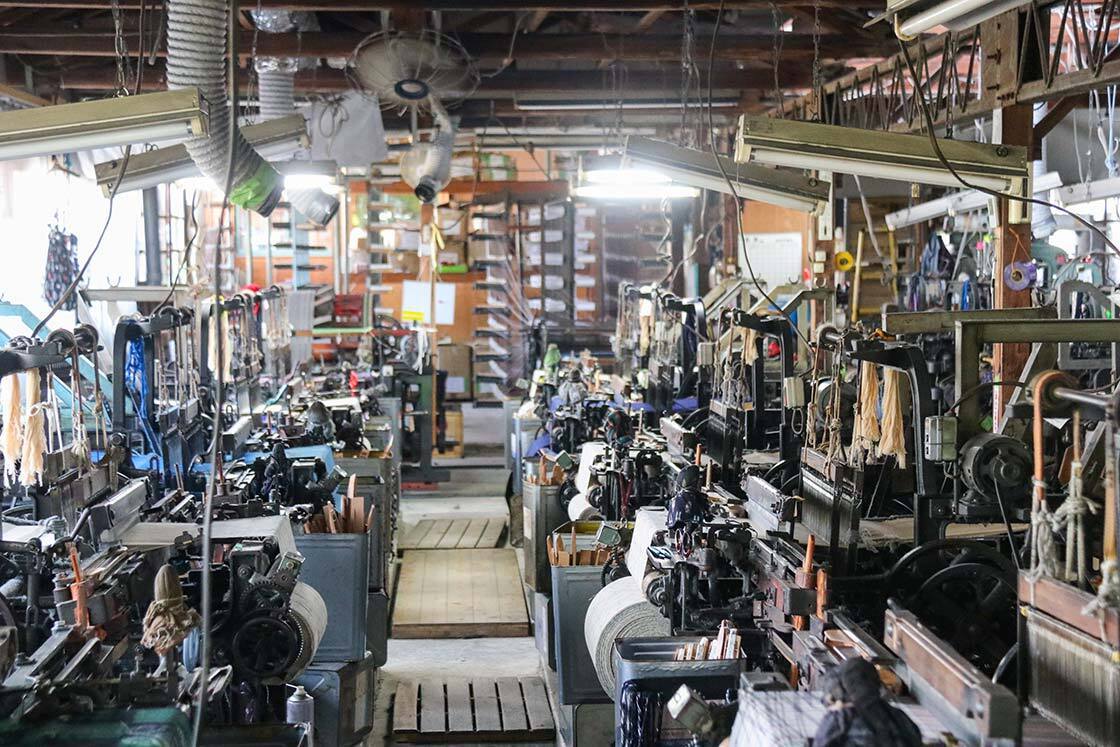
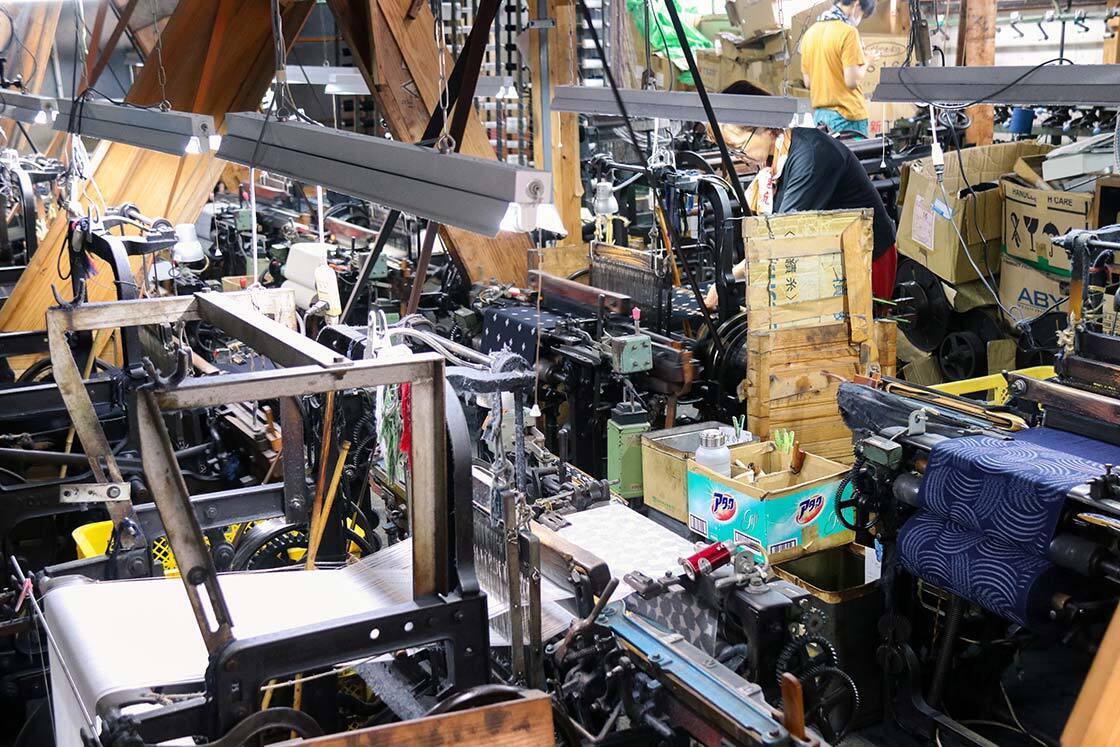
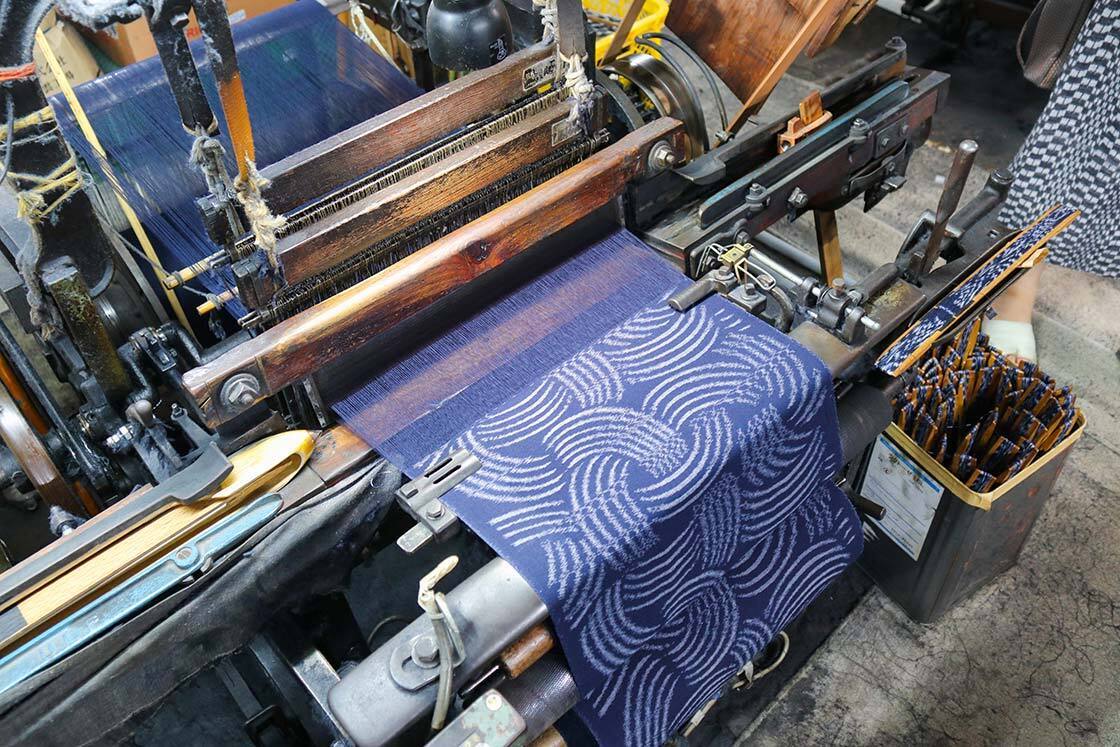
It is worth knowing that patterns are on either the warp (threads that run lengthwise) or the weft (threads that run crosswise) or both. Finally, the yarn is separated into single threads, each loaded onto looms for weaving. Warp threads are held in tension on the loom, while weft threads are spooled into smaller shuttles to be woven crosswise. Kurume Kasuri generally falls into two broad categories of weavers: those who weave by hand (including using pedal looms) and use indigo dyed kasuri, and those who use mechanized power looms with chemical dyed kasuri. Interestingly, power looms are typically vintage machines dating from the early 20th century.
Kurume Kasuri quickly became popular for everyday and workwear thanks to its breathability and versatility. One characteristic of Kurume Kasuri is the soft, blurred or slightly fuzzy appearance of its patterns, which is typical of ikat woven textiles.
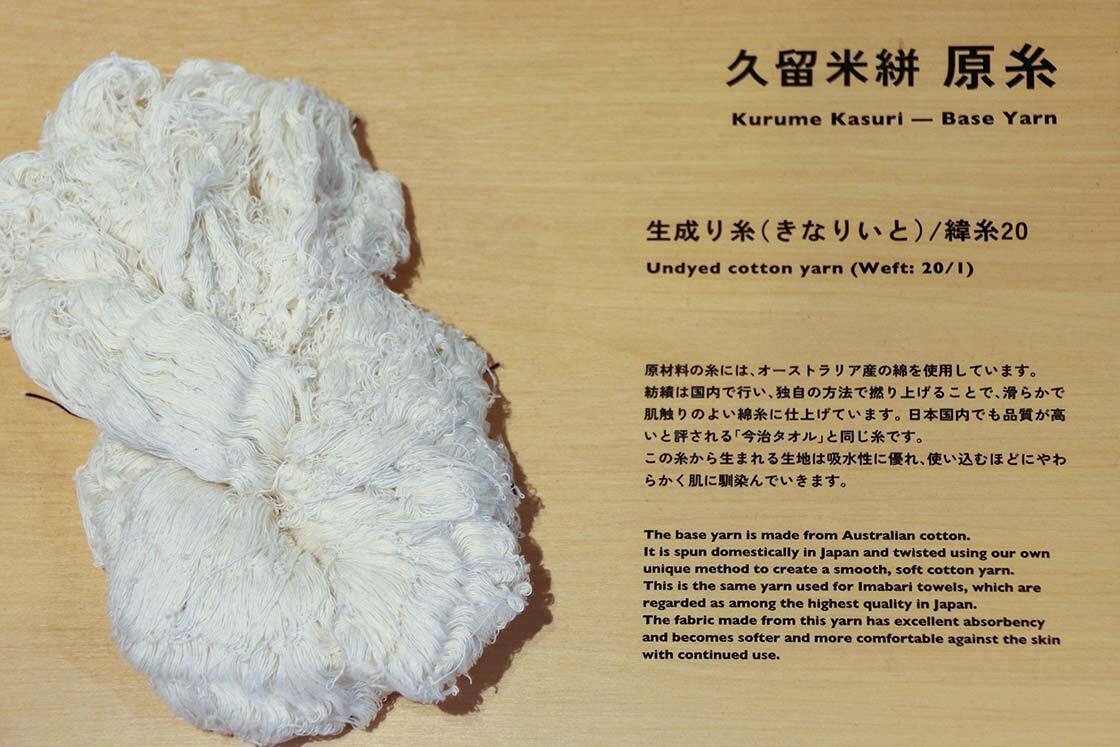
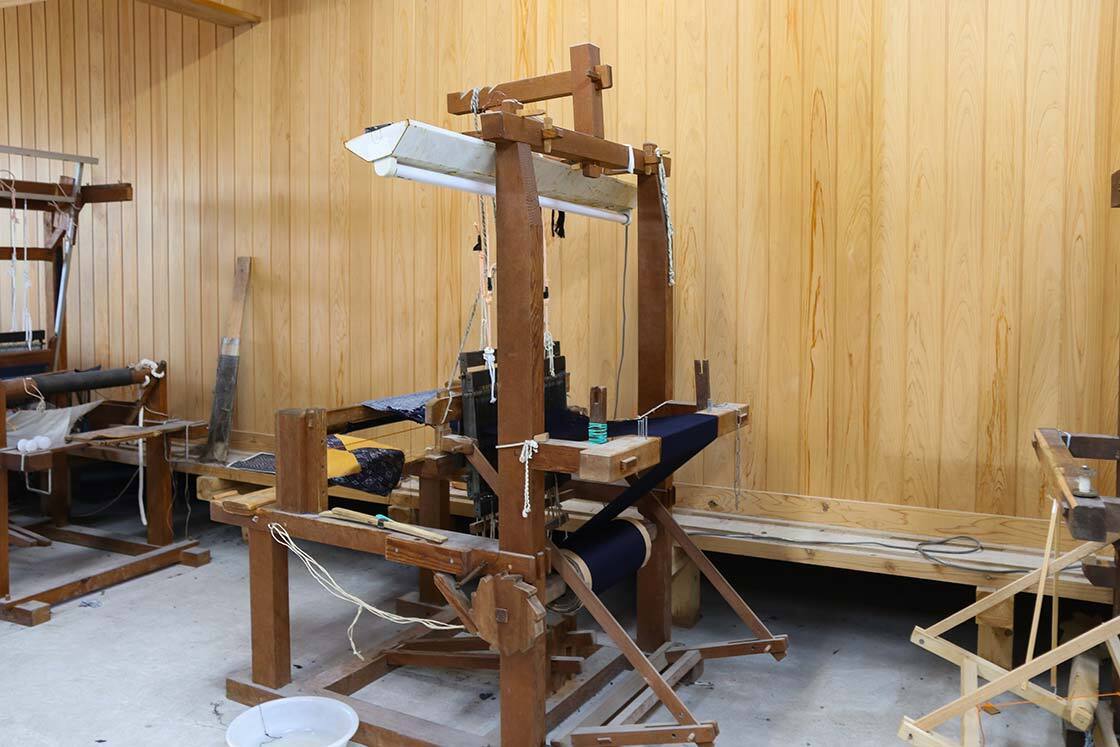
Once produced by hundreds of businesses, Kurume Kasuri is now made by only around 20 workshops and factories. They can mostly be found in Hirokawa Town and Chikugo City.
Ikeda Kasuri Kobo
Ikeda Kasuri Kobo was founded in 1919 and is currently run by the fourth generation artisan Daigo Ikeda. The workshop specializes in indigo dyeing (aizome) and hand loom weaving. In fact, it is the workshop with the largest number of pedal looms.
When it comes to indigo dyeing, the company sources the raw ingredients from Tokushima Prefecture on the island of Shikoku, then mixes and maintains the active dye to achieve the beautiful indigo hues. Before learning about indigo dyeing, I did not realize that the natural dye mixture was alive with living microorganisms that need warmth and nutrients to remain active. Adjustments are usually made along the way to maintain the ideal pH levels.
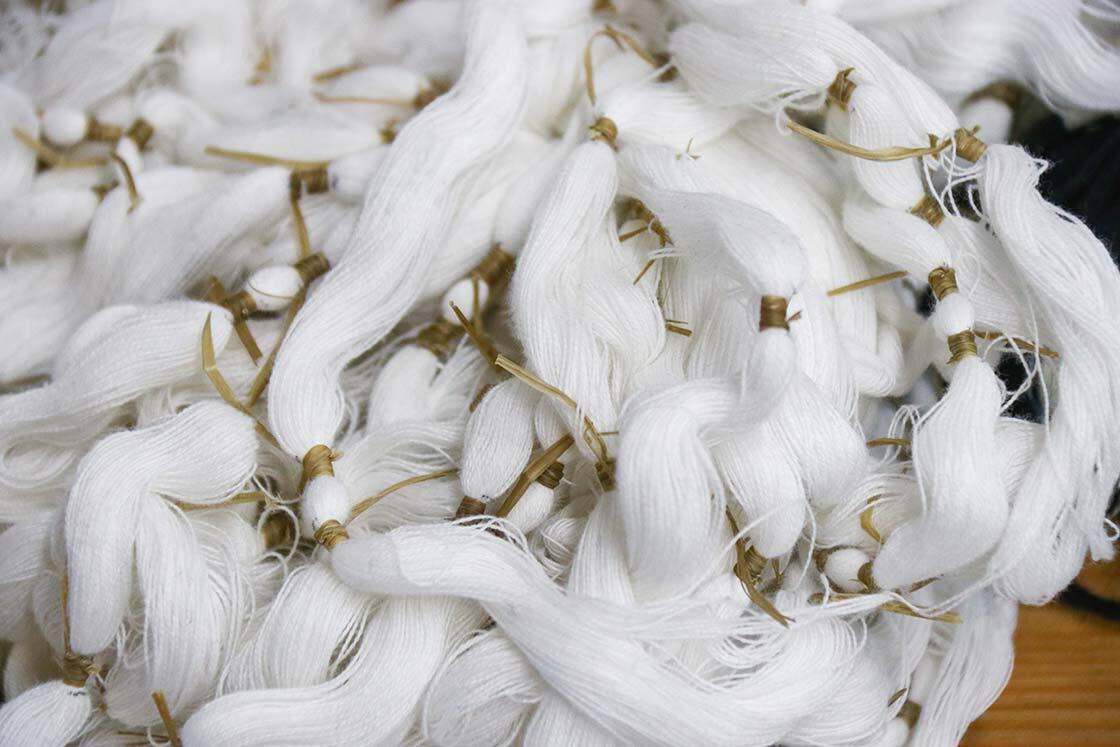
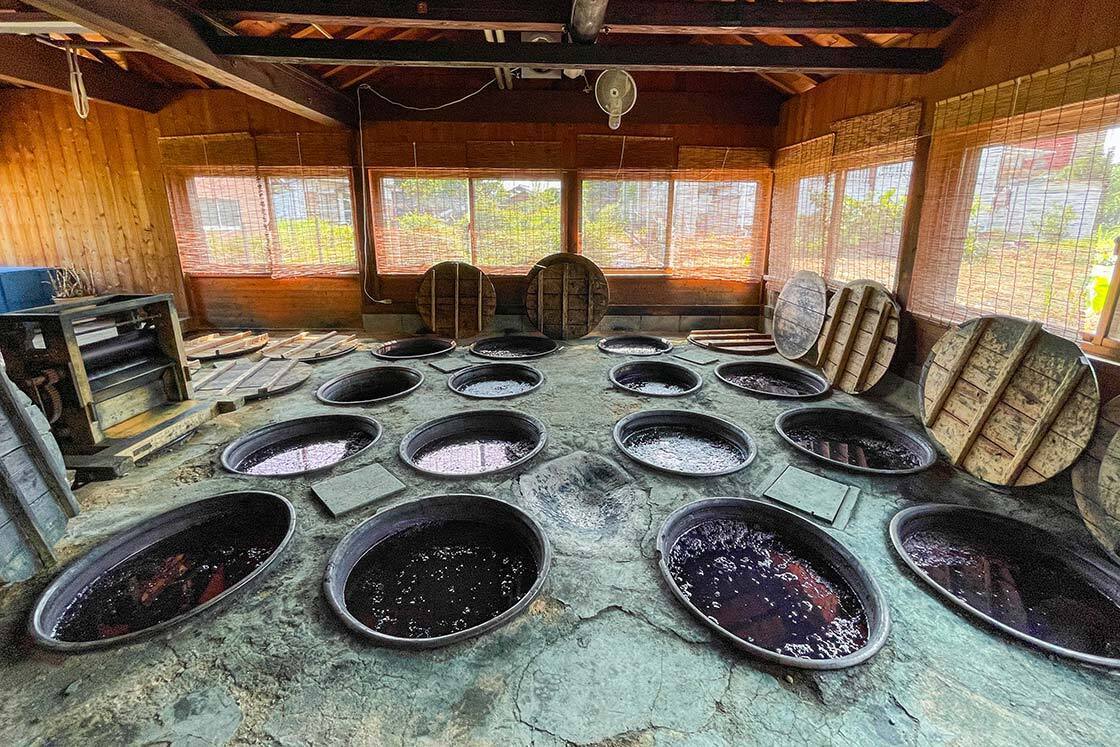
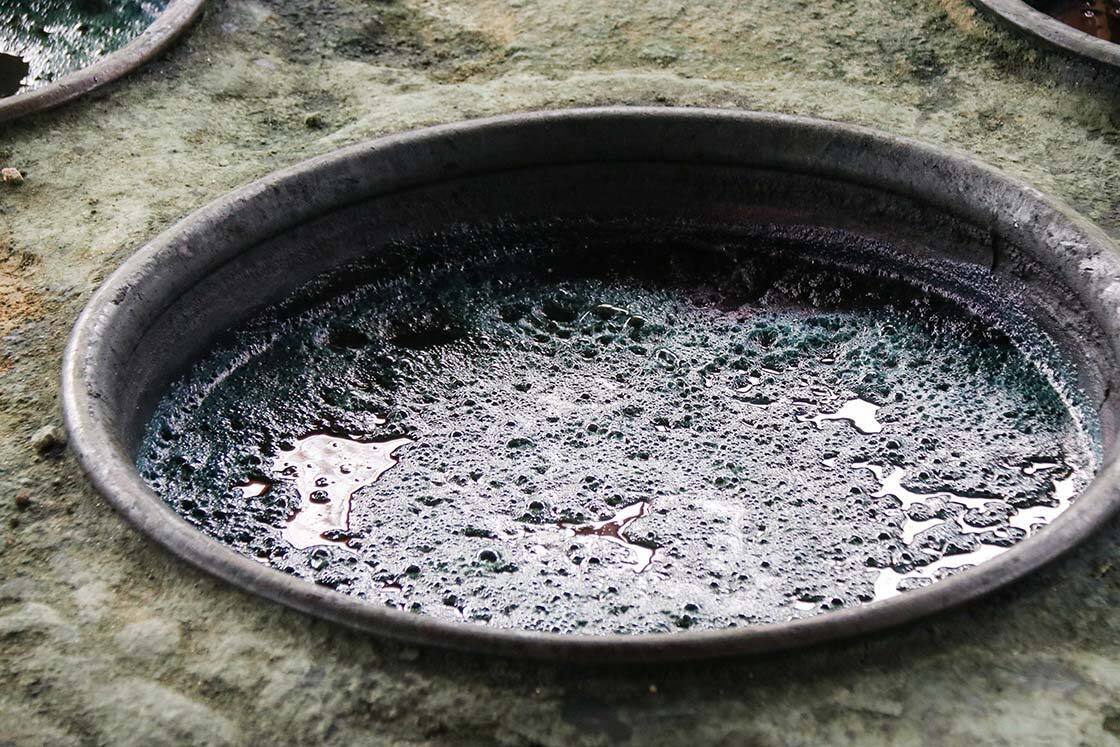
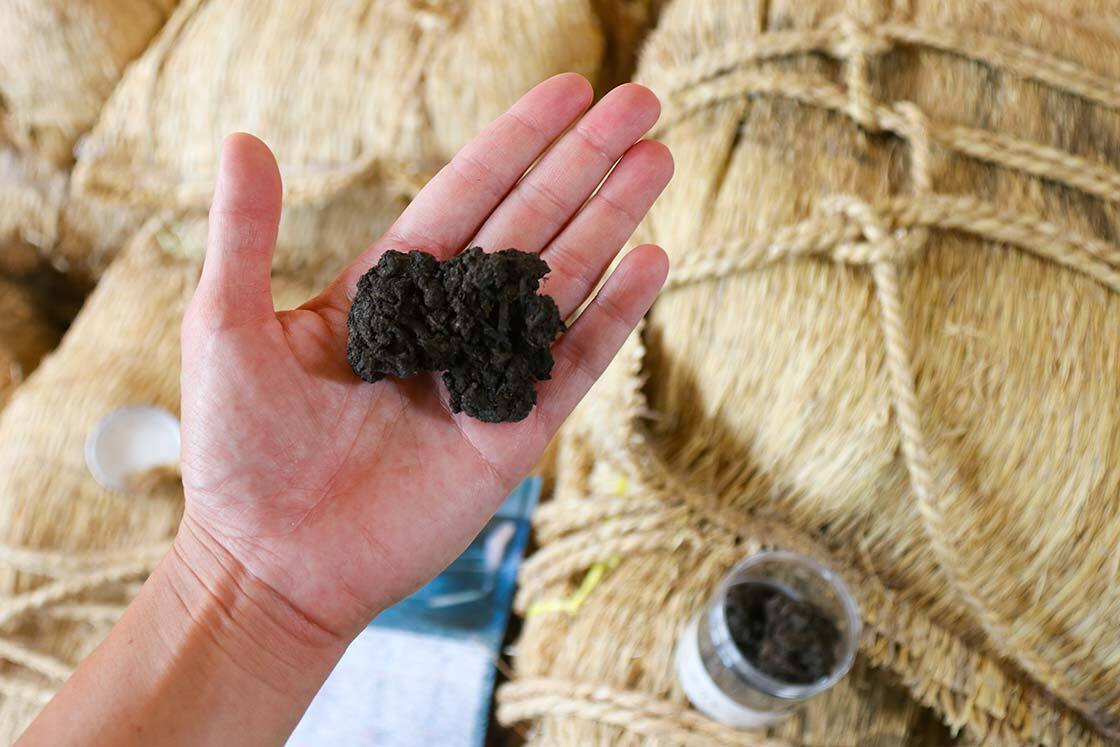
A nice feature at Ikeda Kasuri Kobo is the large glass windows separating the shop space and the workshop, allowing visitors to see weaving in action.
How to get to Ikeda Kasuri Kobo
Address: 1840 Hisatomi, Chikugo, Fukuoka Prefecture
Access: 10 minutes by taxi or 40 minutes on foot from JR Hainuzuka Station
- Book a workshop tour at Ikeda Kasuri Kobo.
- Find out more about Ikeda Kasuri Kobo and its workshop tour on the official Visit Fukuoka website

Sakata Orimono
Over at Sakata Orimono, the focus for third generation owner Sakata-san is the question: What is kasuri? Over his 20-odd years at the helm of the business, Sakata-san has focused on introducing kasuri to both locals and international visitors. The idea is simple: people are more likely to be interested in or buy something if they know about it in the first place.
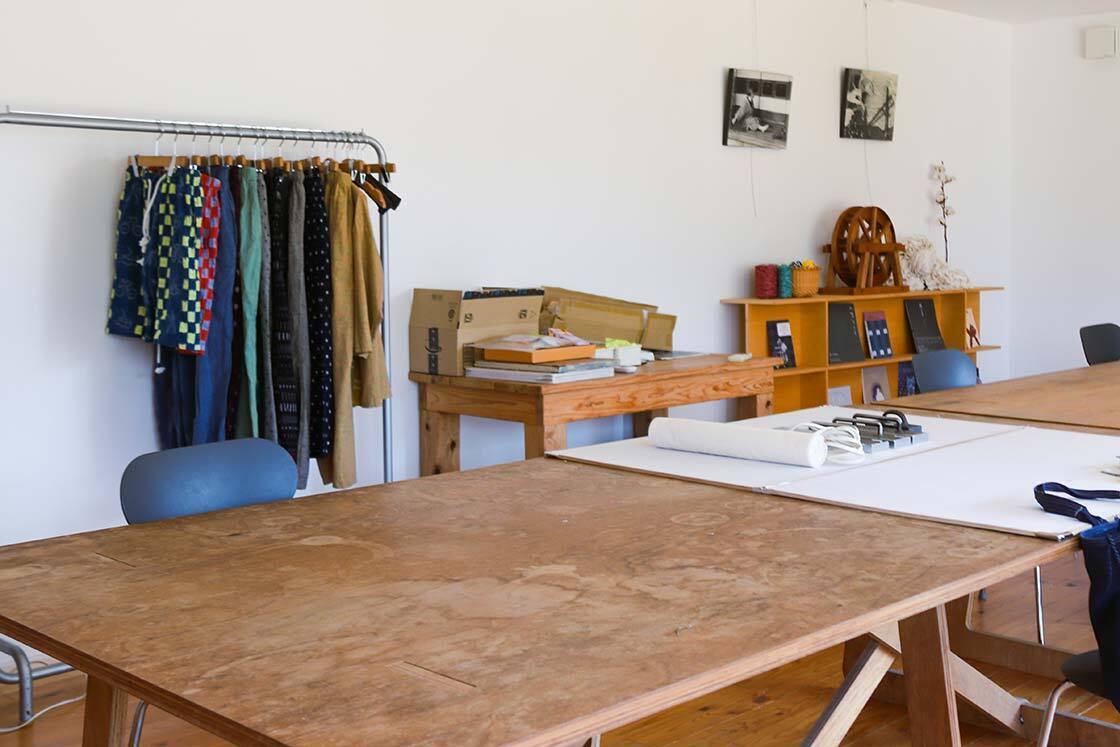
Sakata-san has come up with a number of ways to reach the public directly. One was creating a private clothing label, Tugu, selling original designs made with kasuri woven cloth. Another was starting the Kurume Kasuri Apprenticeship Program, which offers designers and enthusiasts the opportunity to learn more deeply about traditional textile production. The other two ways of running a cafe and accommodation are covered in more detail below.
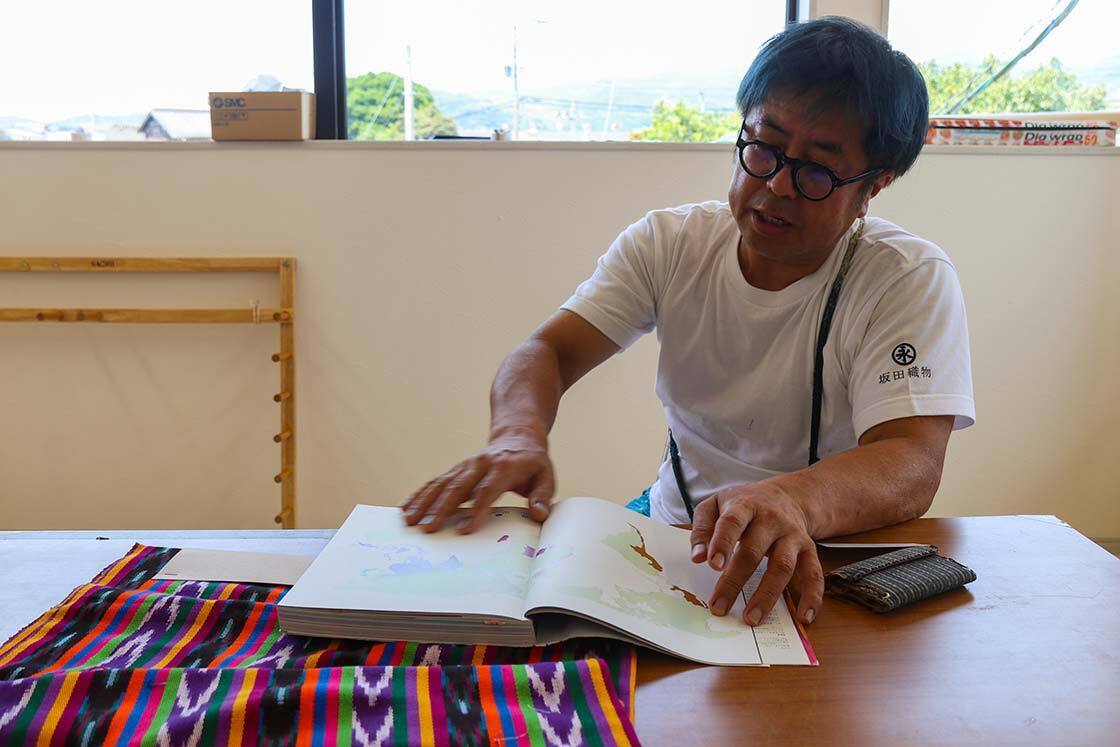
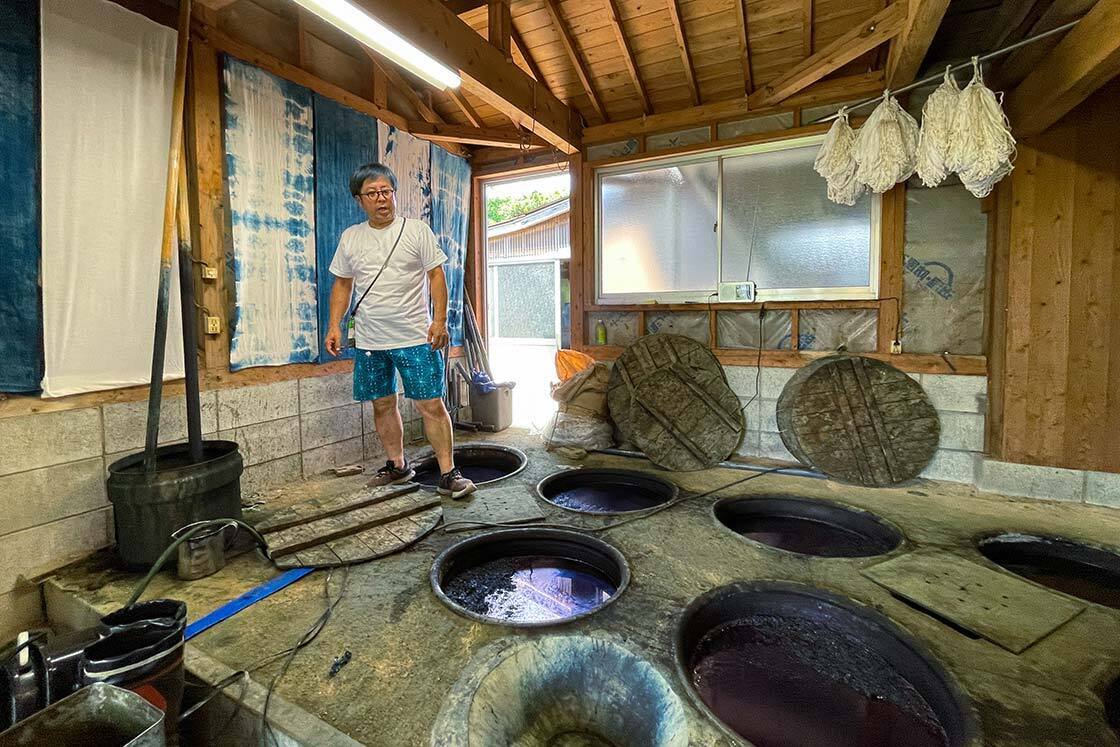
It goes without saying that workshop tours are available at Sakata Orimono, but as Sakata-san has shown, there are many ways to experience and get familiar with Kurume Kasuri. As someone seeing Kurume Kasuri for the first time, I appreciated how Sakata-san found different ways to make the craft accessible, through hands-on experiences as well as through his cafe and accommodation.
How to get to Sakata Orimono
Address: 602 Naganobu, Hirokawa-machi, Yame-gun, Fukuoka Prefecture
Access: About 20 minutes by taxi from JR Hainuzuka Station.
- Book a workshop tour at Sakata Orimono.
- Find out more about Sakata Orimono and its workshop tour on the official Visit Fukuoka website
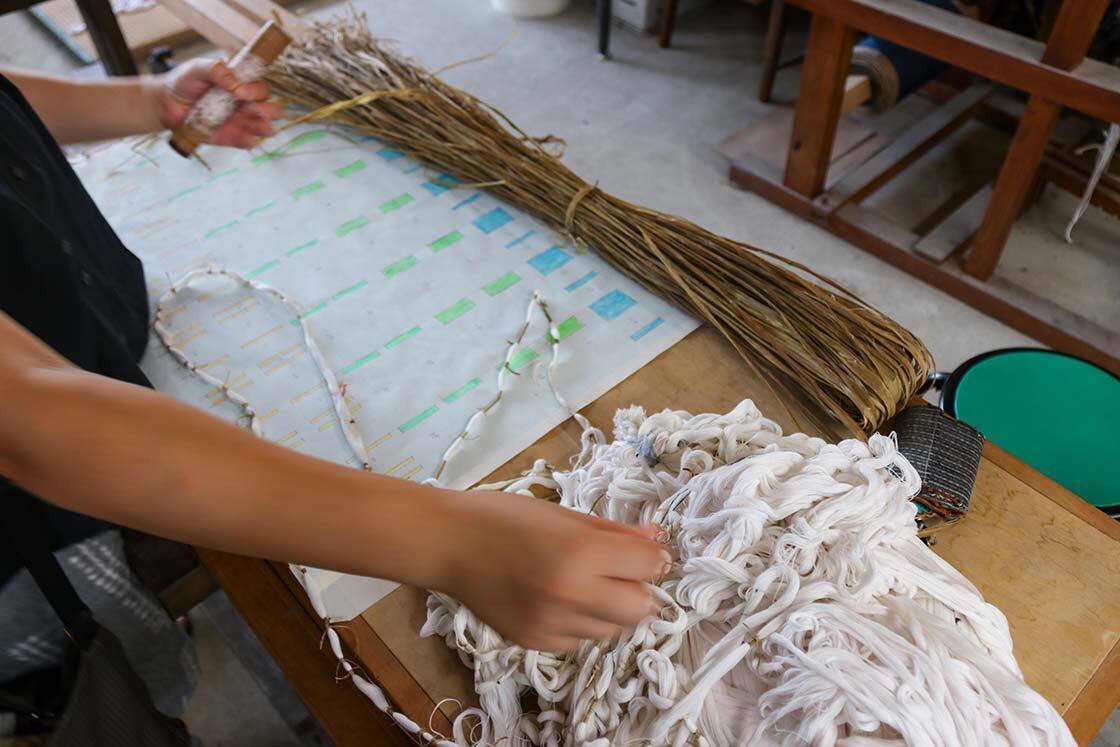
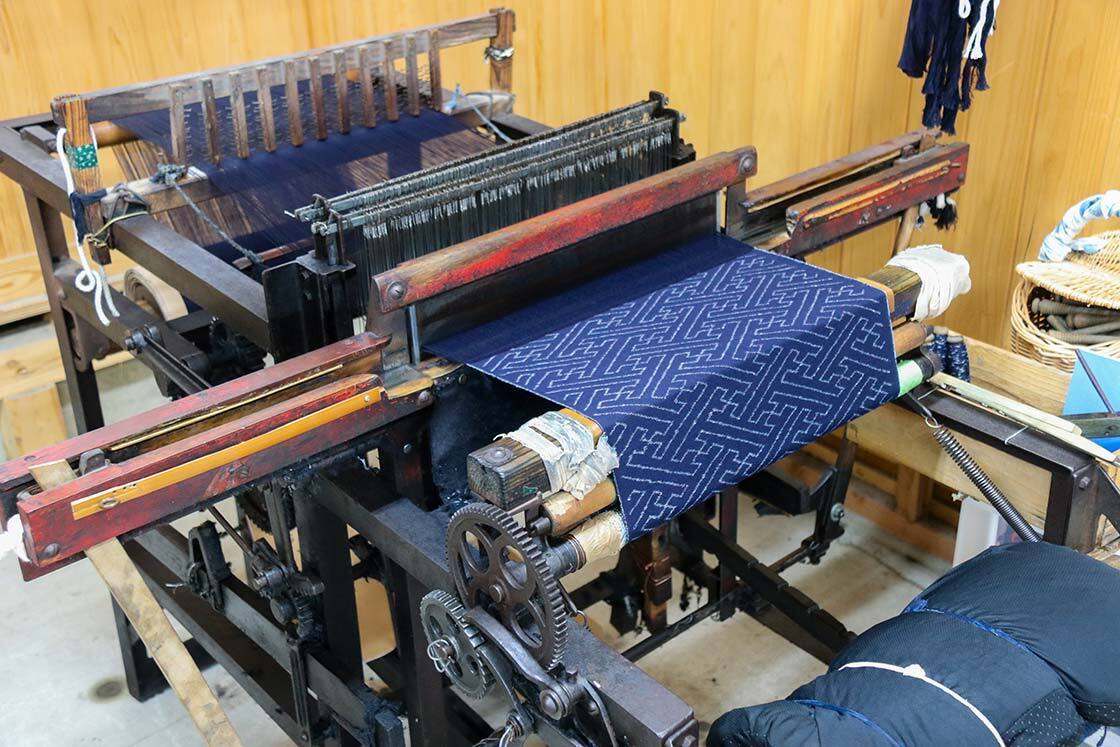
Shimogawa Orimono
Closing this list of three is Shimogawa Orimono, run by third generation artisan Shimogawa-san. He sees Kurume Kasuri as a form of communication, much like how translation apps are a means of communication between people who do not have a common language.
Shimogawa-san believes that simply producing and selling kasuri products is not enough to sustain the craft. It also requires connections between people that broaden any effort. To achieve that, Shimogawa Orimono runs an internship program and has collaborated with multiple international artisans to produce patterns made in the Kurume Kasuri style.
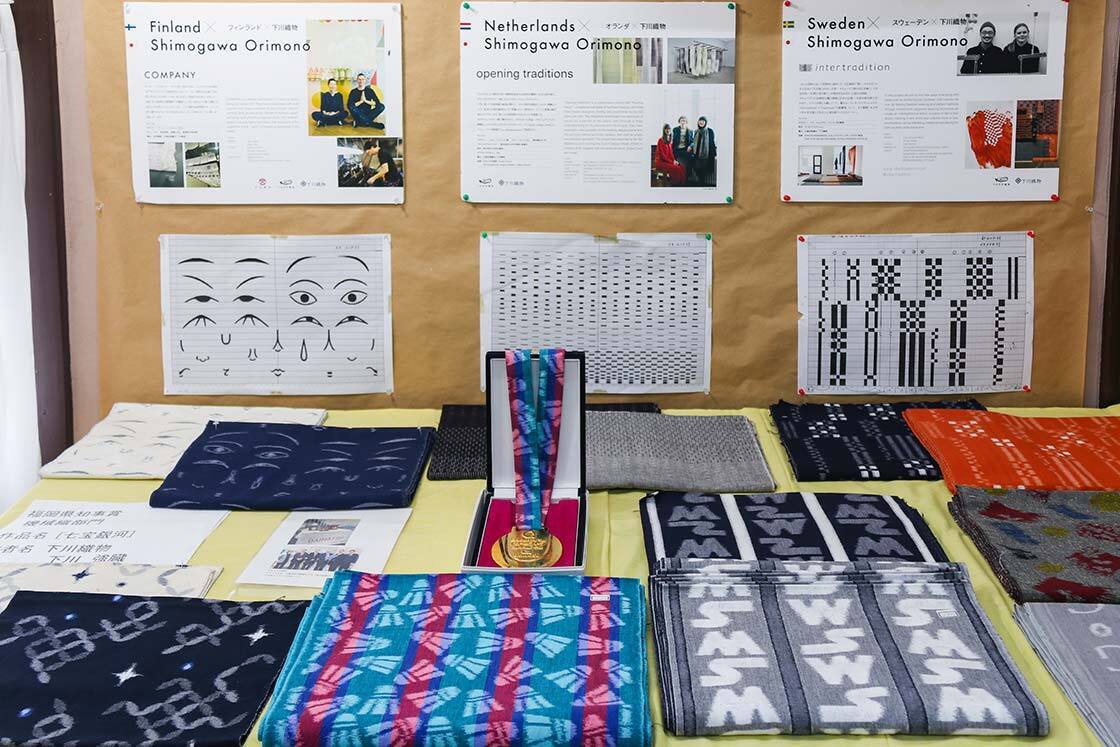
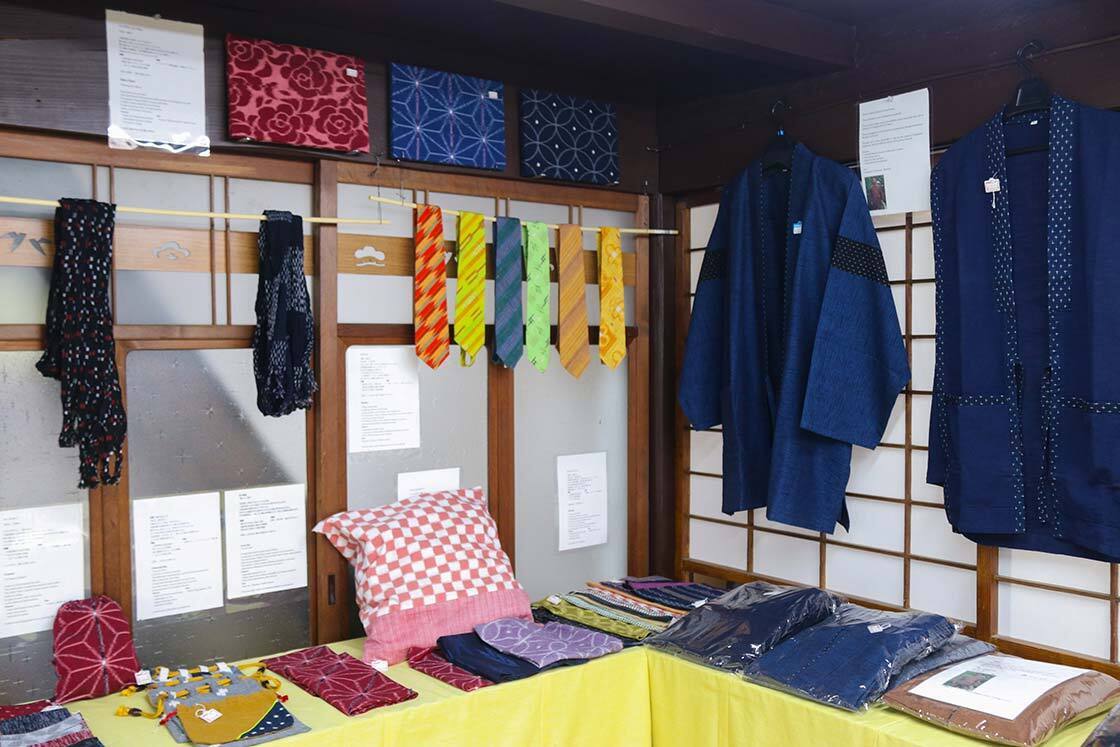
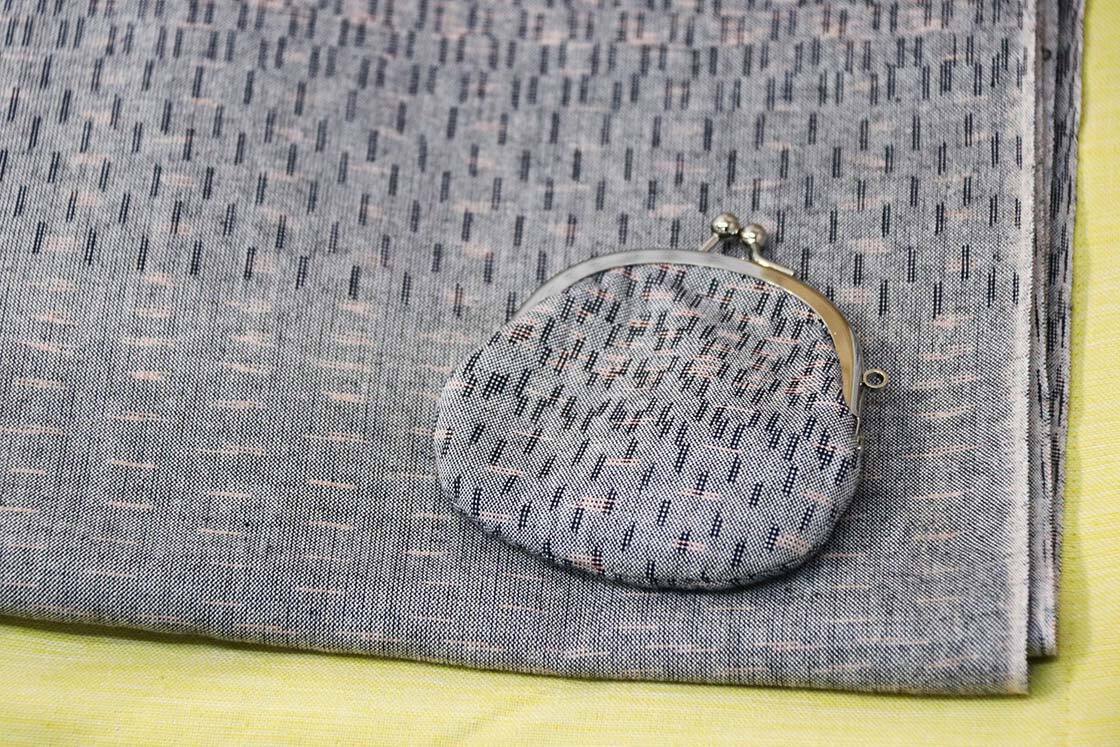
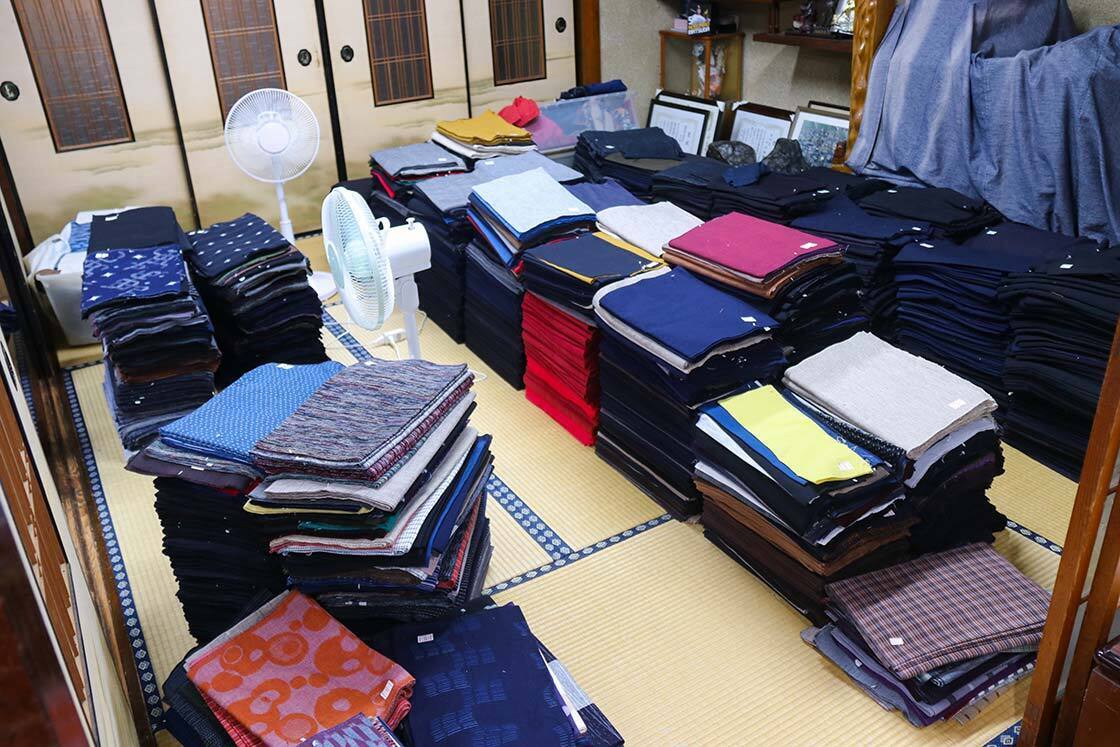
In addition to producing rolls of traditional Kurume Kasuri cloth, Shimogawa-san also experiments with different types of thread like wool and polyester. It may seem counterproductive to produce small batches, as with the collaborations with international artisans and students, but it is Shimogawa-san's way of advocating for and promoting Kurume Kasuri as a craft and technique.
How to get to Shimogawa Orimono
Address: 1111-2 Tsunoe, Yame-shi, Fukuoka Prefecture
Access: About 20 minutes by taxi from JR Hainuzuka Station
- Book a workshop tour at Shimogawa Orimono.
- Find out more about Shimogawa Orimono and its workshop tour on the official Visit Fukuoka website
Where to stay and what to do
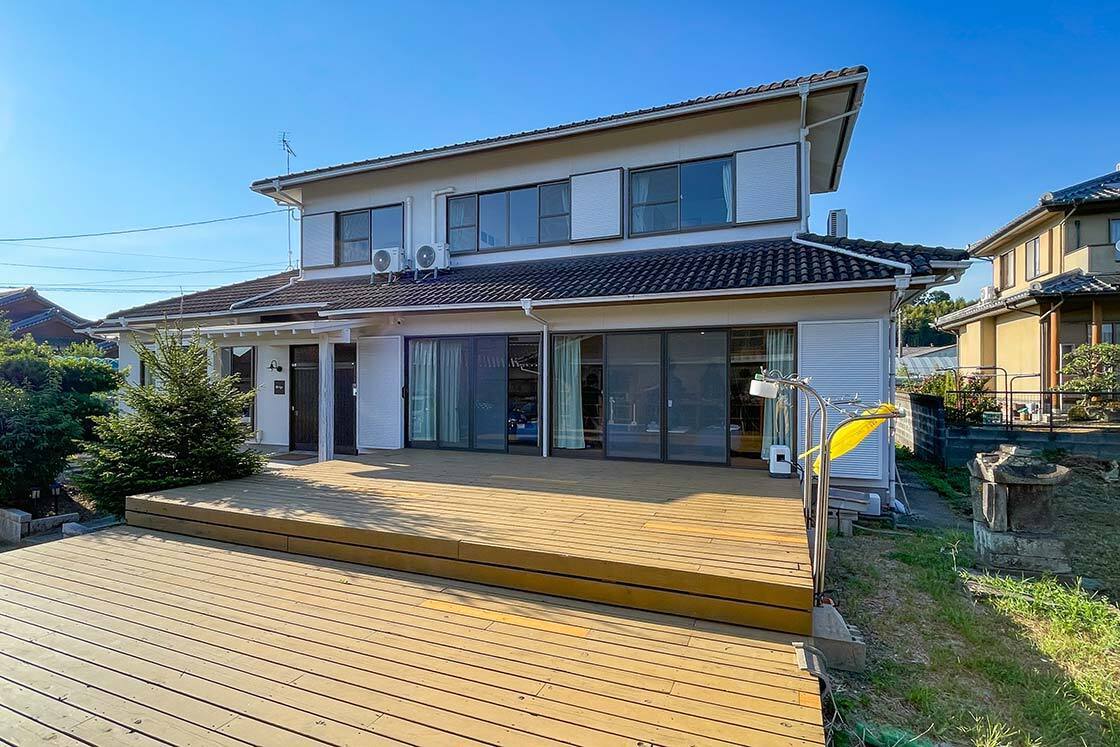
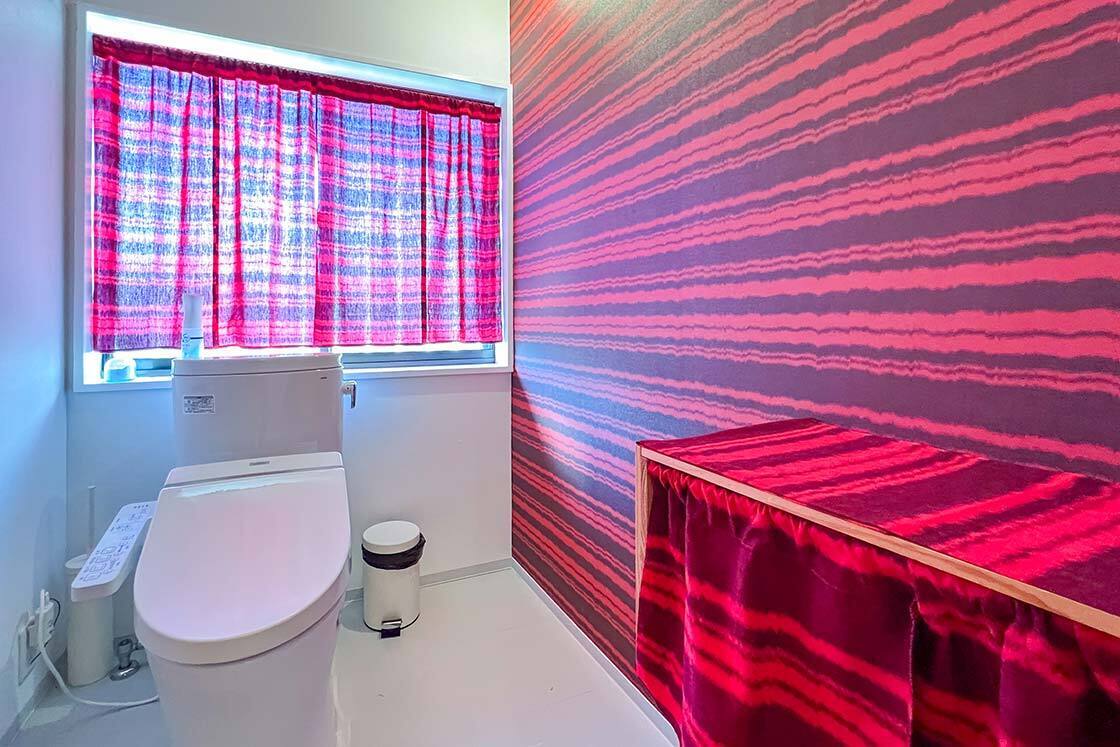
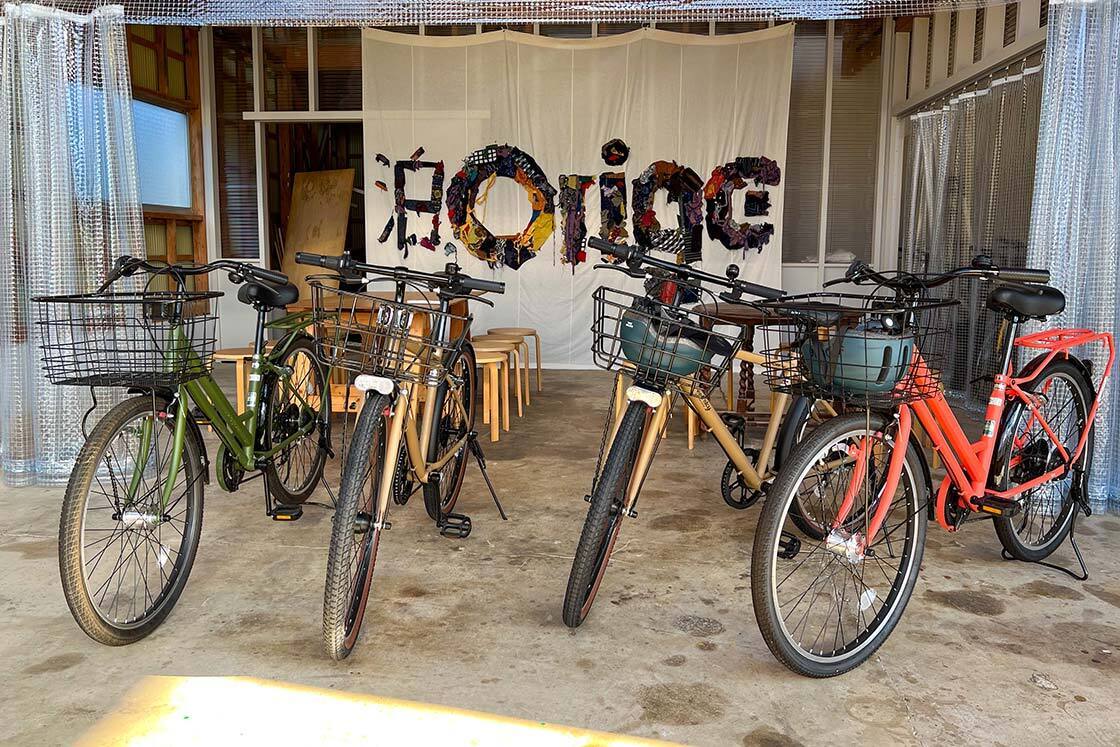
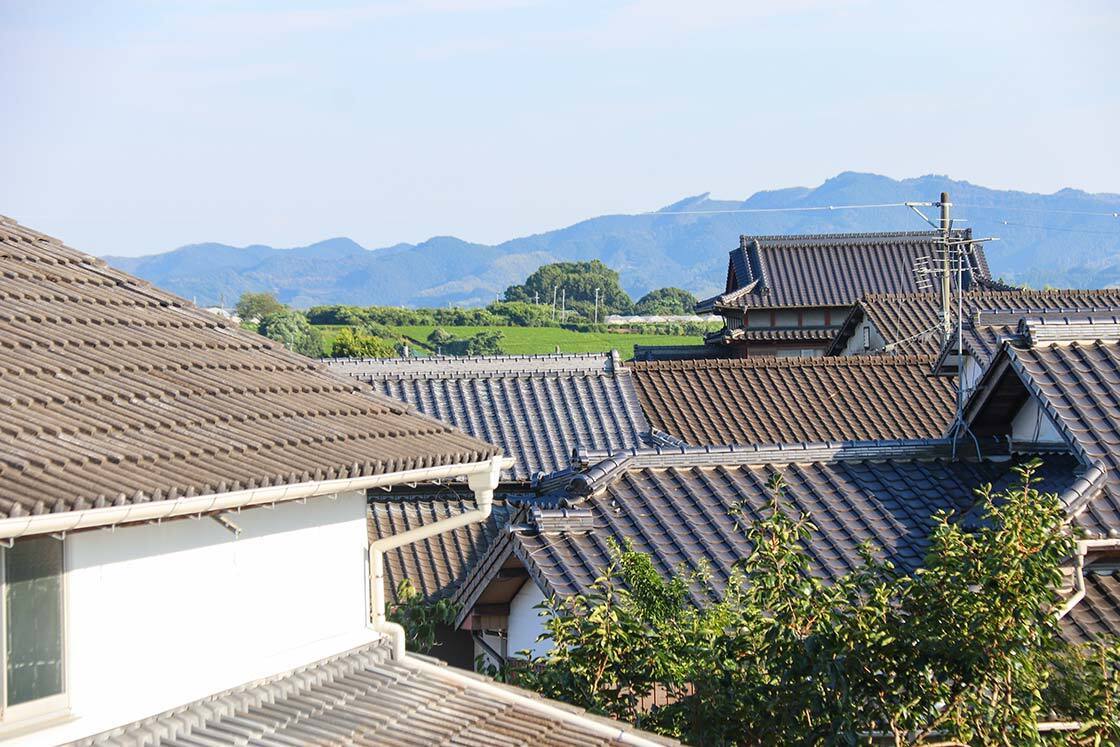
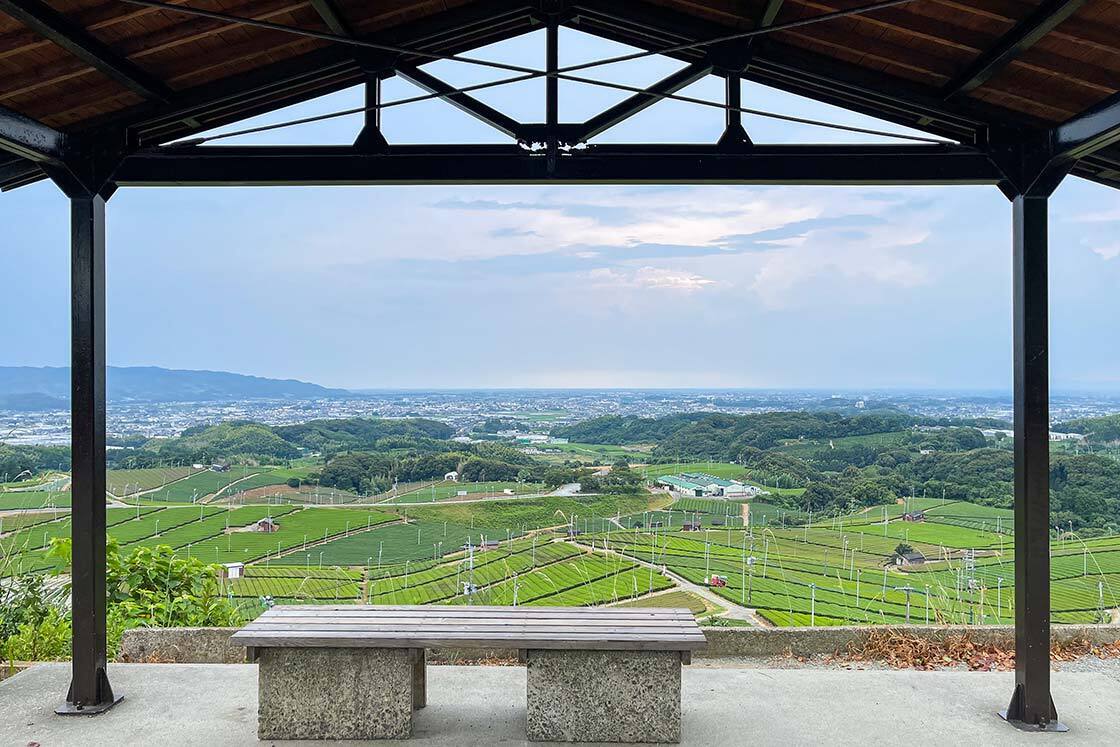
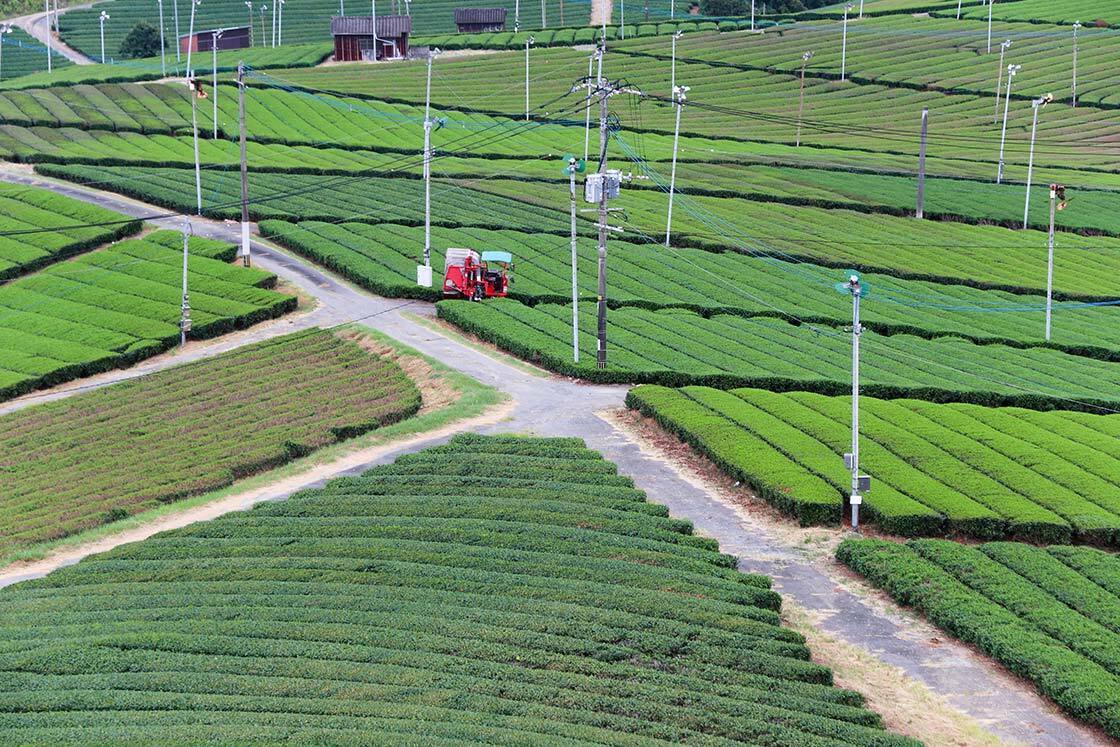
Orige is a guesthouse operated by Sakata Orimono. The house sleeps up to ten people, with three single rooms on the second floor and a large family room on the ground floor. As a lodging operated by a Kurume Kasuri producing company, it was a nice touch to see plenty of Kurume Kasuri on the premises - bedspread covers, wallpaper, curtains and wall art. There is also kasuri clothing for visitors to wear. Free rental bicycles are available for the convenience of staying guests. The Daichaen observation deck, which offers panoramic views of the famous Yame tea fields, is about 15-20 minutes away by bicycle.

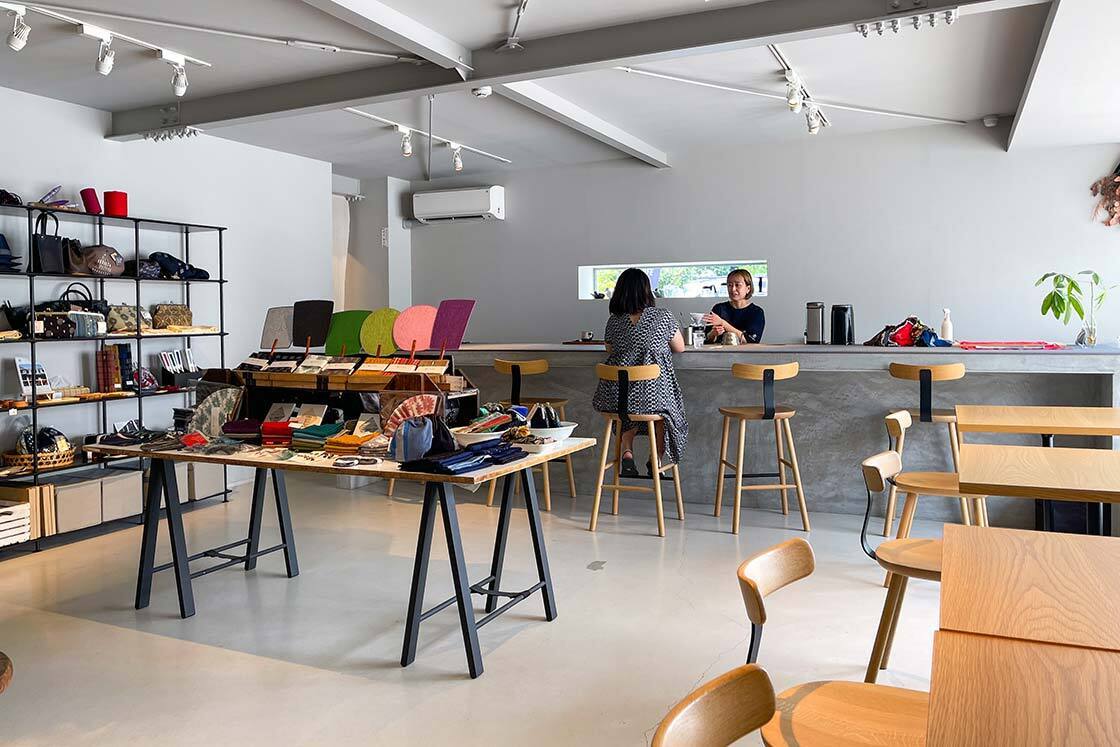
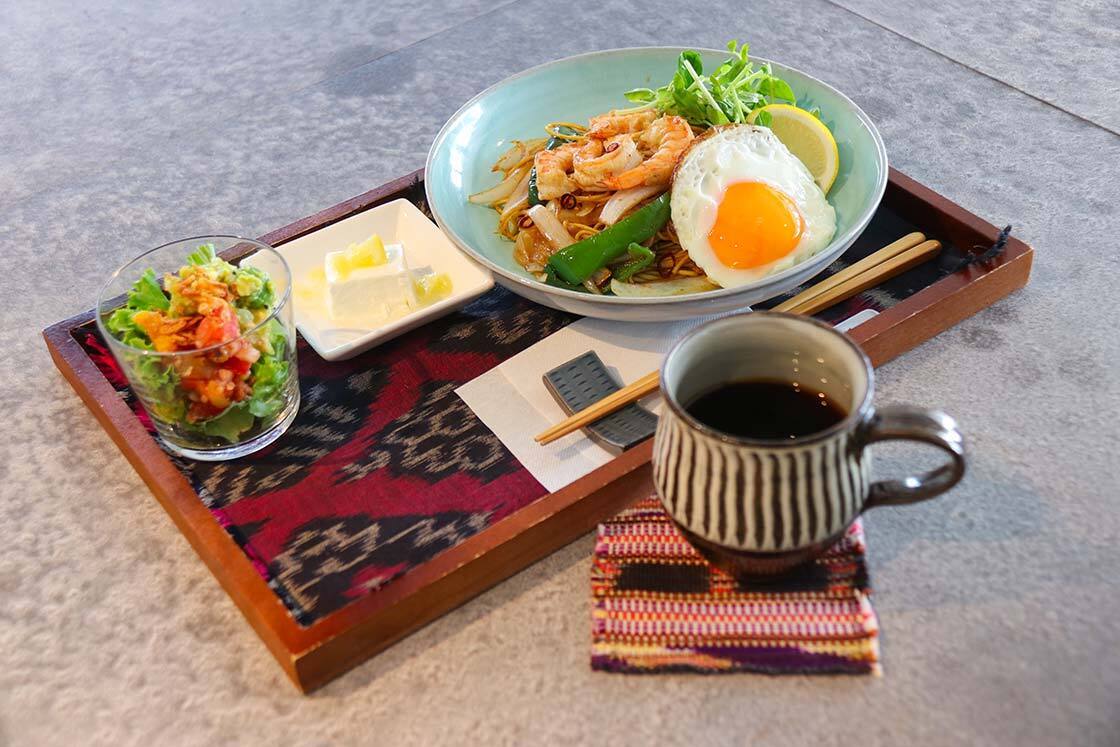
When it comes to dining, the Sakata Cafe opposite the Sakata Orimono workshop offers diners an unusual kasuri-themed menu. The Guatemalan coffee was served on a Guatemalan woven coaster, the Indonesian mee goreng was a nod to the Malay/Indonesian origins of the word Ikat, and the noodles resembled cotton threads. It was a fun dining experience and an unexpected introduction to the international world of ikat and kasuri.
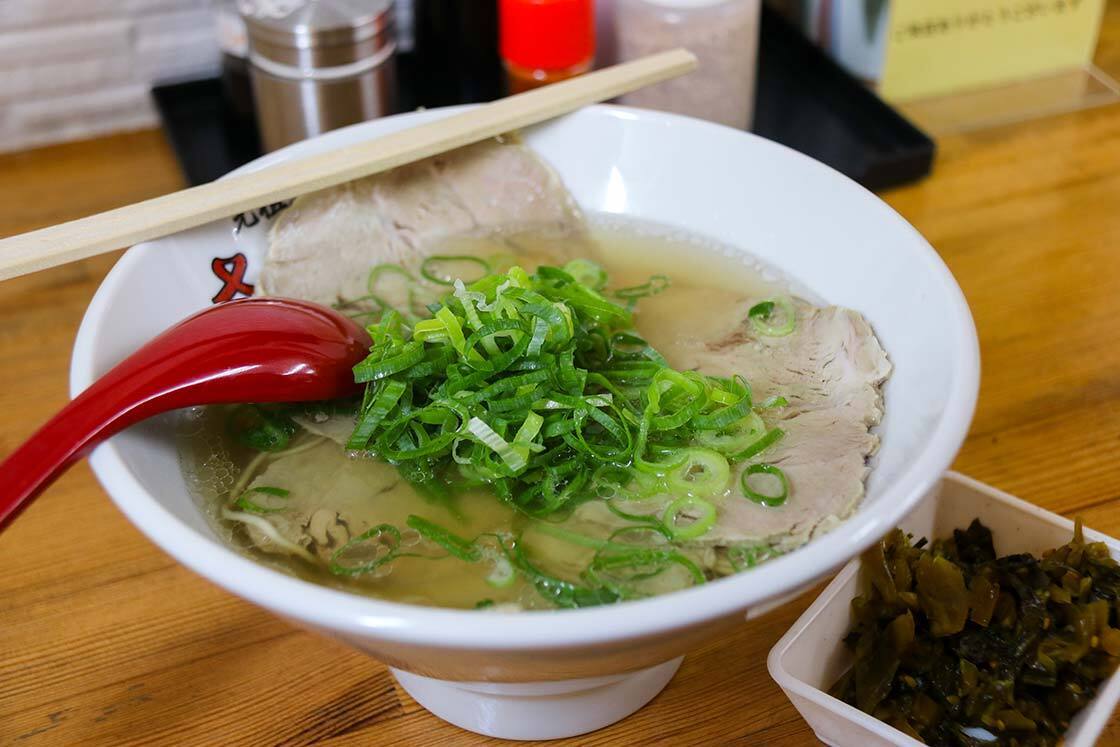
Fukuoka Prefecture is also known for ramen, and Kurume ramen is said to be different from Hakata ramen. Definitely worth checking if you are in the area and hankering for a bowl of good ramen.
How to get to and around Yame and Hirokawa
Hainuzuka Station on the JR Kagoshima Line is the most convenient station when traveling by train. There are three train options:
- Fastest option: take the bullet train from Hakata to Kurume, then transfer to the JR Kagoshima Line and get off at Hainuzuka Station (35 minutes with a good connection)
- Convenient option: take the direct rapid train bound for Hainuzuka from Hakata Station (50-55 minutes one way)
- Alternative: from Hakata Station, take a limited express train in the direction of Takeo Onsen or Sasebo, then get off at Tosu and transfer to a local or rapid train to Hainuzuka Station (45 minutes one way)
Central Yame can be reached in about 20 minutes by frequent local buses or taxis from JR Hainuzuka Station. It should be noted that none of the workshops are in the central core.
Sakata Orimono is about 15-20 minutes by car north of central Yame, Ikeda Kasuri Kobo is about 20 minutes by car west of central Yame, and Shimogawa Orimono is ten minutes by car east of central Yame. Detailed access information and addresses for each workshop can be found in their respective sections.
Learn more about the three workshops and book workshop tours
- Kurume Kasuri Open Factory - Information about the workshops and their tours on the official Visit Fukuoka website
- Kurume Kasuri workshop tours - Official booking website