Is this the best way to visit Yamaguchi Prefecture?

Located right at the western tip of Honshu, Yamaguchi Prefecture boasts a varied and beautiful landscape, along with exactly the kind of sights that international visitors are calling out for - the dramatic coastlines, enormous caves, vermilion torii gates, glittering turquoise seas - but they're scattered across a large, mostly rural prefecture where getting around can be less than straightforward.
This is where sightseeing bus tours can really come into their own, allowing you to leave Japan's rail network behind and cover those hard-to-reach destinations without the need for hours of planning or the cost of a rental-car. And in fact, given the context of Japan's ongoing troubles with overtourism - which is to say, so many visitors concentrated in a handful of locations while largely ignoring the rest - it's no surprise that local governments have been trialing tours just like this in less-connected areas across the country.
But here's the rub - if you've spent time in any of the world's major cities, just hearing the words "bus tour" may well make you think of garish, overcrowded double-deckers crawling their way past the same old spots. And then there's the language issue - often geared more towards the domestic market, many such bus tours lack English-speaking guides, forcing overseas visitors to resort to pre-prepared materials or machine translation.
To see for myself how well this works in practice and whether regional bus tours just might be the fix your travel itinerary needs, I recently took my first trip to Yamaguchi for a day of exploring aboard the Fuku's Journey: Yamaguchi Explorer 2026 sightseeing bus. How would it compare to traveling independently? Would I get along with my fellow, mostly Japanese passengers? And would I have any idea at all what was going on?
As a one-day introduction to Yamaguchi Prefecture, the tour certainly had its itinerary down: starting from the little hot spring town of Yuda Onsen, the bus would be arcing through the prefecture's northwest quadrant in a giant loop through suburbs, forest, and coastal hills, stopping on the way at three of the prefecture's most celebrated spots.
It was also pretty easy to get to, with a second stop to pick up additional passengers just 20 minutes into the ride at Shin-Yamaguchi Station, the main prefectural transport hub connecting to both the Sanyo Shinkansen Line and, via local line, taxi or airport limousine bus, Yamaguchi Ube Airport.
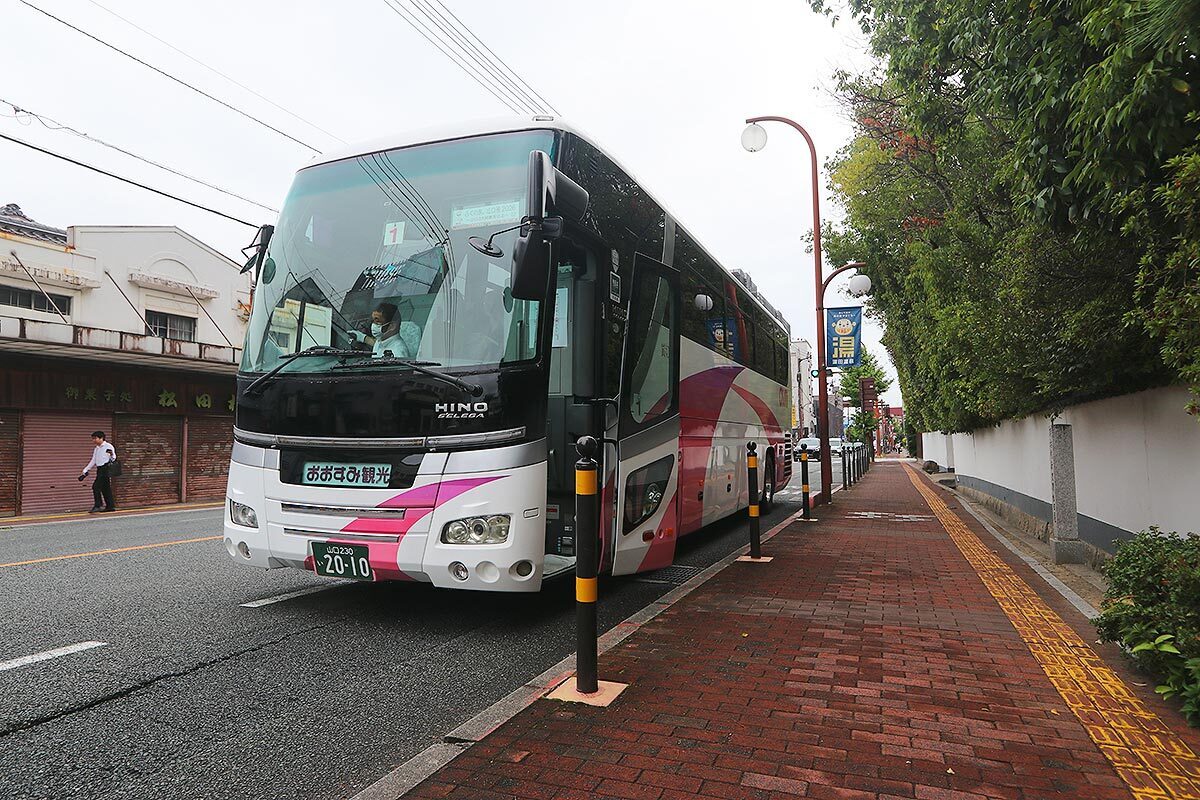
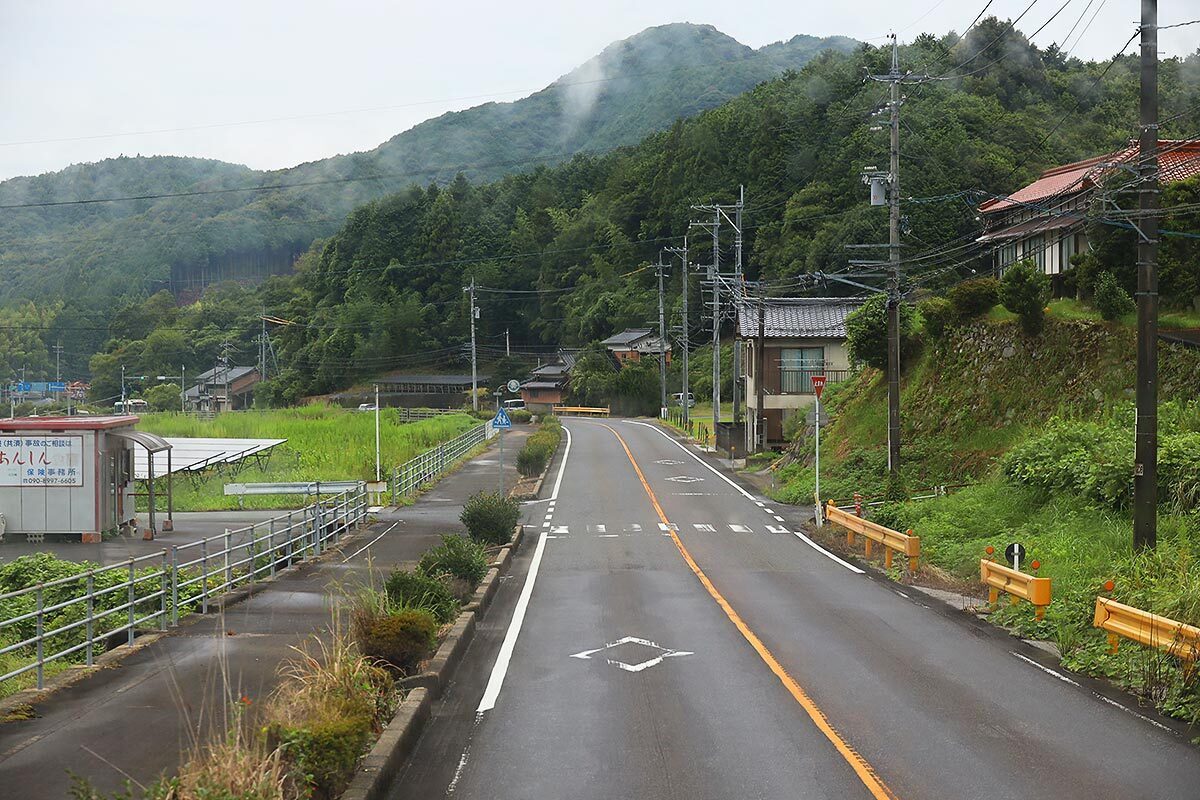
Yamaguchi is one of those places that seems built for sunny weather, but the sky was overcast and already threatening rain as I made my way along the main strip of Yuda Onsen to the meeting point. Fortunately, my guide for the day and our driver were so warm and cheery I couldn't help but feel the day would turn out alright.
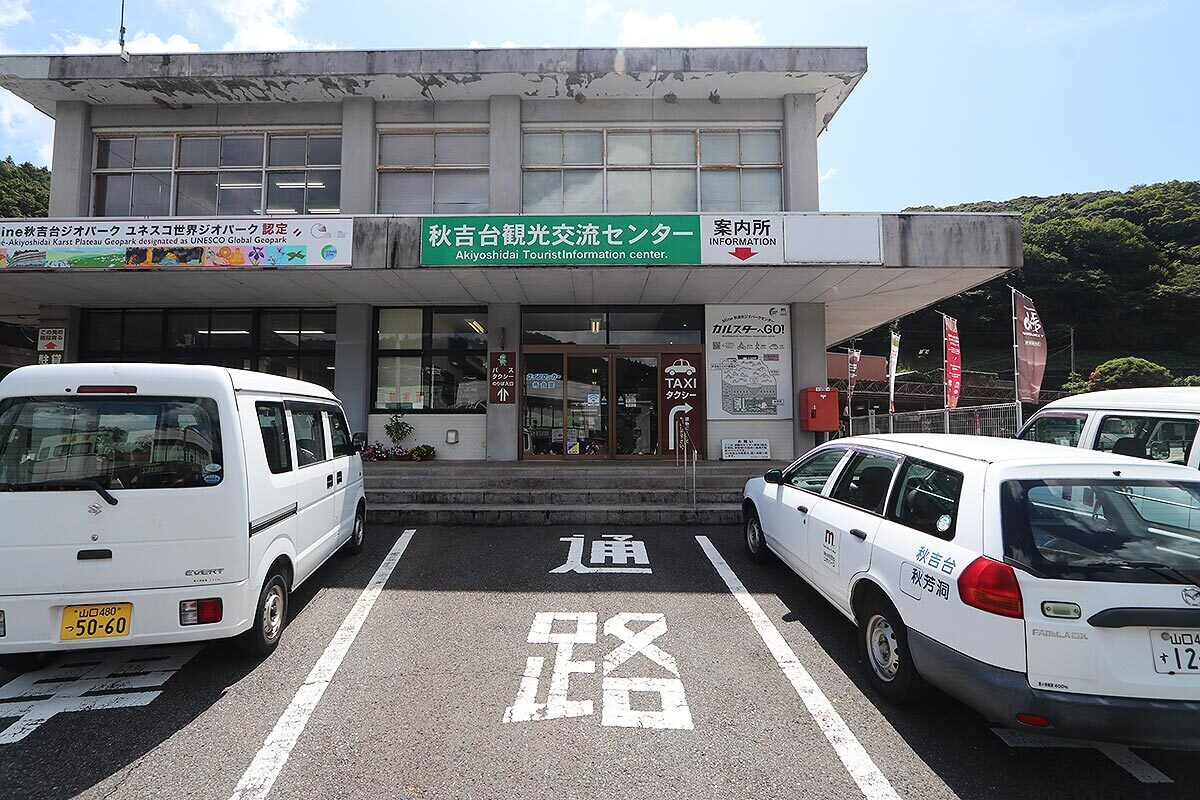
In just a few minutes, the bus had taken on about twenty passengers (numbers typically vary from 15-40) and was already on its way, urban concrete soon giving way to low hills and broad, sweeping valleys as we approached our first stop on the Akiyoshidai Plateau. Watching the scenery pass by from my comfy, air-conditioned seat, I was already starting to feel pretty relaxed - even the guide's explanations had proven no match for translation apps, with a well-timed follow up question usually enough to put me back on the right track whenever things got confusing.
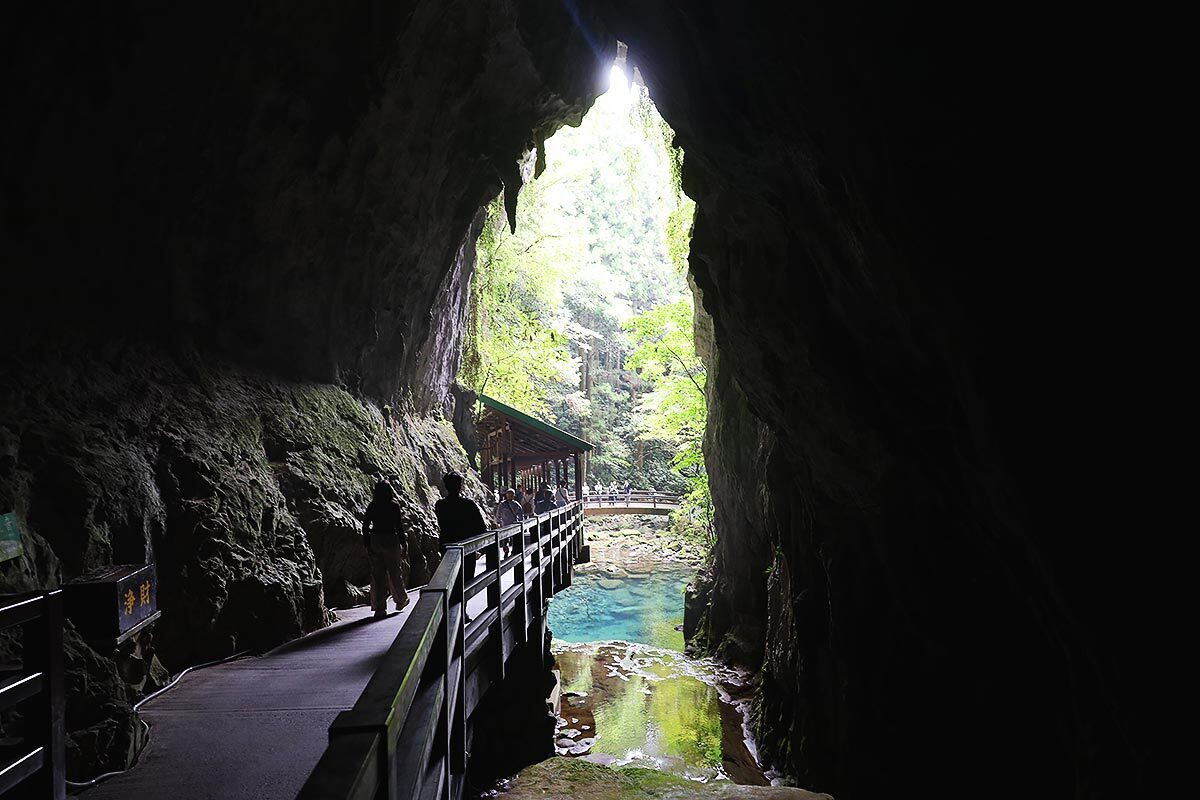
To understand the area's geology, we have to go back some 300 million years when all this was a volcano at the bottom of a tropical sea. Around the summit, a complex and multi-layered coral reef began to form, crushing and solidifying over millennia into a thick limestone crust. Ultimately prised to the surface by tectonic movement, the same limestone became exposed to acid rain, creating the craggy, weathered landscape today and its hidden centerpiece - a massive cave system known as the Akiyoshido.
Descending about 100 meters underground by elevator, visitors can explore about one kilometer of its total size - today reckoned at a whopping 11.2 kilometers - revealing vast chambers, flowing water and colorful, otherworldly formations. Fascinatingly, due to its size, stable temperature and the presence of water, the cave is not just a dead geological space but supports an ecosystem of its own, from a species of tiny, sightless and almost transparent crustaceans that live in its shallow pools, and bats that appear between May and August.
Apart from the sheer scale, what impressed me as I followed our guide along the roughly hourlong sightseeing route was how varied and extrasensory it felt - every passage and chamber had its own sights, sounds and atmosphere, all of it easily navigable and distinctly enhanced with good, professional lighting.
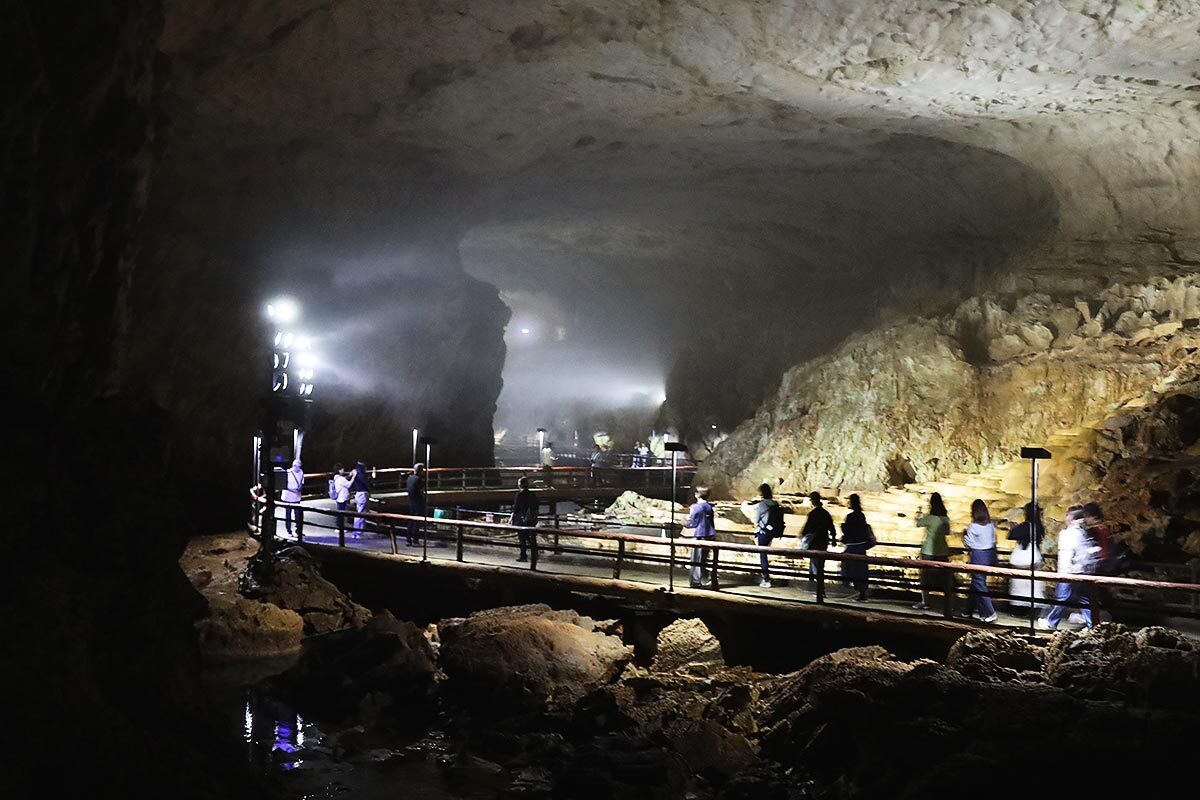
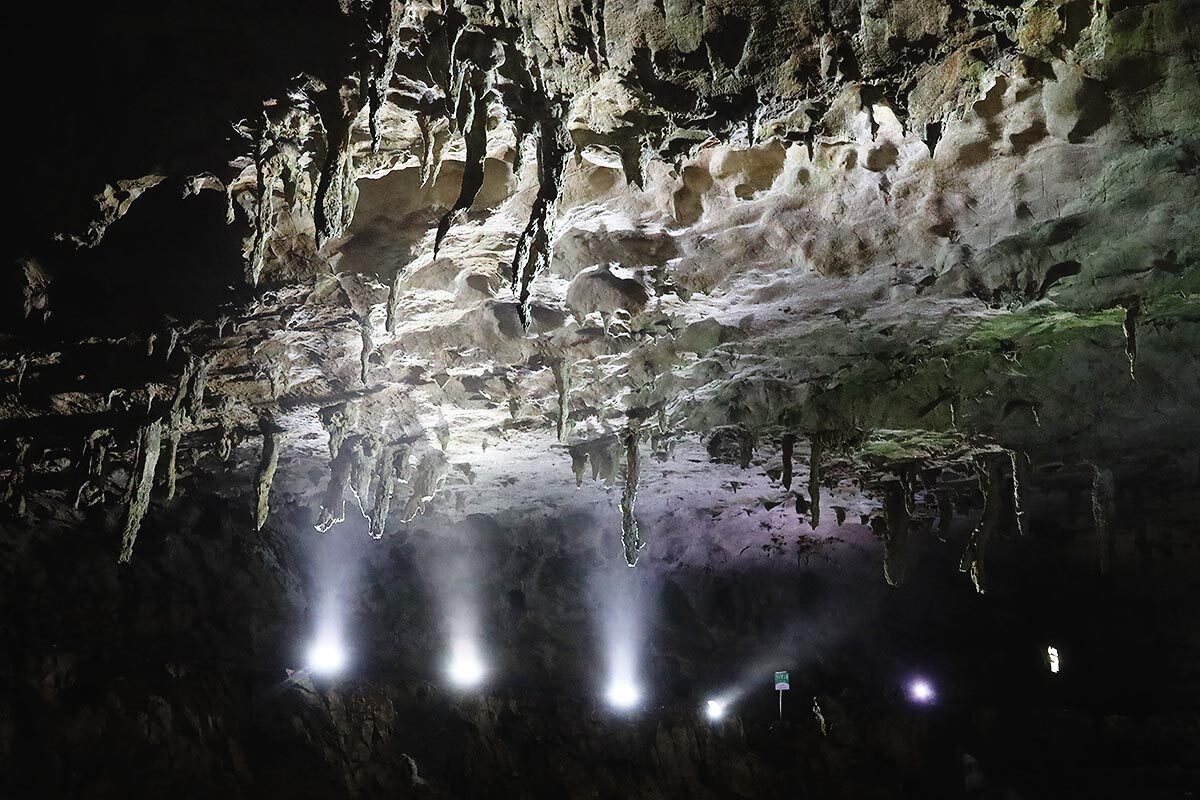
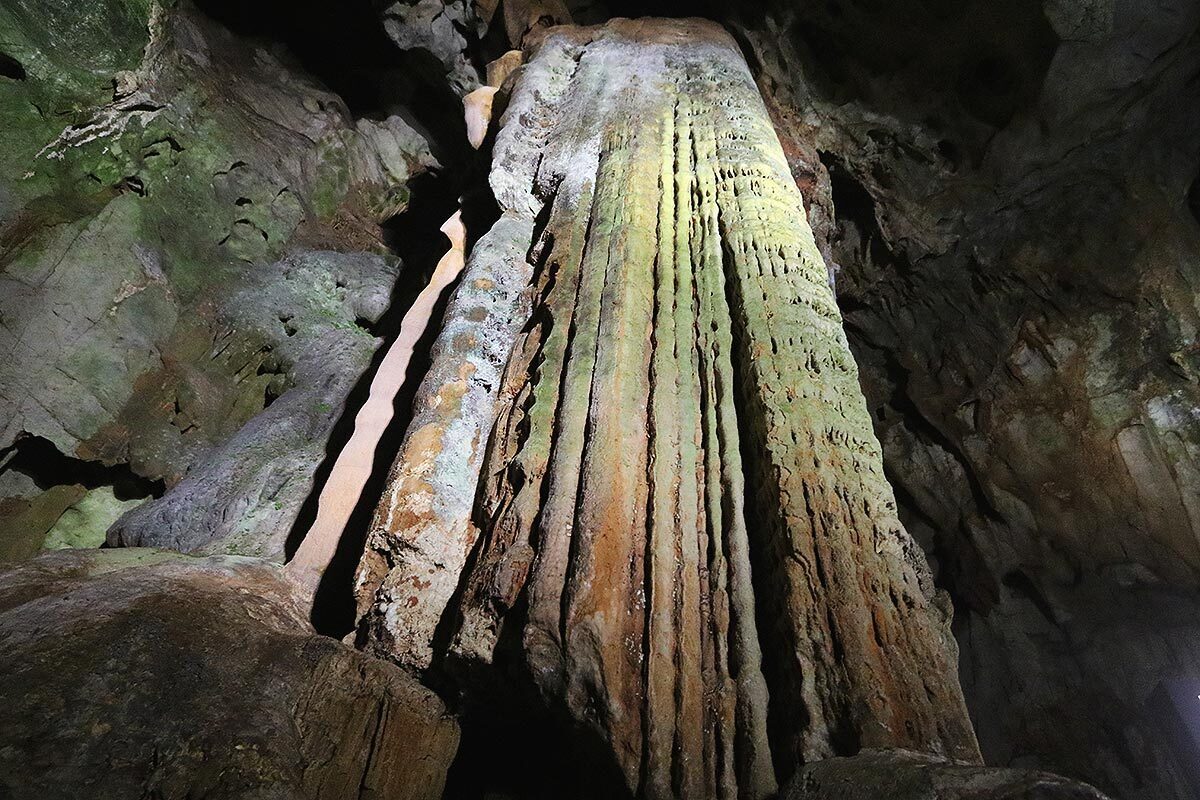
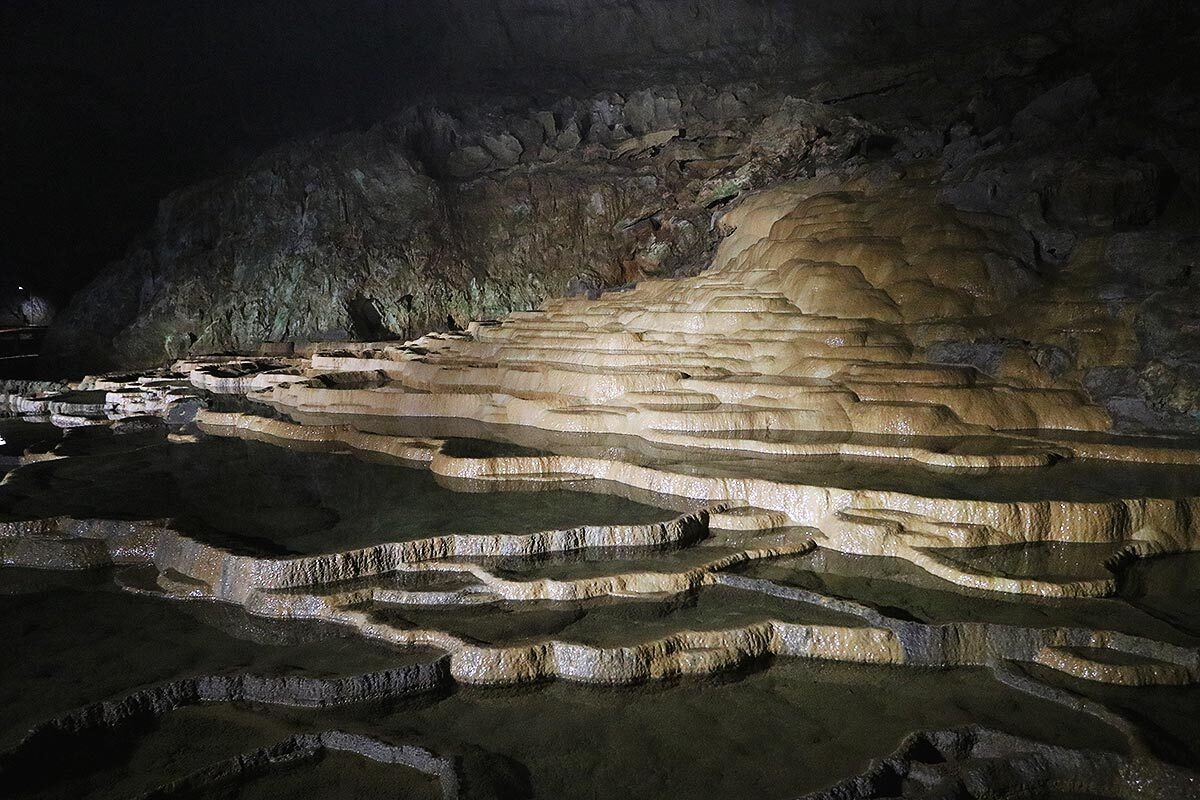
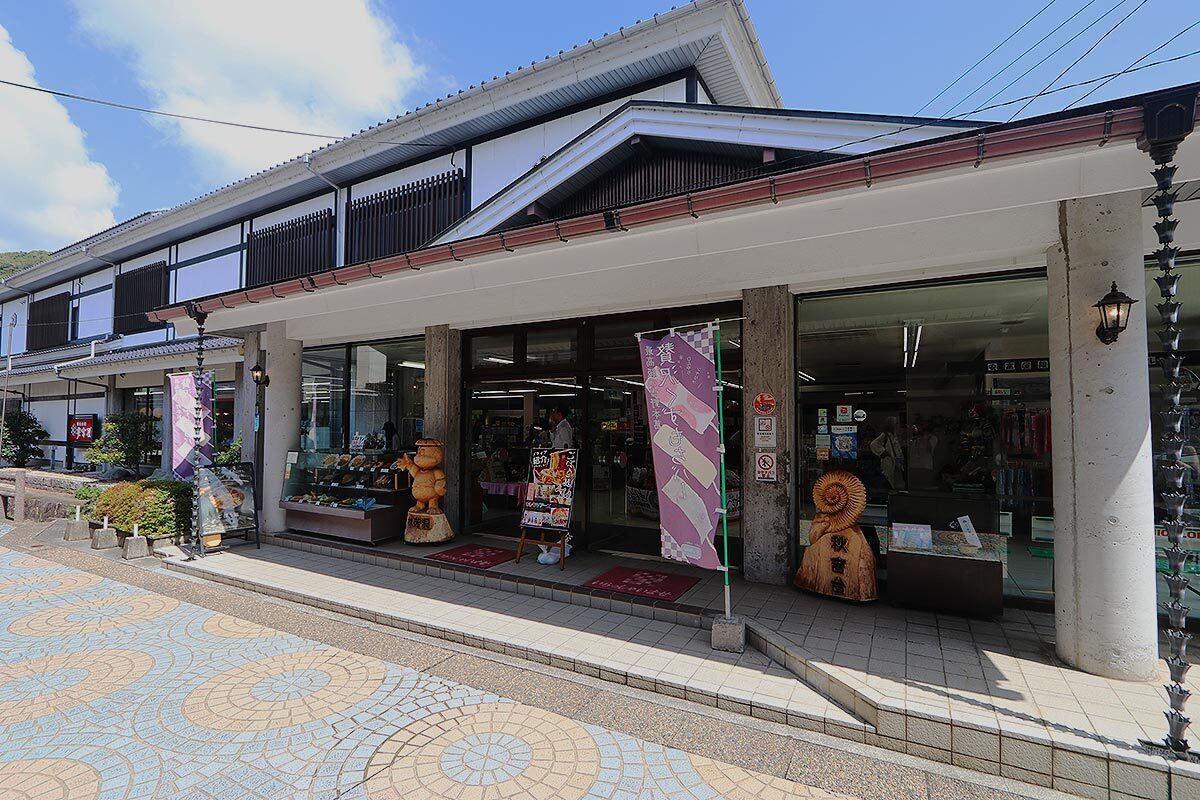
Emerging from the cave through a dramatic vertical crack in the rock wall at the southern end, our group looped back to a main strip of souvenir shops and eateries at the main entrance. Here, we made a stop for lunch and souvenirs at Yasutomiya.
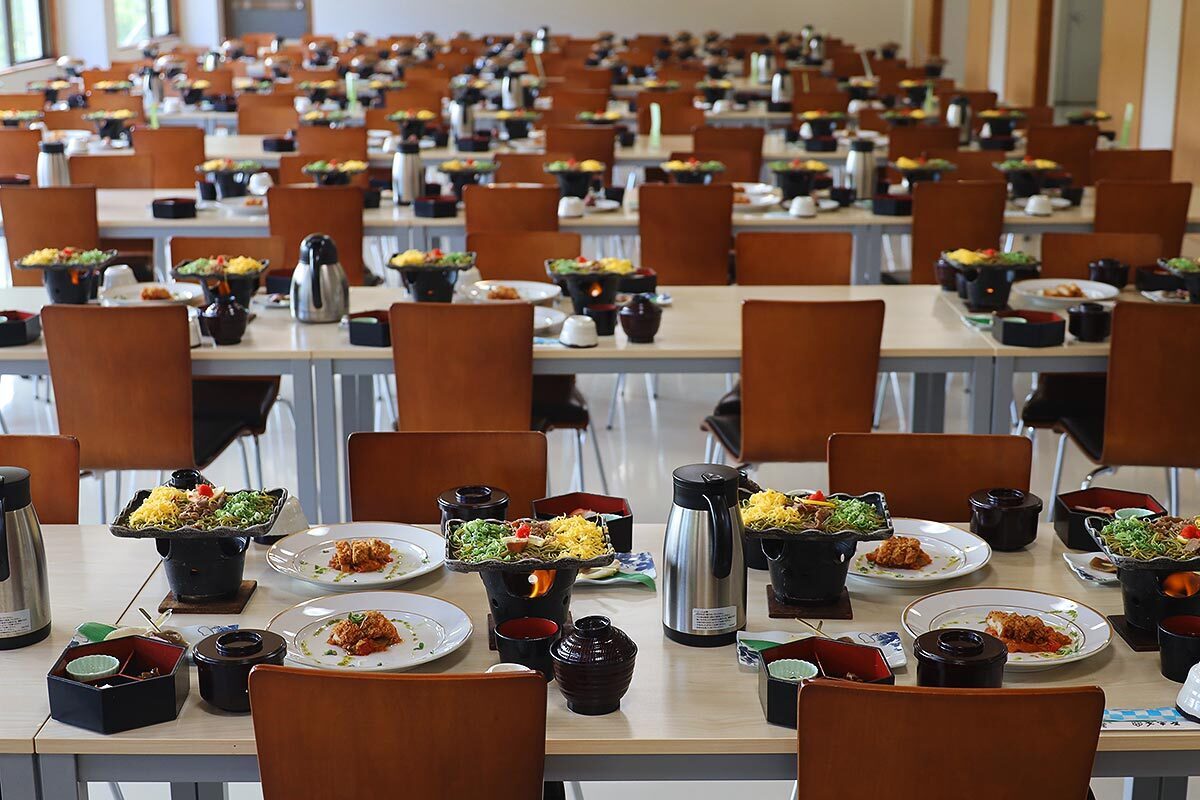
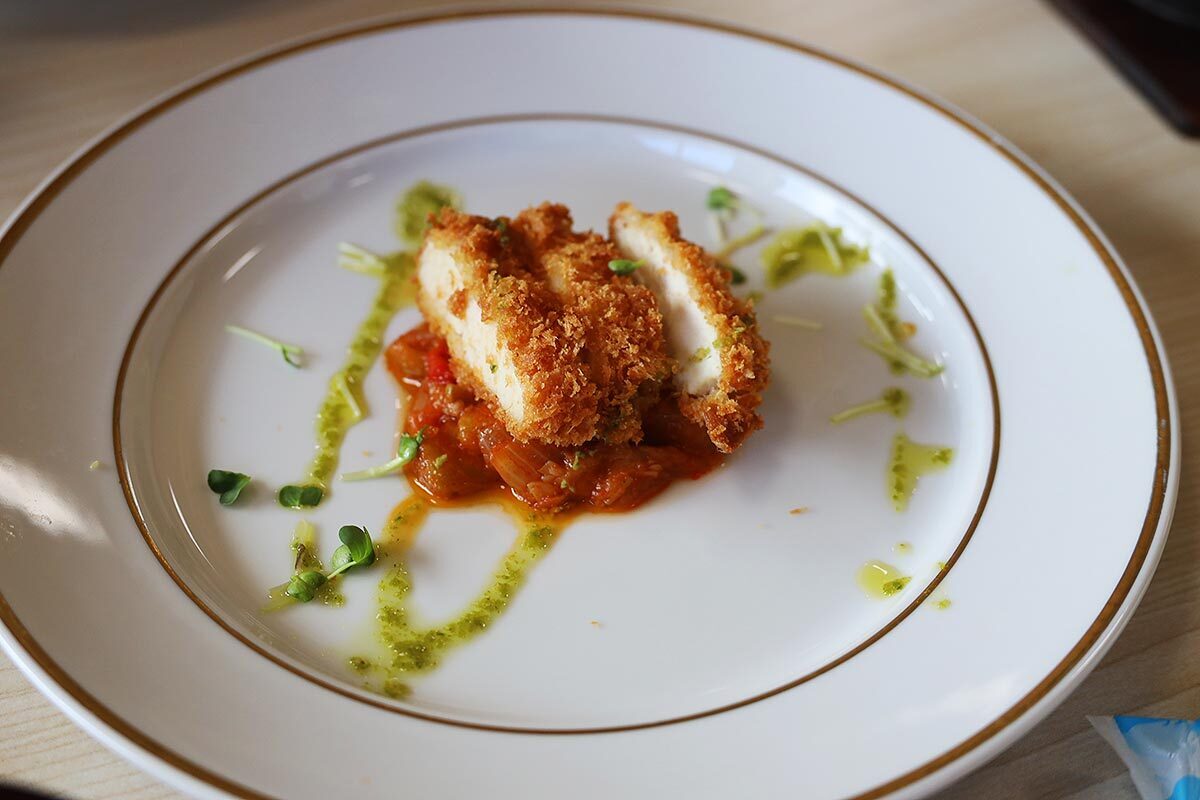
Served upstairs in an expansive second floor dining room, our meal started with chicken katsu with the usual servings of rice and miso soup, but its centerpiece was a variation on the Yamaguchi specialty of kawara soba - a mix of buckwheat noodles flavored with powdered tea, sliced omelette and shredded beef, cooked by fire on a ceramic roof tile.
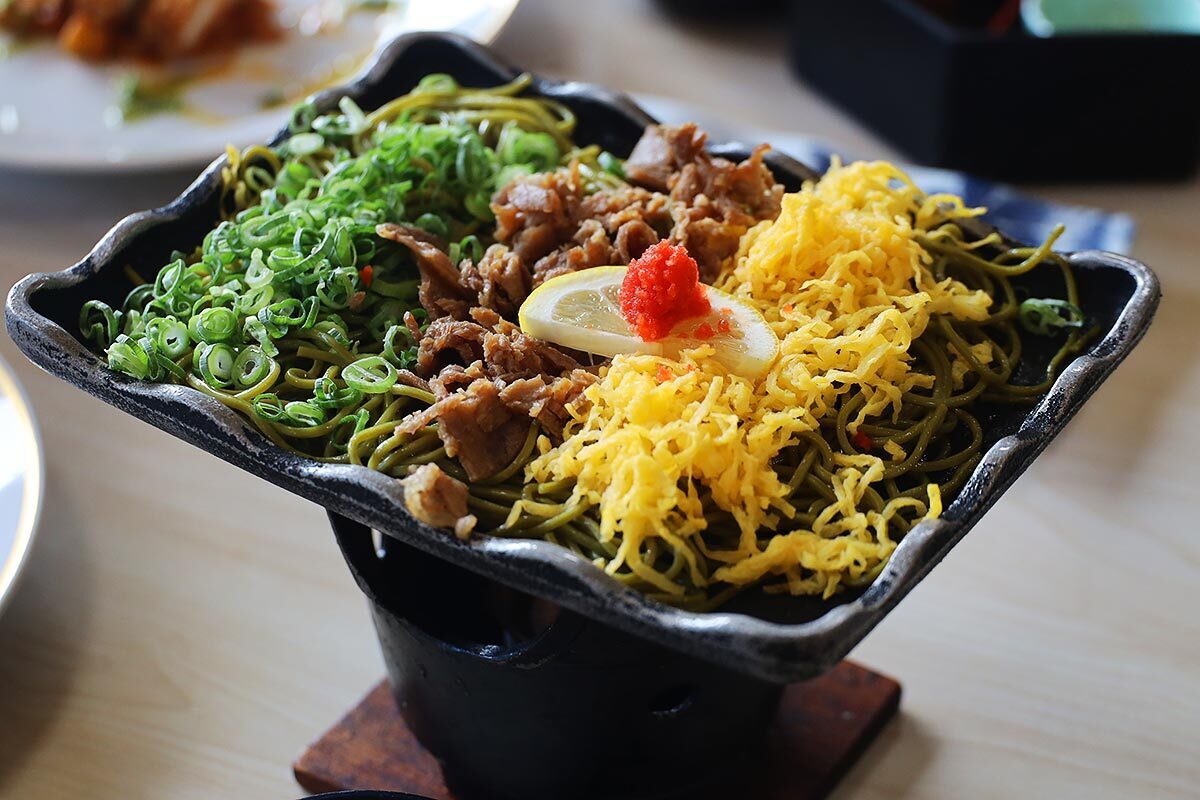
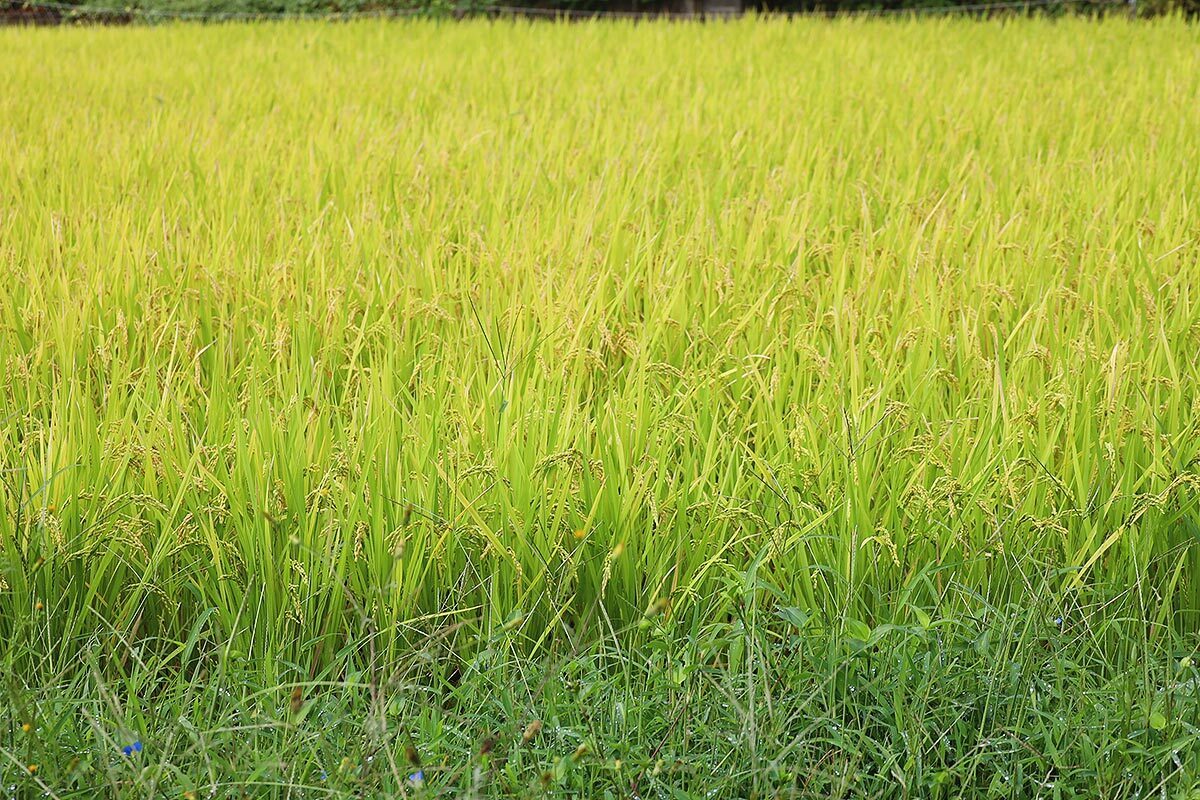
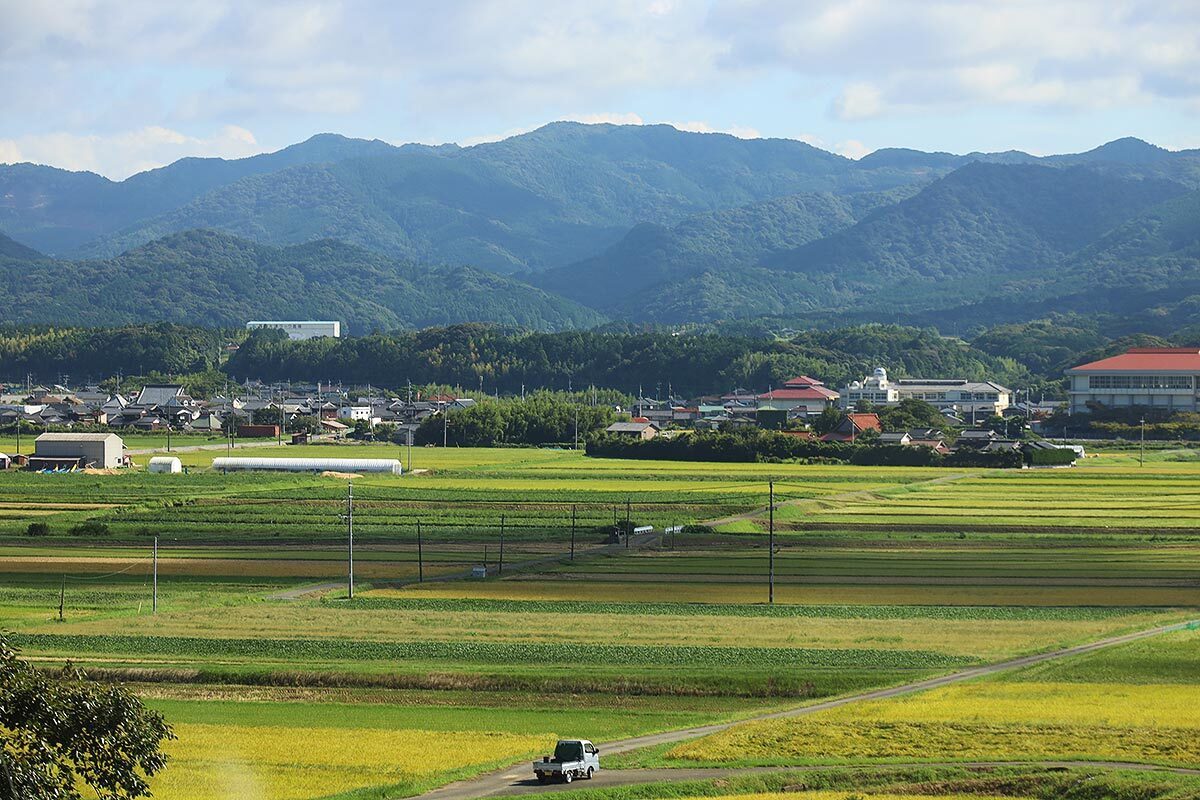
After lunch, we were soon back on the road and continuing on through rolling hills, interspersed with small agricultural clearings and settlements, the latter growing fewer and further between as we made our way further westward. Gradually, the landscape seemed to open up again revealing more villages and expansive rice fields, looking lush and yellow in the final few weeks before harvest. At last, we joined route 191 and the farmland quickly gave way to coastal hills, the ocean winking at me through small gaps in the trees.
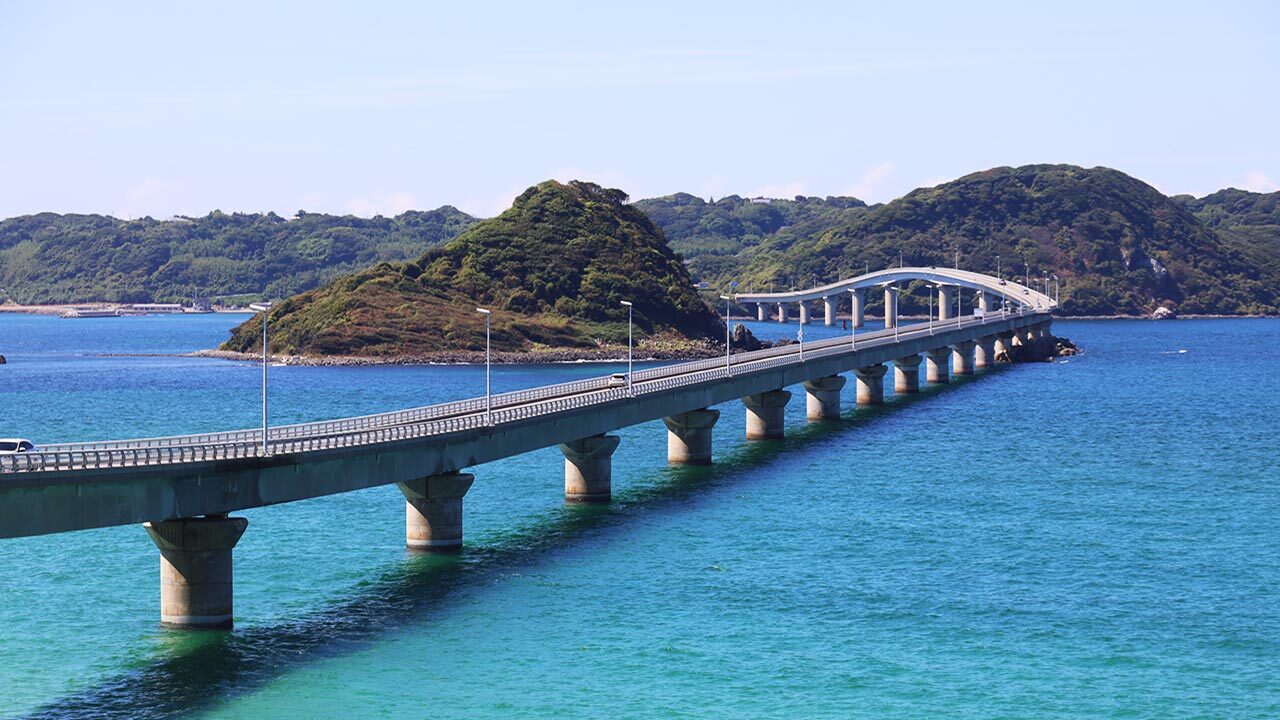
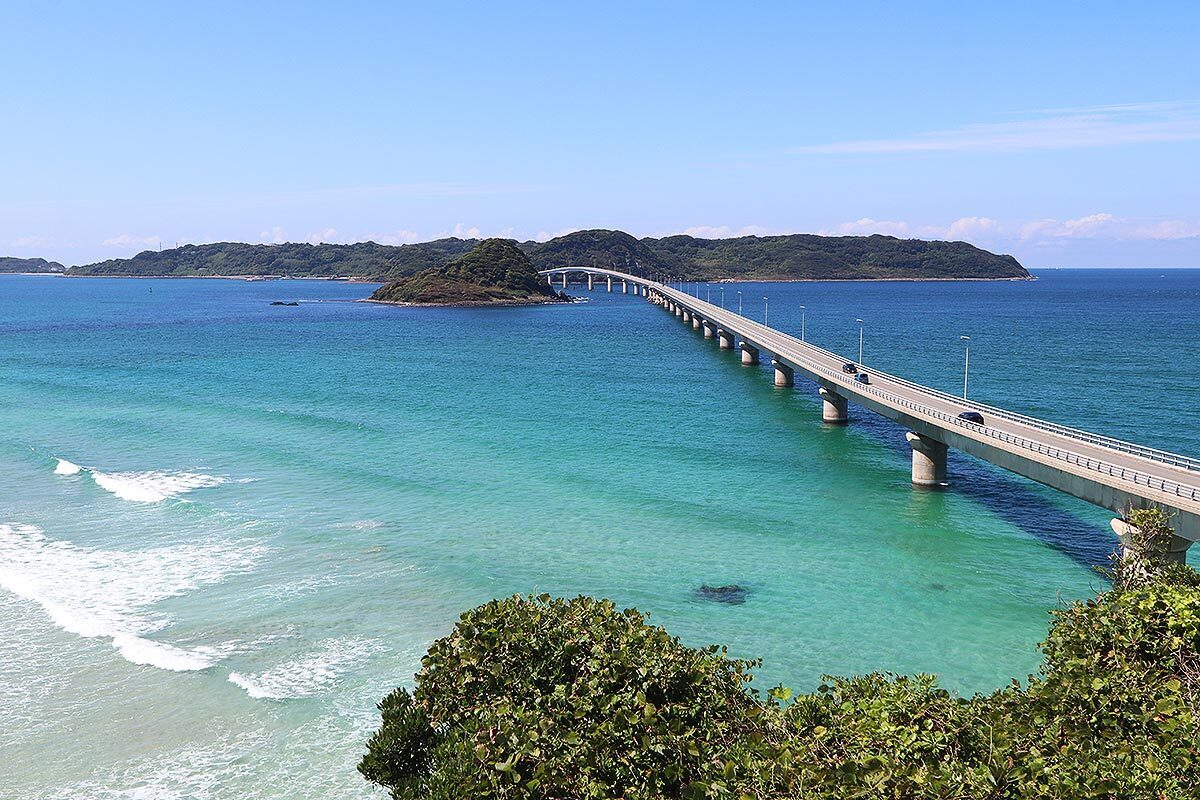
Our next stop was the Tsunoshima Bridge, extending like a white ribbon across the Amagase Strait, now a glittering emerald blue in the afternoon sun. At 1,780 meters long, it only just about claims the number 10 spot among Japan's longest bridges, but routinely places close to the top in votes for its most scenic views overall. A big part of its appeal is likely its understated design - at just 18 meters in height it sits remarkably close to the surface of the water, while its gentle curvature seems to fit perfectly into the surrounding landscape, carefully skirting the little island of Hatoshima that lies roughly at the halfway mark.
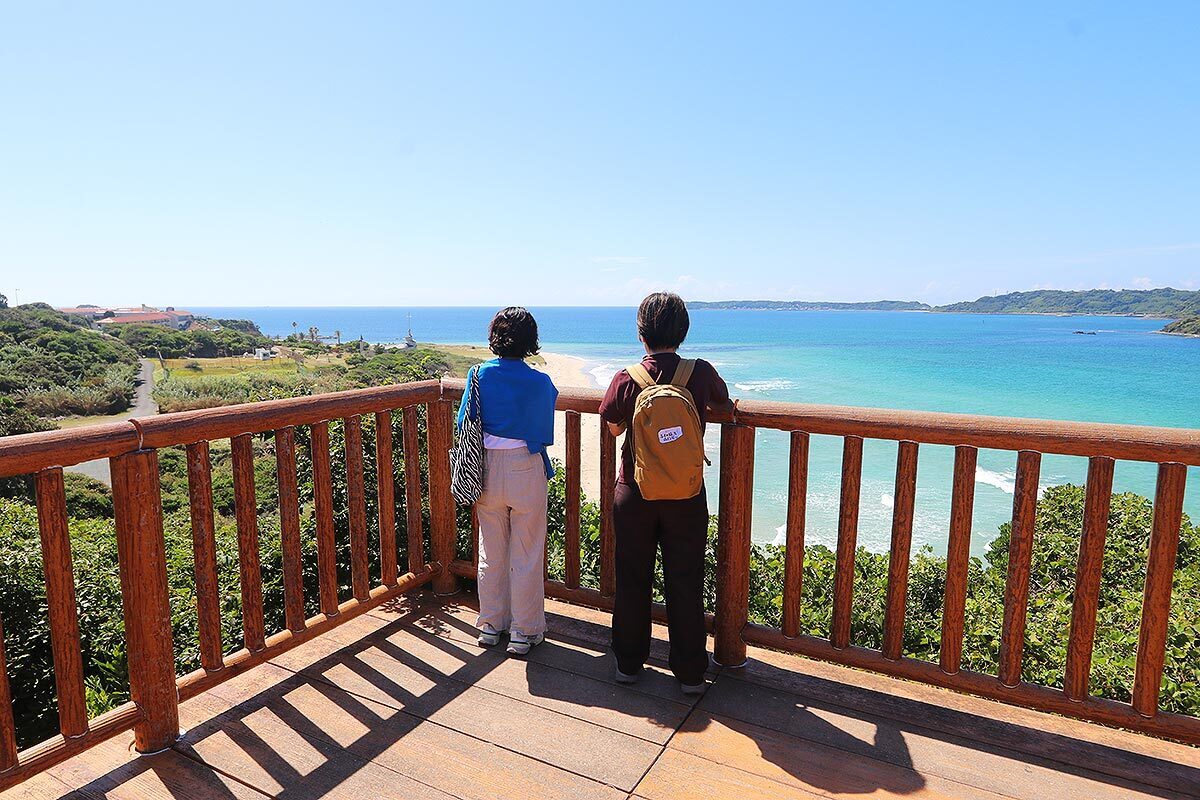
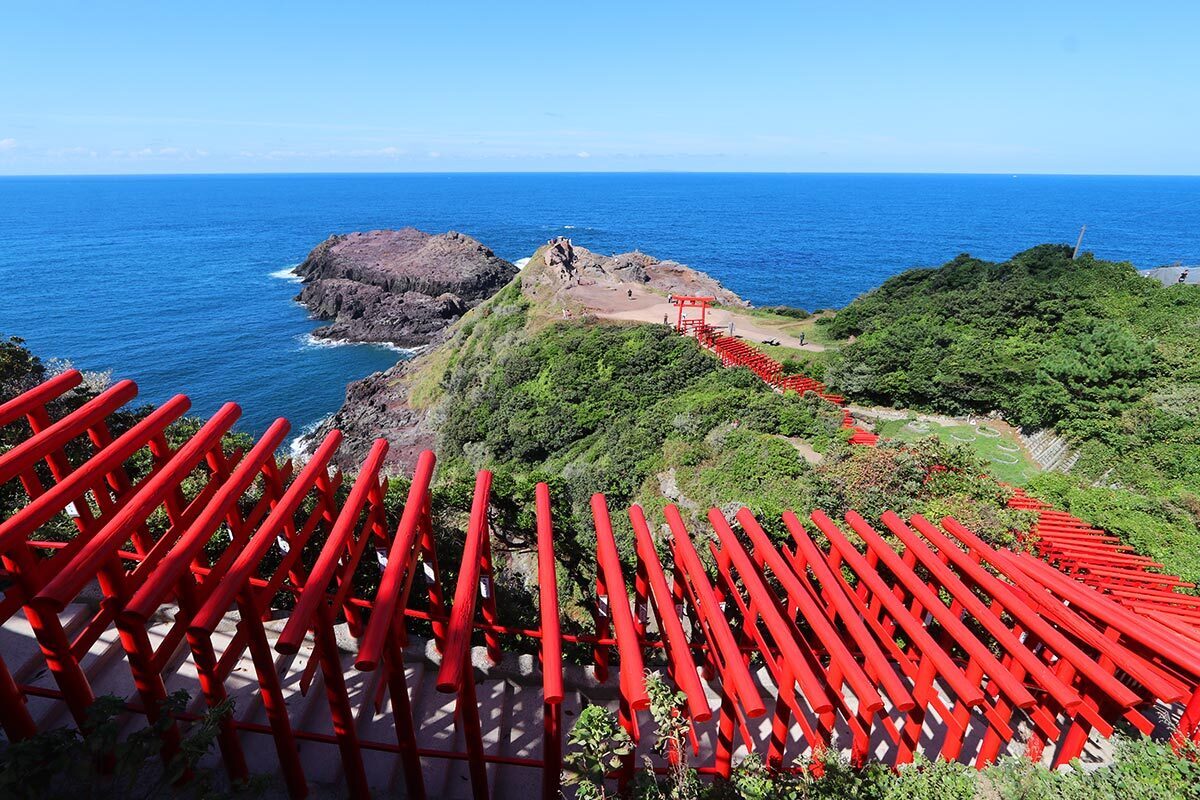
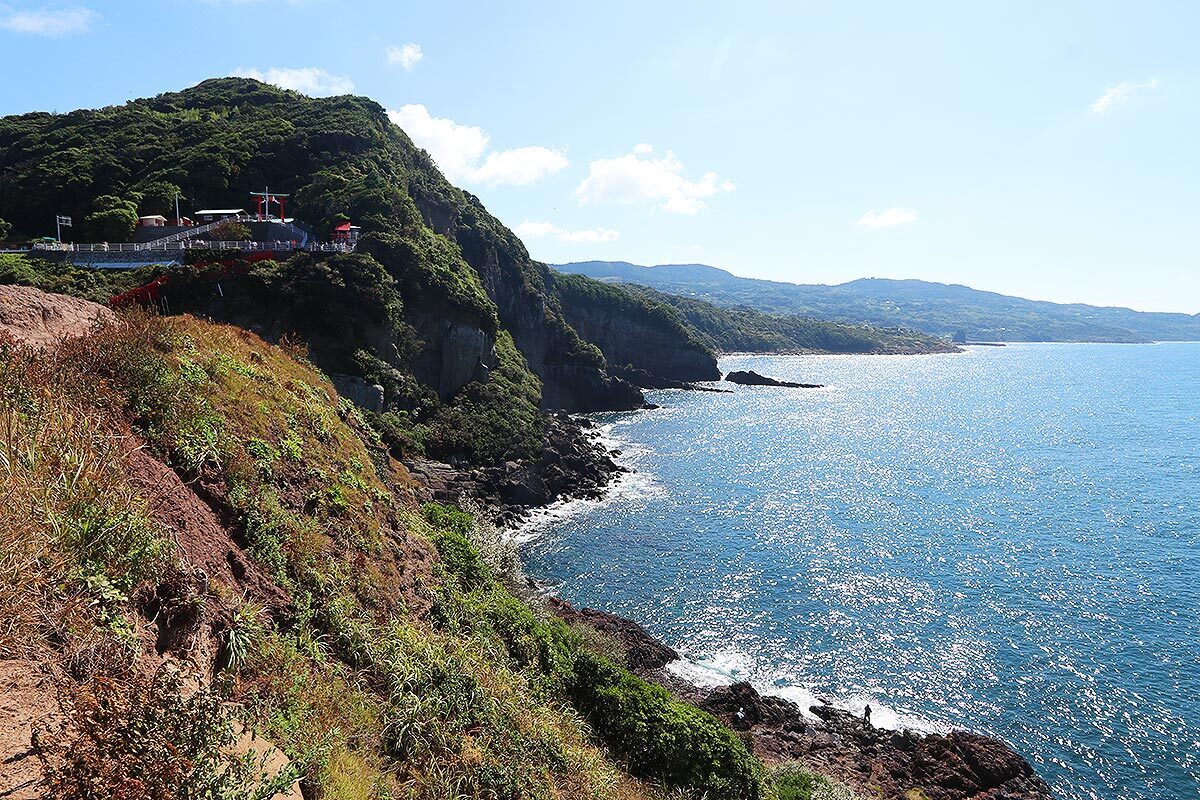
After taking a few minutes to enjoy the view and stretch my legs, the bus was soon back on the road, following the coast to the east, then turning inland at the base of the Mukatsuku Peninsula. Perched on a high, grassy headland with spectacular views along the coast, Motonosumi Shrine is best known for its winding corridor of 123 red torii gates - quite reminiscent of the more famous Fushimi Inari Shrine in Kyoto, though in a dramatically different setting.
Though it has the look of something that could have been on this spot forever, it is in fact a relatively recent creation, founded in 1955 when a local fisherman reported being visited by a white fox in a dream.
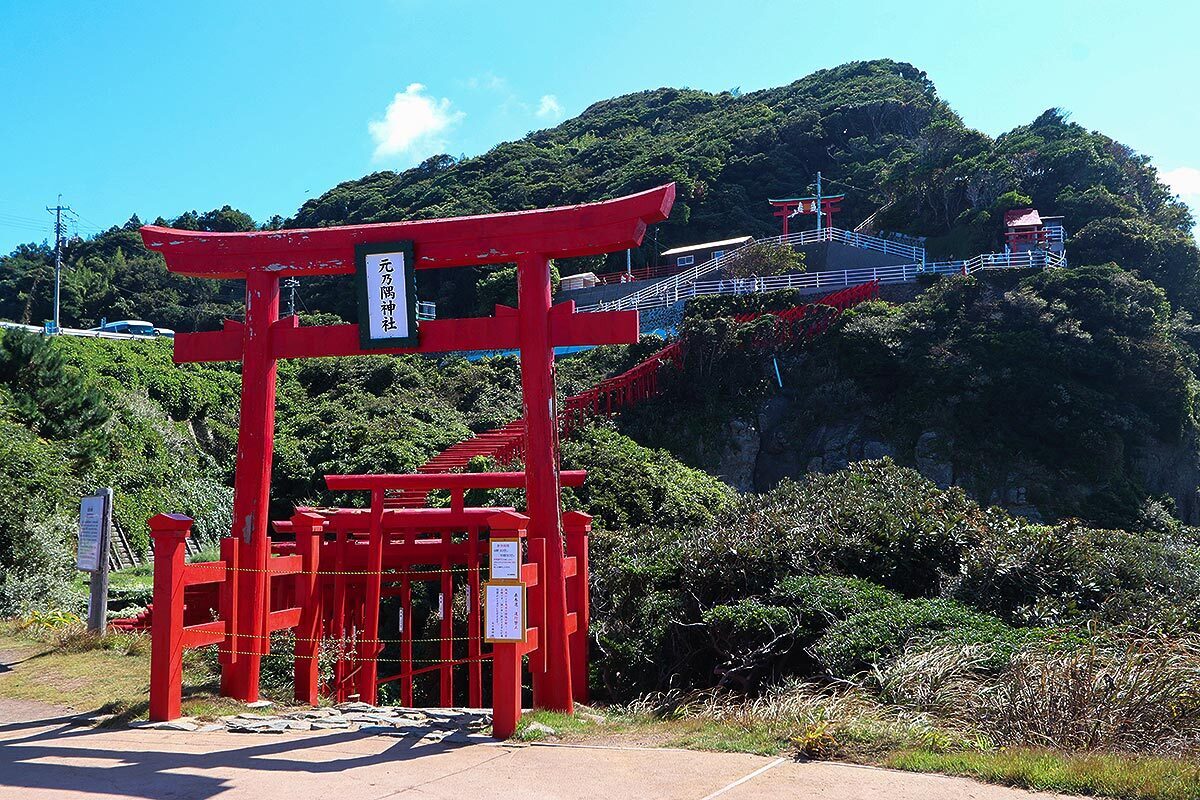
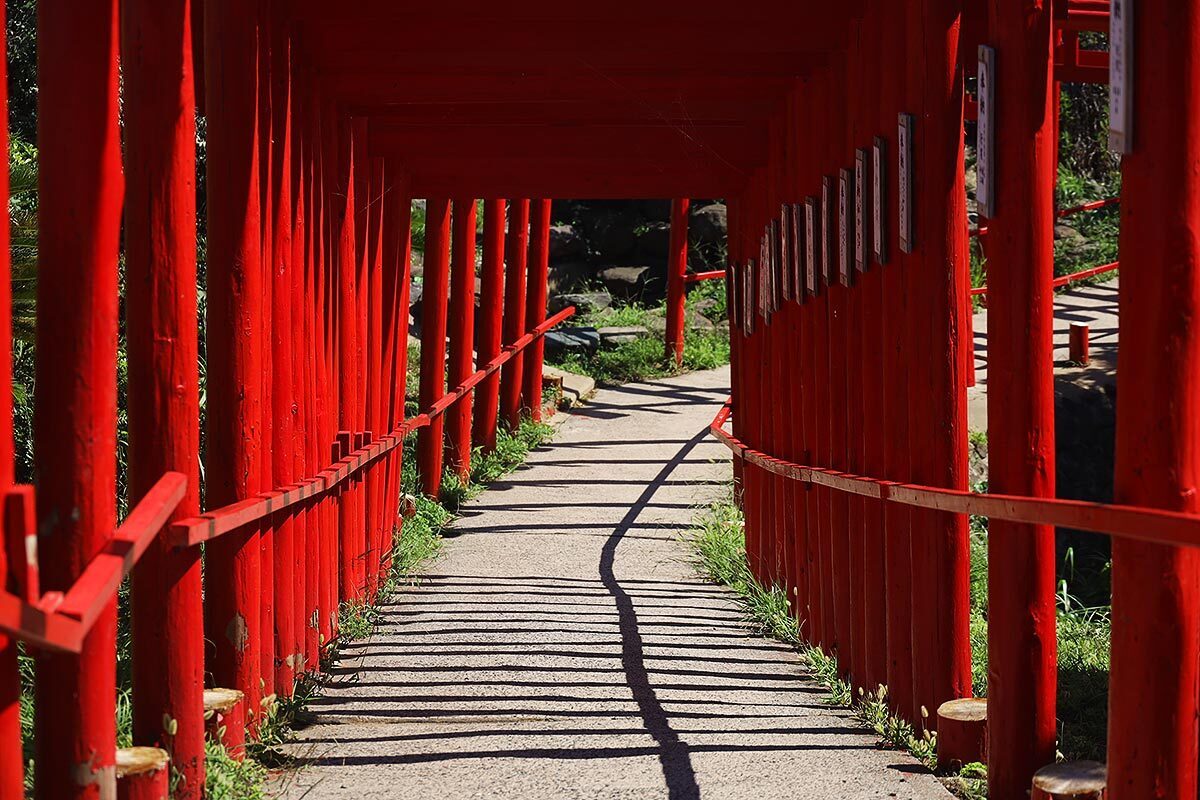
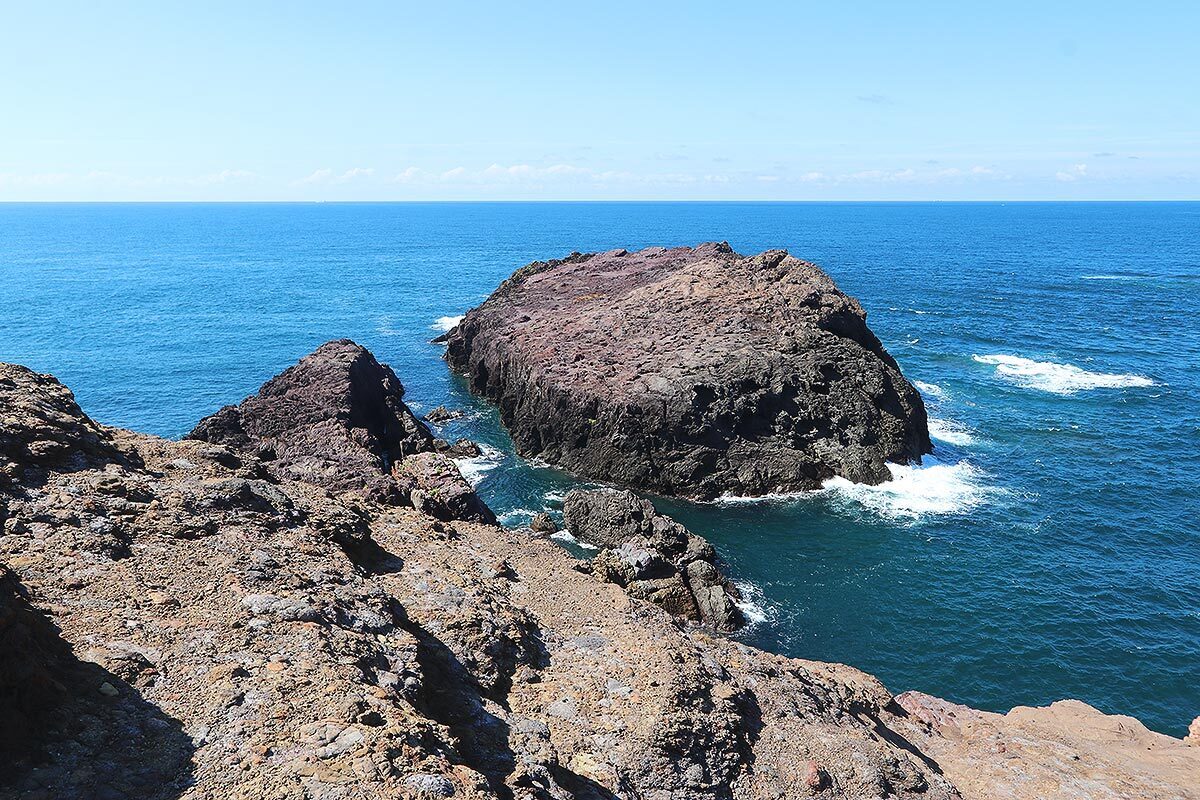
Directly below the shrine where the cliff face meets the sea is a dramatic rock outcropping called the Ryugu no Shiofuku, or "Ryugu's sea spout", which channels seawater through a hidden sea cave and out through a narrow opening. When conditions are just right, the water can become pressurized and blast upward to heights of 30 meters, though the sea was too calm for that on the day of my visit.
As exciting as this and the shrine itself were, the highlight for me has to have been standing on a little promontory at the foot of the hill, looking back along the rocky shoreline towards the peninsula, the sea twinkling in the sun.
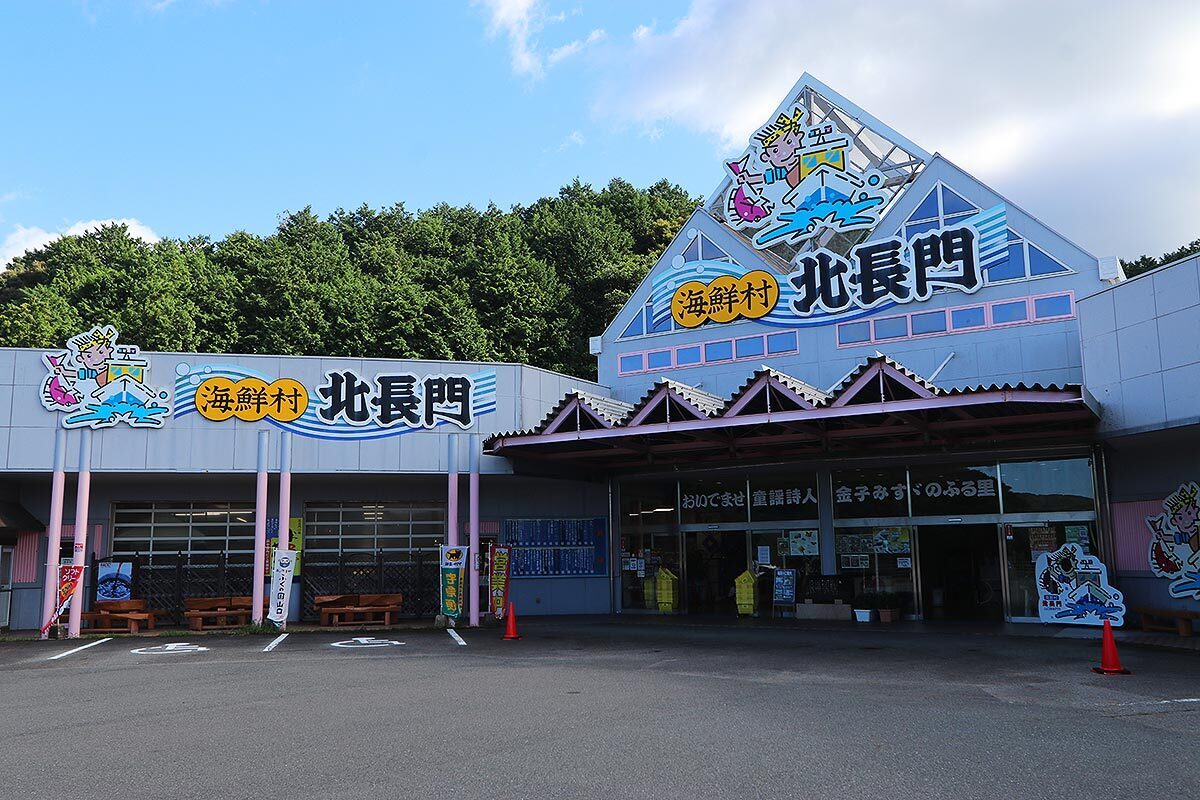
By now we had already begun to curve eastward back toward our starting point, but there was one final slice of local life to enjoy about half an hour along the coast at Kaisenmura Kitanagato, a tourist-friendly roadside market selling local seafood, produce and souvenirs.
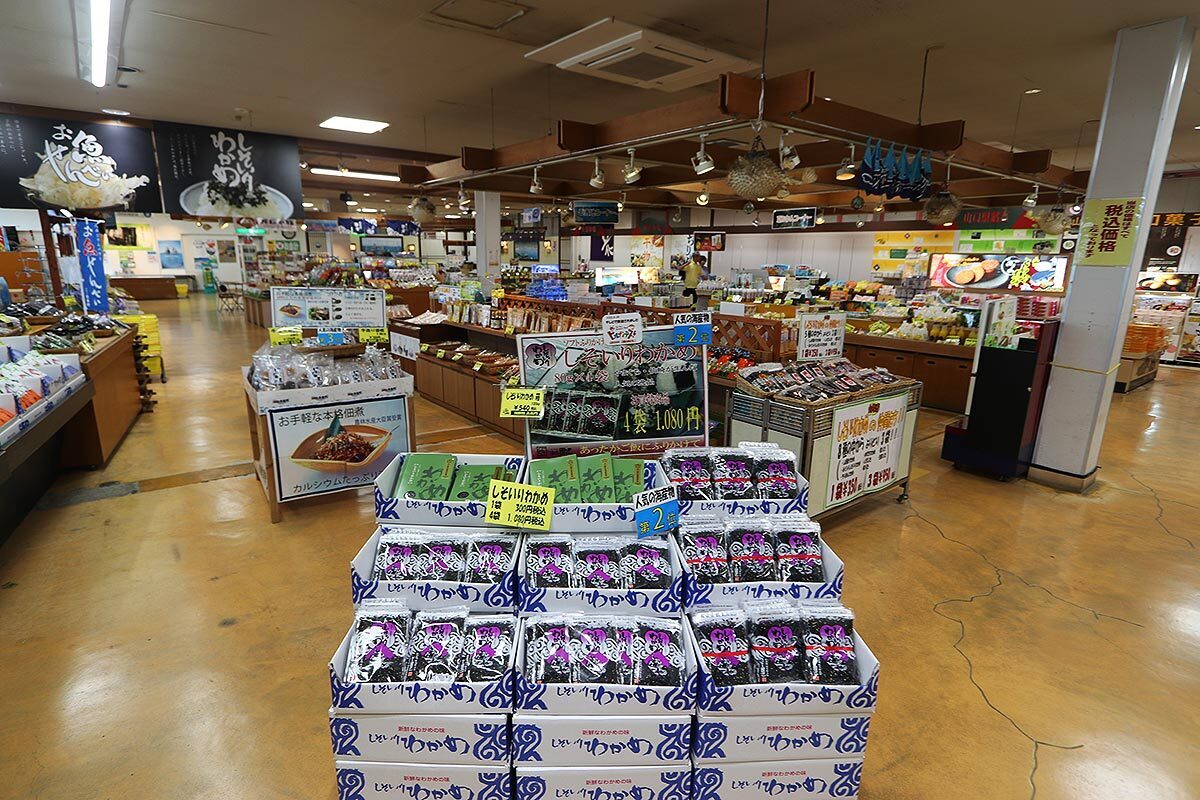
As simple as this last stop was, I soon came to see it as a surprisingly smart inclusion - having seen so much of the prefecture through a bus window, it felt genuinely absorbing to see (and smell) products like fugu, various kinds of fish cracker and - apparently a particular Nagato favorite - seaweed flavoured with shiso leaf.
With that, the sightseeing portion of the day was at an end, and all that remained was to make three handy drop-offs at Nagato City, Nagato Yumoto Onsen, Shin-Yamaguchi Station, where I said my goodbyes, and Yuda Onsen. Reflecting later on the tour, it occurred to me just how many of my original reservations about bus travel had been turned on their head - or at least could be for the right traveler.
Rather than feeling cooped up inside, I had been comfortable and protected, first from rain then again from the sun. Traveling by road instead of by train is what made the itinerary possible, and I hardly felt cheated of having to research obscure local train lines or rushing to make a tight connection. And then there was my guide, a friendly and knowledgeable local expert,on hand to answer questions - albeit via a pocket translation app. In short, it expanded my opportunities far more than it limited my experience, and I couldn't have asked for more from my first ever time in Yamaguchi.
- Fuku's Journey: Yamaguchi Explorer 2026
Official website for bus tour details and online reservations