In search of the Kyoto moment

It was a few years ago now at a get-together of mostly younger foreign residents that a friend of mine - the conversation had already turned a little bit lyrical - said something like "you're a writer aren't you, so how would you explain what it feels like to be in Kyoto?". The incident sticks out not so much because of any great profound thinking on my part, but because rather than do what I usually would and bat the question away, I gave it a go.
Of course, I started with history - it's the former capital, its layout modeled on an ancient Chinese city, there's a unique kind of sensibility baked into it and so on - but this wasn't satisfying anyone. Thinking again, I said that to me at least, Kyoto was less a physical space than it was a series of intense, personal moments - things seen, heard, smelled even - things that can touch you very deeply and that you may well find yourself returning to long after.
So what might qualify as a "Kyoto moment"? It could be something as simple as walking down a crowded street - suddenly there is the smell of incense and just for an instant you find yourself in another, older world. Or turning a corner in some sheltered garden when - with the practised nonchalance of a magic trick - a sightline opens just so to reveal a weathered statue or the eaves of a little teahouse.
In a time when headlines and social media feeds are still dominated by overtourism and other sources of tension, many travelers will be asking themselves whether such experiences might be a thing of the past or in some cases whether to skip the city altogether. For this video project in partnership with the Nishiyama Ryokan, established in 1953, we set out to lean into a more contemplative mood and share three surprising spots that might just restore your faith in the "Kyoto moment".
Day 1
Stepping off the Tokaido Shinkansen at Kyoto Station on a surprisingly warm February morning, I soon found myself in the usual scrum of visitors and commuters that has become such a fact of life in recent years. By the time I arrived at my first stop, just a few minutes' walk to the northeast however, the sound of the crowds and even the city itself had faded to a comfortable background hum.
Founded in 1641 on land already by the shogun to what is now Higashi Honganji Temple, the landscape garden of Shōsei-en has long since been cut off from the main precinct to form its own little enclave, two city blocks from its parent institution. Inside, it feels like a quiet oasis in the middle of the city - a green and surprisingly open space with skillful landscaping only expanding the impression of scale.


Taking up about a sixth of the garden's total footprint and its primary point of focus is the Ingetsu-chi or moon crest pond, named for the much-vaunted beauty of the full moon reflected on its surface. Visitors to the garden are led around and over sections of the pond along a meandering path, with the landscape deliberately shaped to form 13 distinct views.
As well as its natural features, the garden is known for a series of charming wooden structures, including a large reception hall, teahouses and a ceremonial arch. My own favorite though is the Kaitō-rō, or "ore turning" bridge - a slim, covered bridge connecting the pond's northernmost island to the shore. Apart from its elegant positioning over a twist in the pond, what really stands out is its roof; combining a Chinese-inspired form with distinctly Japanese methods, there is something so sheltered and comfortable about it that you can't help but pause halfway.
In fact, this is just one of many subtle references within the garden to Chinese poetry and aesthetics, thanks to the input of former samurai, poet and noted Confucian scholar Ishikawa Jōzan. Incidentally, his retirement villa in the east of Kyoto was turned after his death into one of my favorite temples, today known as Shisen-dō.


Leaving the garden behind, I took a 15-minute walk to Shichijo Station on the far bank of the Kamo River. From here, a 5-minute ride on the Keihan Line brought me to Sanjo, just a short walk from my next stop. Located a little way further north along Kiyamachi-dori and hidden away behind a grand-looking gate is Ganko Takasegawa Nijoen - a well-regarded traditional restaurant whose setting quite simply needs to be seen to be believed.
Stepping through the gate and its little attendant garden, one finds oneself in an expansive and beautifully preserved villa, believed to date as far back as 1611. Until around the turn of the Meiji Period in 1868, this was the property of the Suminokura - one of the city's wealthiest and most influential merchant families in the early Edo Period (1603-1868).
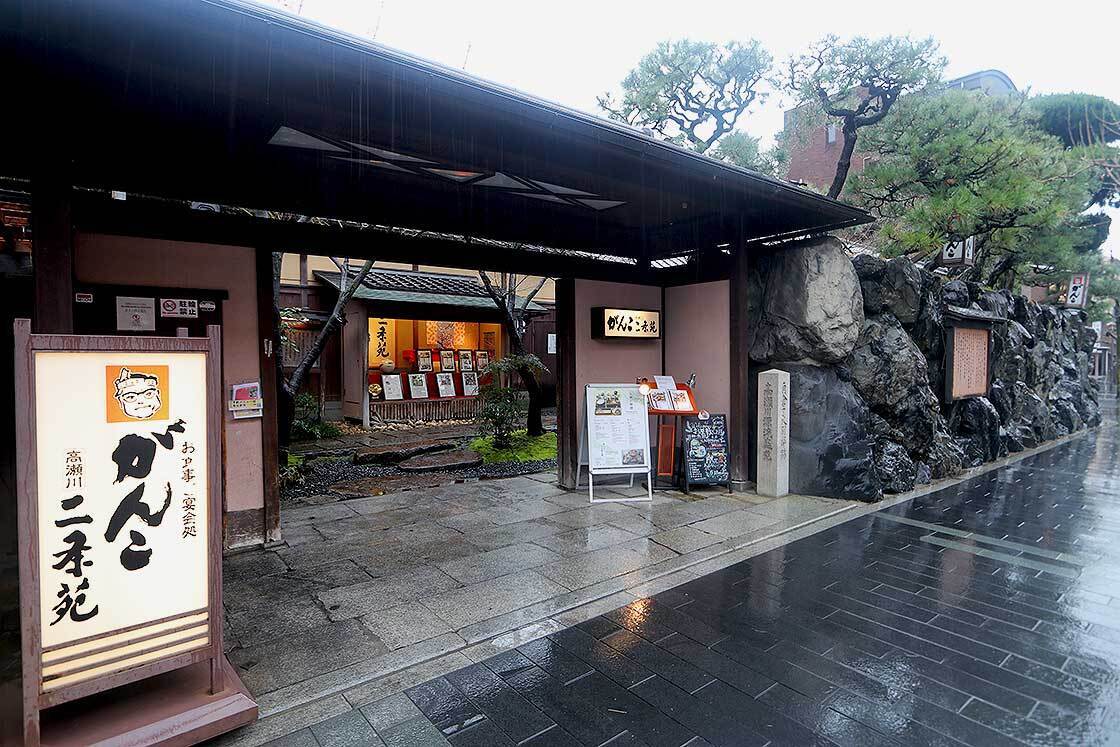


Inside, the restaurant opens into a series of separate dining rooms of different sizes, some preserving their original opulence, some more plain and still others riffing on original architectural features to create their own unique atmosphere. By far the most striking feature however is its garden - a beautiful, leafy space arranged around the Takasegawa canal.

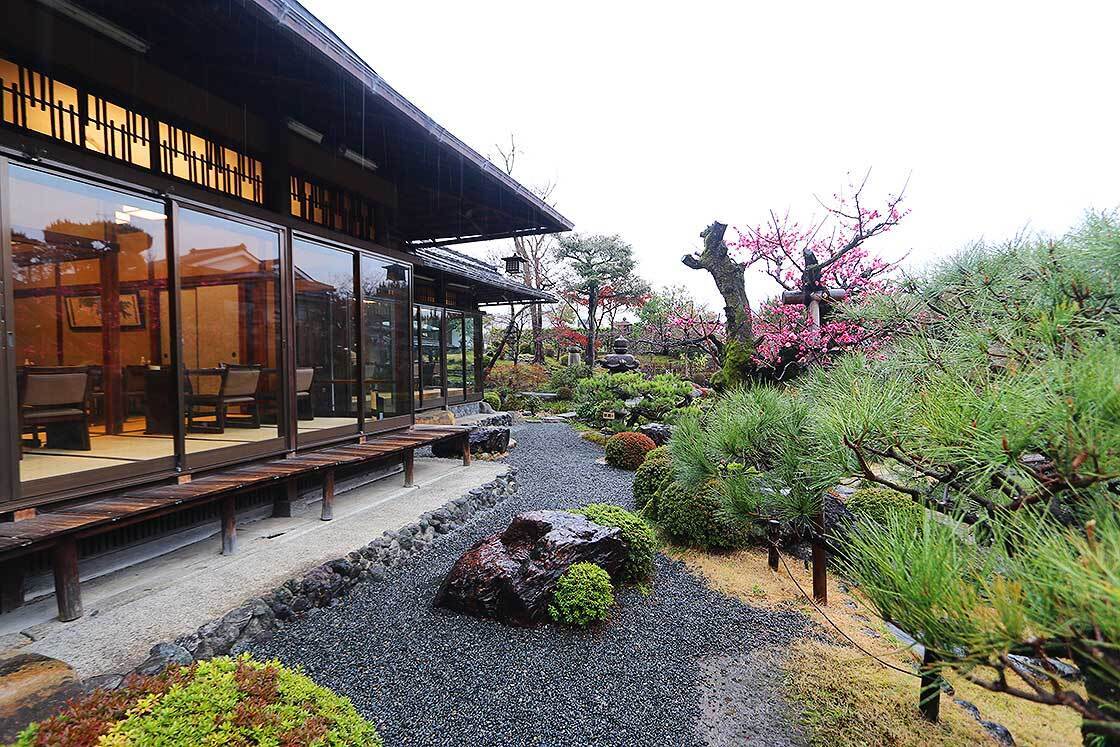
Not unlike Shoseien, the garden creates a wonderful sense of nature and openness that is in quite startling contrast to its actual surroundings, as if you've teleported far away into the middle of some forest, the fast-flowing water of the canal only heightening the illusion while dampening the noise from traffic outside.
To the Suminokura, the river was not just an ornament but a demonstration of their wealth and power - it was they who financed and oversaw its construction, creating a whole new delivery route through one of the city's key commercial districts, eventually passing through the opposite side of the Kamo to reach as far as Fushimi.


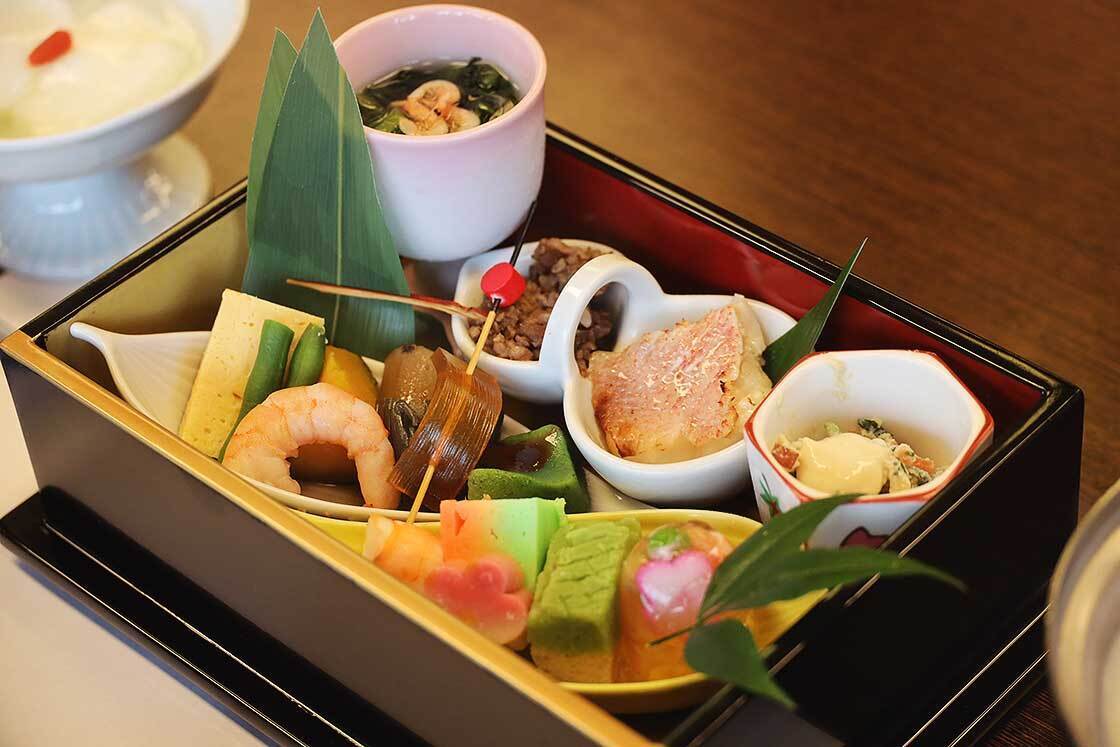
Taking a seat in one of the rooms facing onto the garden, I ordered and was soon tucking into a seasonal kaiseki course complete with fresh sashimi and a host of delicate, bite-sized morsels. The menu is expansive, varied and reasonably priced for such a beautiful setting, with the Kansai regional style as the overarching theme.


Leaving the Takasegawa River behind and turning westward into the middle part of Kyoto, I took a five-minute stroll along Nijo-dori to my accommodation for the night. Set in a modern 5-story building just a few steps from Shiyakusho-mae Station, the Nishiyama Ryokan feels like a cozy, sheltered oasis in the heart of the city, combining the warmth and atmosphere of a traditional ryokan with the flexibility and no-fuss mentality of a western-style hotel.
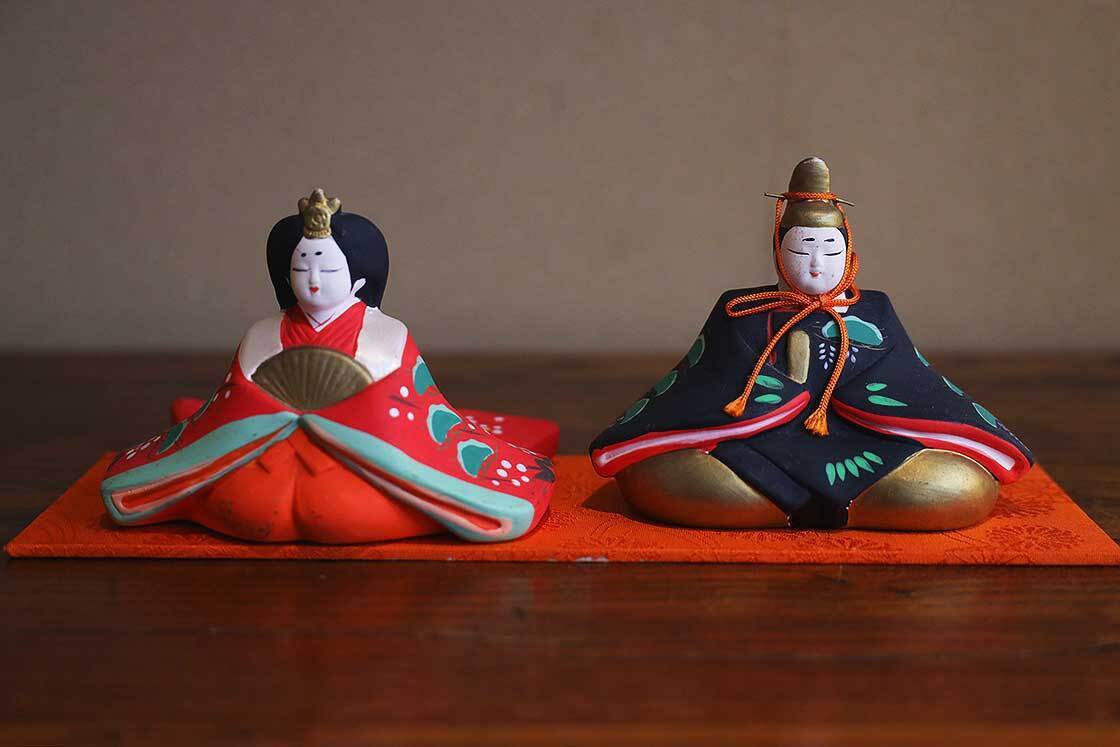
Stepping in off the street, visitors are met with a modest but welcoming space with floor-to-ceiling windows looking out onto an enclosed garden and, at the time of my visit, a lovely display of hina dolls on a special, multi-tiered platform as part of the lead-up to the Hina matsuri on March 3.


My room belonged to the more compact "standard" type, but instantly impressed with its comfortable feel and refined design, a great example of how attention to a few subtle details - good joinery, quality shoji paper, fine latticework and well-chosen fabrics - can really turn a room into something special.
The staff were also kind enough to give me a peek at several of the other room types, including a family-sized suite room and a luxury twin type with western-style beds and some unique design features inspired by the feel of a traditional teahouse.


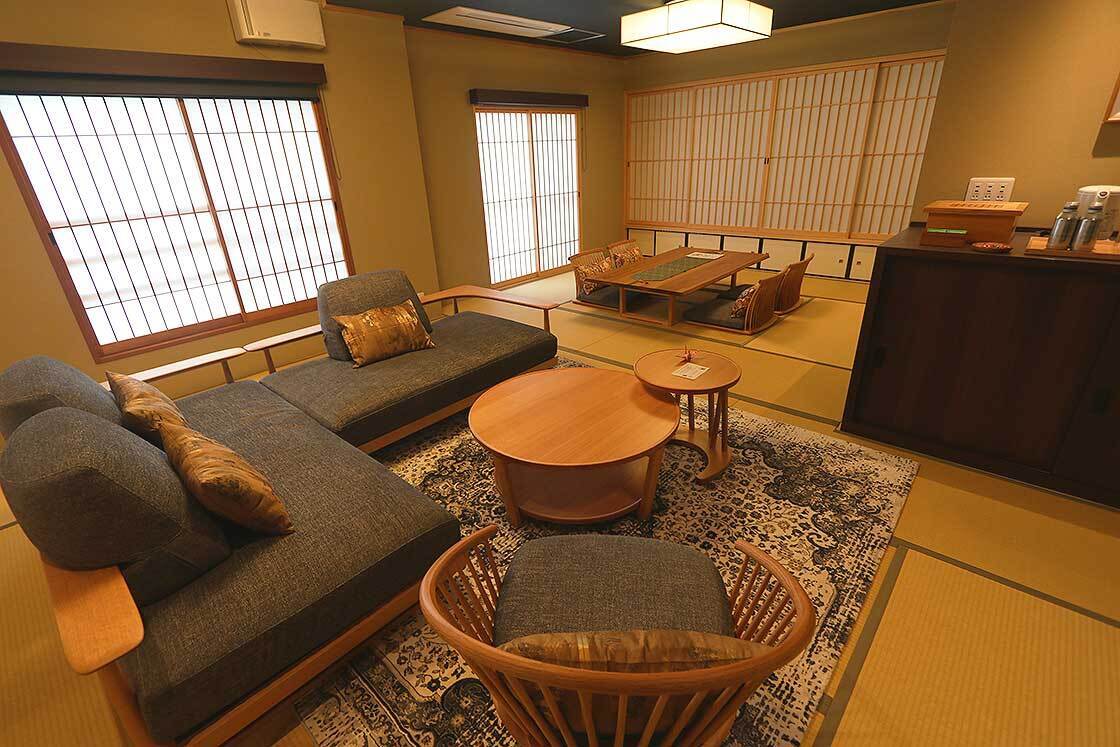

luxury twinroom
While the ryokan departs from the usual formula in not offering an evening meal - a very practical nod to its location in a busy city with such a dazzling array of restaurants to choose from - one feature I really appreciated not having to do without was the basement level bathing facilities. Though fed by regular tap water and not hot springs, these were nicely designed to look out onto a recessed portion of the garden and so nice to unwind in after a busy day on the road.

By now I was almost ready to settle down for the night, but there was still one more unique experience waiting for me in the lobby, where the ryokan offers a rotating schedule of cultural experiences for guests to take part in and enjoy. On the program for that night was a koto performance by Matsumura-san, a skilled player with many years of experience, dressed beautifully in a gold-colored kimono.
Introduced to Japan from China during the Nara Period (710-794), the koto remained for centuries an instrument of the elite, with strong connections to the imperial court and Kyoto's wider aristocratic culture.


Day 2
The ryokan may not offer the usual evening course meal, but it more than makes up for it come morning with an equally elaborate traditional breakfast, beautifully presented and complete with some interesting Kyoto-specific elements. One thing that caught my eye was a dish of yudofu and mushrooms, cooked inside a unique little box with the heat from a candle.
Minimalist almost to the point of abstraction, yudofu is closely connected to Zen Buddhism and the classical vegetarian cuisine of Shojin Ryori, itself with origins in the monasteries of medieval Japan. Cooked gently in water, it is typically served with only a light dipping sauce allowing the delicate texture and subtle flavor to shine through.

It would soon be time to say my goodbyes and move on to my final stop in the city, but not before another great little cultural experience in the lobby; this time a somewhat simplified tea ceremony demonstration with the elder Nishiyama-san - the ryokan's second generation owner - presiding while the okami-san or lady of the house gave a helpful running commentary in English.
Despite following the steps from little tables instead of on tatami mats, Nishiyama-san immediately set a serious tone as he arranged the utensils, scooped a little matcha powder into an elegant little bowl and whisked it intensely for a few moments. Receiving the bowl with a bow, my job was to rotate it just slightly before drinking the thick, slightly bitter mixture down in four slurps and pausing to take in the nice seasonal design painted on its side - a neat, simple ritual that felt at once peaceful and somehow cleansing, and I found myself wishing I could carry that mental state forward into the day ahead. After taking the role of guest, I also had the chance to practise serving - something usually reserved for the host. Leaving the ryokan behind, I set out for about 10 minutes westward along Nijo-dori to my final stop in Kyoto.


Here's an experience that many visitors to the city will surely relate to - turning some corner, you catch the smell of incense and suddenly wherever you are feels charged with something mysterious and timeless. In fact, Kyoto and incense have been deeply intertwined ever since the city's founding, from Buddhist and court ritual, crystalizing amongst the wealthy elite into a fully realised system of appreciation and etiquette.
For this reason, I had decided to bring my time in Kyoto to a close with a visit to Shoyeido, a peaceful, reflective space with a pleasantly old-world feel, and one of the oldest and most respected incense sellers in the city. Inside, lining its wood-panelled shelves I found products in all kinds of shapes and sizes, with prices ranging from the beginner-friendly to the avowedly premium.
Founded all the way back in 1705, Shoyeido became a supplier both to high ranking temples and well-to-do aesthetes, soon gaining a reputation for subtle and high-quality fragrances. With the advent of the Meiji Period (1868-1912) and the dissolution of feudalism, the company was able to continue its traditional methods while working to make incense more accessible to the general public.

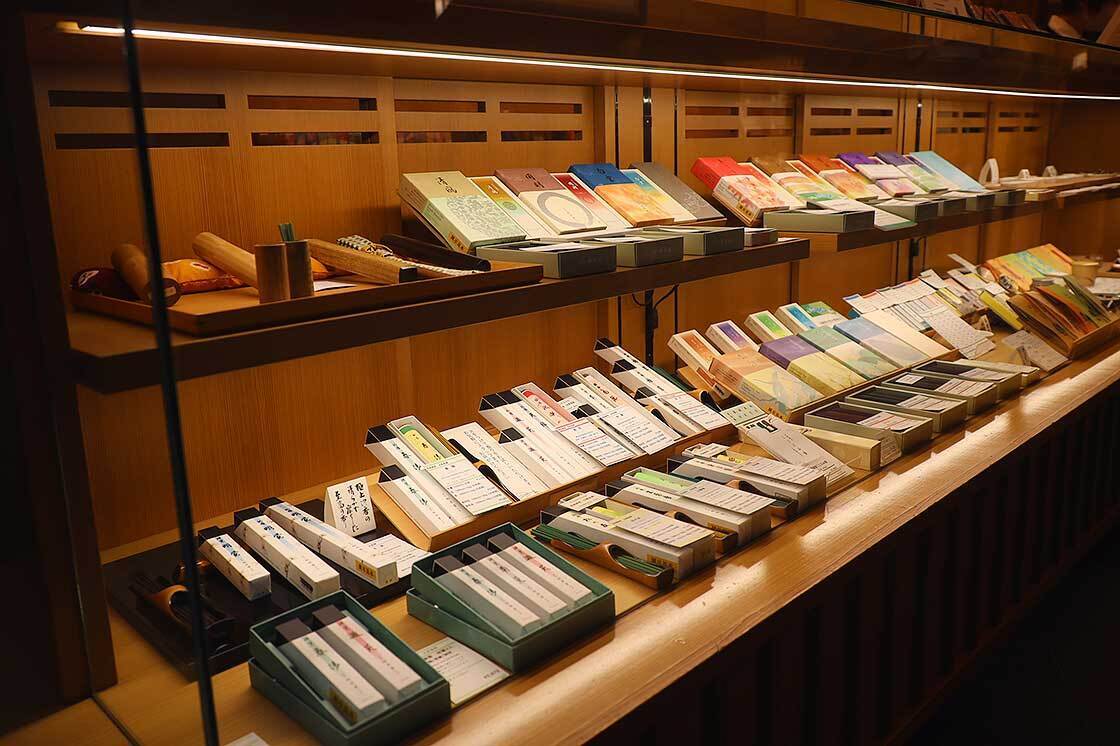
Fittingly, Shoyeido's main store today is a great place to take a first step into the world of incense, with information available in English as well as Japanese, and the chance to sample a wide range of different scents before buying.
In a nice touch, the store also maintains a connected exhibition space, with nicely presented displays introducing the methods and ingredients behind the craft. Just as much fun as the exhibits themselves though were the physical components - rotating cranks, squeezy air pumps and even a set of hanging boxes for visitors to put their heads into - that reminded me just a little of Dr. Seuss.
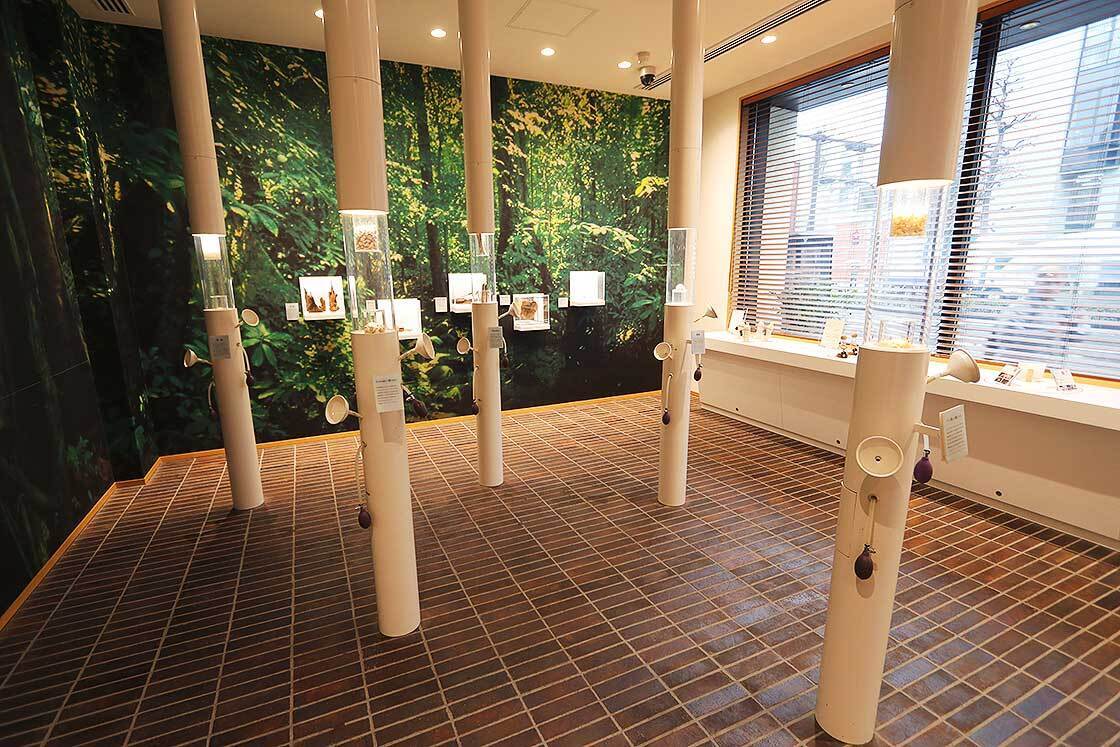

With that, another all-to-brief trip to Kyoto was at an end, and it was time to make my way back to the station for a long, comfortable shinkansen ride home. In the space of a little under a day and a half, I'd seen hidden gardens, filled up on delicious cuisine, learnt about incense and still found time for some quality relaxation at the Nishiyama Ryokan, leaving me with a headful of pleasant memories, old and new. Sometimes it really is less about how much you pack in, than taking the time to experience each thing to the fullest.
