A visit to the Tokyo Sumo Festival

Every bit as emblematic of Japan as a beautifully face-painted geisha or katana-wielding samurai, the unique spectacle of sumo bridges the gap between popular modern sport and deep cultural significance. Long seen as a fascinating if somewhat impenetrable diversion by many visitors to Japan, it is today experiencing something of a renaissance internationally, boosted by the success of the cult Netflix series Sanctuary and - more recently - a packed sumo demonstration at London's Royal Albert Hall that caused a sensation, with social media feeds lighting up with photos of traditionally attired wrestlers or rikishi out and about in the city.
While jumping straight in at the deep end by attending one of Japan's six annual sumo tournaments can be the perfect experience for some, others - whether traveling on a budget, with kids or perhaps just outside of tournament dates - may well prefer something a bit more bitesized. This is exactly where experiences like the Tokyo Sumo Festival come in, offering an informative, easily digestible and thoroughly entertaining slice of sumo action that can be booked year round.
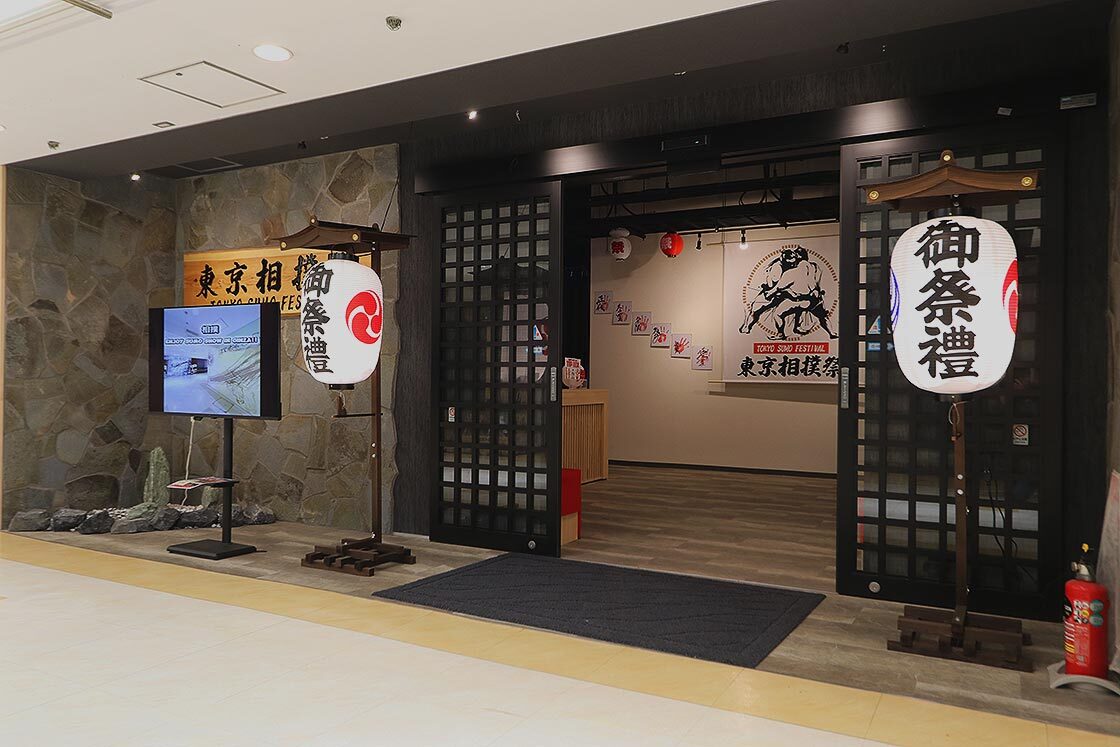
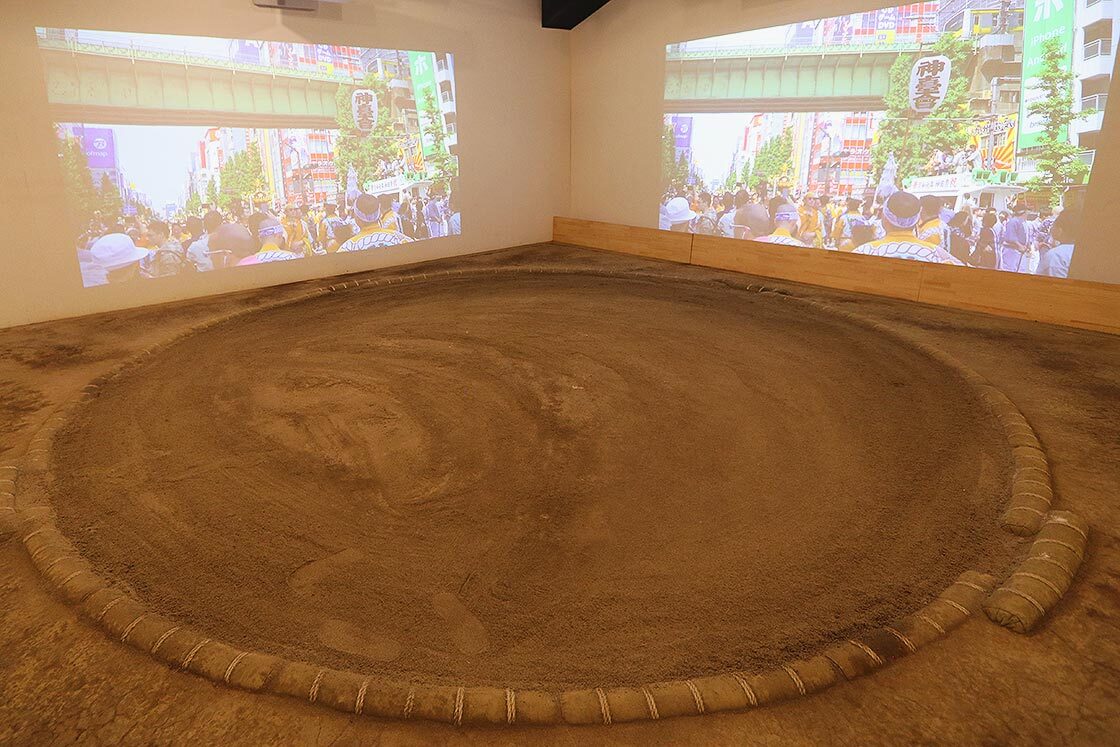
Located within Ginza Inz - a shopping arcade in one of Tokyo's busiest downtown areas and easily reachable from Tokyo Station by train - the experience is set in a welcoming space with English-speaking staff, comfortable seating and very faithfully reconstructed sumo rings or dohyo, lending a surprisingly authentic note to the proceedings.
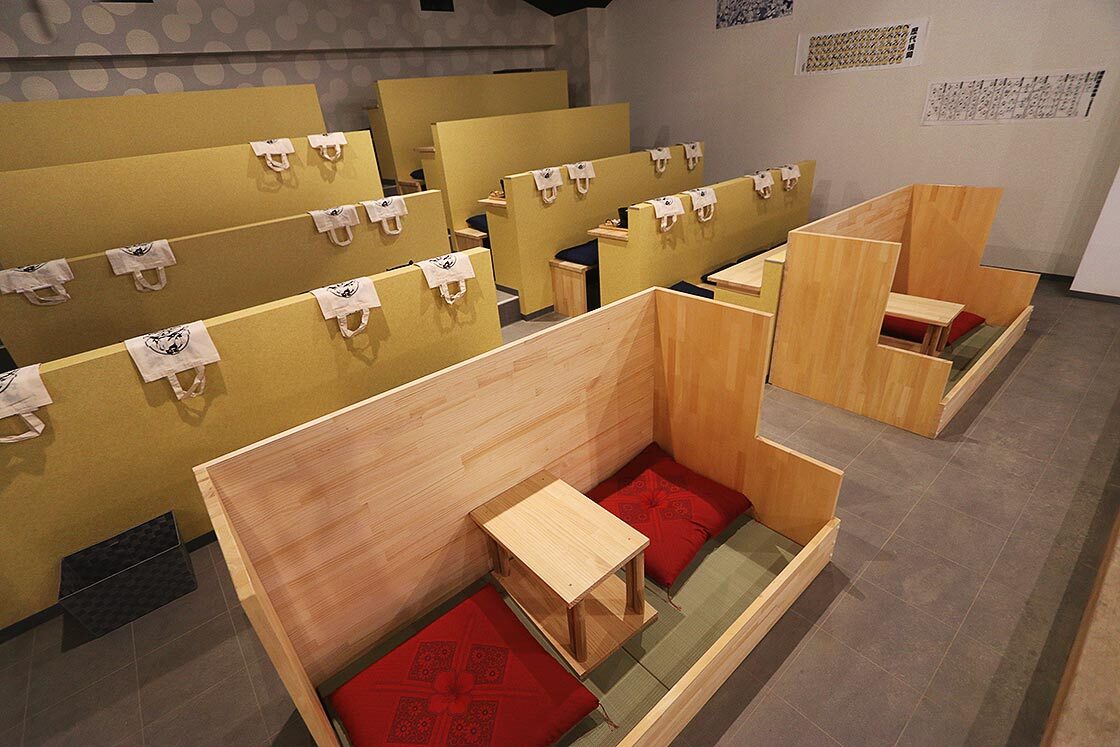
After checking in at the welcome desk, I was shown to my seat - also nicely designed to evoke the feel of the ringside box seats seen at real tournaments. Hungry visitors can also order from an à la carte menu while you wait for the show to begin. With the audience settled and raring to go, an announcer soon stepped out into the ring for a bit of crowd warmup - effectively setting the scene while catching us up on sumo's essentials.
In just a handful of minutes, we got not only a quick outline of the background and rules, but a daunting picture of the day-to-day routine of a wrestler within a sumobeya or stable: up at six (or even earlier for the lower grades, who are expected to clean and prepare the space), three to five hours of brutal training conducted in near silence, followed by communal bathing and a big main meal - the first of the day. It's a tough, rigidly hierarchical world, with the wrestler's own body weight and the strain of repeated, full-force collisions creating a constant risk of injury.
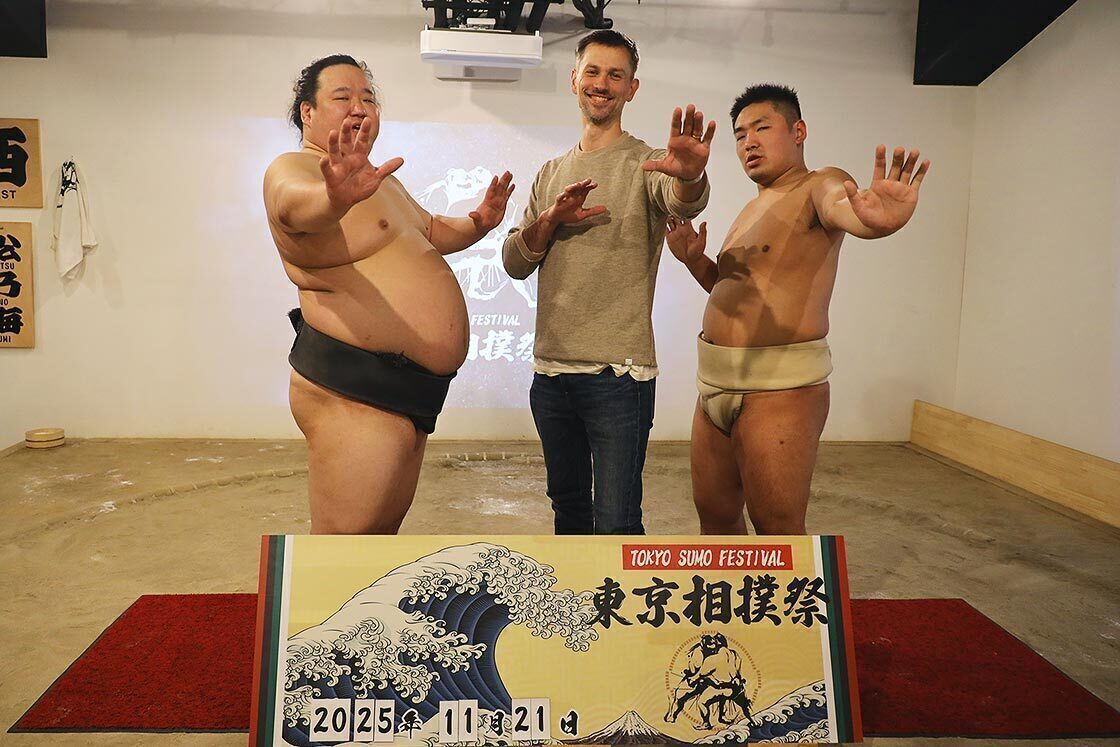
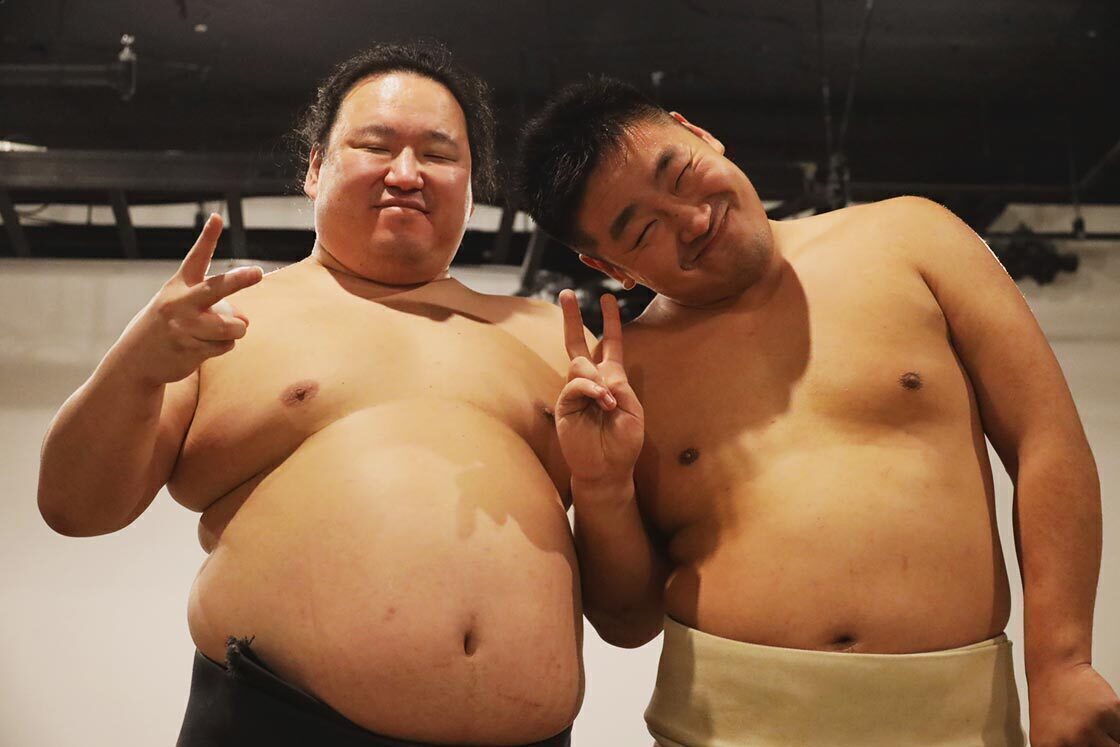
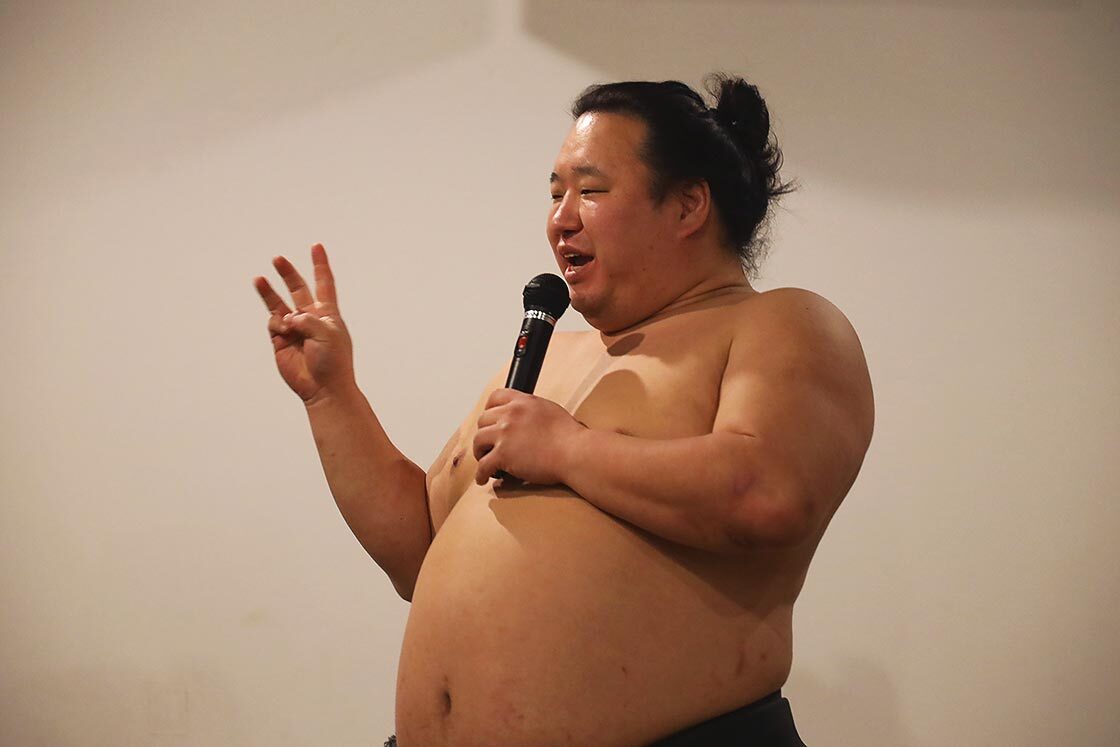
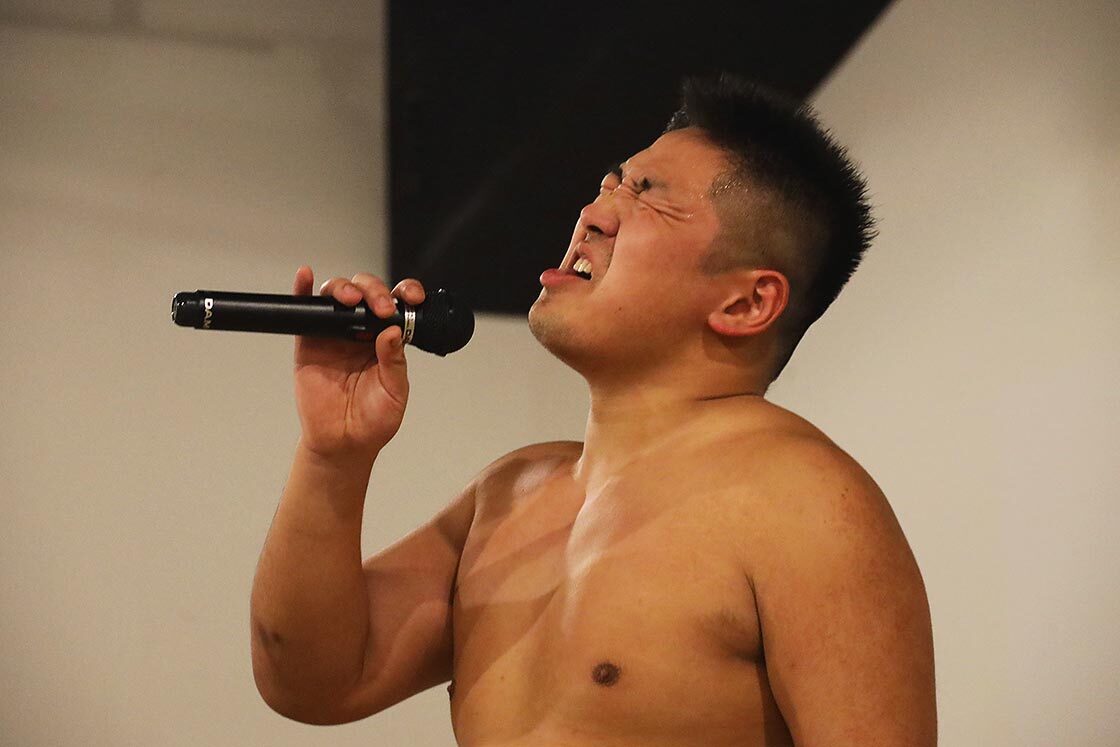
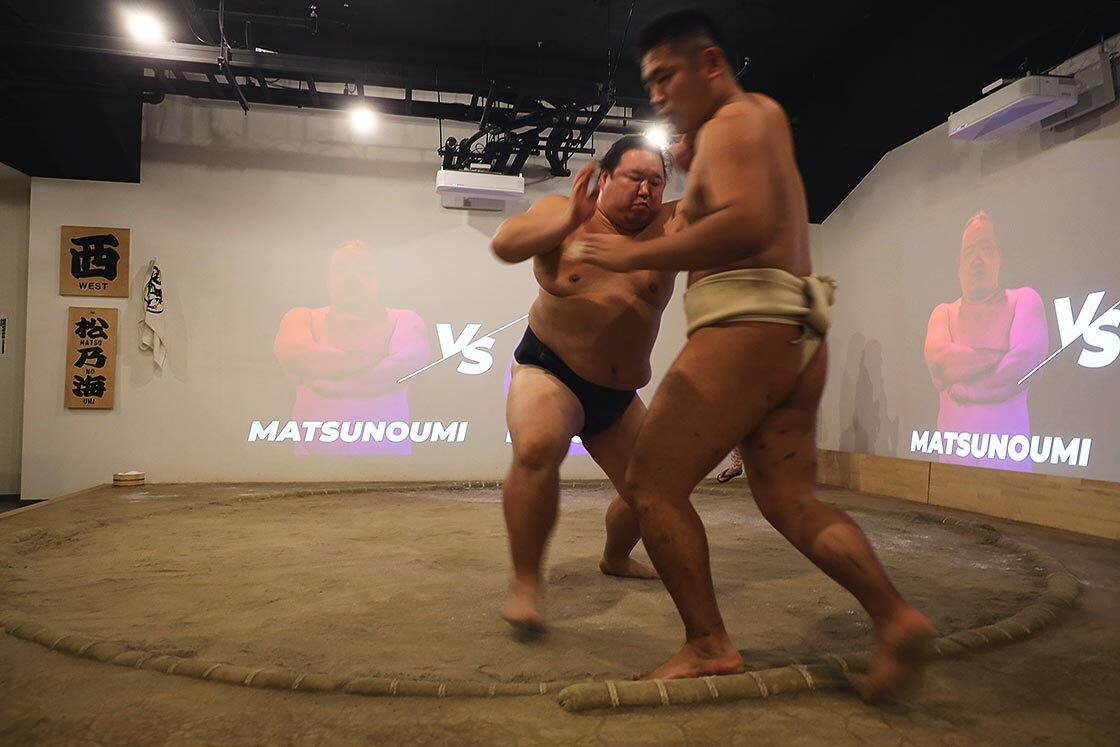
With an excited atmosphere already brewing, it was time to meet the two stars of the show, introduced by the shikona or stage names of Matsunoumi (pine ocean) and Hakuyo (oak leaf). Typically given by the stablemaster rather than chosen by the rikishi himself, these are no mere nicknames but carry great symbolic weight - some stables use recurring characters like a coat of arms, other names like Hakuyo reference the wrestler's hometown, while still others like Matsunoumi simply conjure an image of great size and strength.
From the moment they came bounding onstage, the pair's mix of sheer physical presence and grinning, good-natured charm filled the room and made it hard to take my eyes off them - even with just a few words of English, a constant interplay of horseplay and patter between the two added a real sense of liveliness and fun.
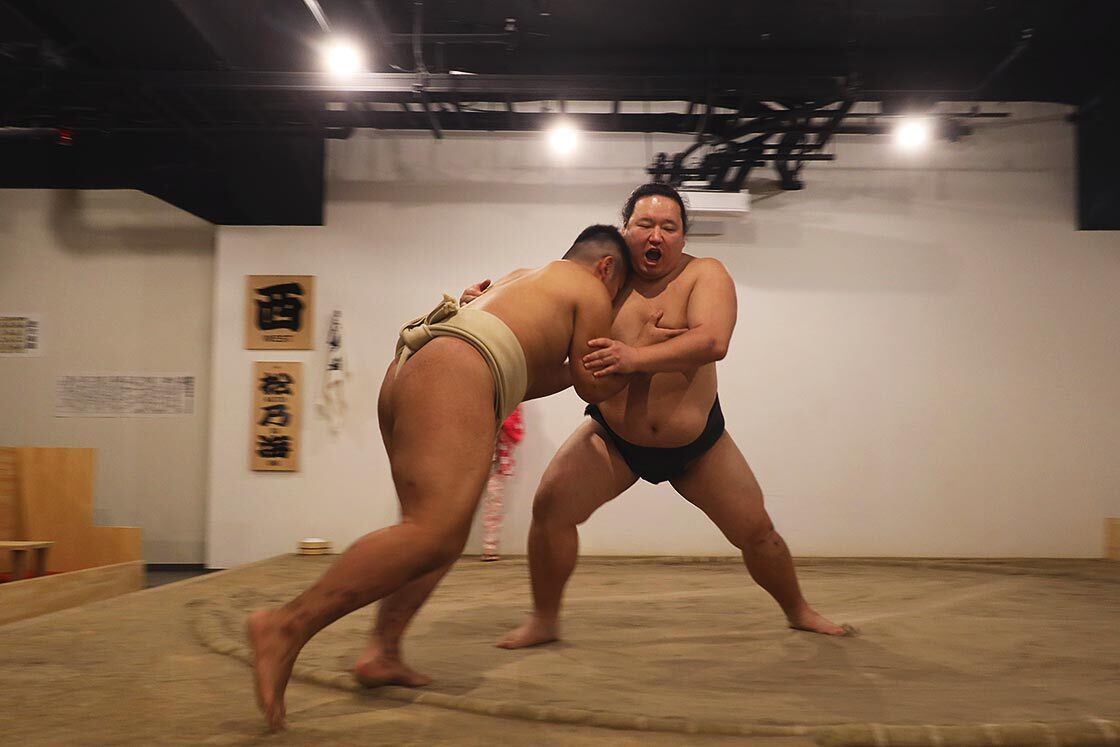
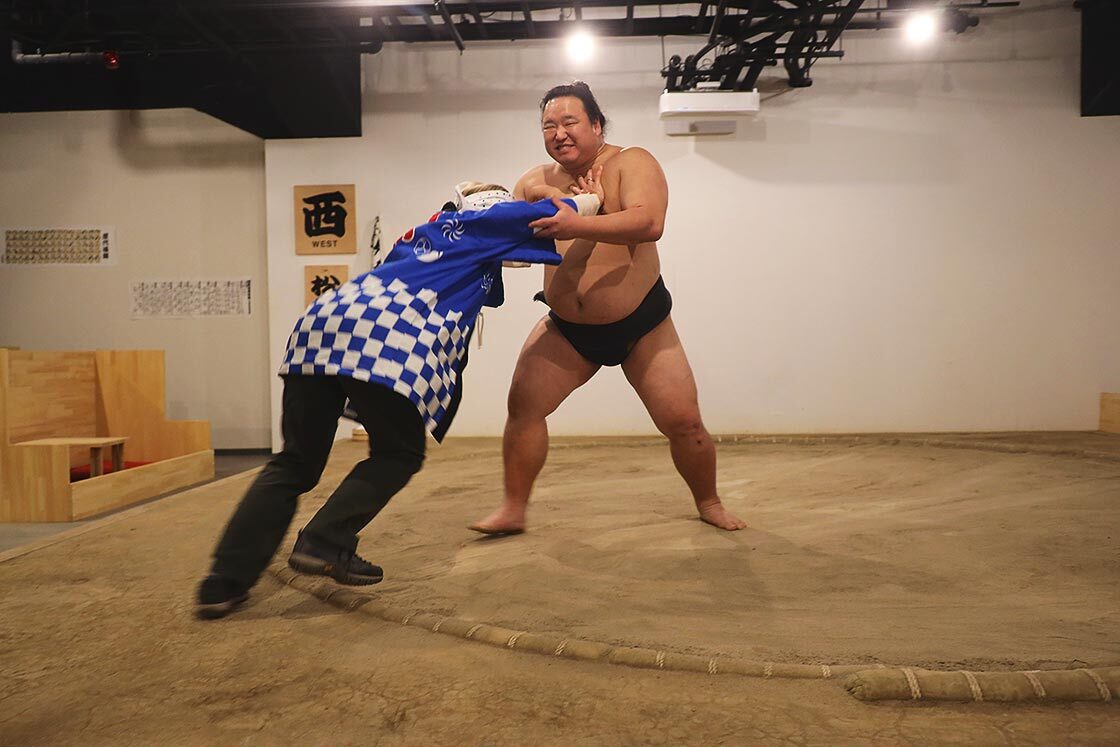
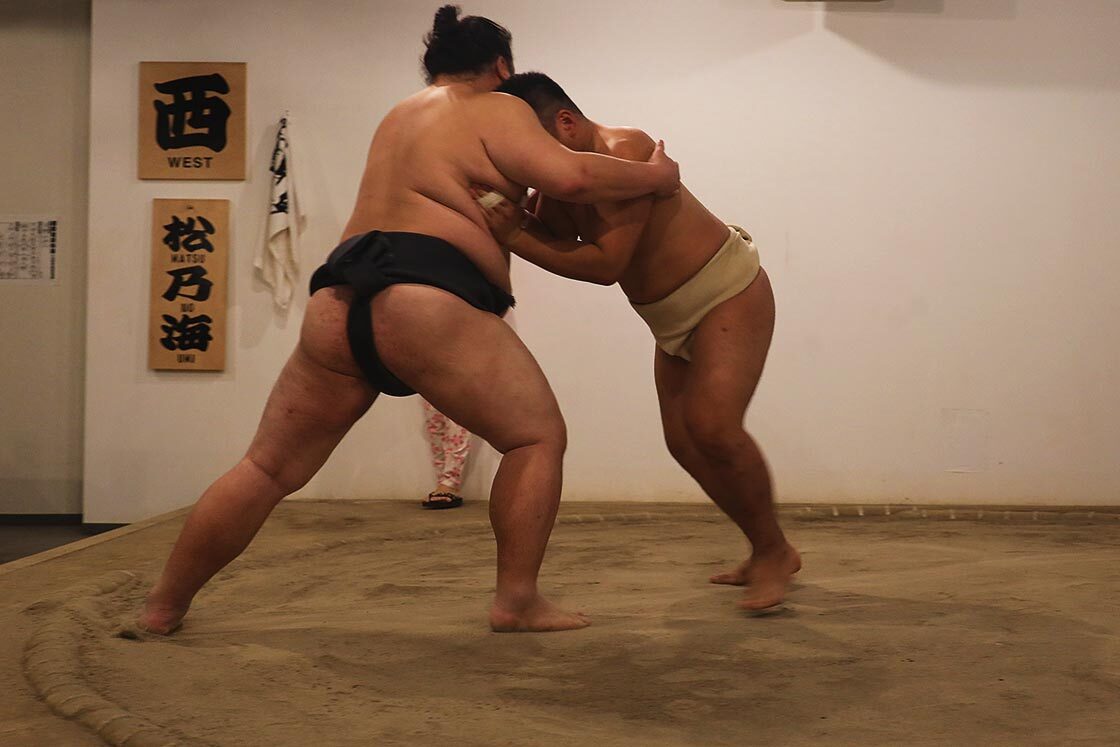
Our first glimpse of the two in action came with a few basic techniques, starting with the instantly recognizable stretch and stamp of the legs, called shiko. This was followed by suriashi or sliding feet - a linear, shuffling movement with the knees bent, hips low and torso upright, allowing each player to advance while keeping a powerful base - and finishing with a spirited display of butsukare geiko or body-crashing practice. Here, each player must absorb the impact of his opponent's charge and drive him back - a daunting exercise that in regular training would be repeated over and over until the junior partner is exhausted.
After watching the display a few times, one brave member of the audience gave it his own best shot, but Matsunoumi - with a mysterious little smile and not the slightest sign of effort - was as immoveable as a brick wall.
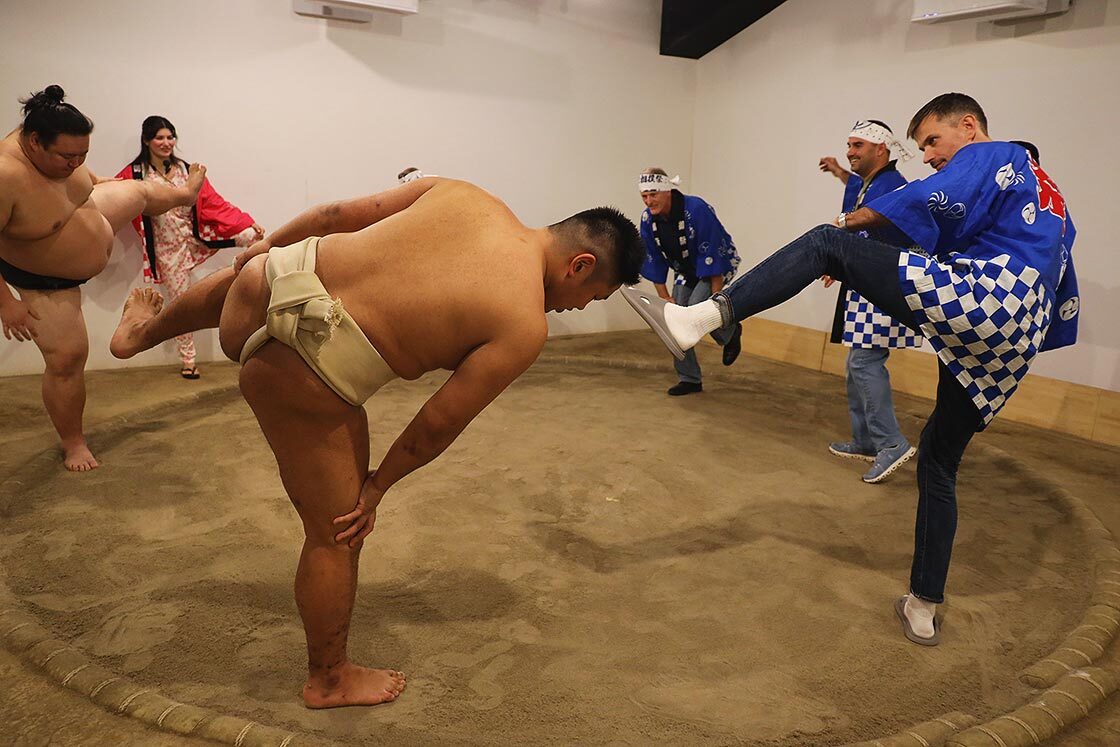
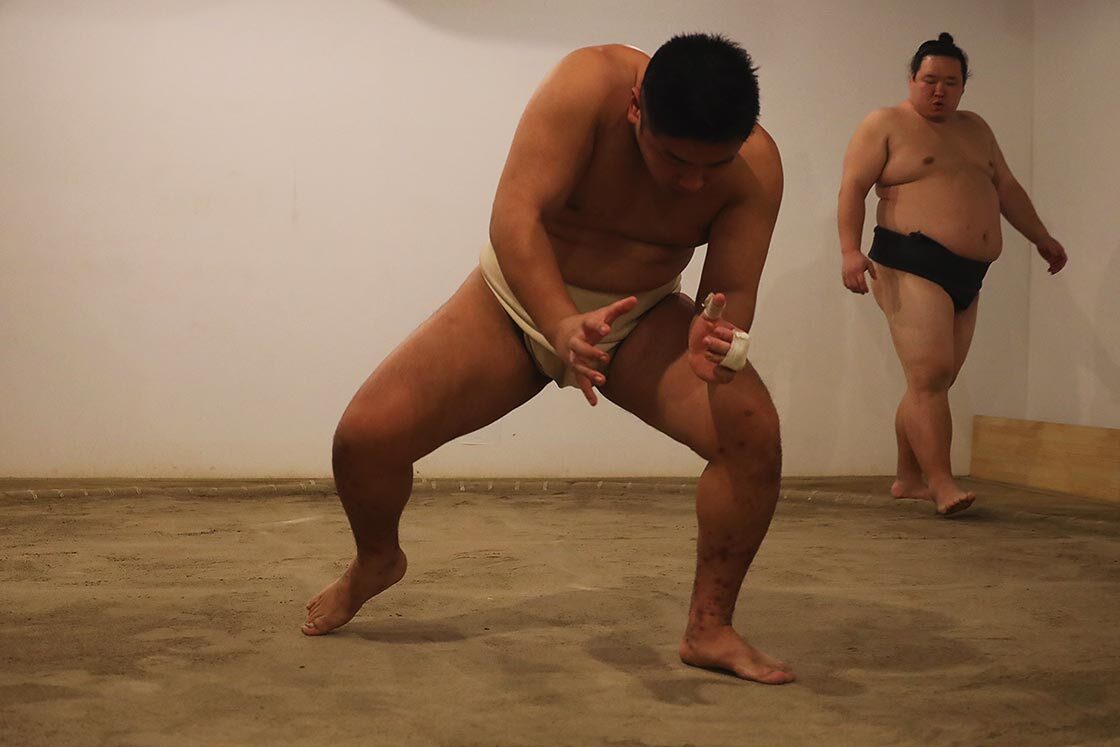
We could all sense something exciting building, but first it was time to learn a bit more about some of the unique rituals that mark the beginning of a bout. Upon entering the dohyo, both contestants perform something called chirichozu or dusting off the hands - crouching down, bringing the hands together, then open and out to the sides, then back together - cleansing them as if with invisible water while showing one has no weapons.
This is followed by the throwing of salt, called shiomaki, intended to cleanse the sacred space before anything violent can happen inside it. Derived from Japan's native religion of Shinto, this follows the same ritual logic behind the use of salt at shrines, in funerals or when left in little dishes outside restaurants.
Sumo famously has a great many winning techniques, or kimarite - a total of 82 are formally recognised - but the essence of the thing is to shift one's opponent outside the ring or make them fall to the ground, whether by sheer brute force or more deceptively through trips, throws or simply stepping aside at the key moment, all without closed-fist punching, kicks, eye-gouging or losing the long, heavy strip of cloth called a mawashi that is their only item of clothing on the dohyo.
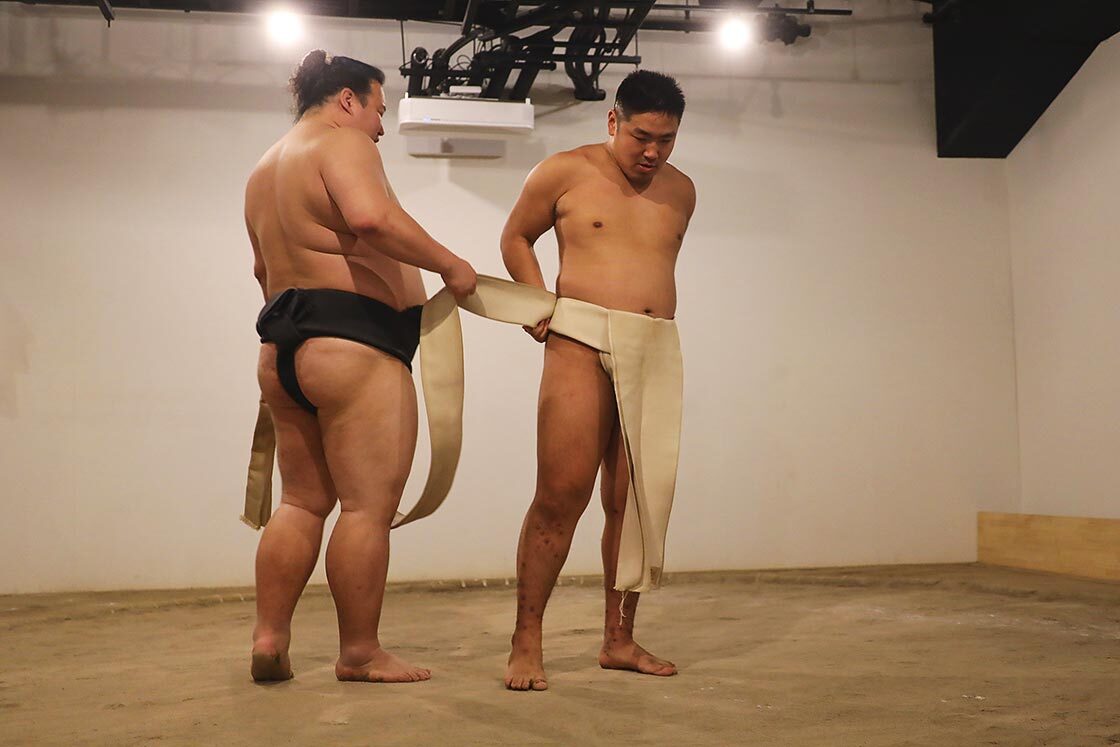
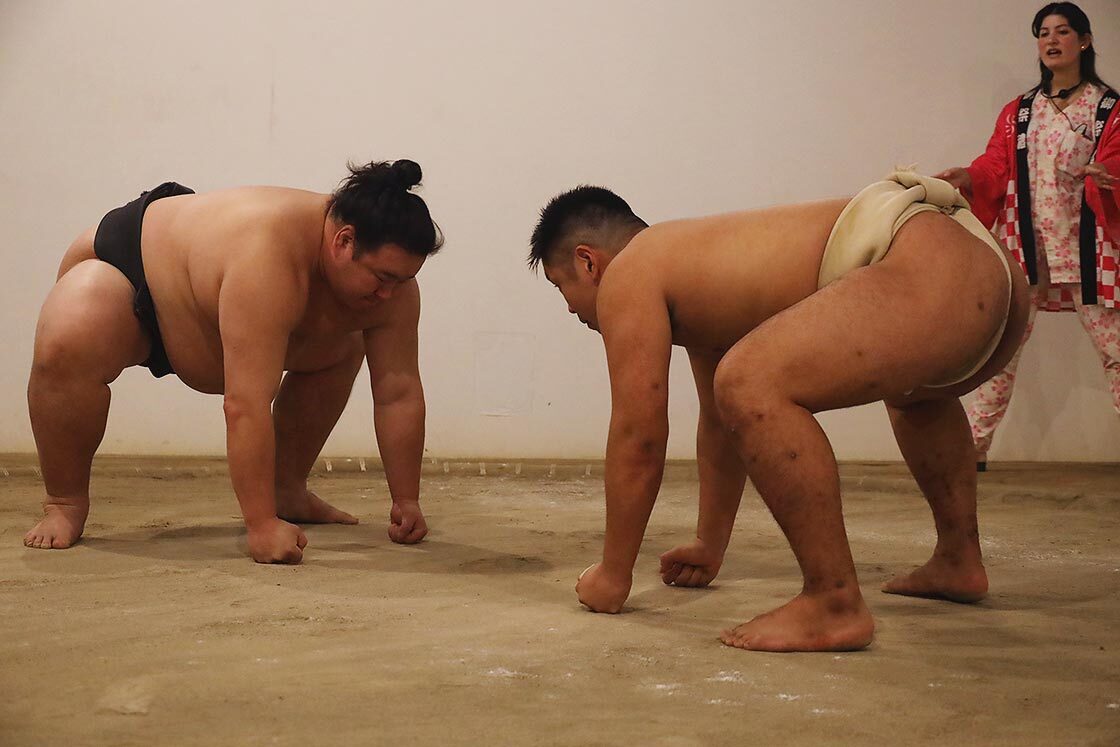
With the context fully explored, the stage was at last set for few much anticipated bouts between our two stars, the two showing their readiness by crouching down, facing one another and placing their knuckles onto the clay. I had expected something light and obviously choreographed, but was soon gasping along with the rest of the audience as the two big men clashed again and again with surprising force and grit, each exchange blindingly fast.
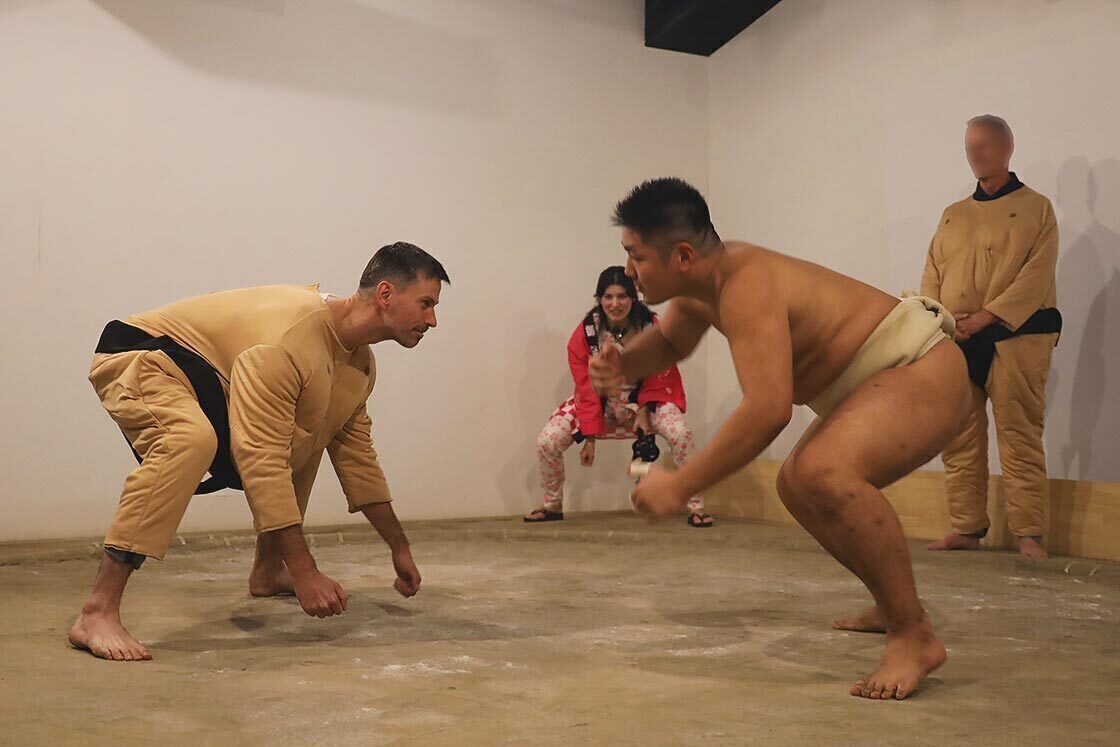
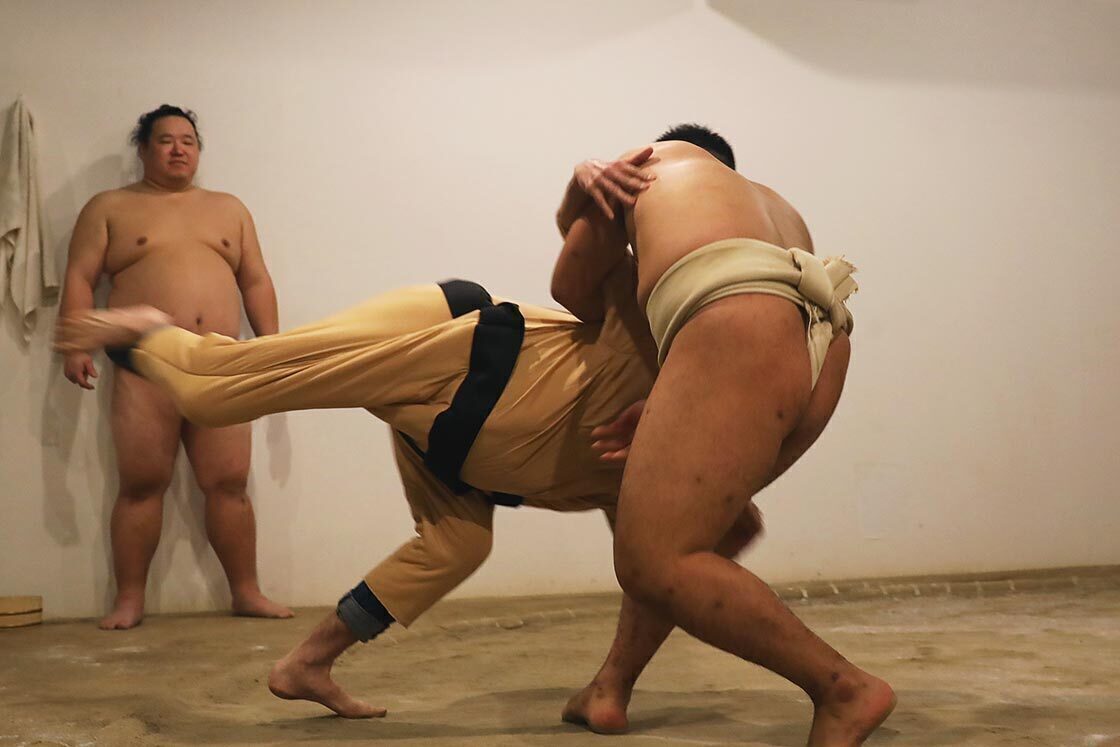
It was almost time for the event to end, but there was still time for one last, slightly sillier activity, in which five volunteers from the audience - yes, including me - donned padded fat suits for a quick bout each with one of the two rikishi.
No-one will be shocked to hear that my own contest with Hakuyo lasted only a few seconds before a neatly executed leg-sweep caused the world to turn sidewise and I came crashing down onto the clay.
For me, the Tokyo Sumo Festival did a great job of being entertaining, accessible and genuinely interesting. Whether you're looking for an up-close glimpse of this fascinating artifact of Japanese culture, an easier or out-of-season alternative to seeing the real thing at a tournament or just a fun way to keep the kids occupied during a busy day of sightseeing, this experience absolutely has you covered.