A stroll through Toyama City

A mid-sized city located at the meeting point between the Sea of Japan and the North Japan Alps, Toyama attracts a modest but steady stream of visitors thanks to its surrounding landscape, peaceful atmosphere and a handful of solid attractions, not to mention delicious seafood hauled from the deep waters of the Toyama Bay.
Little more than a rural backwater until the early Edo Period (1603-1868) when its wealth and status grew under the watchful eye of its then feudal overlords, the Maeda, Toyama is today the capital and largest urban center in the prefecture of the same name - a quiet success story that continues to thrive even without the spectacle of, say a Kanazawa or Takayama.
Recently, I was delighted to spend a cold and snowy January day getting to know the city and some of its best-known sightseeing spots, from its modest reconstructed castle to its historic port district.
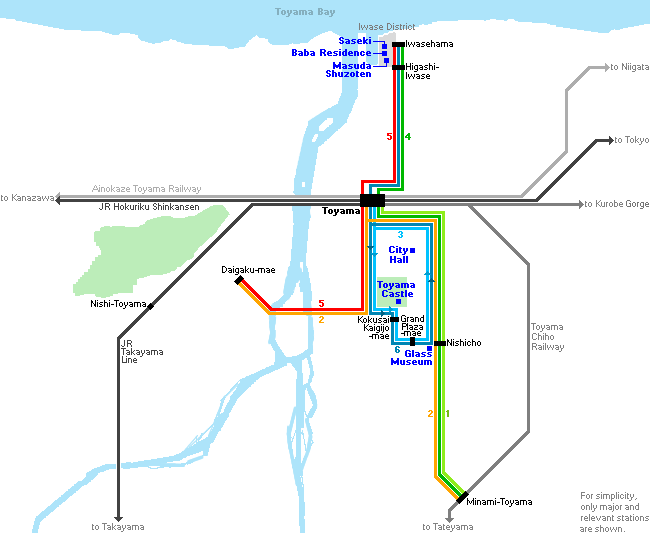
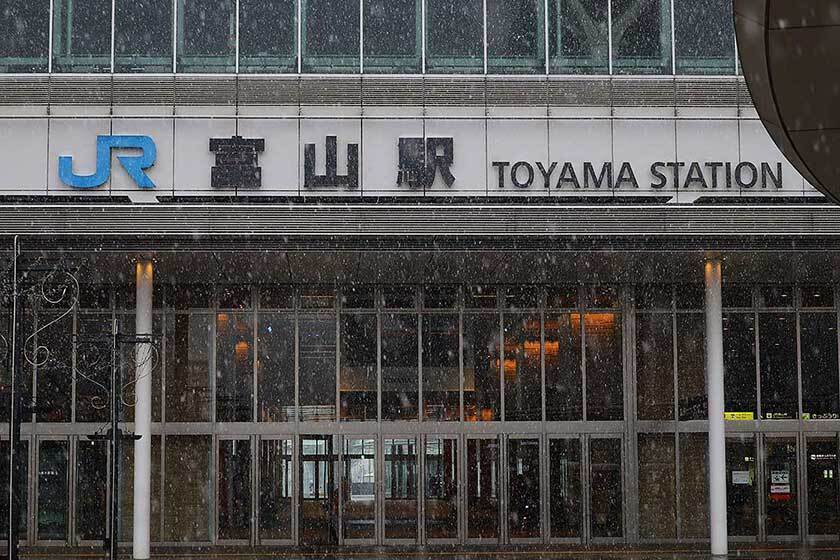
Stepping off of the Hokuriku Shinkansen after a two-and-a-half hour journey from Tokyo, I immediately left the station behind and took a ten-minute walk south to Toyama City Hall - an unusual place to start the day, if it weren't for the 70 meter observation tower added back in 1963 as part of the building's postwar redevelopment.
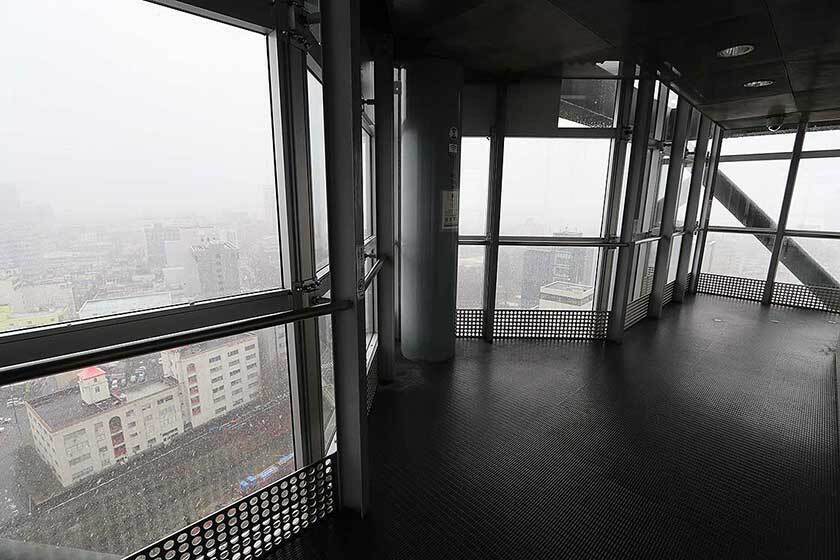
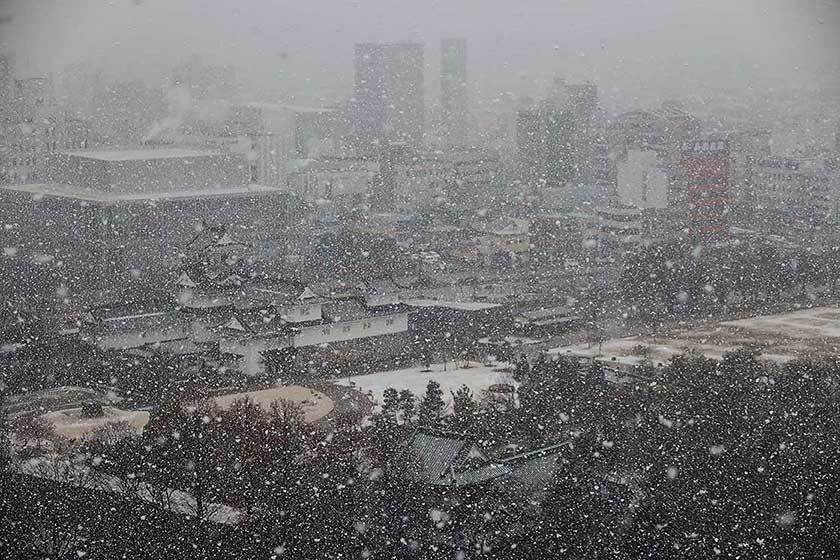
A rare feature for such a small city, the tower offers an impressive 360 degree panorama extending out over Toyama's rooftops as far as the Toyama Bay to the north and the peaks of the North Japan Alps to the south. At the time of my visit however, thick heavy snow falling just outside the window reduced the city to a few faint outlines.
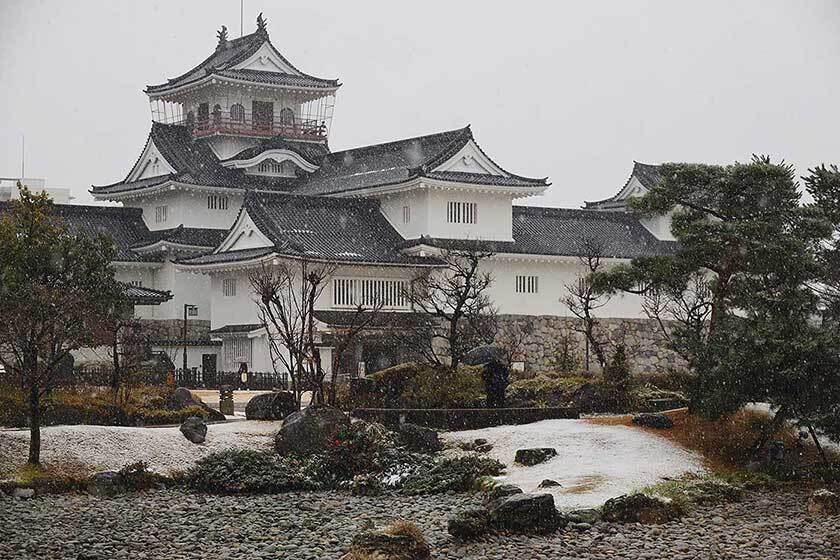
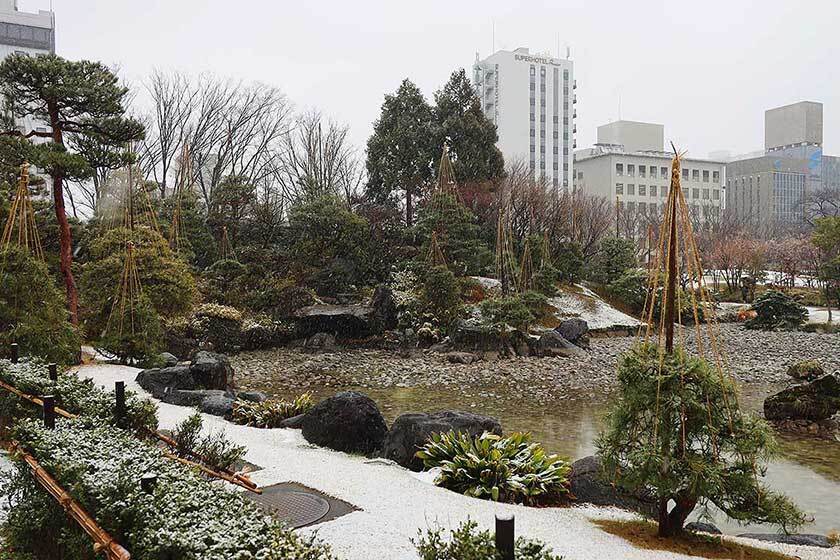
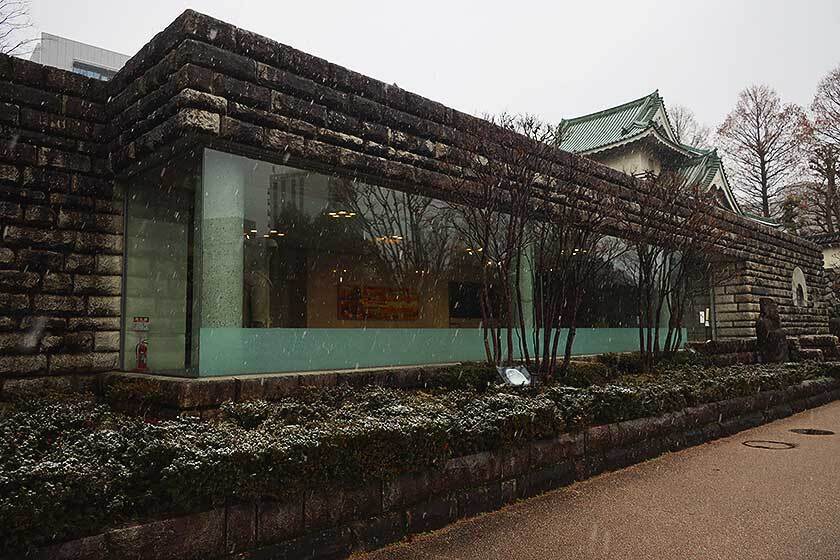
From here, just a couple of minutes' walk brought me to Toyama Castle Park, a modestly sized open space containing the city's reconstructed castle, a small but pleasant landscape garden and the Sato Memorial Art Museum, dedicated to the collection of a wealthy entrepeneur.
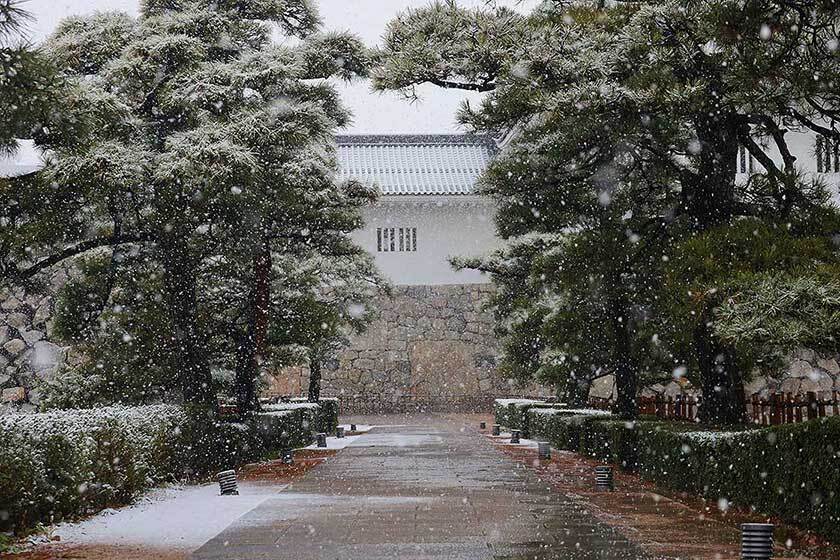
Torn down during the Meiji Period (1868-1912) and recreated from ferroconcrete in 1954, the castle today can feel a little underwhelming when set against others of its kind - original and reconstructed alike - and yet, in a curious way, this very humility was not only baked into the design of the castle itself but part of the secret of Toyama's success over the centuries.
The clan that would go on to rule not only modern-day Toyama Prefecture but also Ishikawa and even part of Fukui began as a modest warrior family in what is now Nagoya. Like many minor clans without the benefit of a famous or ancient name, they rose by backing the right candidate - in this case Oda Nobunaga, the warlord who began the work of uniting Japan but would not survive to see its completion.
Their leader in this time was Maeda Toshiie, who was not only a solid battlefield commander but a skilled administrator and politically astute. In the wake of Nobunaga's shock assassination, he quickly joined with the next great warlord Toyotomi Hideyoshi, rising to become one of his most trusted lieutenants. Toshiie himself passed in 1599 only a year after Hideyoshi with the Maeda already at their territorial peak.
The story took an unusual twist with the rise to power of Tokugawa Ieyasu, who made war on what remained of the Toyotomi and their allies to ultimately consolidate his own power and establish a dynasty that would rule Japan for the next 265 years. With family ties on both sides, the Maeda remained neutral and kept their power and wealth - second only to the Tokugawa themselves - but without earning the trust of the new regime, setting the stage for trouble down the line.
To ease the suspicion, in 1639 the Maeda took the decisive step of dividing into a senior family branch based in Kanazawa, and a junior Toyama line - the latter expected to be useful, compliant and, above all, non-threatening. With this in mind, the castle's limited footprint and lack of strong defensive structures begins to make a lot of sense.
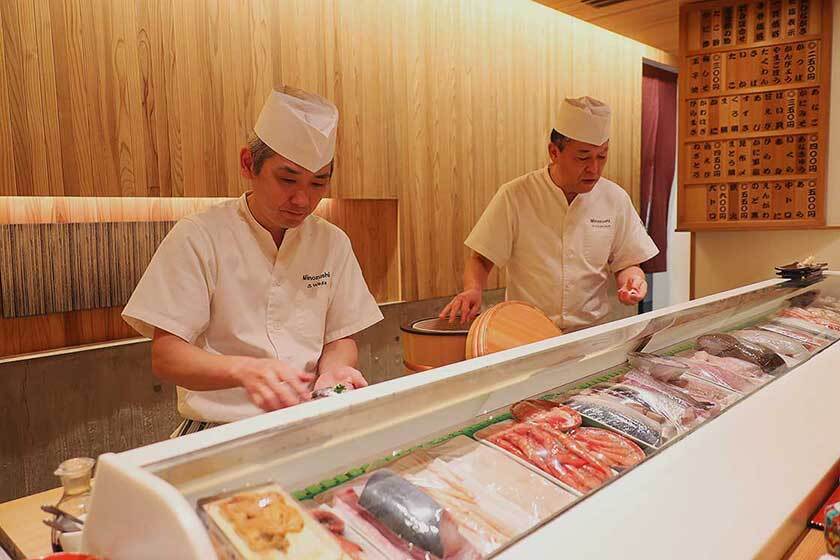
After leaving the castle behind, my next stop was at Minozushi - a mid-to-high end sushi restaurant tucked discretely into a little building just across from the castle park's southwest corner. Stepping inside the nicely wood paneled interior and slipping into a counter seat, there was a certain appreciative hush to the dining space that instantly let me know I was in for something special. Originally founded in Tokyo's Meguro district, the restaurant moved to Toyama some 35 years ago and is now on its second generation itamae, or counter chef. Here, the speciality is a mix of the classic Edo-mae style with local favorites, combining extremely fresh seafood from the Toyama Bay with premium locally grown rice.
The "Toyama Bay course" I ordered turned out to be a pretty textbook example of its two regional influences, with black sea bream, yellowtail, horse mackerel and shimesaba standing in for Tokyo while giant surf clams, reef squid and raw shrimp nicely represented more local tastes. This was really, really good stuff - the kind of thing that makes the outside world disappear for a moment as you bite into it - and could certainly hold up against far more expensive fare in the capital.

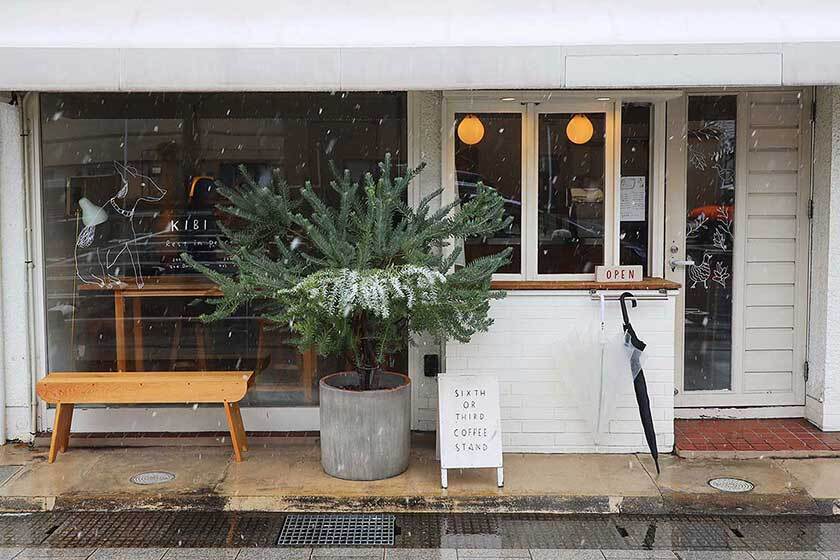
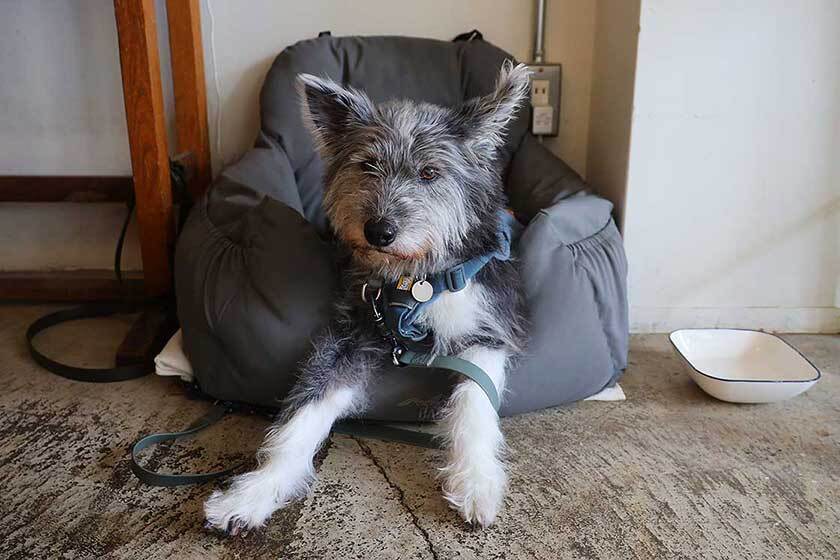
After that hugely satisfying lunch, I made a quick stop at Six or Third Coffee Stand - a compact but very stylish little cafe a few hundred meters to the west - en route to my next stop. Despite my plan to stay only the few moments it would take to get some much-needed caffeine into my system, it turned out to be such a warm and friendly contrast with the snowy street outside that I couldn't help melting into one of the chairs.
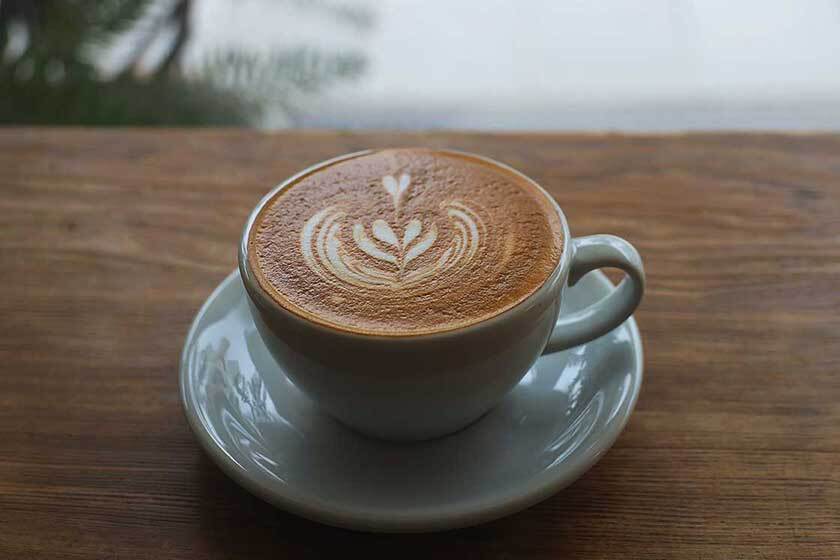
I discovered that the owner, Inoue-san, speaks good English, having married a Brit from a city I know well, and we soon fell into some easy patter about English cities, Japan and life here in Toyama. The coffee also turned out to be delicious, and just the medicine I needed to get me back on track.

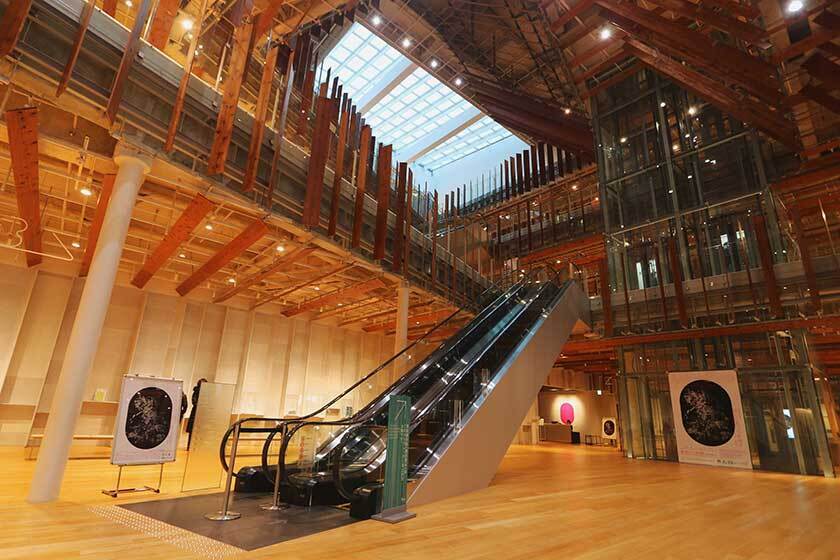
Just a couple of hundred meters southeast along narrow backstreets lay the Toyama Glass Art Museum - a contemporary gallery dedicated to fine glassware, Japanese and international alike. The gallery itself is set inside the visually striking and much larger Toyama Kirari building, which also houses the city's main public library alongside several spaces set aside for civic and community functions.
Toyama's own glass industry emerged not as an inherited tradition but rather something deliberately cultivated in the postwar period. Glassmaking depends on a supply of pure water, which the city had plenty of - along with manufacturing infrastructure and expertise in the then relatively new arts of chemical and material engineering. Fast forward to the present, and Toyama is well known for its high quality glass - widely so within the country and at least in professional circles overseas - but with no single definitive style to point to.

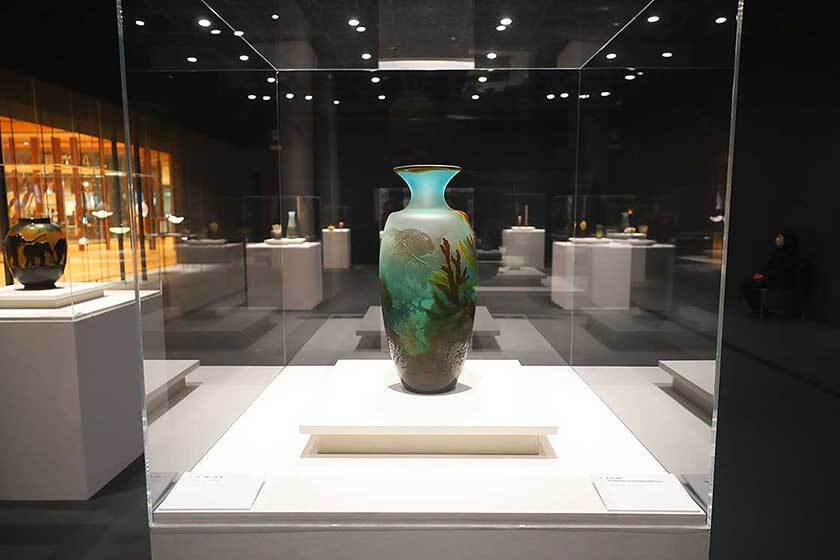
While galleries on the second, third and fifth floors of Kirari are reserved for visiting exhibitions, the one on the fourth hosts rotating exhibitions from the museum's own collection. On display at the time of my visit (and continuing until May 31 2026) is a selection of French art nouveau glass by makers like Baccarat, Emile Galle, and the Daum brothers.

Up on the sixth floor I found the Glass Art Garden, a permanent exhibition of installations by Dale Chihuly, one of the world's best known glass artists credited with elevating the medium from craft to true fine art in its own right.
Said to take inspiration both from landscapes and natural forms, the pieces on display were highly intricate and beautifully presented by the museum, with lighting and backgrounds arranged just so as to bring out subtle details and intensity of color. This was certainly one of the highlights of my day, and all the more so when set against the nice design of the building itself.
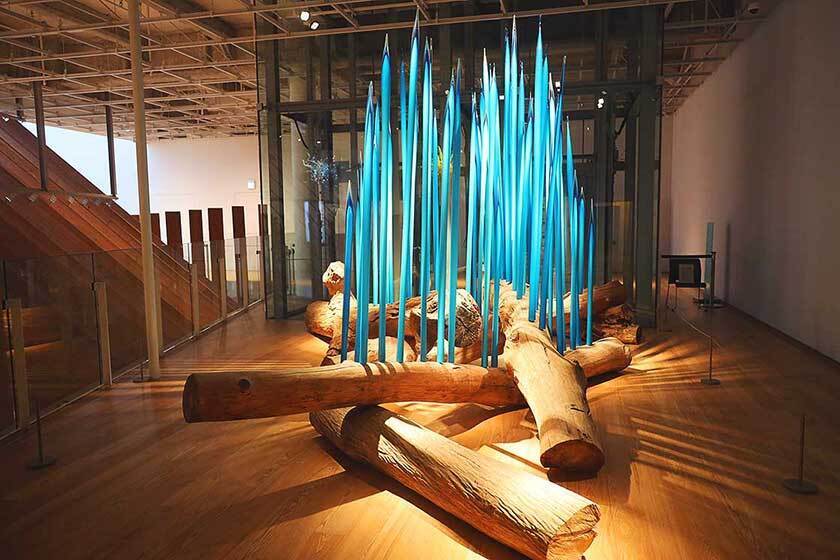
Saphire Blue Icicle Forest

Maccia Forest
Leaving the museum behind, I jumped on a tram at the Nishicho stop just outside the building for a 35-minute ride to the city's historic Iwase District, where I planned to wrap up my day with a few final stops.
Keen as they were to avoid drawing the ire of their Tokugawa overlords, the Toyama Maeda found two quietly workmanlike means to further their wealth and influence, both of which would shape the city's future for centuries to come. One was to invest in the growing market for medicines while cultivating a network of traveling salesmen - an industry that still thrives in modernised form - the second was to establish a major port on the Sea of Japan, tapping into the vital Kitamaebune shipping lane that already extended from Kyushu and the Seto Inland Sea via Osaka as far as Matsumae in Hokkaido.

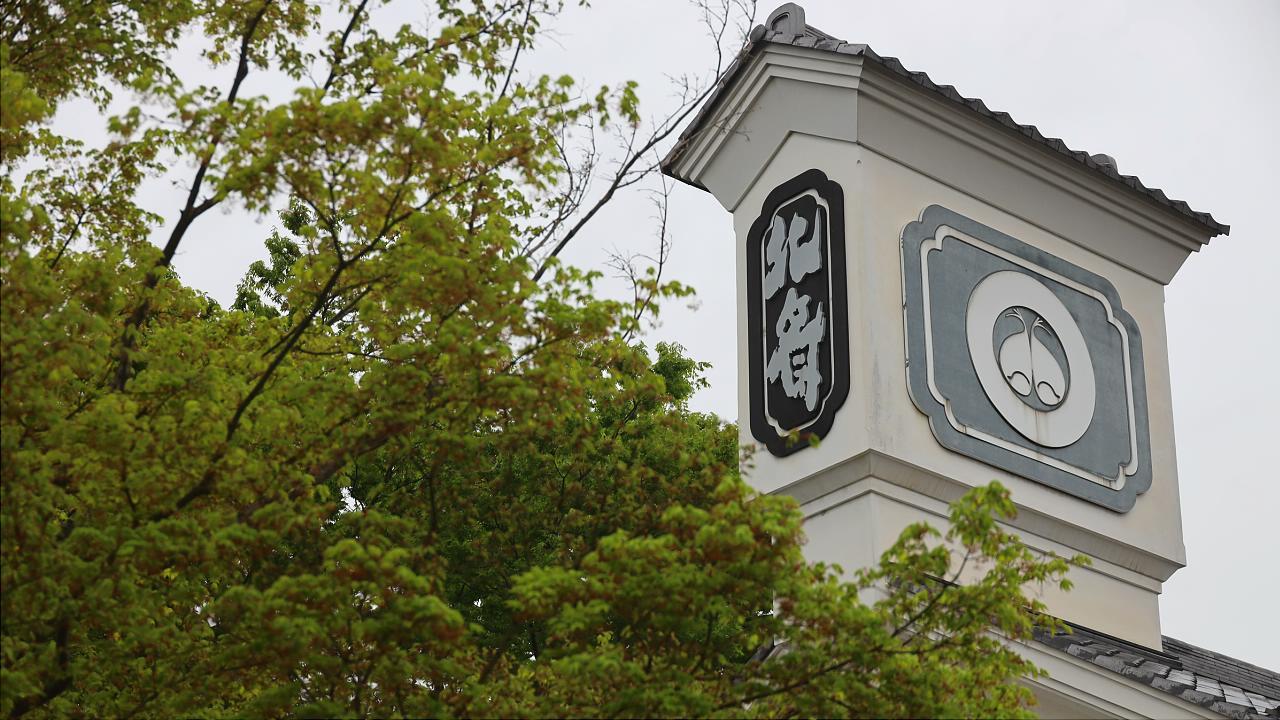
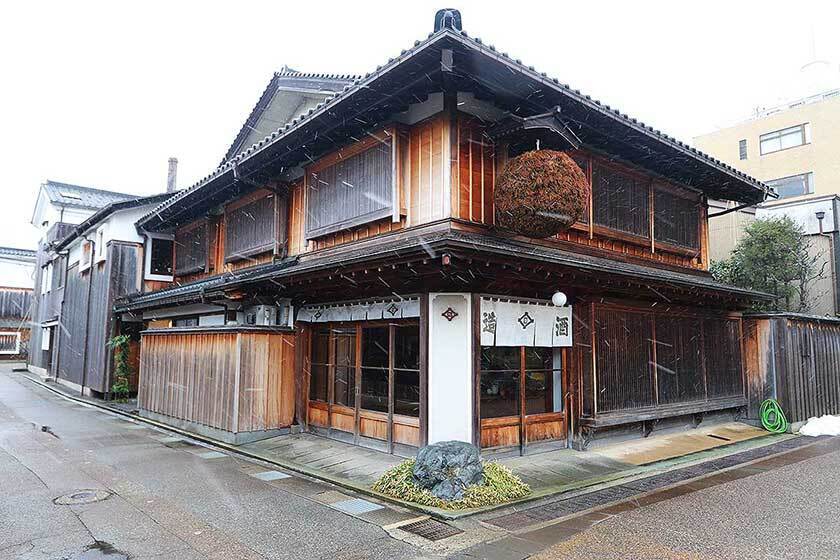
I began my wanderings-around along Niikawa-cho, formerly the district's main thoroughfare and an important urban center. Working my way south-to-north, the first building to jump out at me was a beautiful machiya-style shopfront with a sugidama - a hanging bundle of cedar leaves and twigs immediately identifying it as a sake shop. This belongs to Masuda Shuzoten, the area's last surviving historic brewery dating to 1893.
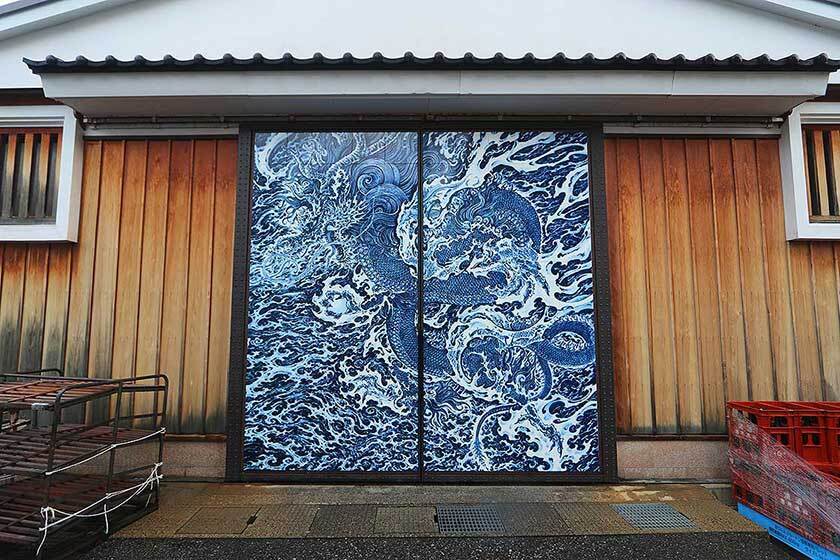
Just around the corner on the next parallel street I found the old brewery itself, and another very striking image: sets of antique sliding doors decorated with writhing dragons amid ocean waves, painted in a deep indigo palette. At the area's peak, this would have been just one of a dozen or so breweries, all benefiting from Toyama's pure mountain water and expansive rice plains, and with shipping merchants accounting for much of their trade.
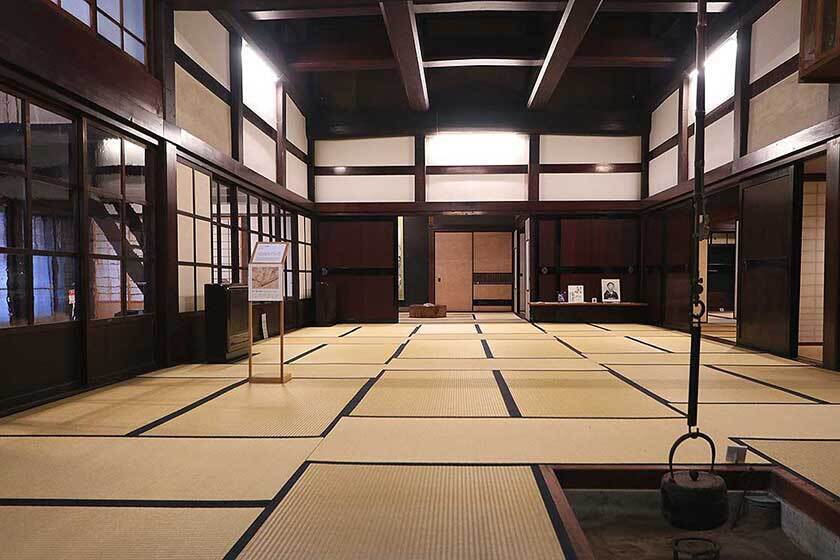
A little further along the street I came to the old Baba Residence, one of the area's best-preserved former merchant houses, built in the typical style of the Edo and early Meiji periods: a relatively narrow frontage disguising a surprisingly long structure containing business premises, storehouses and - usually in the innermost part - a family's private living space.
Inside, the residence is a great example of the architecture of its time and captures something of the prosperity and bustle of merchant life in that era.


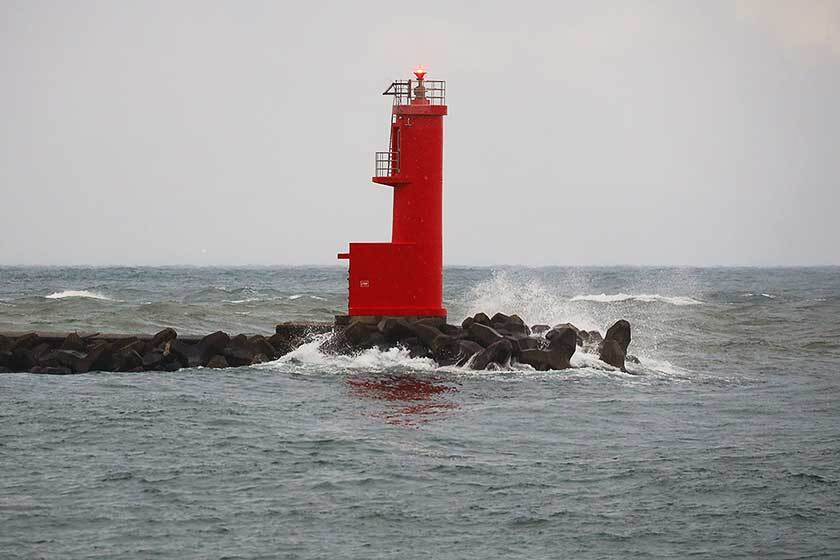
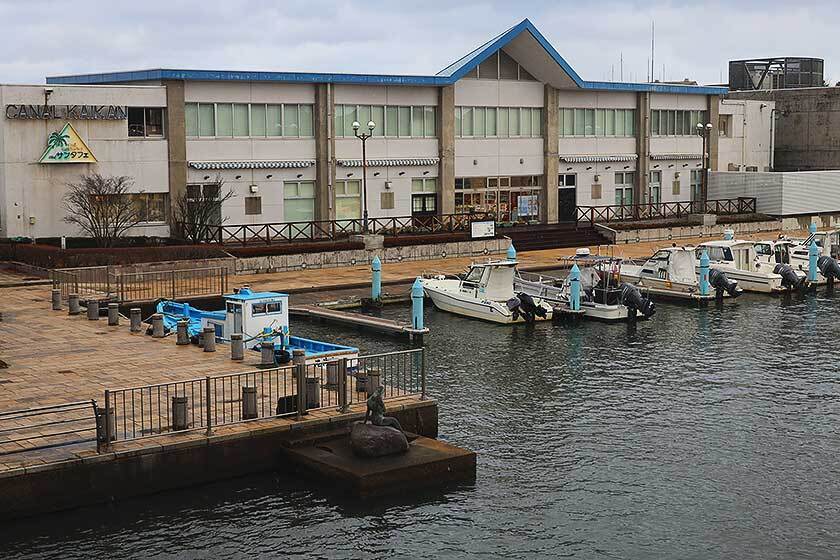
Expanding my route a bit beyond the old main street, I followed the shoreline a little way north before turning east along the Iwase Canal. While there is little today to tell it apart from any other urban waterway, it is in fact very much part of the area's historic landscape and is believed to have been carved out some time in the early Edo Period.
One more spot to point out here is the Iwase Canal Hall, the end point for a regular sightseeing cruise up the Jinzu River from Kansei Park in the city center - this is something I would certainly have considered had my visit been in the warmer months.
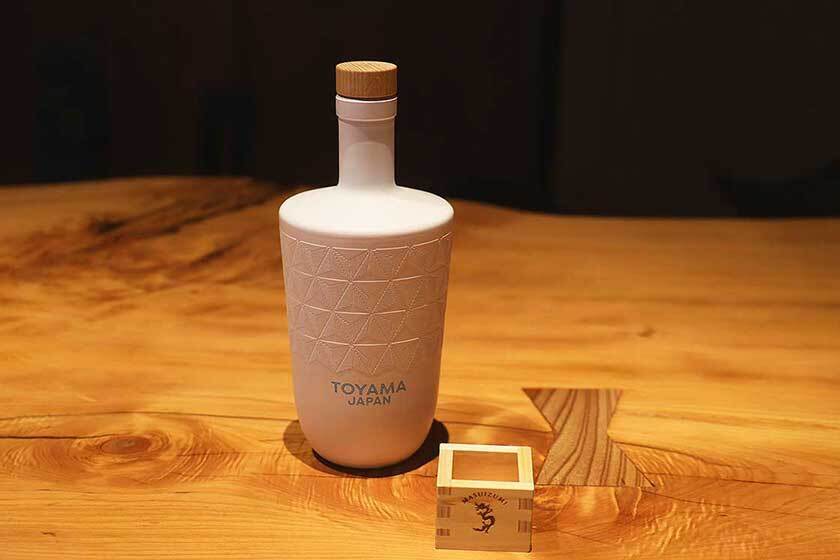
For my second to last stop in the city, I circled back to the north end of Niikawa-cho, where the same Masuda Shuzoten brewery I happened to pass earlier has opened Saseki - a sake tasting bar inside another beautifully remodeled old machiya house, with the fresh, sweet smell of cypress still hanging lightly in the air. The system here is refreshingly casual - pay 220 yen for a little wooden cup that you can also take home as a souvenir, then pour your own sake straight out the fridge with bottles divided into three pricing tiers.
Unlike some famous sake-producing districts like Nada in Kobe or Saijo in Hiroshima, Toyama's reputation isn't really anchored to a particular style - rather, it's known for a certain cleanness in taste and a lack of overpowering finish or aroma, making it a perfect match for the region's seafood. After a fun bit of browsing, I had to try Saseki's own special edition Toyama bottling. This turned out to be lovely - clean and subtle, with a surprising sweet twist at the end.
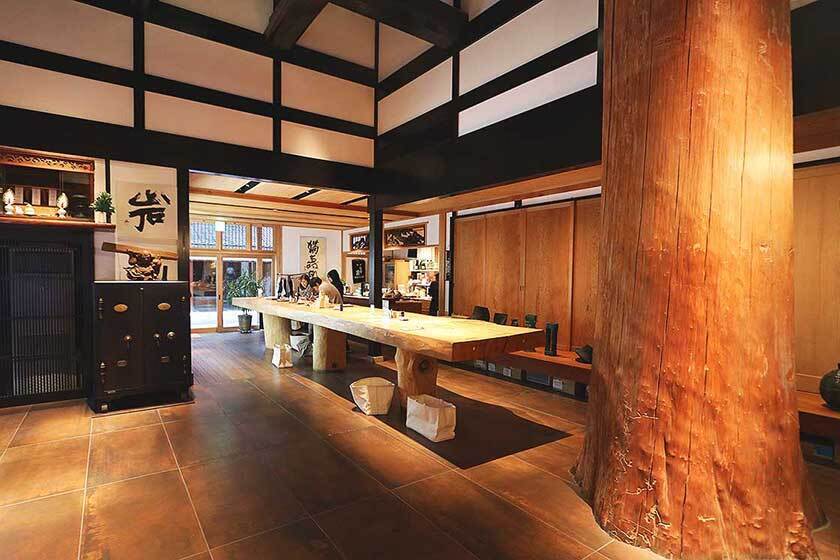
Keen to get some food into me before my long train ride home, I made a final stop just a short walk away at Kobo Brewpub. Set in another historic building directly adjoining the Baba Residence, this turned out to be another architectural treat, combining traditional wood and plaster walls with eye-catching modern features.
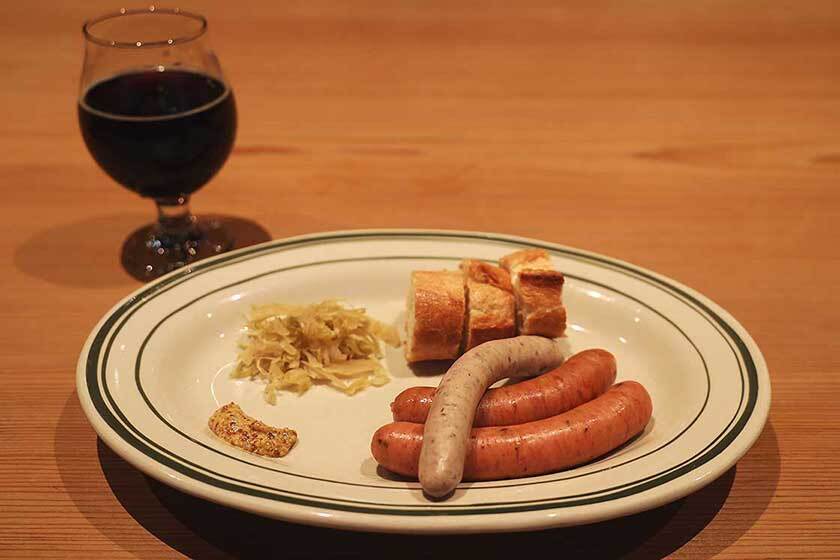
Here, I finished my time in the city with a plate of German-style sausages and a craft beer, savoring every last bit of the atmosphere and again that wonderfully fresh cedar smell.