A stroll through Obuse

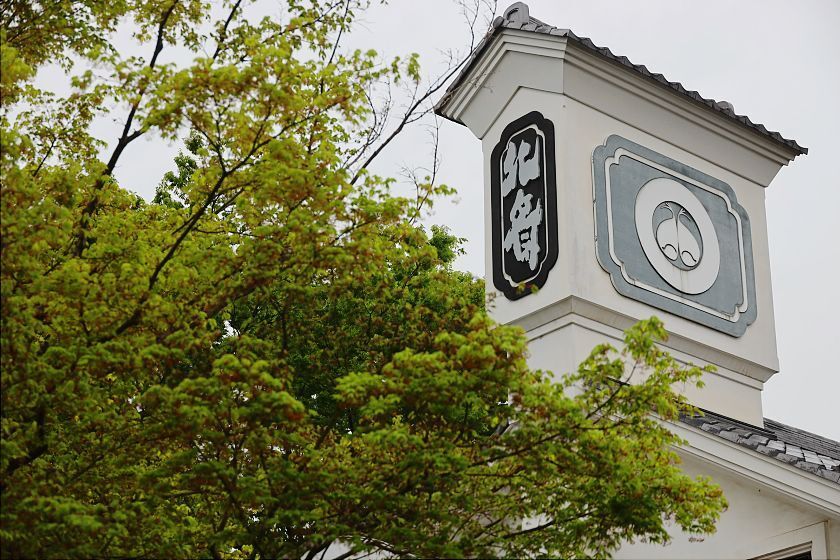
A half-hour train ride north of Nagano City in a broad valley plain lies Obuse - the smallest municipality in Nagano Prefecture by size, known for its quaint town center, chestnut farming and its transformative association with the celebrated painter and woodblock artist Hokusai (1760-1849) in the later years of his career. Though relatively unknown to international tourists, the town nevertheless draws a respectable number of domestic visitors every year - especially around autumn when chestnuts come into season and the local specialty of Mont Blanc dessert reappears on local menus.
If Obuse hasn't quite caught on with the inbound crowd just yet, it certainly isn't for lack of charm but perhaps because it doesn't have a lot of the obvious things that would announce themselves to a first-time traveler. What it does have to offer is rather a certain mix of coziness, rural beauty and cultural depth that somehow makes for a perfect day-trip destination. Keen to revisit this lovely little town, I recently spent an enjoyable day exploring its peaceful streets, hunting for hidden gems and trying to put a finger on just what I like about it so much.
For most visitors today, the easiest approach to the town will be via the Nagano Electric Railway, taking 25 minutes by limited express train from Nagano City. At the opposite end of the same line sits Yudanaka Station in Yamanouchi - a popular spot in winter for its onsen-bathing monkeys - from where you can take a local train in about 40 minutes or, less frequently, a limited express in half that time.
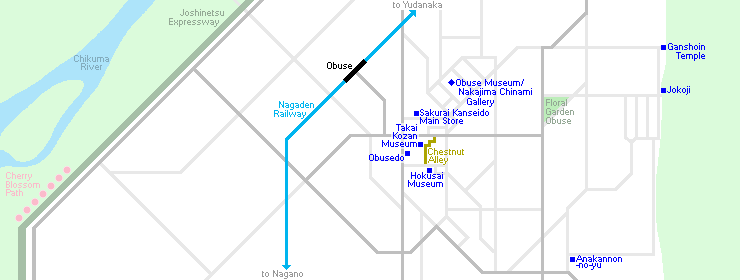
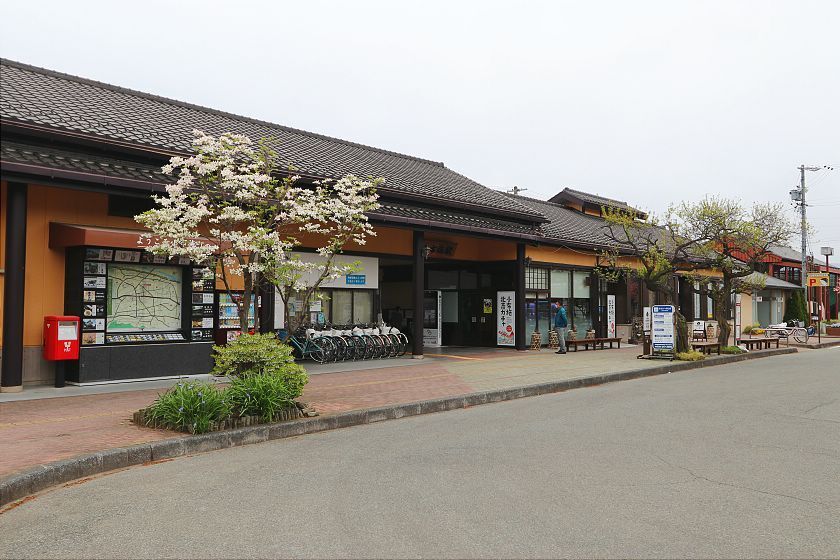
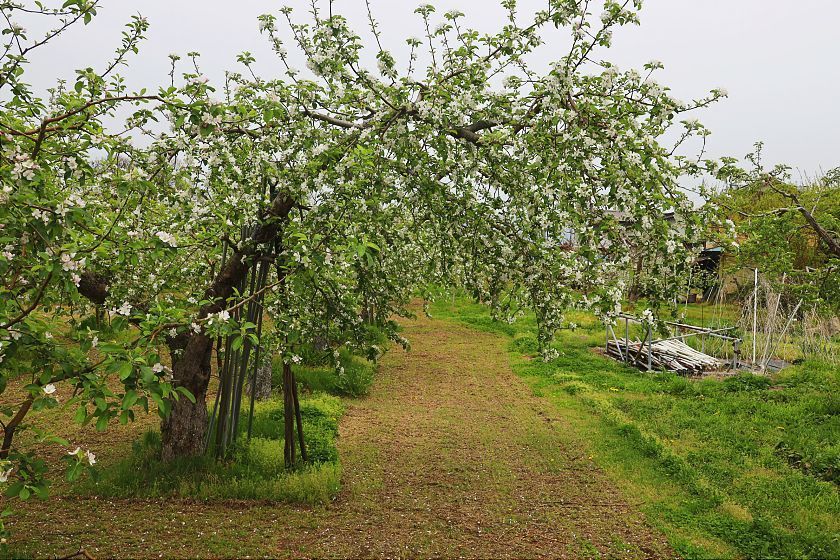
Arriving into the town's modest railway station on a slightly drizzly spring day, I decided to begin my time with a detour to the nearby Chikuma River. Leaving the town center behind, I threaded my way northwest for about 20 minutes along narrow country roads, passing neat country houses and row upon row of blossoming apple trees.
Though the fruit trees are a modern development, farming has always had a special significance here. Once just another rice-growing backwater among countless others, the town's identity only really began to crystallize in the early Edo Period (1603-1868), when relative peace and a growing market economy allowed farmers and merchants to plant cash crops and achieve a level of prosperity still rare at the time.
From its position within the slightly tilted bowl of the Nagano basin, the town does boast a handful of decent mountain views to the northwest. By the time I reached the river though, the snow-covered peaks were already slipping behind a gathering wall of mist, leaving me with a middling look at the wide, rounded summit of Mount Iizuna.
Fortunately, the riverside has more to offer: planted along a four-kilometer stretch of embankment are about 600 cherry blossom trees, which at the time of my visit had just passed the peak of full bloom. Interestingly, where many towns would have gone for Somei Yoshino - by far the most common type in Japan - every one of these is a pink, late-blooming type of yaezakura, likely chosen to extend the viewing season into Golden Week.
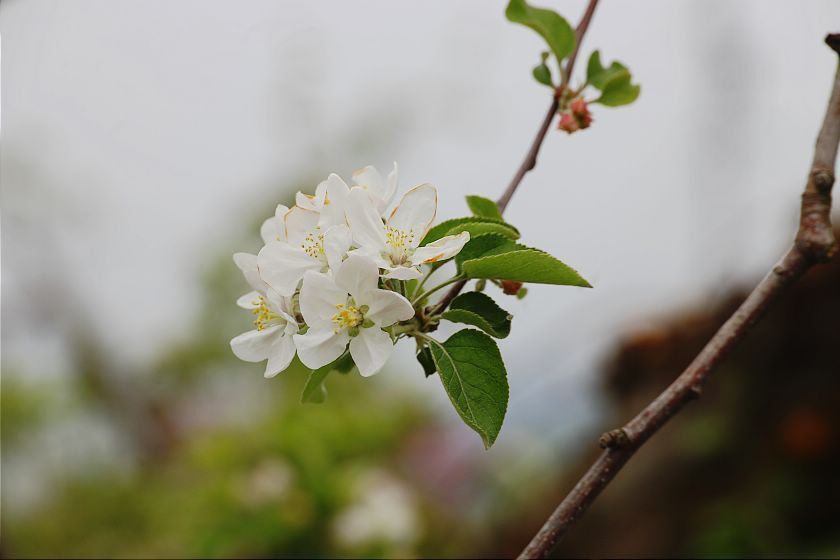
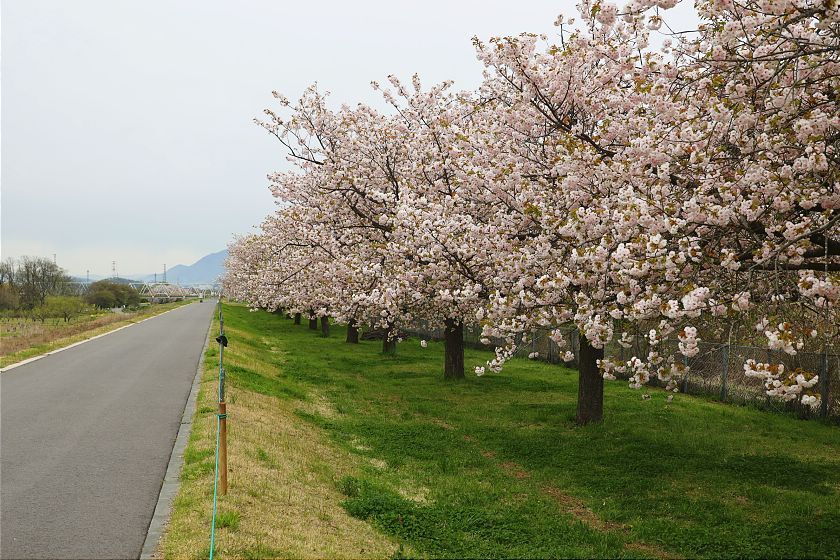
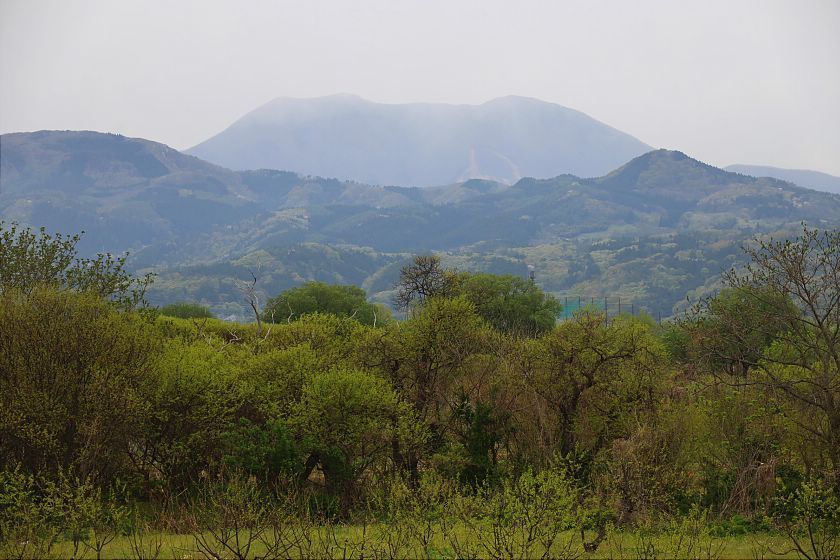
After taking a few moments to enjoy the blossoms, I retraced my steps back towards the town center, where my next stop was probably the most popular attraction in town, the Hokusai Museum. Founded to commemorate Hokusai's life and work, the museum is currently marking its 50th anniversary with a special exhibition by the contemporary artist Fukuda Miran.
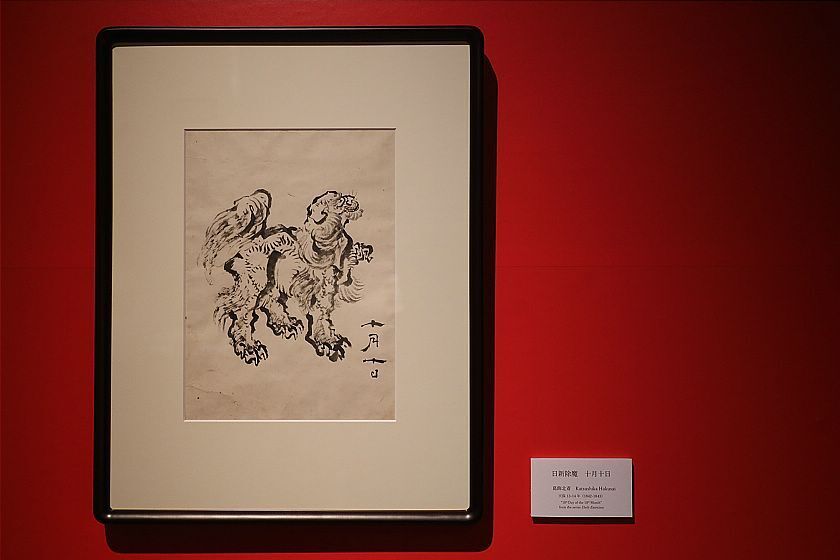
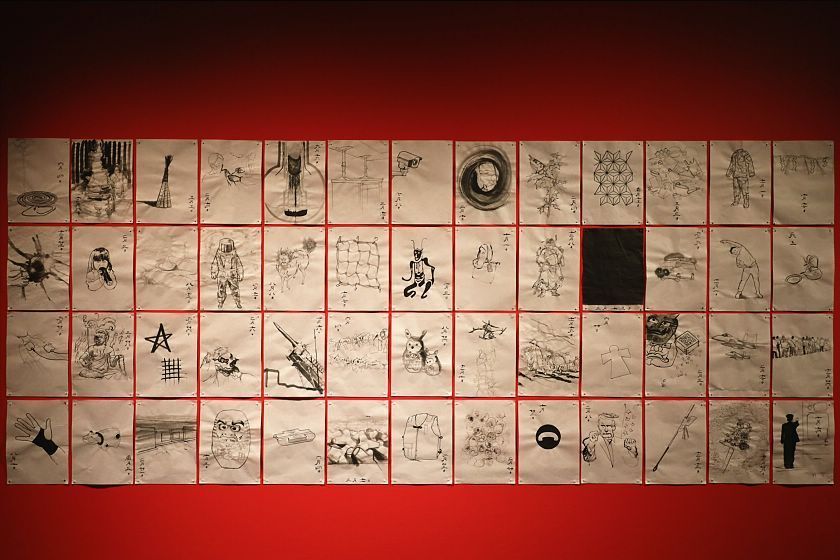
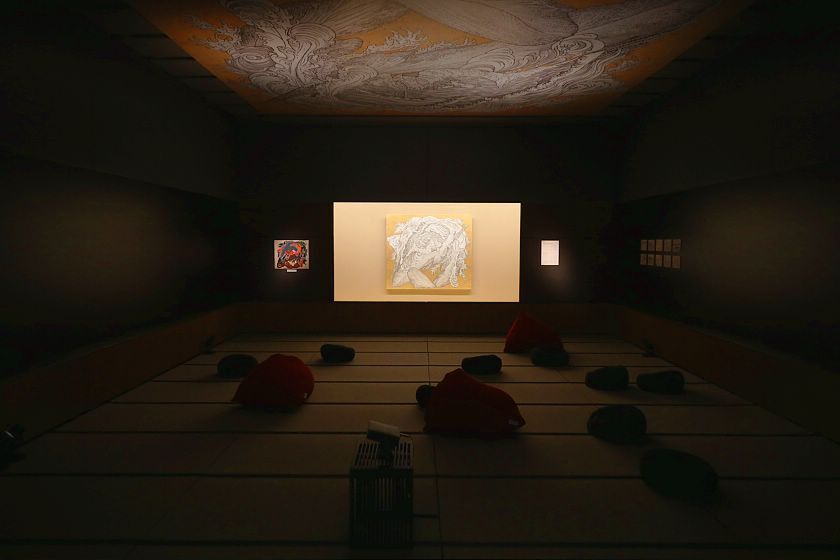
Framed as a kind of dialogue across time between the two artists, the exhibition features 15 brand new works riffing on themes and imagery from Hokusai's oeuvre, introducing contemporary elements in a playful way and seeming to ask where the old master fits into modern visual culture. In my favourite, called Daily Exorcisms, Miran reinterprets Hokusai's everyday habit of drawing and throwing away sketches of lions and lion dancers into a litany of modern ills and distractions.
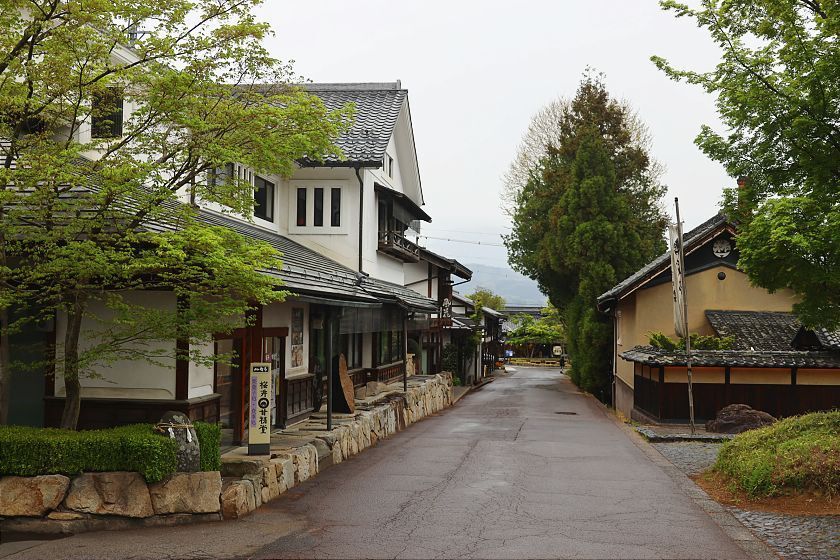
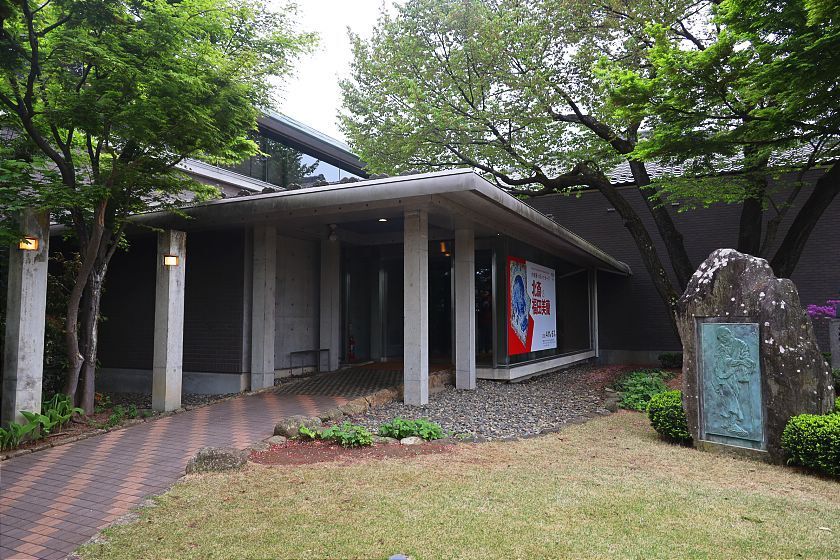
Hokusai never lived in Obuse, but made multiple visits to the town in the 1840s at the invitation of Takai Kozan, a wealthy local merchant who had been educated in what is now Tokyo and moved in artistic circles. As well as taking lessons from the master painter himself, Kozan commissioned a series of unique pieces for his hometown, most notably two matching sets of ceiling tiles for its prized festival floats - two of which can be seen on permanent display in the museum.
What really makes this collaboration continue to resonate today is its timing: then in his 80s, Hokusai had already achieved a measure of fame and recognition for earlier woodblock print series like the "36 Views of Mount Fuji", including what is today his best-known work, "The Great Wave off Kanagawa". As the popularity of woodblock prints began to cool however, the artist remained convinced his best work lay ahead of him, and was actively seeking a new beginning.
The paintings themselves satisfy precisely because of the way they stand outside and even transcend his earlier career; where his existing series were entirely observed from nature, his Obuse works are bold, imaginative, even bordering on abstract. Where an ukiyo-e print is compact and meant for a single perspective, his focus now was on larger-scale pieces inviting multiple viewing angles.
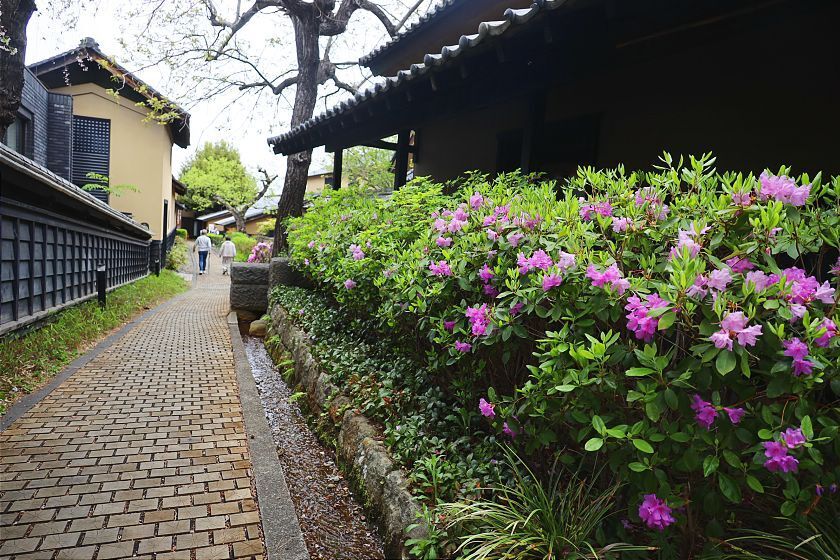
Leading from just outside the museum for about 100 meters to what was my next stop that day, a short thoroughfare known as Kuri no Michi or Chestnut Alley has been cultivated into a pleasant, pedestrianized pathway. Like the town overall, the alley has a pleasantly historic feel, but it's not obvious which of the surrounding buildings are restored old ones and which are new.
Accessed through a main gate towards the opposite end of the alley is the former residence of the Takai family, one of the wealthier trading houses in Obuse from the 17th century onwards, today restored and open to the public as the Takai Kozan Memorial Museum.
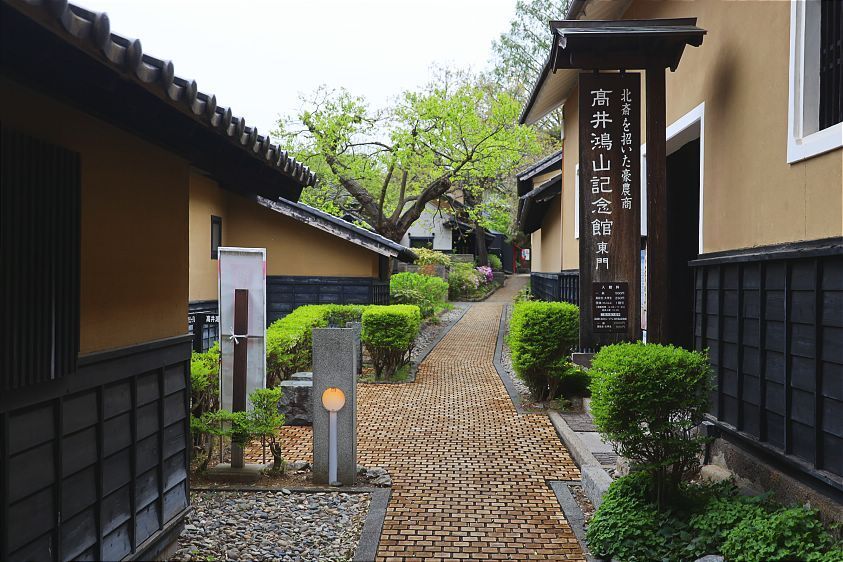
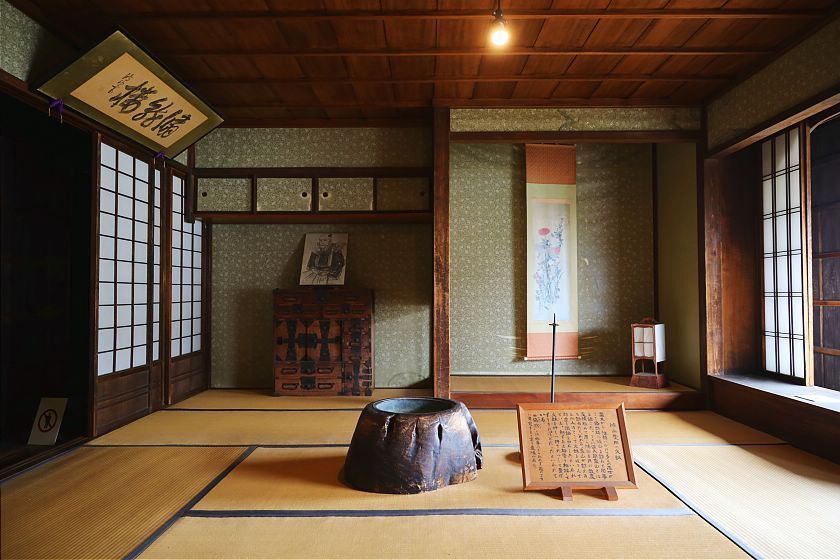
After building their fortune through sake brewing and trading in rapeseed oil, the Takai family reached the peak of its powers around the mid-19th century under its twelfth-generation patriarch, Takai Kozan. A man of learning as well as commerce, Kozan's interests included painting, calligraphy, the Chinese classics and even western sciences. Over the course of his career, he built up a network of fellow artists and thinkers, many of whom he hosted at his guesthouse cum salon, called Yuzenro.
Today, the museum's exhibition space is divided between two nicely restored kura - earthenware storehouses built to protect against fire. Inside, visitors can find an impressive collection of sketches, calligraphy and scholarly items that really help to bring home an impression of the meeting of minds between the old master painter and his younger patron.
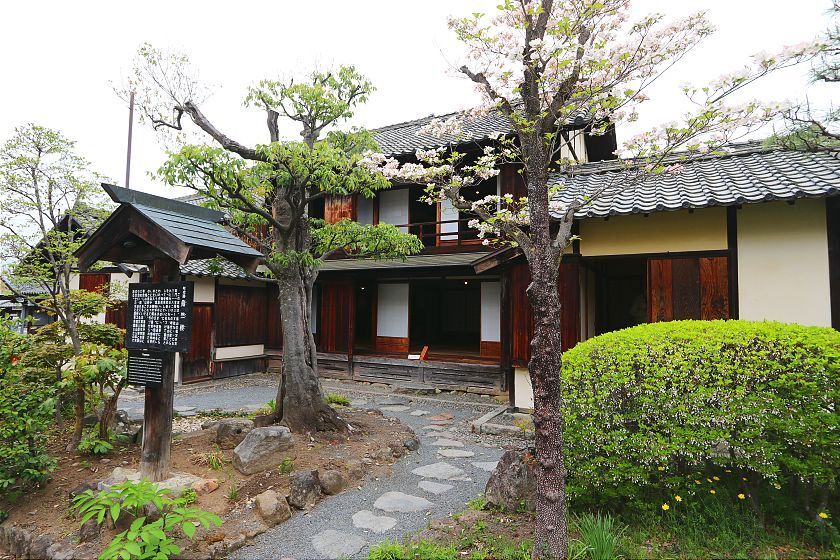
It was in the next plot over from the museum that I first noticed a nice touch that would reappear a few times while exploring the town - matching signs left outside of private gardens inviting visitors to come in and look.
Naturally, results varied in the half-dozen or so that I stopped to look in on, but it struck me as a great idea, and - in a time with so many stories about tensions arising from overtourism - it was nice to imagine local people working together to make their community more appealing.
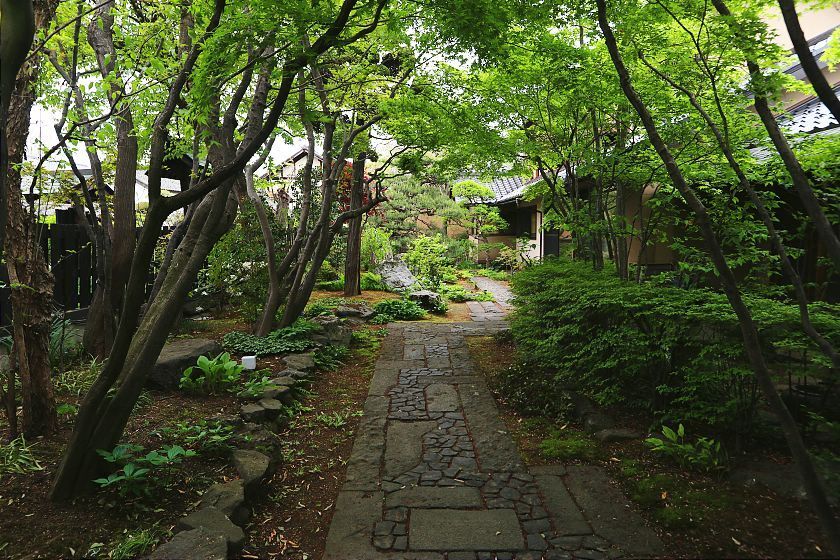
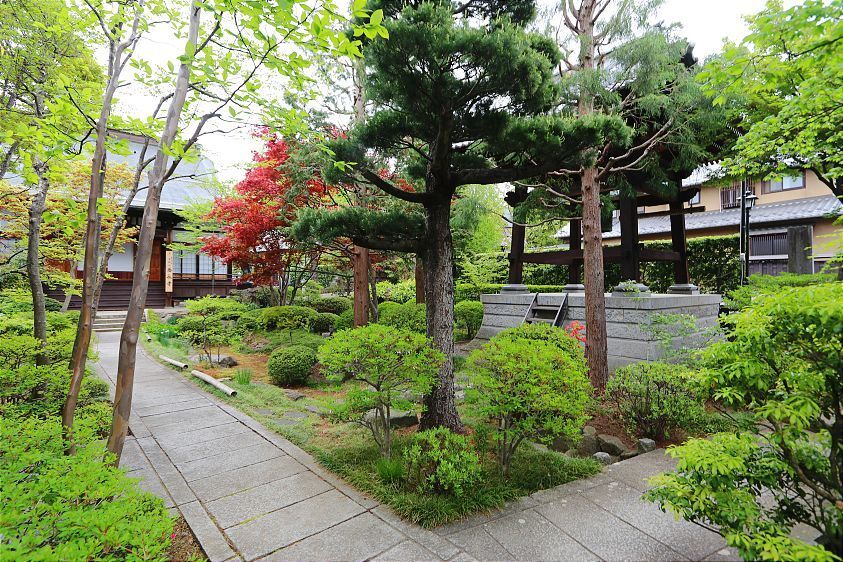
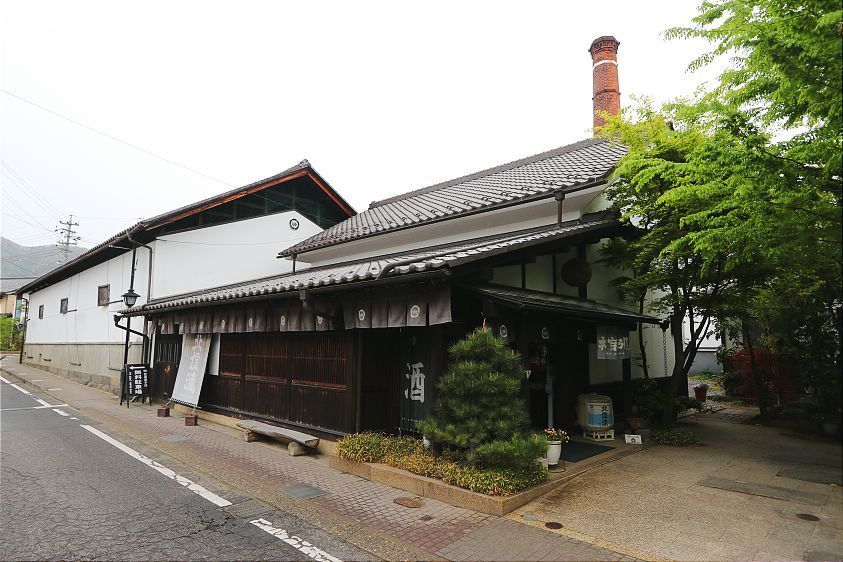
Emerging at the far side of the alley, I meandered for a while along quiet backstreets before gradually looping back to rejoin the town's main strip. On the way, I found myself pausing for a look at the little temple of Saieiji Temple with its elegant main building and neat, leafy garden, before stopping again just a little further along the road to admire the old Matsubaya Sake Brewery.
Founded over 200 years ago in what is today the southern part of Nagano City, the brewery relocated to Obuse in 1889 and has kept its premises - down to the eye-catching redbrick chimney tucked away behind the reception building - largely unchanged since then. Now on its 14th generation owner, it is known today for the quite remarkable number of different sakes it produces.
Just around the corner from the brewery, I decided to stop for lunch at Sakurai Kanseido - a restaurant chain whose history connects on a few levels with that of the town itself. Founded in 1808, the company was the first to pioneer using chestnut flour to make rakugan, a type of traditional sweet used in the tea ceremony, putting it right at the beginning of the town's association with chestnuts that would later become its specialty.
After the town joined Japan's budding railway network in the 1880s - a double-edged sword that soon began to bring visitors to the town even as it heralded the end of trade by pack-horse and riverboat - it was Sakurai Kanseido and a handful of other businesses like it that kept the local economy afloat.
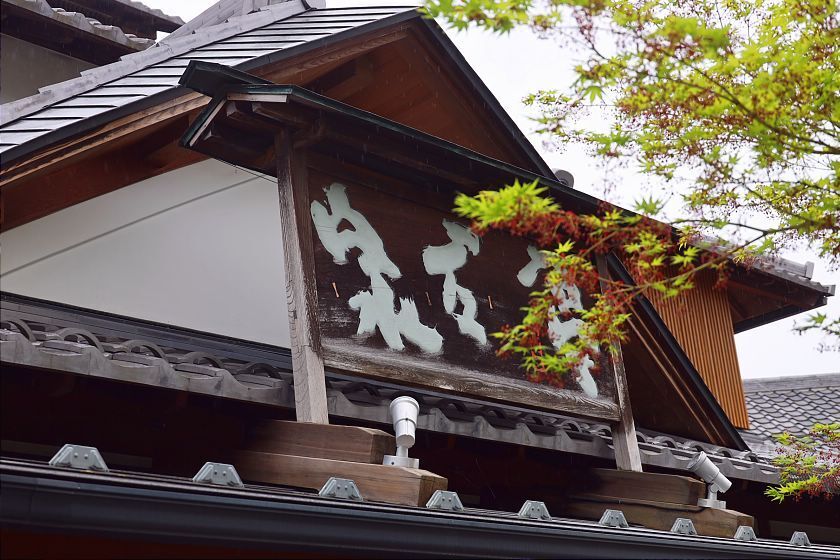
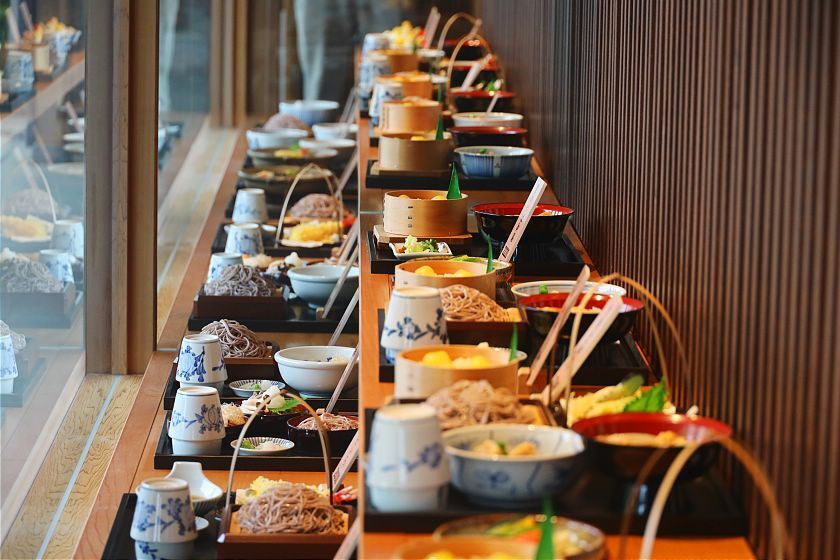
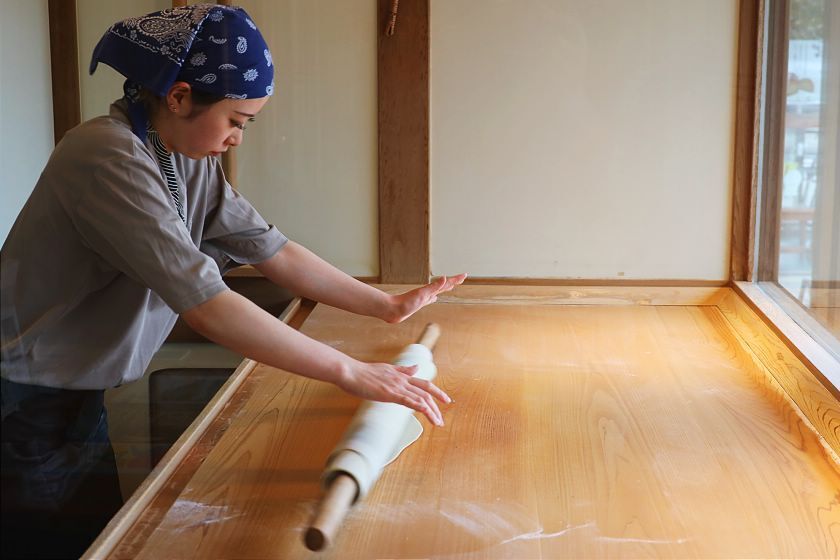
Today, the company has expanded to multiple buildings around Obuse, each with a historic feel to match the town's overall aesthetic though any individual elements will likely have been restored or replaced.
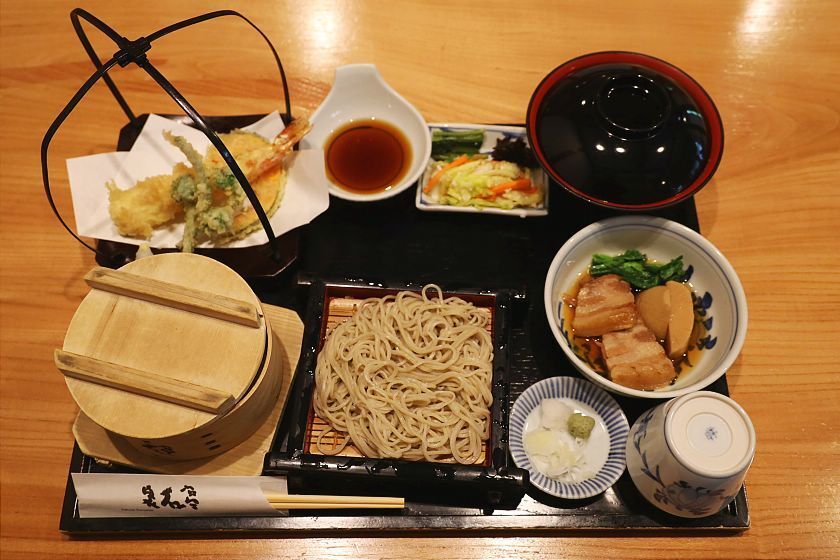
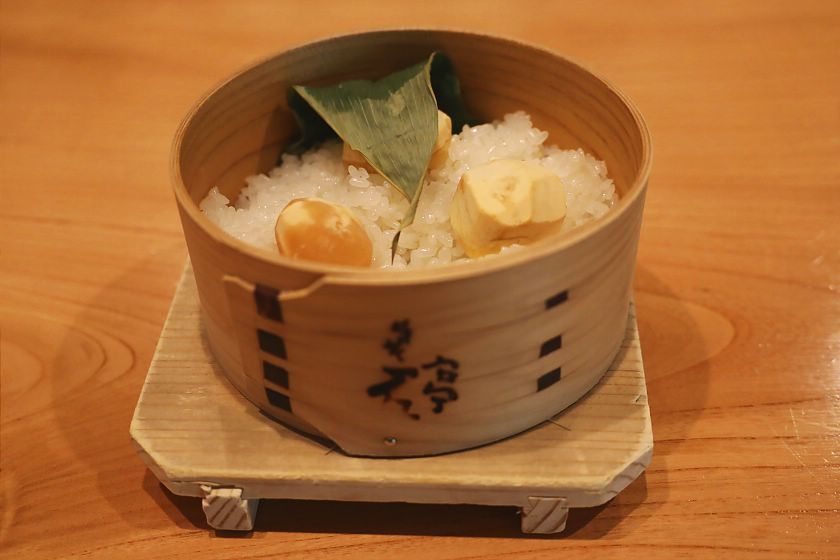
Arriving at Kanseido's main store, a light, airy building drawing on the design language of Edo Period merchant houses, I ordered the signature lunch set of soba noodles, braised pork belly, tempura and kuri-wappa, or steamed rice with sweet chestnuts.
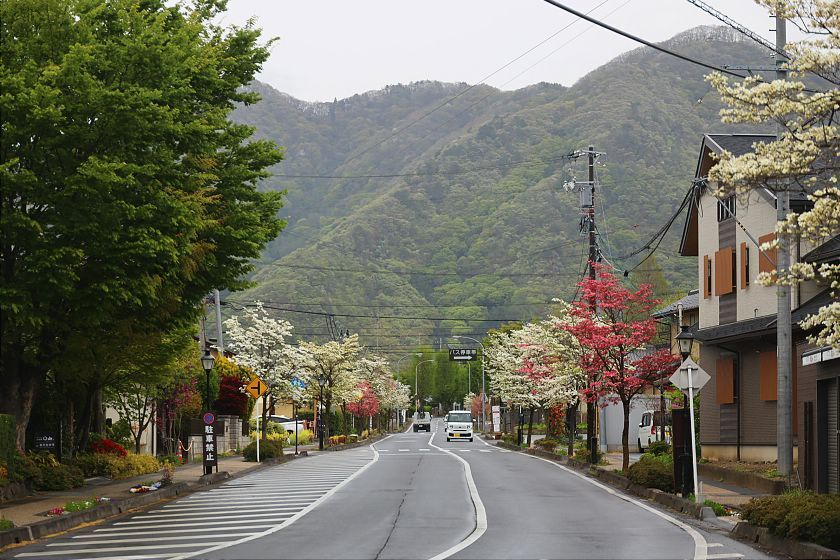
After my meal, I took a stroll along the town's main strip, which even without many unambiguously historic buildings and a mix of different architectural elements - thatched roofs or clay tiles, timber frame or cream plaster, open entrances or traditional shopfronts with hanging noren curtains - still manages to feel remarkably cohesive and authentic.
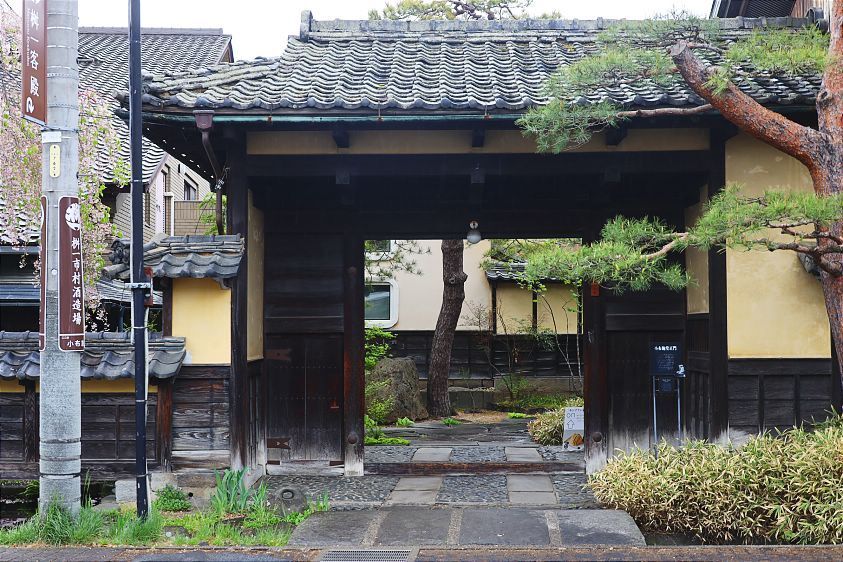
One spot that immediately caught my eye was the old gate leading off of the main street and into a compound belonging to the Masuichi Ichimura Sake Brewery. Indeed, its striking effect is quite by design - its height, clay-tiled roof and deep, framed entry are all features associated with samurai residences, and it would certainly have drawn admiring looks when it was added sometime in the mid-18th century. Local lore has Hokusai himself knocking on this very gate when he first visited the town in 1842, which is certainly plausible as the Takai and Ichimura families were closely connected.
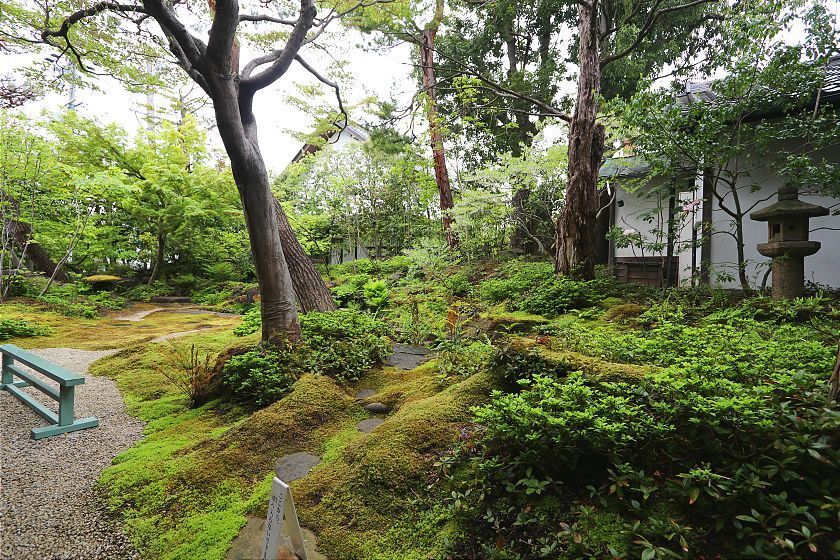
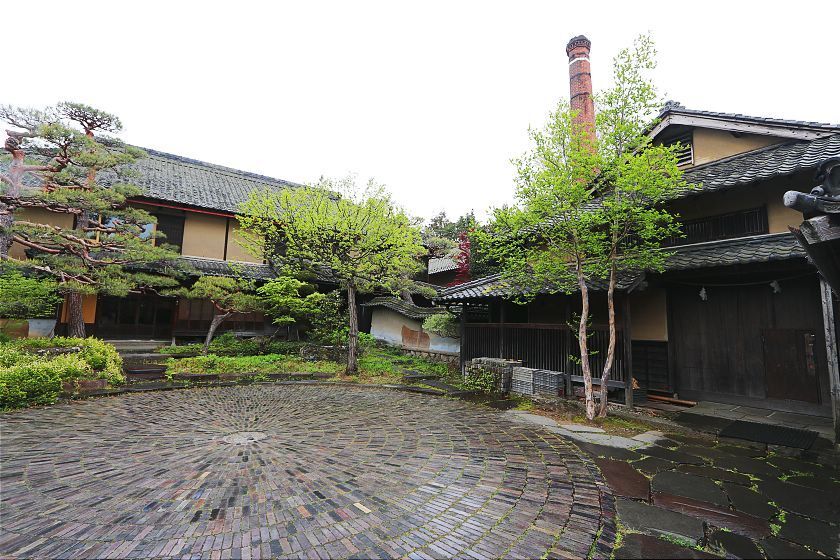
Inside, an elegant cobblestone courtyard is ringed with several nicely restored buildings - a cafe, a private residence and what looks like part of the modern brewing operation. Along with several of Obuse's most recognizable buildings, this area owes its look to the confectionary company Obusedo, who funded a lot of the restoration work and, in doing so, established a visual template of sorts for the way the town looks today.
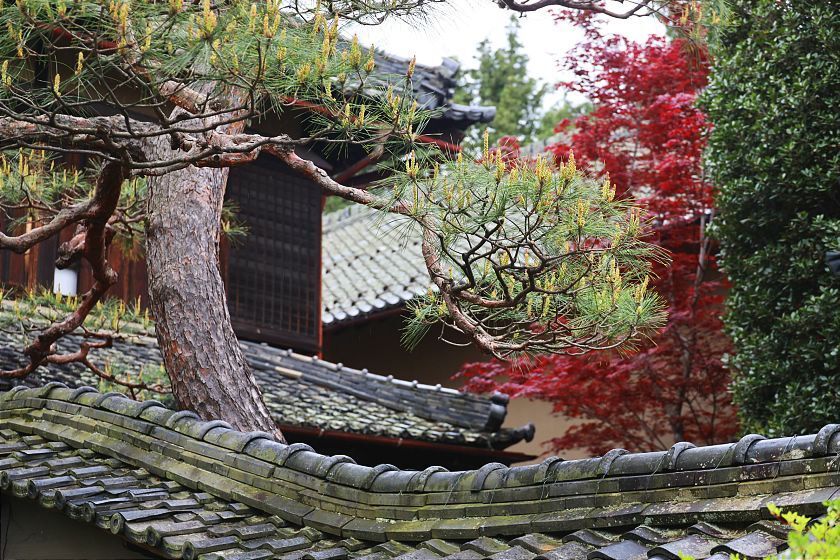
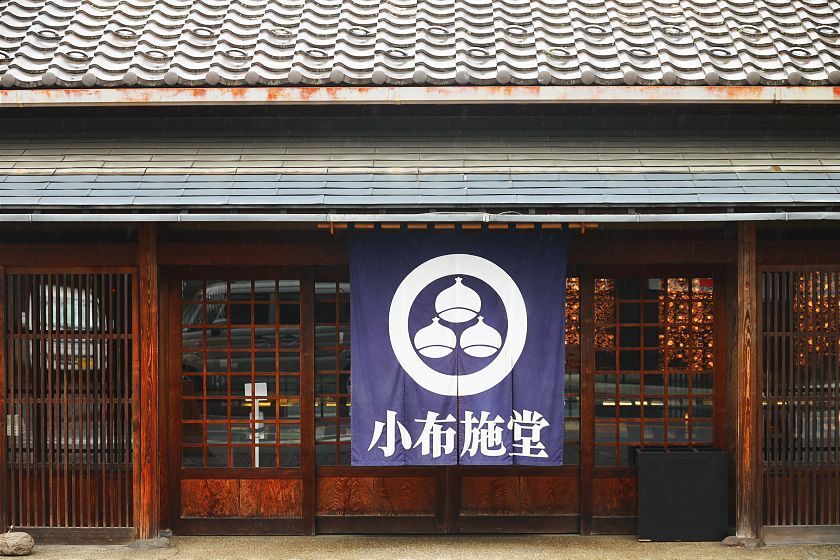
Located next door and directly connecting onto the courtyard via a side entrance is Obusedo's own main store, another elegant building offering takeaway confectionery, a full lunch service and a smaller cafe-style space to enjoy their sweets with a tea or coffee in-house.
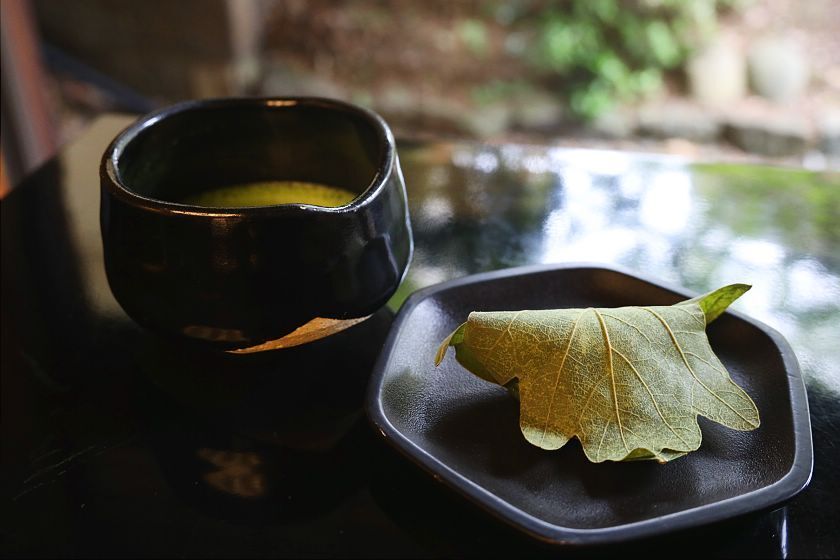
Sadly their signature Mont Blanc sweet is tied to the chestnut harvest and available only in autumn, so with corners left to fill I ordered a bowl of matcha paired with kashiwa mochi - a little cake of crushed, sticky rice with bean paste filling, served neatly wrapped in an oak leaf.
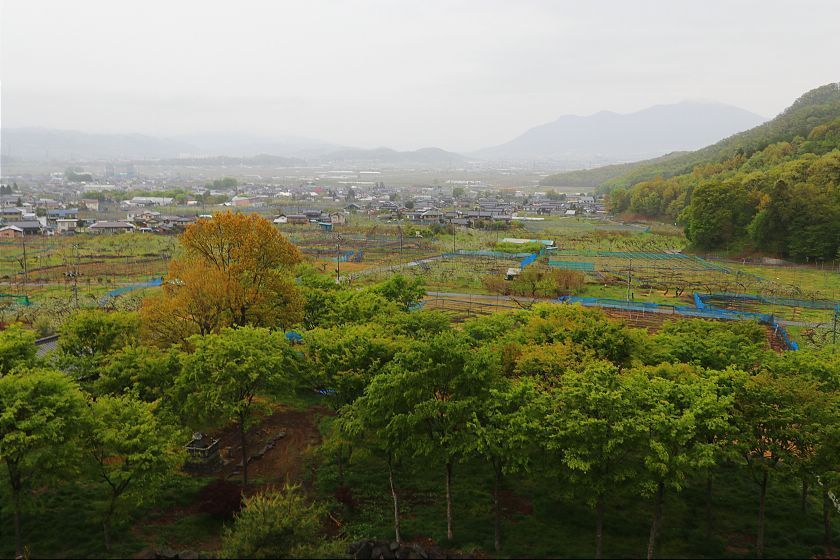
With the center of town well-covered, I set off on a leisurely stroll to the east, the surrounding shops and cafes gradually giving way to private homes, then a patchwork of fields, many lined with more rows of fruit trees.
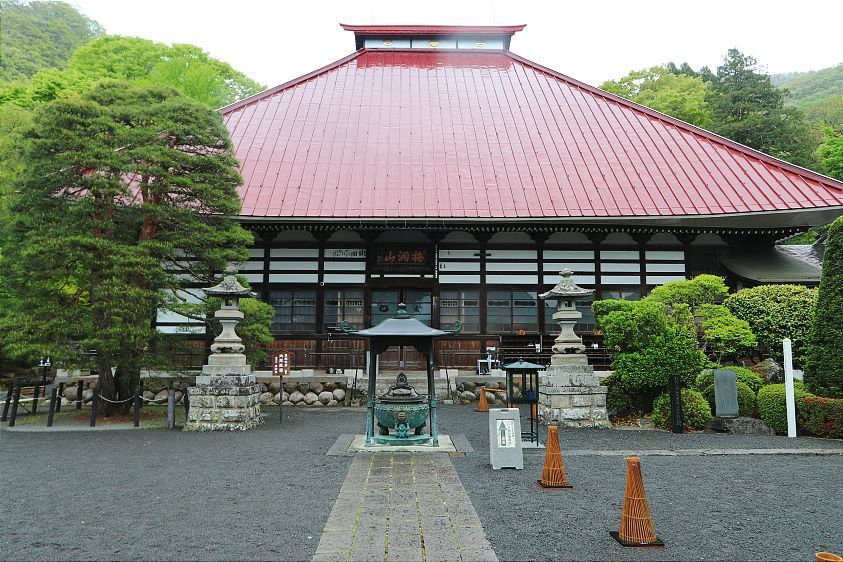
In a little under half an hour, I arrived at the eastern edge of town, and the modest temple complex of Ganshoin. Though the main building was built in 1831, the temple itself can be traced back as far as the 15th century. It was also very closely linked with the Takai family, who had been its sponsors for many generations by the time of Hokusai's famous visits to the town.
It was through this ancestral connection that the temple became the site of one of Hokusai's last major works - a 6.3 by 5.5 meter painting of a phoenix on the ceiling of the main hall, painted when Hokusai himself was already 88-89 years of age. Notably, the work has never been touched up or restored in any way, so what you see today is the original work, just as the artist left it.
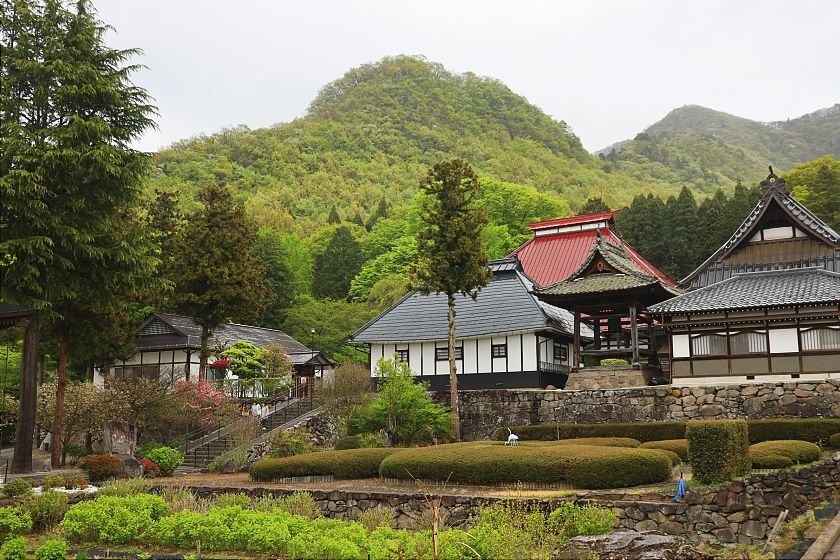
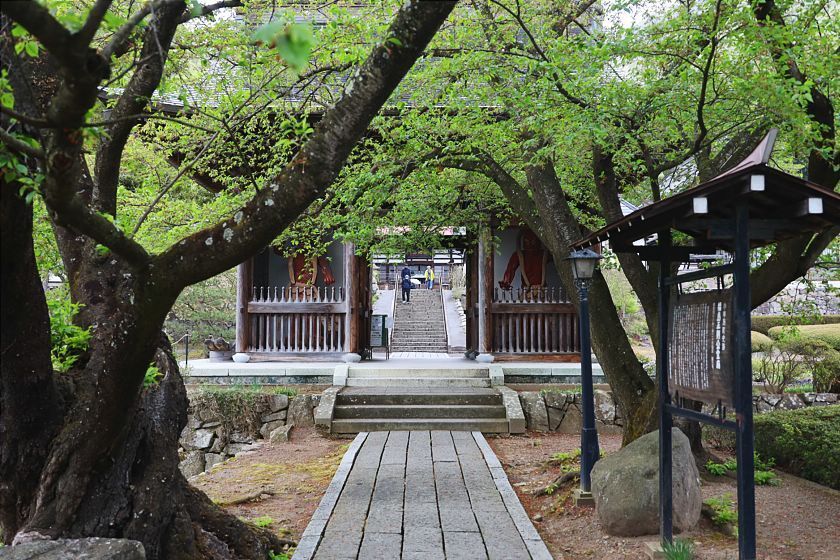
Although the temple itself feels quite low-key, its atmosphere is heightened by the low, wooded backdrop of Mount Karita. From its grounds, several hiking paths lead up towards the ridgeline, passing on the way a modest but well-known waterfall called the Karita Fudo Falls, which I promised myself to check out next time.
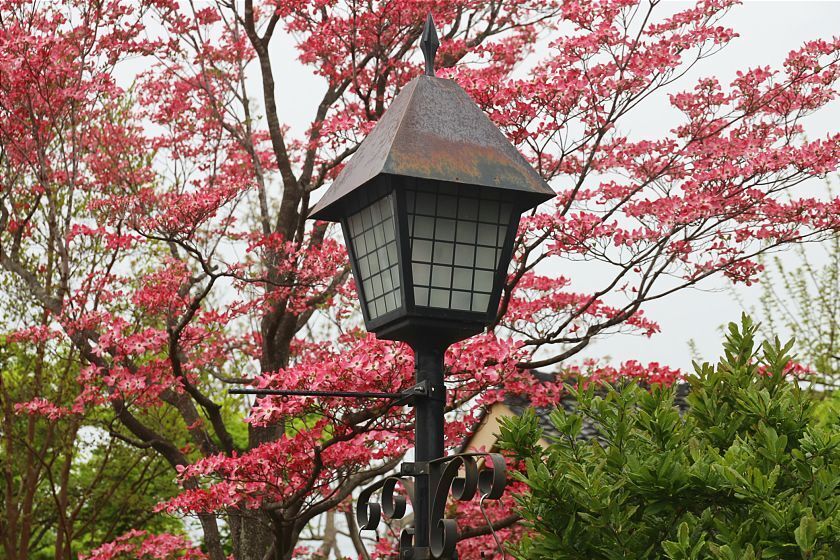
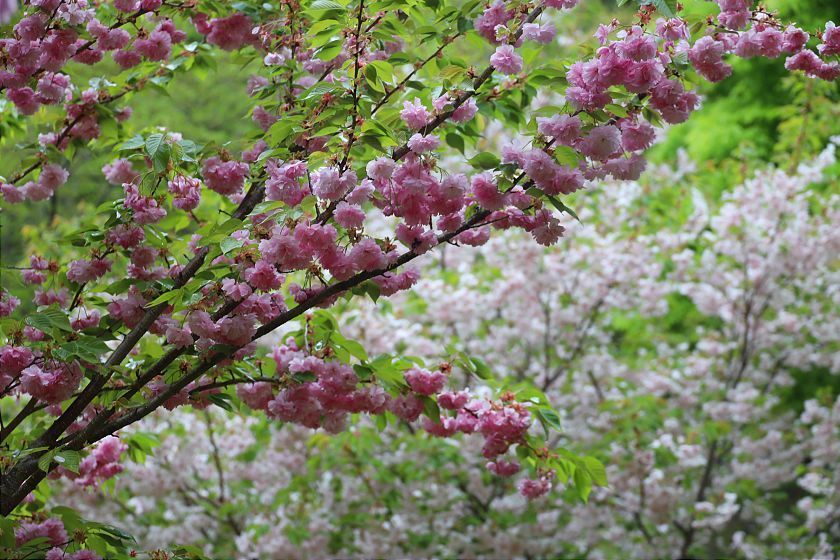
As it happened, I didn't have to go far to find some nice scenery - just a few steps from the temple's main gate I found a cluster of cherry blossom trees, still at full bloom in a vibrant mix of pink and white.
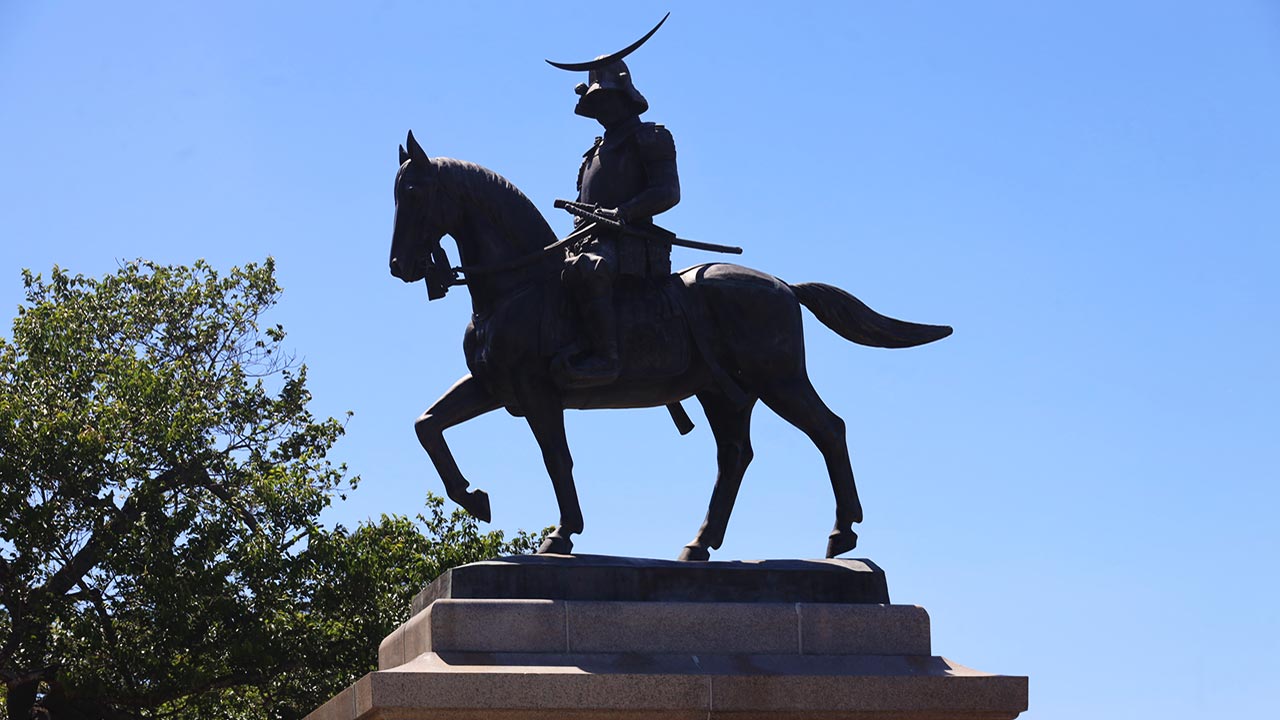
Another spot not to miss at the temple is the grave of Fukushima Masanori, standing proudly behind the main hall. One of the legendary "seven spears of Shizugatake", Masanori rose through sheer battlefield prowess, ultimately becoming the overlord of Hiroshima domain. Like a lot of warriors from that time though, he was a direct, no-nonsense sort of man and chafed against the internecine politics of Tokugawa rule.
After making unauthorized repairs to Hiroshima Castle, his holdings were confiscated and he was demoted to a minor estate overlapping with what is today Obuse, dying in obscurity just five years later. His name may have slipped from the national consciousness, but perhaps not so much here - just as I was preparing to move on, I saw an elderly woman carefully brush a few leaves from the steps leading to the grave before bowing deeply to it, a gesture I found oddly moving.
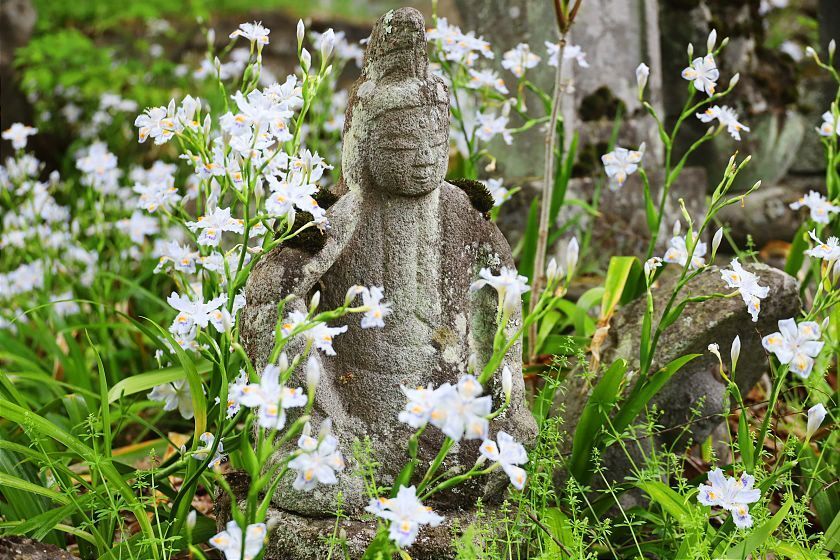
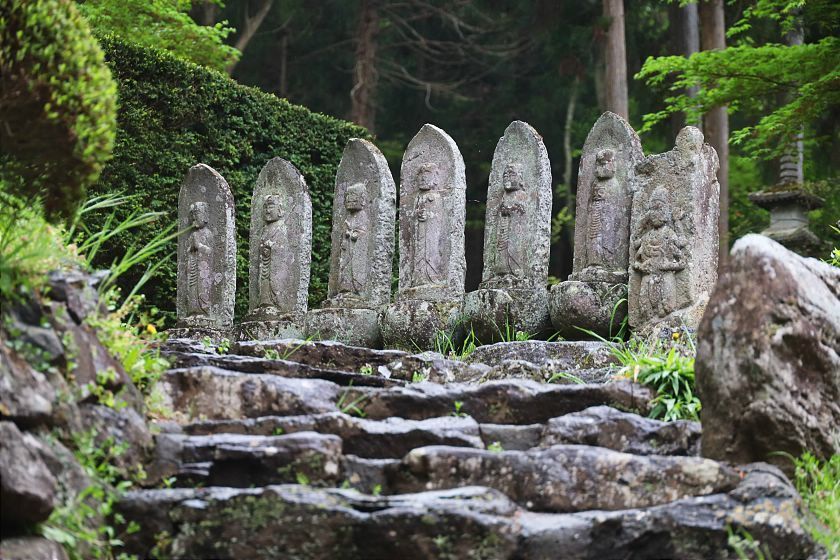
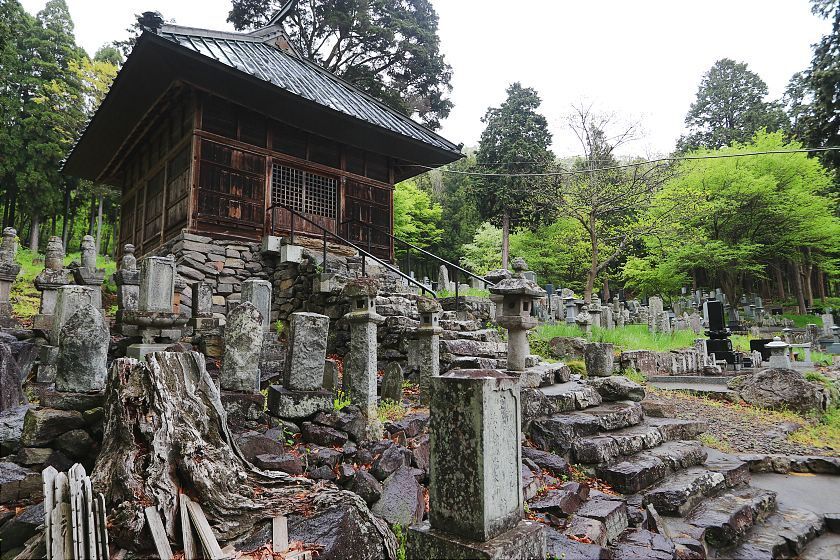
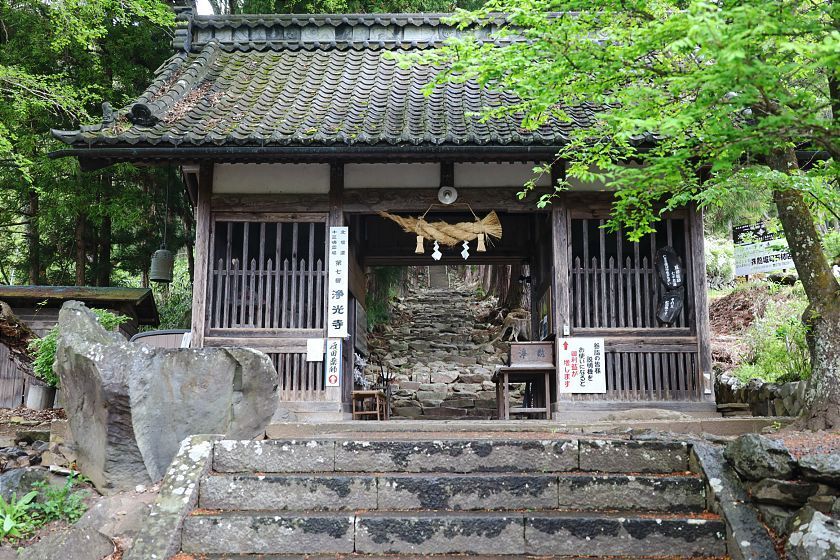
Skirting the treeline for a few hundred meters to the south along another country lane I arrived at my second to last stop - the minor local temple of Jokoji. A member of the Buzan subsect of Shingon Buddhism, aligning it with Hasedera Temple in Nara Prefecture, it looks from the road like nothing more than a couple of old shacks huddled together.
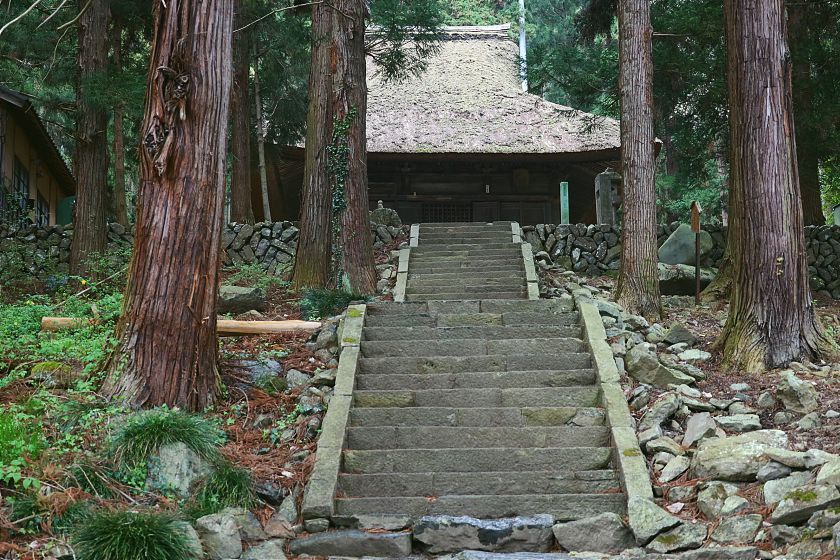
Passing through a gate and up a tumbledown flight of ancient-looking stone steps however, I arrived at what might just have been my favorite spot of the whole day - the temple's Yakushido Hall. Apart from the setting which exudes a quiet dignity of its own, the building itself is strikingly elegant, capped with a wide, thatched roof in the hip and gable style.
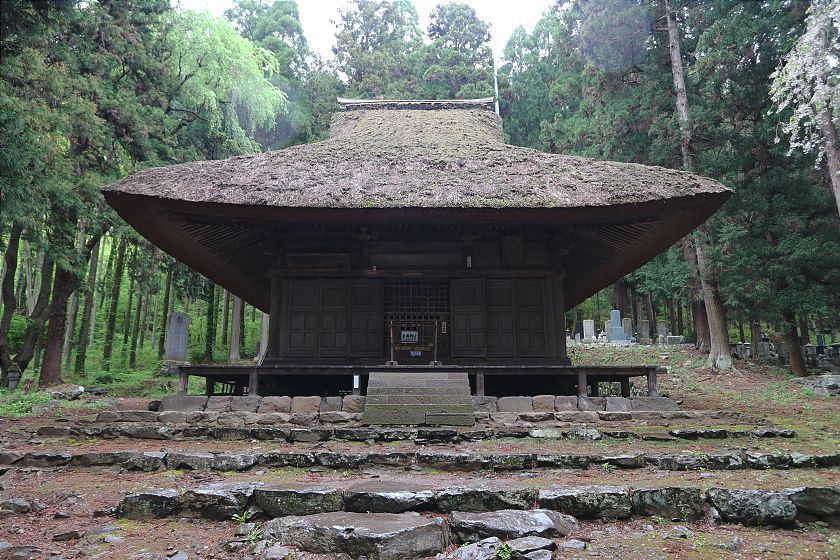
The hall, as I discovered later, was restored in 2007 with most of the roof needing to be replaced. It was during this work that an inscription was discovered on a sacred statue, dating the building itself to the 15th century and establishing it by some distance as the oldest structure in Obuse. Despite its age, it remains a functioning part of the temple and hosts a goma gyo or fire ritual on the first Sunday of every month.
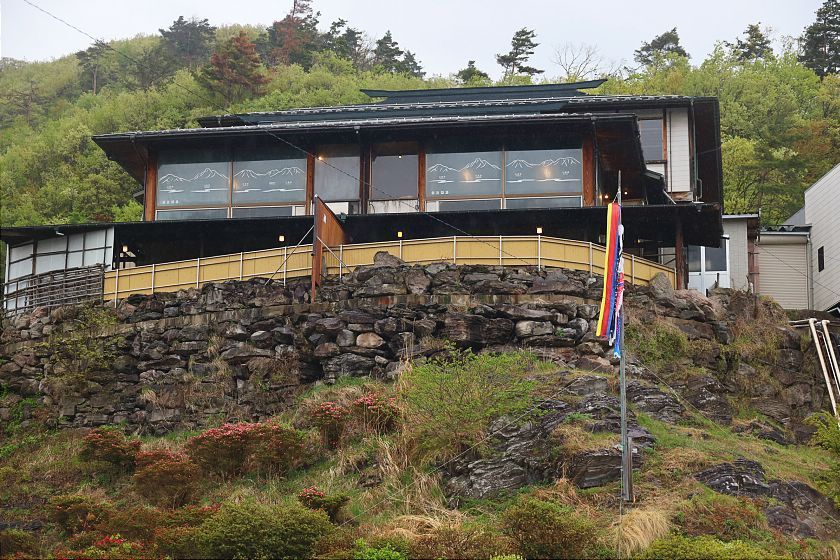
It was almost time to say goodbye to Obuse, but first I wound my way between a few more fruit fields for one last stop at Anakannon-no-yu, a rustic day-visit hot spring overlooking the valley from its perch high on the hillside, where I joined a surprising number of what I took to be locals for a long dip in slightly sulfur-scented water.