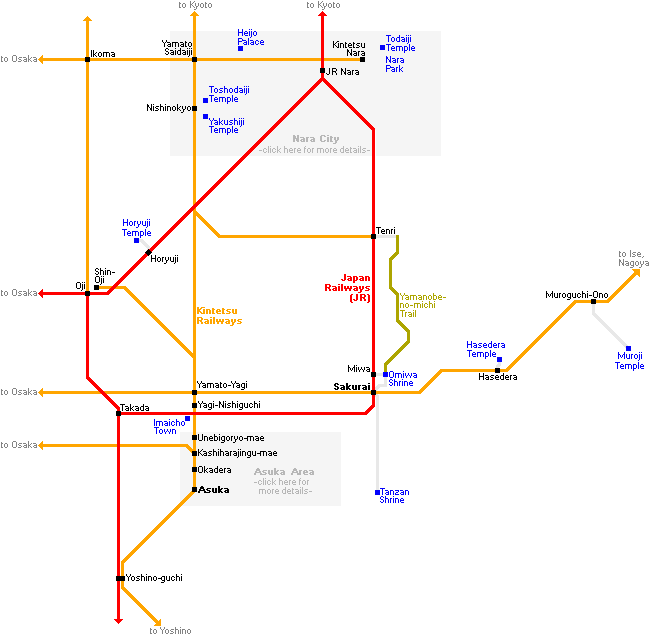
Take Kintetsu Railway from Kintetsu Nara Station to Yamato-Saidaiji Station (5 minutes) and transfer to a train to Kashiharajingu-mae Station (30-45 minutes). To reach Asuka Station, transfer once more (5 minutes). The entire one way journey takes around one hour, costs 700 yen (plus 520 yen if taking a slightly faster limited express train) and is covered by the Kintetsu Rail Pass and Kansai Railway Pass (except limited express fee), but not by the Japan Rail Pass.
To Sakurai
30 min
¥330
There are two trains per hour between JR Nara Station and Sakurai along the JR Sakurai Line. The one way ride takes 30 minutes, costs 330 yen and is covered by the Japan Rail Pass.
Above fees and schedules are subject to change. Be sure to check current yen exchange rates.
Getting around
Asuka and Sakurai are located at the southern end of the Yamato Plain, the cradle of Japanese civilization. To the south, east and west are mountains, and at the northern end of the plain is Nara, Japan's first permanent capital. In the mountains to the south lies Yoshino.
The local attractions of Asuka and Sakurai are spread out over a relatively wide area:
Around Sakurai
Sakurai Station is a major transportation hub where the Japan Railways (JR) meet Kintetsu Railway and which is also served by many local bus lines, including the one to Tanzan Shrine. The Yamanobe-no-michi Trail runs parallel to the JR Sakurai Line north of Sakurai Station and can be accessed from several stations along the way. Hasedera and Muroji are located further east of Sakurai Station along the Kintetsu Osaka Line.
Around Asuka
The sites of ancient Asuka are spread out over what has become a very rural area. The main attractions are all within about three kilometers of Asuka Station. Alternatively, Kashiharajingu-mae Station can serve as the local transportation hub.
On dry days, rental bicycles are the most popular and convenient means of exploring Asuka. There are rental shops outside Asuka Station, Kashiharajingu-mae Station and Okadera Station, as well as elsewhere in the area. Renting a bicycle typically costs 900 yen per day on weekdays and 1000 yen per day on weekends and holidays. Shops are usually open from 9:00 to 17:00, and some offer drop-off services, overnight rental or rental by the hour.
Alternatively, the Kame Loop Bus for tourists serves most of the sights around Asuka. It generally operates once per hour except during some busy travel seasons there are two buses per hour. The bus runs between Asuka Station and Kashiharajingu-mae Station, passing most of Asuka's main attractions along the way. The cost for a single ride starts at 190 yen and increases depending on distance traveled, while a day pass for unlimited use on one calendar day is available for 650 yen.