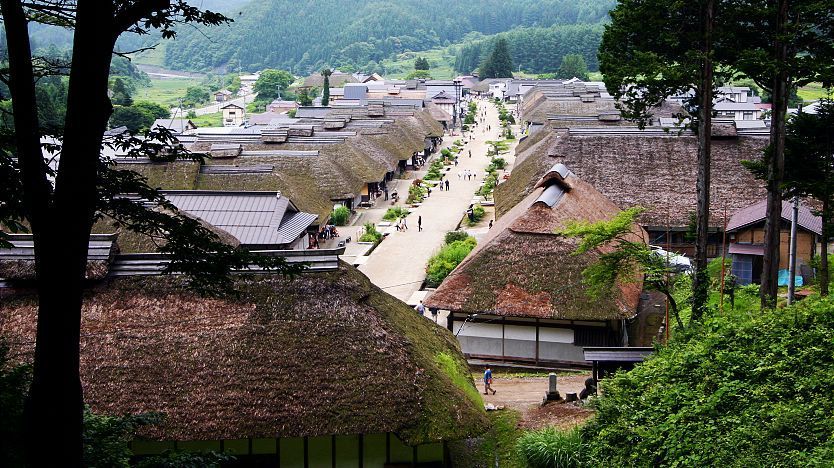
Ouchijuku (大内宿, Ōuchijuku) is a former post town along the Aizu-Nishi Kaido trade route, which connected Aizu with Nikko during the Edo Period. Restrictions set by the shogunate required travelers to make their long journeys on foot and as a result, post towns developed along the routes to provide travelers with food, accommodations and rest.
Today, Ouchijuku has been restored to look as it did in the Edo Period with telephone and electricity wires buried. The unpaved main street is lined by thick thatched roof buildings, which house a variety of shops, restaurants and minshuku (small traditional Japanese inns). Soba noodles and locally caught char fish roasted on sticks are popular specialties.

Ouchijuku's former Honjin, the principle inn for high ranked government officials, is also located along the main street and open to the public as a museum. It offers visitors an example of elegant, traditional housing interior of the Edo Period and includes a collection of dishes, clothing and other artifacts.
Also of note are Ouchijuku's shrine and temple. The temple is located at the end of the main street up a steep set of stairs. Visitors are rewarded with a panoramic view of the main street and its surroundings. A five minute walk off the main road stands a quiet shrine, set back in a patch of cedar trees. It has a pleasant atmosphere and a unique purification fountain.

Getting there and around
From Aizu-Wakamatsu
Ouchijuku is located in Shimogo Town, about 20 kilometers south of Aizu-Wakamatsu. The nearest station is Yunokami Onsen on the Aizu Railroad (35 minutes, 1050 yen one way from Aizu Wakamatsu Station, not covered by the Japan Rail Pass), from where Ouchijuku can be reached in a 15 minute taxi ride (around 2000 yen one way). From mid March through November, a bus operates between Yunokami Onsen and Ouchijuku about once per hour (20 minutes, 1100 yen for a 2-day pass).
From Nikko
From Nikko, it is about a 2.5 hour train ride to Yunokami Onsen Station by Tobu Railway, Yagan Railway and Aizu Railway. The one way fare is 2750 yen when using local trains and around 4000 yen when using the slightly faster limited express trains. The "Nikko-Ouchijuku Free Pass" provides two consecutive days of unlimited use of the Tobu, Yagan and Aizu railways between Tobu-Nikko and Yunokami stations (except limited express trains) and one day of unlimited use of the bus between Yunokami Station and Ouchijuku for 4860 yen. The pass can be purchased at the tourist centers of Tobu-Nikko and Kinugawa stations.

Hours and Fees
Questions? Ask in our forum.
Links and Resources
Hotels around Aizu

-
-
![]() TagotoTagoto features a hot public bath, Japanese-style and Western rooms and Japanese cuisine, a 5-minute drive from Aizu Wakamatsu Station. It offers free Wi-Fi throughout the propert and free parking is on-site. Japanese-style rooms have a tatami (woven-straw) floor and traditional futon bedding, while Western rooms come with beds and an en suite bathroom. All rooms are air-conditioned and fitted with an LCD TV and a fridge. The restaurant offers local specialities, including the region’s signature meppameshi rice dish and an Aizu Kaiseki multi-course dinner. Tagoto is a 7-minute drive from Tsuruga Castle and a 10-minute drive from Mount Iimori. The Noguchi Hideyo Memorial Museum is a 30-minute drive.View on Booking.com
TagotoTagoto features a hot public bath, Japanese-style and Western rooms and Japanese cuisine, a 5-minute drive from Aizu Wakamatsu Station. It offers free Wi-Fi throughout the propert and free parking is on-site. Japanese-style rooms have a tatami (woven-straw) floor and traditional futon bedding, while Western rooms come with beds and an en suite bathroom. All rooms are air-conditioned and fitted with an LCD TV and a fridge. The restaurant offers local specialities, including the region’s signature meppameshi rice dish and an Aizu Kaiseki multi-course dinner. Tagoto is a 7-minute drive from Tsuruga Castle and a 10-minute drive from Mount Iimori. The Noguchi Hideyo Memorial Museum is a 30-minute drive.View on Booking.com -
![]() Marumine Kanko HotelLocated in Ashinomaki Onsen, 渓谷美の宿川音 provides air-conditioned rooms with private open-air hot spring bath. The property is situated 16 km from central Aizuwakamatsu and Aizuwakamatsu Castle is 14 km from 渓谷美の宿川音. Ouchijuku, featuring traditional buildings is 14 km from the property. The ryokan features a public hot spring bath, open-air hot spring bath and sauna. Free shuttle service to Ashinomaki Station is available. Luggage storage is available for guest's convenience. The rooms in the ryokan are fitted with a flat-screen TV. 渓谷美の宿川音 offers certain units that feature a balcony, and every room comes with an electric kettle. All units will provide guests with a fridge. Certain rooms feature Simmons mattresses. A traditional kaiseki (multi-course) dinner is served at the dining area. A buffet breakfast or Japanese-style breakfast is served each morning at the property.View on Booking.com
Marumine Kanko HotelLocated in Ashinomaki Onsen, 渓谷美の宿川音 provides air-conditioned rooms with private open-air hot spring bath. The property is situated 16 km from central Aizuwakamatsu and Aizuwakamatsu Castle is 14 km from 渓谷美の宿川音. Ouchijuku, featuring traditional buildings is 14 km from the property. The ryokan features a public hot spring bath, open-air hot spring bath and sauna. Free shuttle service to Ashinomaki Station is available. Luggage storage is available for guest's convenience. The rooms in the ryokan are fitted with a flat-screen TV. 渓谷美の宿川音 offers certain units that feature a balcony, and every room comes with an electric kettle. All units will provide guests with a fridge. Certain rooms feature Simmons mattresses. A traditional kaiseki (multi-course) dinner is served at the dining area. A buffet breakfast or Japanese-style breakfast is served each morning at the property.View on Booking.com -
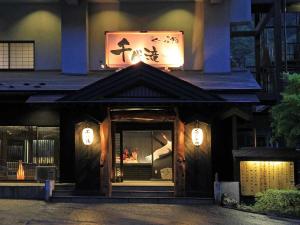
![]() Kutsurogijuku ChiyotakiBoasting hot spring baths with mountain views, Kutsurogijyuku Chiyotaki is a 15-minute bus ride from JR Aizuwakamatsu Station. Guests can enjoy the on-site restaurant and unwind in a private hot spring bath with views that was open in July 2017. Free WiFi is available in all rooms. All guest rooms have a flat-screen TV and an electric kettle. Slippers and a hairdryer are provided for guest's comfort. An on-site restaurant offers Japanese local cuisine and sake. There is a Japanese sake bar available on site from the evenings. You will find a shared lounge fitted with various books and complimentary tee and coffee. Guests can unwind in an open-air hot spring baths with mountain views on the top floor, and they can enjoy free access to hot spring baths at the sister property in the vicinity. Aizu Higashiyama Onsen is 100 metres from Kutsurogijyuku Chiyotaki, while Mount Iimori is 2.8 km from the property.View on Booking.com
Kutsurogijuku ChiyotakiBoasting hot spring baths with mountain views, Kutsurogijyuku Chiyotaki is a 15-minute bus ride from JR Aizuwakamatsu Station. Guests can enjoy the on-site restaurant and unwind in a private hot spring bath with views that was open in July 2017. Free WiFi is available in all rooms. All guest rooms have a flat-screen TV and an electric kettle. Slippers and a hairdryer are provided for guest's comfort. An on-site restaurant offers Japanese local cuisine and sake. There is a Japanese sake bar available on site from the evenings. You will find a shared lounge fitted with various books and complimentary tee and coffee. Guests can unwind in an open-air hot spring baths with mountain views on the top floor, and they can enjoy free access to hot spring baths at the sister property in the vicinity. Aizu Higashiyama Onsen is 100 metres from Kutsurogijyuku Chiyotaki, while Mount Iimori is 2.8 km from the property.View on Booking.com -
![]() Kutsurogijyuku ShintakiFeaturing 4 hot spring baths with free flowing spring water, Kutsurogijyuku Shintaki offers accommodation located a 15-minute bus ride from JR Aizuwakamatsu Station. Free WiFi and a restaurant are featured on site. Each room is equipped with a flat-screen TV and an electric kettle. Slippers and a hairdryer are provided in guest rooms. All guest rooms are non-smoking, while there is a designated smoking area on each guest floor. There is room service at the property. Local cuisine and various local rice wine can be sampled at the on-site restaurant. A shared lounge has books and complimentary tea and coffee for guests' comfort. You can play table tennis at the ryokan free of charge. Guests have an free access to a hot spring bath of a sister property nearby. Aizu Higashiyama Onsen is 100 metres from Kutsurogijyuku Shintaki, while Mount Iimori is 3 km from the property.View on Booking.com
Kutsurogijyuku ShintakiFeaturing 4 hot spring baths with free flowing spring water, Kutsurogijyuku Shintaki offers accommodation located a 15-minute bus ride from JR Aizuwakamatsu Station. Free WiFi and a restaurant are featured on site. Each room is equipped with a flat-screen TV and an electric kettle. Slippers and a hairdryer are provided in guest rooms. All guest rooms are non-smoking, while there is a designated smoking area on each guest floor. There is room service at the property. Local cuisine and various local rice wine can be sampled at the on-site restaurant. A shared lounge has books and complimentary tea and coffee for guests' comfort. You can play table tennis at the ryokan free of charge. Guests have an free access to a hot spring bath of a sister property nearby. Aizu Higashiyama Onsen is 100 metres from Kutsurogijyuku Shintaki, while Mount Iimori is 3 km from the property.View on Booking.com -
![]() Onyado TohoSet in Aizuwakamatsu, 500 metres from Aizu Higashiyama Onsen, Onyado Toho features free WiFi access and free private parking. Free shuttle service is available from Aizuwakamatsu Station to the hotel on a first-come, first-served basis. You will find a kettle in the room. All rooms are equipped with a private bathroom. For your comfort, you will find slippers, free toiletries and a hairdryer. You will find shops at the property. Mount Iimori is 2.4 km from Onyado Toho, while Aizuwakamatsu Castle is 2.6 km away.View on Booking.com
Onyado TohoSet in Aizuwakamatsu, 500 metres from Aizu Higashiyama Onsen, Onyado Toho features free WiFi access and free private parking. Free shuttle service is available from Aizuwakamatsu Station to the hotel on a first-come, first-served basis. You will find a kettle in the room. All rooms are equipped with a private bathroom. For your comfort, you will find slippers, free toiletries and a hairdryer. You will find shops at the property. Mount Iimori is 2.4 km from Onyado Toho, while Aizuwakamatsu Castle is 2.6 km away.View on Booking.com -
![]() Shosuke-no-Yado TakinoyuFeaturing an open-air bath and views of mountain, Shosuke-no-Yado Takinoyu is a ryokan situated in a historic building in Aizuwakamatsu, 3.4 km from Mount Iimori. This 4-star ryokan offers a 24-hour front desk and a lift. The accommodation offers a hot spring bath, spa facilities, family-friendly restaurant and free WiFi. The ryokan will provide guests with air-conditioned units with a desk, a kettle, a fridge, a minibar, a safety deposit box, a flat-screen TV and a private bathroom with a bidet. There is a seating and a dining area in all units. At the ryokan, each unit comes with bed linen and towels. A minimarket is available at the ryokan. The ryokan is located in a geothermal area, with a number of hot springs nearby for guests to relax in. For guests with children, the ryokan provides a baby safety gate and a children's playground. Guests can relax in the garden at the property. Aizuwakamatsu Station is 4.6 km from Shosuke-no-Yado Takinoyu, while Kitakata Station is 25 km away. The nearest airport is Fukushima Airport, 73 km from the accommodation.View on Booking.com
Shosuke-no-Yado TakinoyuFeaturing an open-air bath and views of mountain, Shosuke-no-Yado Takinoyu is a ryokan situated in a historic building in Aizuwakamatsu, 3.4 km from Mount Iimori. This 4-star ryokan offers a 24-hour front desk and a lift. The accommodation offers a hot spring bath, spa facilities, family-friendly restaurant and free WiFi. The ryokan will provide guests with air-conditioned units with a desk, a kettle, a fridge, a minibar, a safety deposit box, a flat-screen TV and a private bathroom with a bidet. There is a seating and a dining area in all units. At the ryokan, each unit comes with bed linen and towels. A minimarket is available at the ryokan. The ryokan is located in a geothermal area, with a number of hot springs nearby for guests to relax in. For guests with children, the ryokan provides a baby safety gate and a children's playground. Guests can relax in the garden at the property. Aizuwakamatsu Station is 4.6 km from Shosuke-no-Yado Takinoyu, while Kitakata Station is 25 km away. The nearest airport is Fukushima Airport, 73 km from the accommodation.View on Booking.com -
![]() Hotel Route-Inn AizuwakamatsuOnly a 5-minute drive from JR Aizuwakamatsu Train Station, Hotel Route-Inn Aizuwakamatsu features simple modern accommodations and a free-breakfast for all guests. Free wired internet is available in all rooms and you can refresh in the spacious public baths. Contemporary rooms are furnished with amenities from a flat-screen TV and a fridge, to nightwear and toiletries. An air humidifier and an extra pillow are available on request. Laptops can be rented at the front desk and a coin-operated launderette is on-site. Guests can relax in the massage chairs and use the free-use computers. The free breakfast buffet is available from 06:45-09:00 at the dining area. Hana-Hana-Tei serves Japanese favourites and sake from 18:00-22:00 (last order at 21:30, closed Sundays). Aizuwakamatsu Route-Inn Hotel is a 10-minute drive from Tsururga Castle and a 30-minute drive from Lake Inawashiro. Sazaedo is a 5-minute drive away.View on Booking.com
Hotel Route-Inn AizuwakamatsuOnly a 5-minute drive from JR Aizuwakamatsu Train Station, Hotel Route-Inn Aizuwakamatsu features simple modern accommodations and a free-breakfast for all guests. Free wired internet is available in all rooms and you can refresh in the spacious public baths. Contemporary rooms are furnished with amenities from a flat-screen TV and a fridge, to nightwear and toiletries. An air humidifier and an extra pillow are available on request. Laptops can be rented at the front desk and a coin-operated launderette is on-site. Guests can relax in the massage chairs and use the free-use computers. The free breakfast buffet is available from 06:45-09:00 at the dining area. Hana-Hana-Tei serves Japanese favourites and sake from 18:00-22:00 (last order at 21:30, closed Sundays). Aizuwakamatsu Route-Inn Hotel is a 10-minute drive from Tsururga Castle and a 30-minute drive from Lake Inawashiro. Sazaedo is a 5-minute drive away.View on Booking.com -
![]() Aizuwakamatsu Washington HotelA 5-minute walk from JR Aizuwakamatsu Train Station, Aizuwakamatsu Washington Hotel offers accommodations with free Wi-Fi. Massages can be requested for an extra cost and guests can enjoy refreshments at the hotel’s cafe. The air-conditioned rooms feature a flat-screen satellite TV, a fridge and an electric kettle with green tea bags. Japanese Yukata robes and toothbrush sets are provided for all guests. The en suite bathroom comes with a hairdryer. Luggage storage is provided at the front desk. Free parking is available and photocopying services are provided for an extra cost. Washington Hotel Aizuwakamatsu is a 10-minute drive from Tsuruga Castle and a 5-minute drive from Sazaedo Shrine. The foot of Mount Iimori is a 25-minute walk away.View on Booking.com
Aizuwakamatsu Washington HotelA 5-minute walk from JR Aizuwakamatsu Train Station, Aizuwakamatsu Washington Hotel offers accommodations with free Wi-Fi. Massages can be requested for an extra cost and guests can enjoy refreshments at the hotel’s cafe. The air-conditioned rooms feature a flat-screen satellite TV, a fridge and an electric kettle with green tea bags. Japanese Yukata robes and toothbrush sets are provided for all guests. The en suite bathroom comes with a hairdryer. Luggage storage is provided at the front desk. Free parking is available and photocopying services are provided for an extra cost. Washington Hotel Aizuwakamatsu is a 10-minute drive from Tsuruga Castle and a 5-minute drive from Sazaedo Shrine. The foot of Mount Iimori is a 25-minute walk away.View on Booking.com -
![]() Higashiyama Park Hotel Shinfugetsu3.5 km from Mount Iimori in Aizuwakamatsu, Higashiyama Park Hotel Shinfugetsu offers accommodation with access to a sauna, hot spring bath and public bath. This 3-star ryokan offers a 24-hour front desk and a lift. The ryokan features rooms with air conditioning, free private parking and free WiFi. All units at the ryokan are fitted with a TV and a safety deposit box. There is a private bathroom with bidet in some units, along with slippers, a hair dryer and free toiletries. The units will provide guests with a fridge. The ryokan is located in a geothermal area, with a number of hot springs nearby for guests to relax in. You can play table tennis at the ryokan. Guests can also relax in the shared lounge area. Aizuwakamatsu Station is 4.7 km from Higashiyama Park Hotel Shinfugetsu, while Kitakata Station is 25 km from the property. The nearest airport is Fukushima Airport, 73 km from the accommodation.View on Booking.com
Higashiyama Park Hotel Shinfugetsu3.5 km from Mount Iimori in Aizuwakamatsu, Higashiyama Park Hotel Shinfugetsu offers accommodation with access to a sauna, hot spring bath and public bath. This 3-star ryokan offers a 24-hour front desk and a lift. The ryokan features rooms with air conditioning, free private parking and free WiFi. All units at the ryokan are fitted with a TV and a safety deposit box. There is a private bathroom with bidet in some units, along with slippers, a hair dryer and free toiletries. The units will provide guests with a fridge. The ryokan is located in a geothermal area, with a number of hot springs nearby for guests to relax in. You can play table tennis at the ryokan. Guests can also relax in the shared lounge area. Aizuwakamatsu Station is 4.7 km from Higashiyama Park Hotel Shinfugetsu, while Kitakata Station is 25 km from the property. The nearest airport is Fukushima Airport, 73 km from the accommodation.View on Booking.com -
![]() Niko RyokanLocated 3.8 km from Mount Iimori, Niko Ryokan offers accommodation in Aizuwakamatsu with access to a hot spring bath. This 2-star ryokan offers a 24-hour front desk and a shared lounge. The ryokan provides rooms with air conditioning, free private parking and free WiFi. At the ryokan, all units come with a desk and a TV. At the ryokan, all units are equipped with a shared bathroom with bathrobes and slippers. The ryokan is located in a geothermal area, with a number of hot springs nearby for guests to relax in. Aizuwakamatsu Station is 5 km from the ryokan, while Kitakata Station is 26 km away. The nearest airport is Fukushima Airport, 74 km from Niko Ryokan.View on Booking.com
Niko RyokanLocated 3.8 km from Mount Iimori, Niko Ryokan offers accommodation in Aizuwakamatsu with access to a hot spring bath. This 2-star ryokan offers a 24-hour front desk and a shared lounge. The ryokan provides rooms with air conditioning, free private parking and free WiFi. At the ryokan, all units come with a desk and a TV. At the ryokan, all units are equipped with a shared bathroom with bathrobes and slippers. The ryokan is located in a geothermal area, with a number of hot springs nearby for guests to relax in. Aizuwakamatsu Station is 5 km from the ryokan, while Kitakata Station is 26 km away. The nearest airport is Fukushima Airport, 74 km from Niko Ryokan.View on Booking.com
-