Today a rural village of fewer than 5000 residents about 20 kilometers south of Nara, Asuka was once the site of multiple imperial capitals and gave its name to the Asuka Period (538-710), one of the most formative eras in Japanese history. Roughly 1500 years ago, this was where the foundations of the Japanese state were laid, as political institutions were centralized, Buddhism was introduced, and cultural influences from the Asian mainland reshaped the country. As a result, Asuka is often referred to as the cradle of Japanese civilization.
For this historical importance the area was inscribed as a World Heritage Site on July 26, 2026. Officially titled "Asuka-Fujiwara: Archaeological Sites of Japan's Ancient Capitals and Related Properties", it centers on the remains of the political and religious heart of Japan before the capital moved north to Nara in 710.
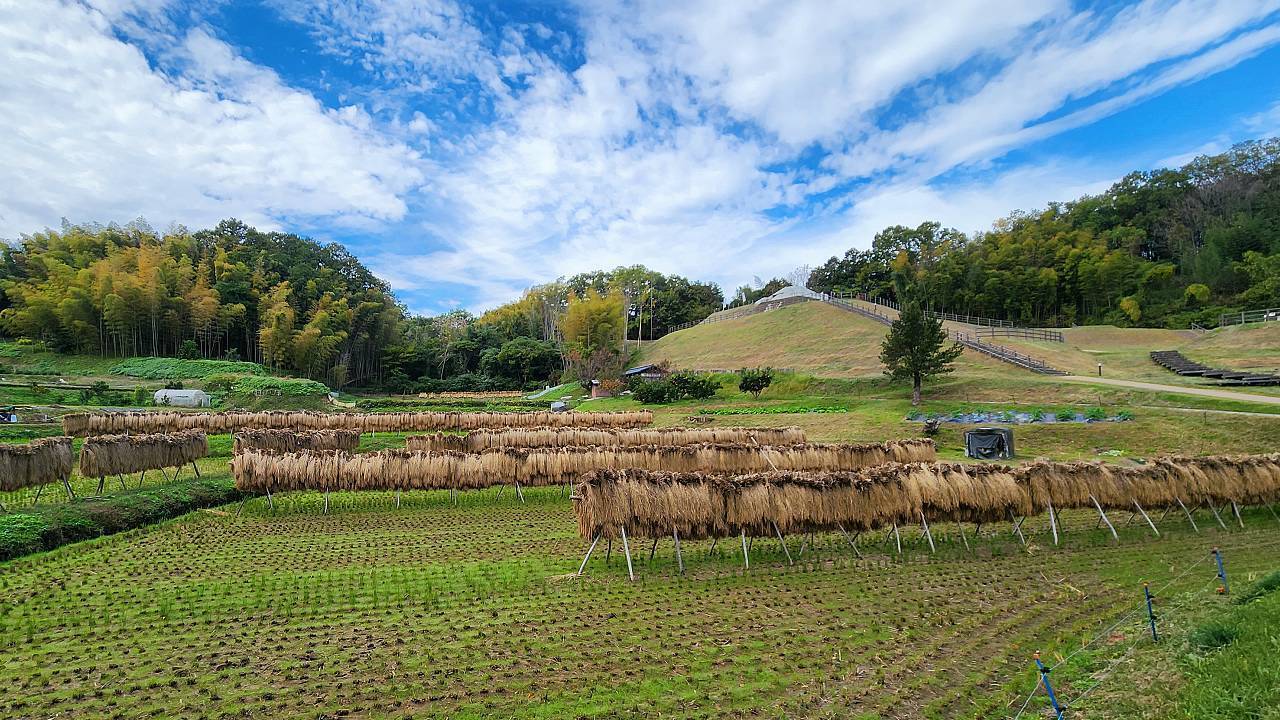
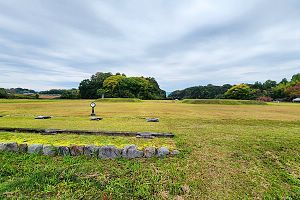
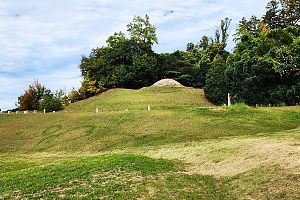
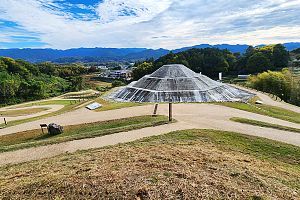
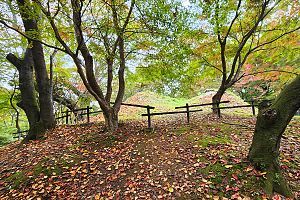
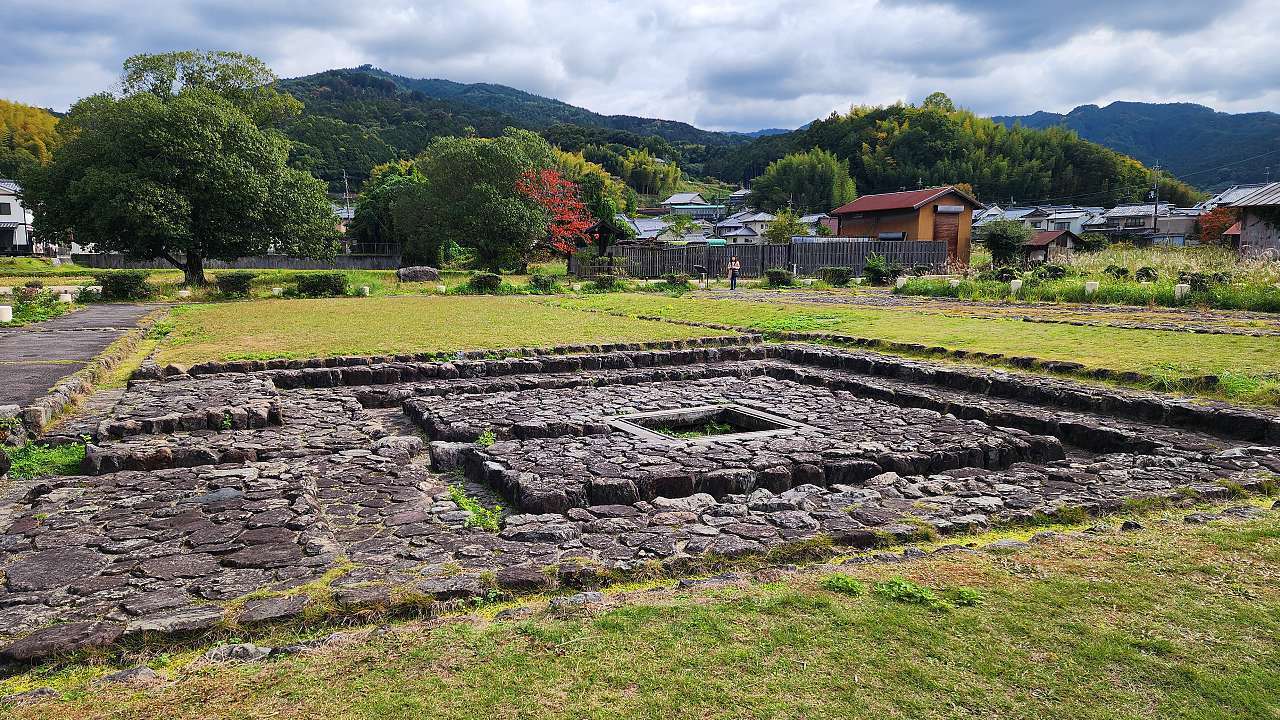
Rural landscape around the Kengoshizuka Mounded Tomb
What makes Asuka significant?
Asuka's historical importance largely rests on two developments:
First, the area served as the seat of multiple emperors during the period when Japan's centralized government began to emerge. Unlike later capitals, the imperial palace was frequently relocated following the death of an emperor, resulting in a succession of palace complexes scattered across the region. While none of the original structures survive, archaeological excavations have uncovered the foundations of palaces and administrative buildings that reveal the early formation of state power in Japan.
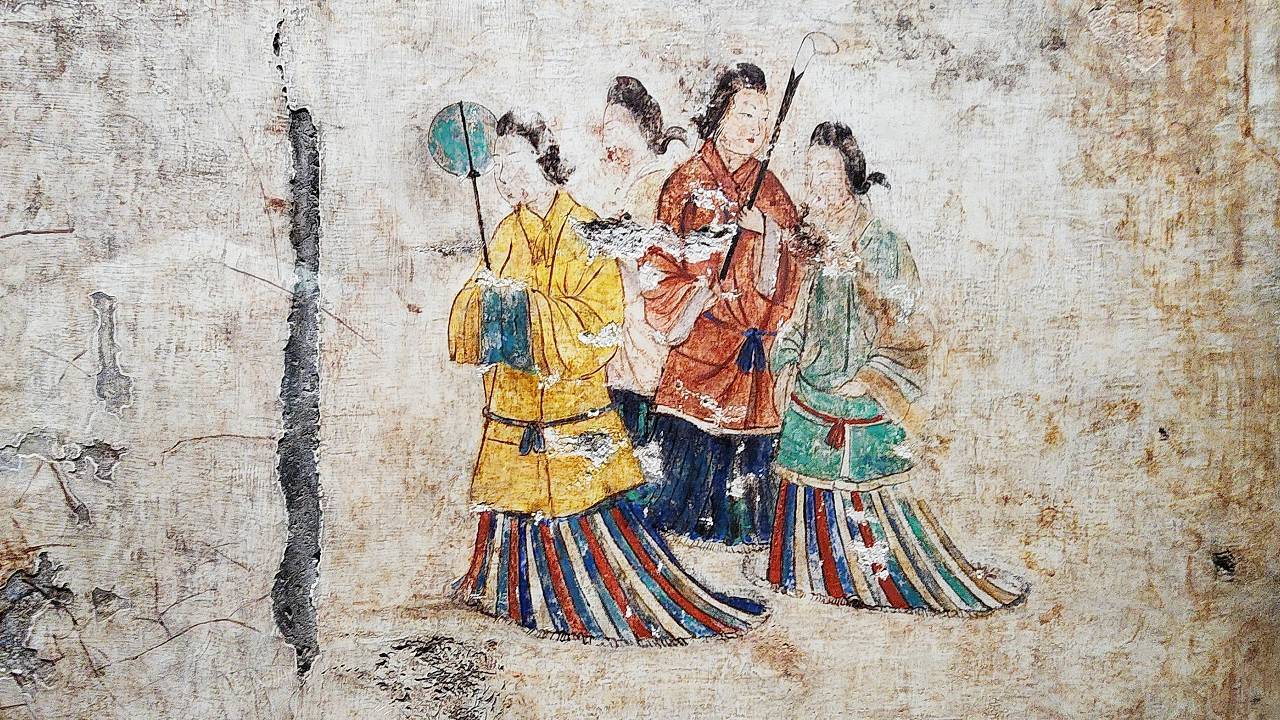
Reproduction of a painting of imperial court ladies discovered in the Takamatsuzuka Mounded Tomb
Second, the Asuka Period was the time when Buddhism was introduced to Japan, largely through immigrants and envoys connected to the Korean peninsula and China. This brought profound cultural and political changes, including a writing system, new technologies and continental models of government. The remains of early Buddhist temples can still be seen across the region, including temple ruins with ancient layouts that differ noticeably from later Japanese temple designs.
The spread of Buddhism also gradually transformed burial practices. Earlier rulers had constructed enormous kofun burial mounds, some of the largest tomb structures in the world, but during the Asuka Period cremation became increasingly accepted and emphasis shifted away from massive tomb construction.
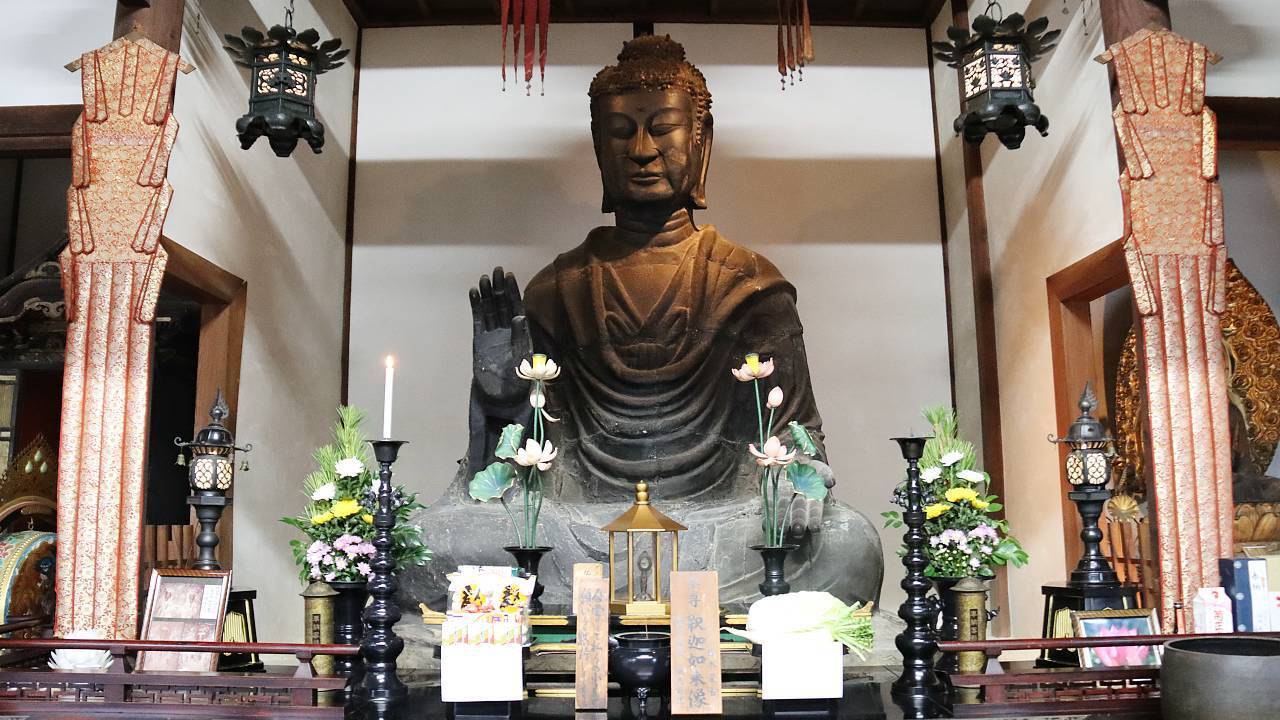
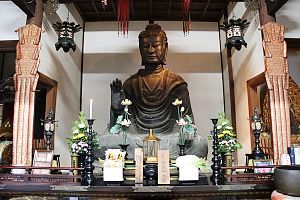
The Asuka Daibutsu, one of Japan's oldest Buddha statues
Today's Asuka
Asuka did not survive as a major urban center. As political power gradually shifted northward to Nara and later Kyoto, the region became wonderfully rural. Today, rice fields, small villages and low wooded hills cover what was once the center of the country.
Only limited original buildings remain, but the area is filled with archaeological remains: the ruins of imperial palaces, some of Japan's oldest Buddhist temples, kofun burial mounds and mysterious carved stones whose exact purposes are still debated. Much of Asuka's appeal lies not in monumental architecture, but in the landscape itself. Visitors can walk or cycle through an idyllic countryside while encountering sites tied to the birth of the Japanese state.
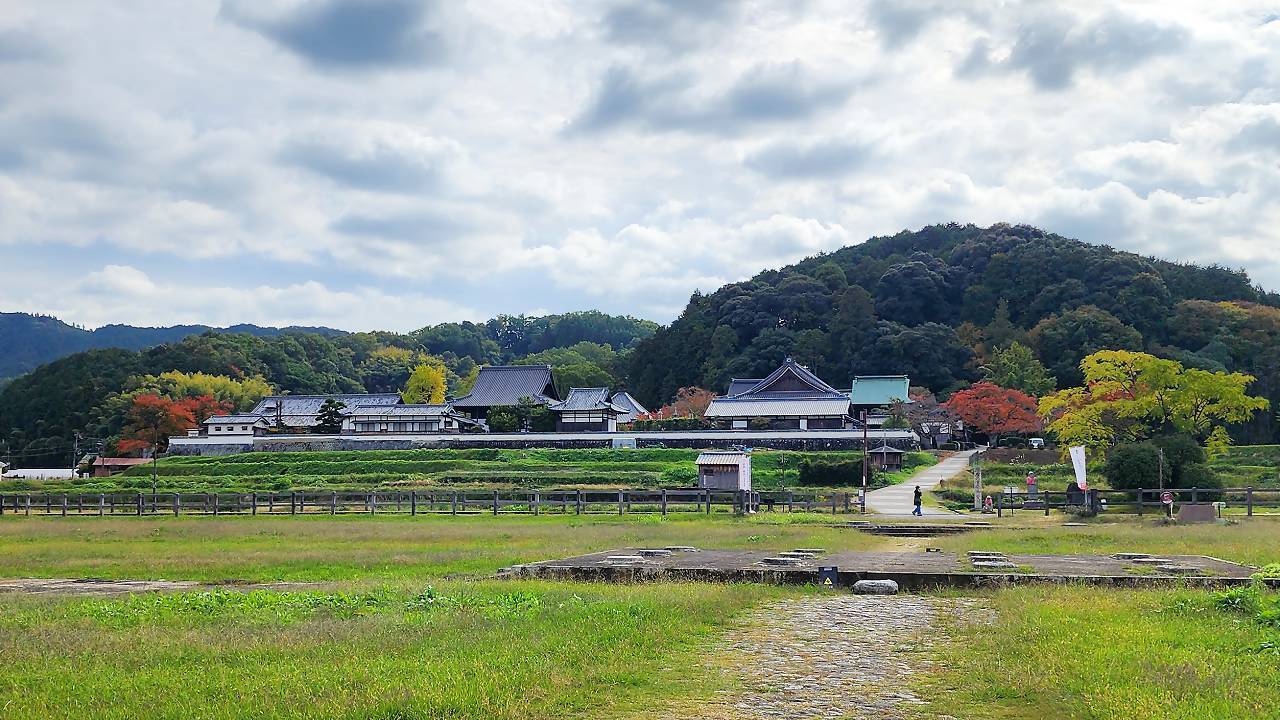
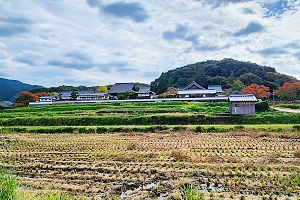
Tachibana-dera Temple in its rural setting
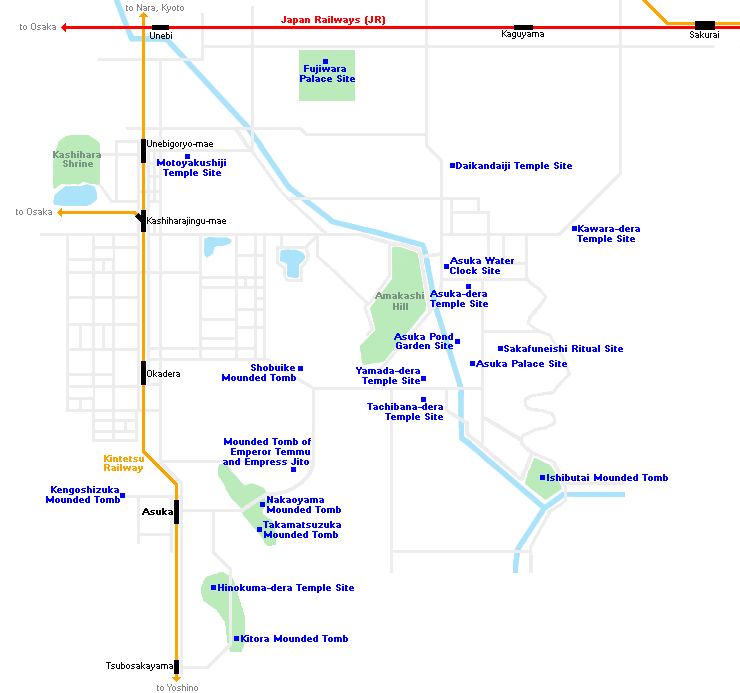
The 19 actual sites
Because around 1400 years have passed since the Asuka Period, most of the sites consist of archaeological remains, such as foundations, kofun tombs and unusual stone monuments, rather than surviving buildings. While some of them may be difficult for casual visitors to appreciate, they are complemented by pleasant rural scenery and a variety of other attractions, making the region rewarding to explore for travelers with an interest in history.
Palace sites and related spots
Before the Nara Period (710-794), the imperial palace and capital were frequently relocated with the accession of a new emperor. Many of these early palaces were concentrated in the Asuka region and consisted of relatively modest wooden structures. In 694, the nearby Fujiwara Capital marked Japan's first attempt at a large-scale, permanent capital city. However, the experiment was short-lived, and the capital was moved to Nara just 16 years later.
Asuka Palace Site
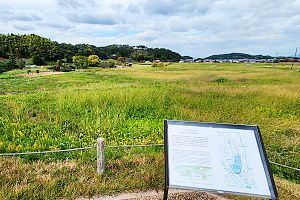
Not far from today's village center and surrounded by rice fields and attractive rural scenery, this site was home to four imperial palaces during the 7th century, when Japan's early centralized state was taking shape. Today, only excavated foundations and other archaeological remains can be seen, while excavation work continues.
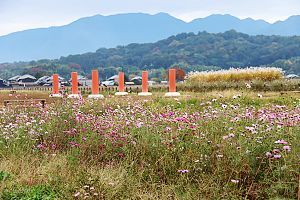
Fujiwara Palace Site
The Fujiwara Palace was part of Japan's first large-scale, permanent capital city built along the lines of contemporary Chinese capitals, on a considerably larger scale than earlier palace complexes. The capital was eventually abandoned in favor of Nara, 20 kilometers further north. Today, a wide grassy plain remains, where reconstructed pillars mark the former location of the palace's audience hall.
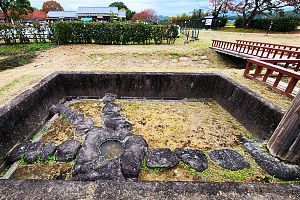
Asuka Water Clock Site
This is the site of Japan's earliest water clock system used by the central government, not far from the Asuka Palace Site. It is believed to have measured time by water flowing through pipes and sequential tanks. While the structure was once covered by a wooden building, only archaeological remains can be seen today.
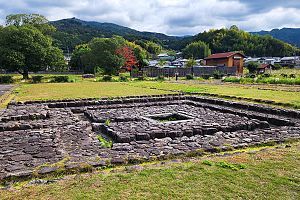
Asuka Pond Garden Site
This site preserves the remains of a former palace garden with two ponds, close to the Asuka Palace Site. While showing strong influences from continental Asia, it is also considered one of the earliest examples of a garden that would later develop into distinct Japanese garden design. Unfortunately, relatively little can be seen today.
Temple sites with temple
As the political center of Japan at the time Buddhism was introduced, the Asuka region is also home to many of the country's earliest temples. Although none of their original buildings have survived, their excavated foundations reveal layouts influenced by temples on the Asian mainland. Over time, these early designs evolved into the distinct styles seen in later Japanese temple architecture. The sites below continue to be occupied by temples today.
Asuka-dera Temple Site
Asuka-dera was Japan's first full-scale Buddhist temple, featuring the complete building layout of buildings typical of major temples on the Asian mainland. When the capital later moved to Nara, the temple's successor, Gangoji, was established there in today's Naramachi district. A smaller temple complex occupies the original site today and houses one of Japan's oldest statues of Buddha.
Tachibana-dera Temple Site
Tachibana-dera, which is said to have been Japan's first Buddhist nunnery, stands on a small rise overlooking the Asuka village center. While none of the original buildings survive, the site continues to be occupied by a popular temple today, albeit with a different layout and later structures.
Yamada-dera Temple Site
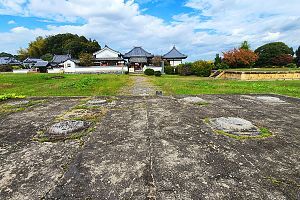
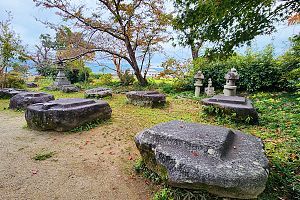
Just across the road from Tachibana-dera stood Yamada-dera, one of the leading temples of the Asuka Period. Its layout reflected the relatively simple temple designs that had been introduced from the Korean Peninsula. Unlike many of Asuka's major temples, Yamada-dera was not relocated to Nara after the political center shifted there. Today, a smaller temple occupies the site, where some of the original foundation stones can still be seen.
Temple sites without temple
Several other temples among the sites no longer have any buildings today. After the capital moved to Nara, many of them were replaced by successor temples in the new capital, leaving only archaeological remains at their original sites.
Kawara-dera Temple Site
Only a few foundations remain of Kawara-dera, one of the largest and most important temples of the Asuka Period. Its layout reflected an early style of temple architecture introduced from the Korean Peninsula, before later Japanese temples developed more complex arrangements.
Hinokuma-dera Temple Site
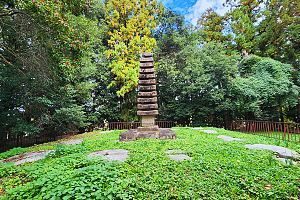
Unlike many of the other major temples, Hinokuma-dera was not sponsored by the state but was established by an influential immigrant clan. The period saw significant immigration from the Korean Peninsula, which played an important role in the introduction and spread of Buddhism in Japan. Today, a Shinto shrine occupies the former temple grounds, and only a few foundation stones remain, including one decorated with a stone pagoda.
Daikandaiji Temple Site
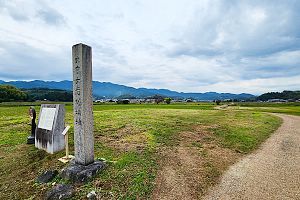
Daikandaiji was one of the two principal temples of the Fujiwara Capital and served to protect the capital and imperial palace. It was particularly famous for its nine-story pagoda, one of the tallest structures in Japan at the time. After the capital moved to Nara, the temple was relocated there as Daianji, which still exists today near the Heijo Palace Site. At its original location, little remains beyond a field and a stone marker.
Motoyakushiji Temple Site
Motoyakushiji, literally "Former Yakushiji", was the other of the two principal temples of the Fujiwara Capital. After the capital moved to Nara, the temple was relocated there as Yakushiji, one of Nara's most famous temples today. While only a few foundations remain at the original site, the temple's symmetrical layout has been preserved at Yakushiji in Nara.
Kofun burial mounds
Before the introduction of Buddhism, large burial mounds known as kofun were built for rulers and other powerful members of society. They came in a variety of shapes, including round, square, octagonal and the distinctive keyhole shape. Nara Prefecture is home to many kofun, and several particularly important examples, including some with painted burial chambers, are among the sites.
Ishibutai Mounded Tomb
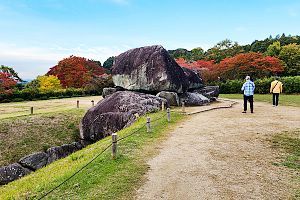
The Ishibutai Kofun is the most famous kofun in the Asuka region. Originally built as a large square-shaped burial mound, it is best known today for its massive stone burial chamber, which has become exposed after the earthen mound covering it was lost over the centuries. Visitors can enter the burial chamber.
Takamatsuzuka Mounded Tomb
The Takamatsuzuka Kofun is one of Japan's most important burial mounds, famous for the colorful wall paintings discovered inside its stone chamber. The paintings include depictions of courtiers, popularly known as the "Asuka Beauties". Reproductions of the paintings are displayed in a small museum near the kofun.
Kitora Mounded Tomb
The Kitora Kofun is famous for its colorful wall paintings, including an astronomical chart and depictions of the four guardian deities associated with the cardinal directions. A museum adjacent to the kofun displays reproductions of the paintings and introduces the history of the tomb.
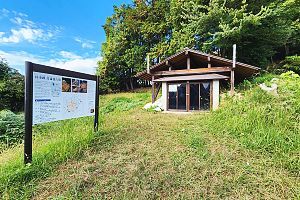
Kengoshizuka Mounded Tomb
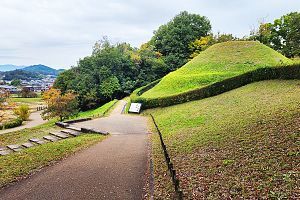
The Kengoshizuka Kofun is a rare octagonal burial mound. Unusually, it has been reconstructed to reflect its original appearance, making it easier to appreciate than most kofun, which survive only as archaeological remains. Visitors can also peer into the stone burial chamber.
Shobuike Mounded Tomb
The Shobuike Kofun is a small burial mound whose stone burial chamber can be viewed from the outside, providing a glimpse into the interior of the ancient tomb.
Nakaoyama Mounded Tomb
The Nakaoyama Kofun is an octagonal burial mound near the Takamatsuzuka Kofun. Built during the final stage of the kofun era, it reflects the transition from monumental tomb construction to cremation and other burial practices influenced by Buddhism.
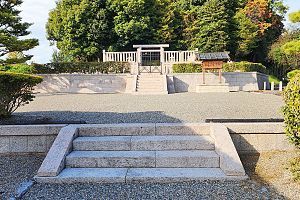
Mounded Tomb of Emperor Temmu and Empress Jito
Believed to be the tomb of Emperor Temmu and Empress Jito, this octagonal kofun is among the most important imperial burial sites of the Asuka Period. It remains an official imperial mausoleum and is therefore not open to archaeological investigation.
Stones
The Asuka region is home to several unusual carved stones whose original purpose remains uncertain. Some are believed to have been associated with rituals, water management or forms of divination that played an important role in government and religious life at the time. One of these stones is included among the sites.
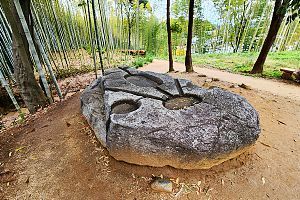
Sakafuneishi Ritual Site
The Sakafuneishi is one of Asuka's most mysterious carved stones. Although its exact purpose remains uncertain, it is thought to have been used in ritual ceremonies, possibly involving divination and water.
Getting there and around
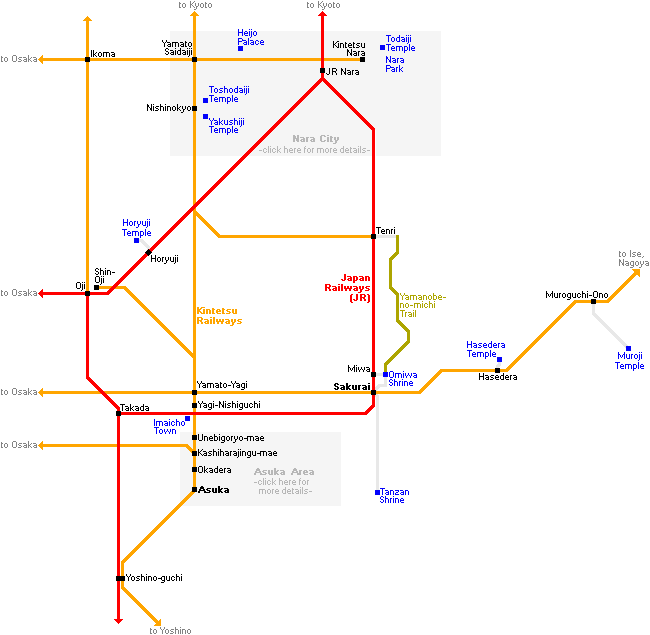
Asuka can be reached by Kintetsu Railway in about 40 minutes from Osaka, 50 minutes from Nara or in about 90 minutes from Kyoto. Read more about how to get to and around Asuka.
 View our Asuka Travel Guide