Atami: Full Bloom

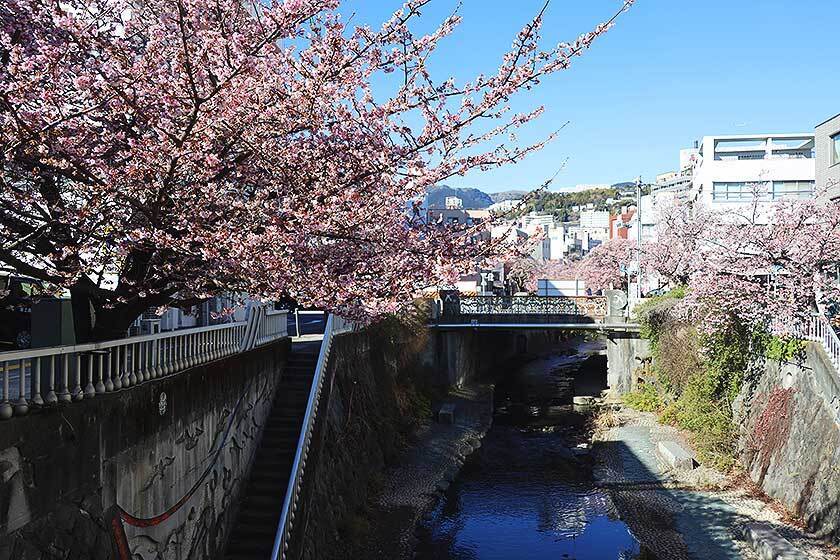
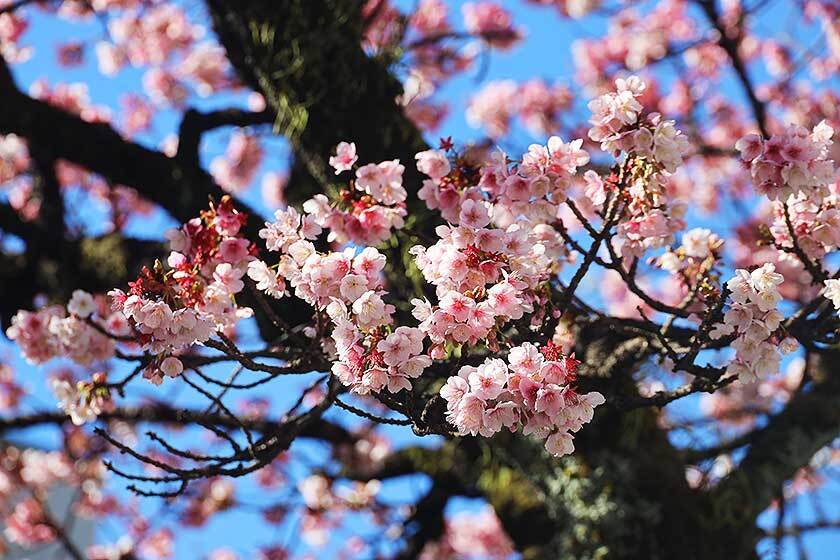
Cherry blossom season might still be some way off in major cities like Tokyo and Kyoto but in a few places it has already begun - and not just in the southern islands. One place you can already see them is in Atami - a pleasant resort town on Shizuoka Prefecture's Pacific coast, known for its ocean views, natural hot springs and mild winters. Here, a unique local tree variety, the Atamizakura, is known as the earliest to open on Japan's main island of Honshu.
Kicking off our sakura coverage for 2026, I recently took a day-trip to several popular blossom-viewing spots in Atami for an in-depth look at this unique variation and to see how the season was progressing so far.
Arriving in the town from Tokyo via a 45-minute ride on the Tokaido Shinkansen, I didn't have far to go before starting to see the odd cherry blossom tree dotted around the hilly, winding streets, already looking well into full bloom.
Each of the spots I visited were likewise at or rapidly approaching full bloom with many beautiful scenes already unfolding. Visitors can expect the trees to remain in bloom at least for another couple of weeks.
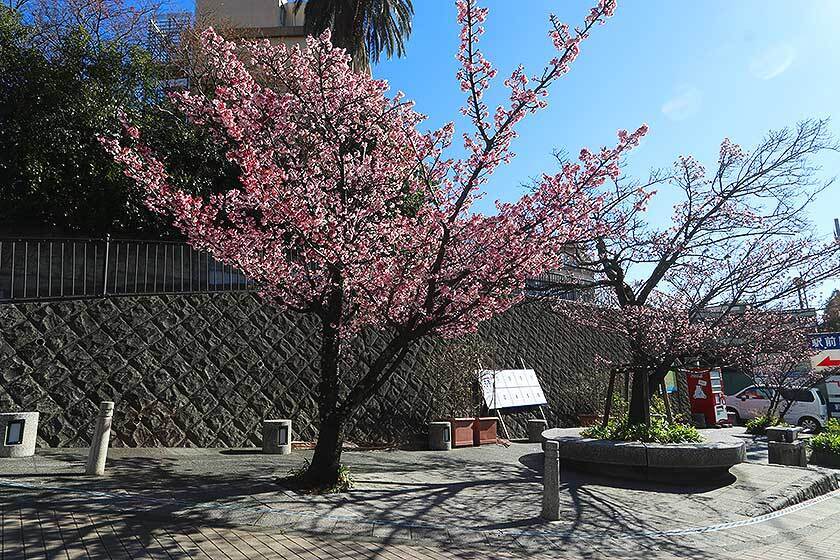
While geography certainly has a part to play in the area's early blossom window, the key factor is a unique variety of cherry tree known as Atamizakura. Introduced to the city by Italians in the late 19th century from an unknown source in East Asia, the trees were cultivated in Atami over the decades and eventually planted across the city.
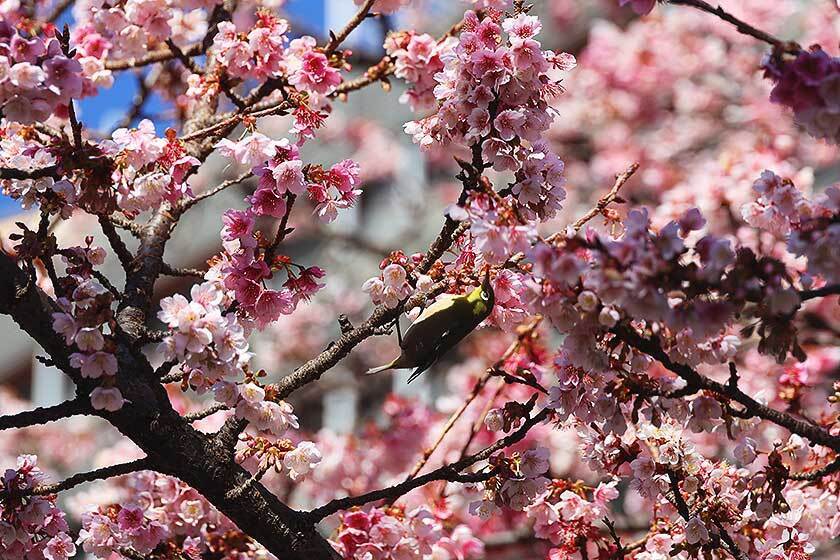
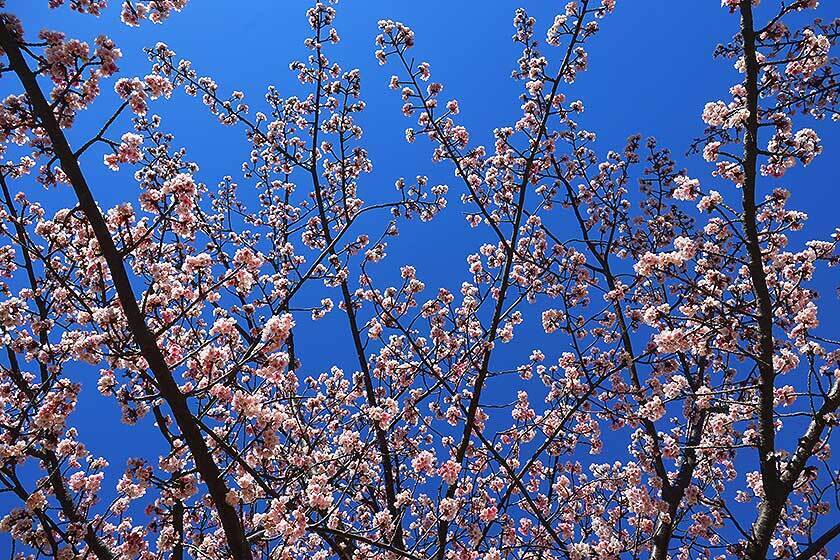
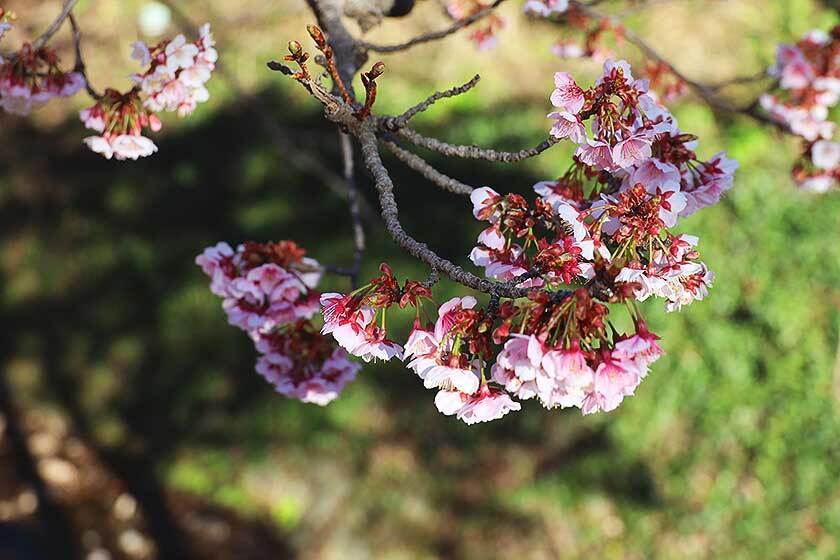
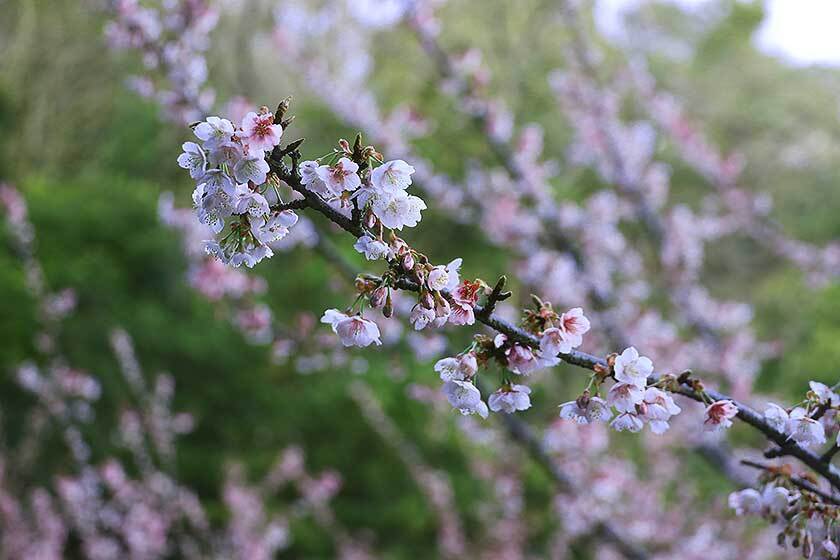
Atamizakura is an early-blooming cherry of the Kanzakura (literally "cold cherry") group, known for a flowering period that is both early and long, as well as for its five-petaled flowers that tend to be a deeper shade of pink than the more ubiquitous Somei Yoshino. The Atamizakura blooms for over a month in January and February, with the best viewing period typically lasting about three weeks from late January to mid February, although the timing varies from year to year. This year, the timing of the season seems to be about average.
Itogawa Promenade
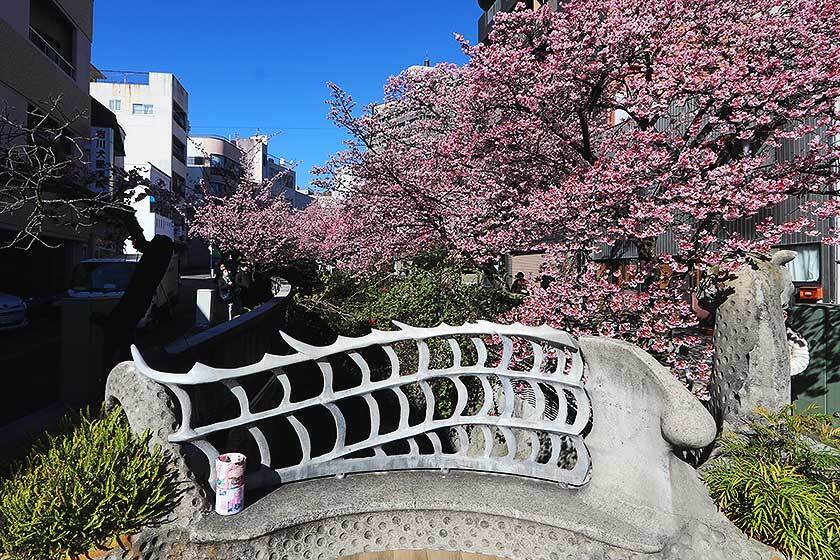
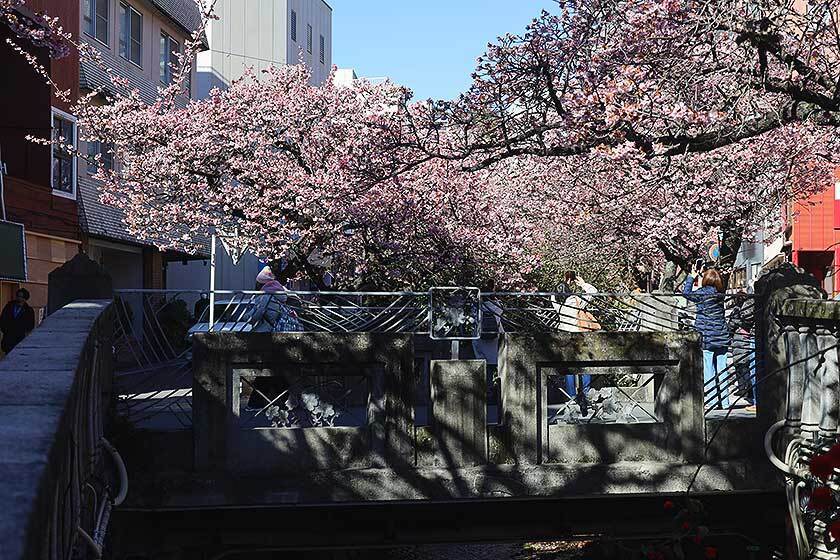
The best-known of the city's viewing spots is the Itogawa Promenade - a pleasant stretch of road just 15 minutes' walk from Atami Station, lined with a total of 58 Atamizakura trees and following a little river about 300 meters downhill to the seafront.
This was by far the most striking and busiest of the spots I covered, with branches heavy with blossoms forming a light canopy over the water channel. For the duration of the Atami Itogawa Sakura Festival (January 10 to February 8, 2026), the trees are illuminated in the evenings until 11pm, and street performances and refreshments can be seen along the route, especially on weekends and national holidays when the surrounding streets turn pedestrian-only.
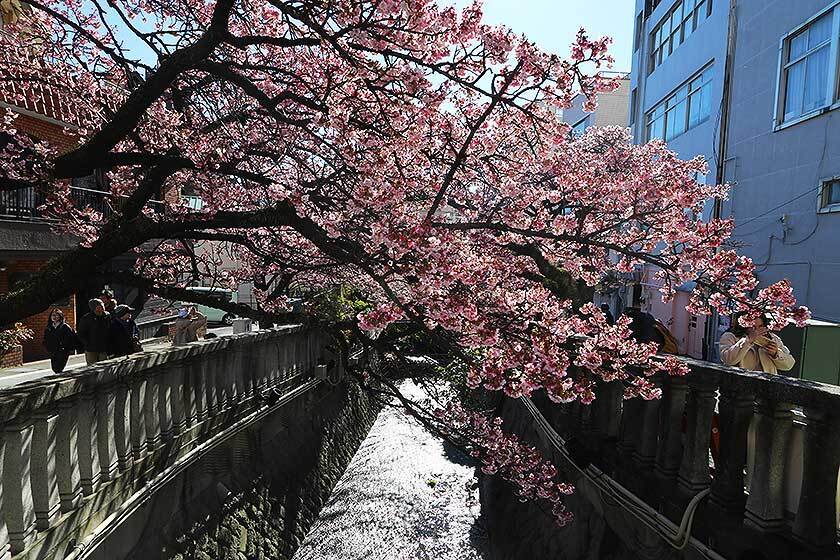
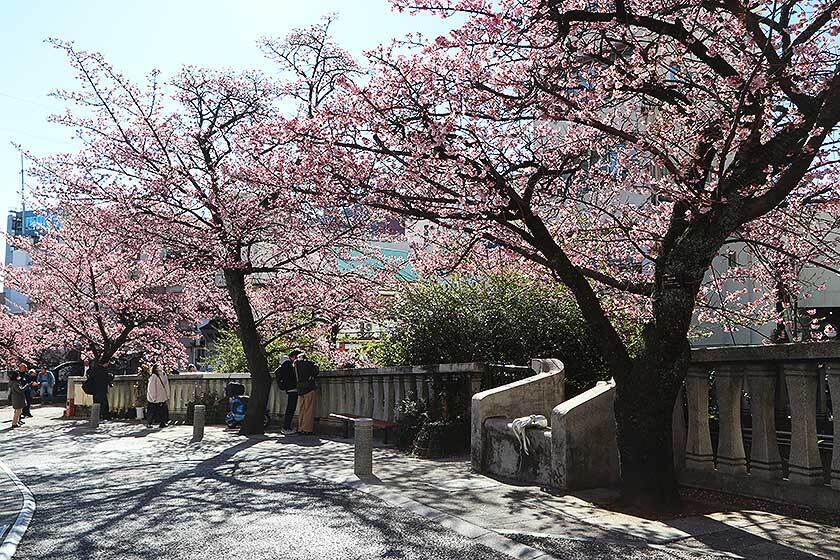
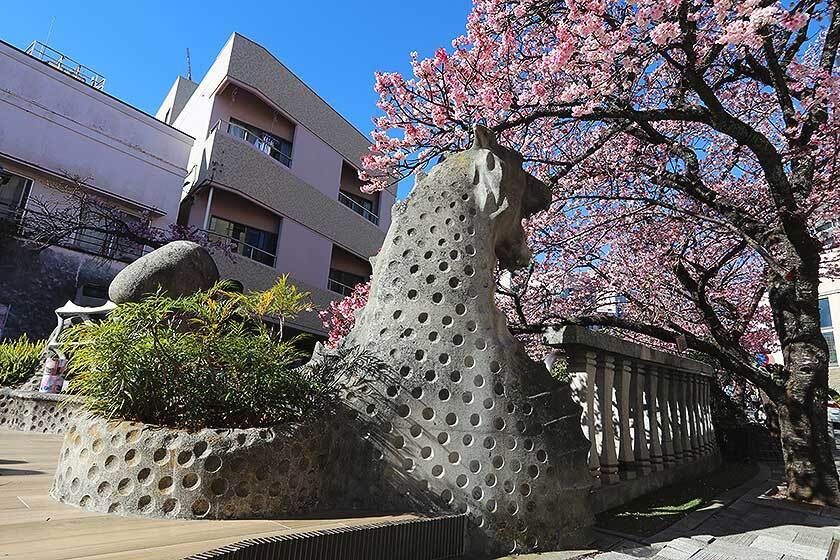
Dragon Bridgeis a popular local spot
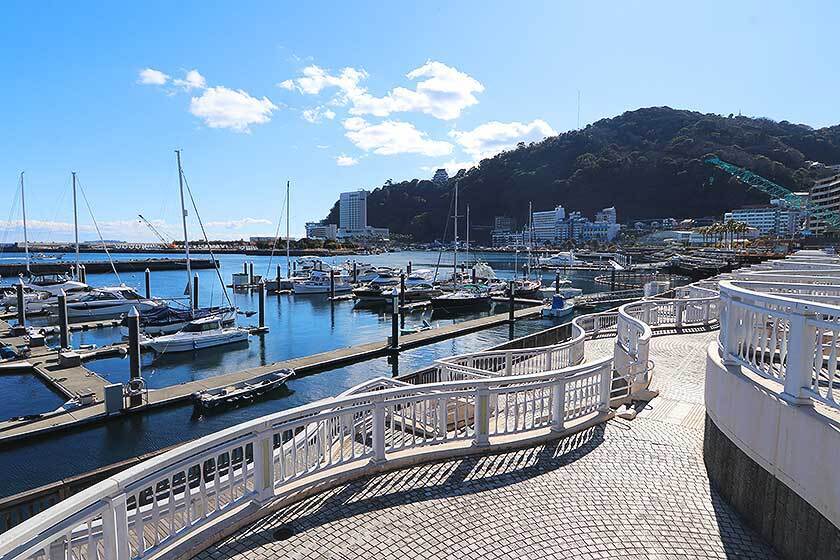
The waterfront area
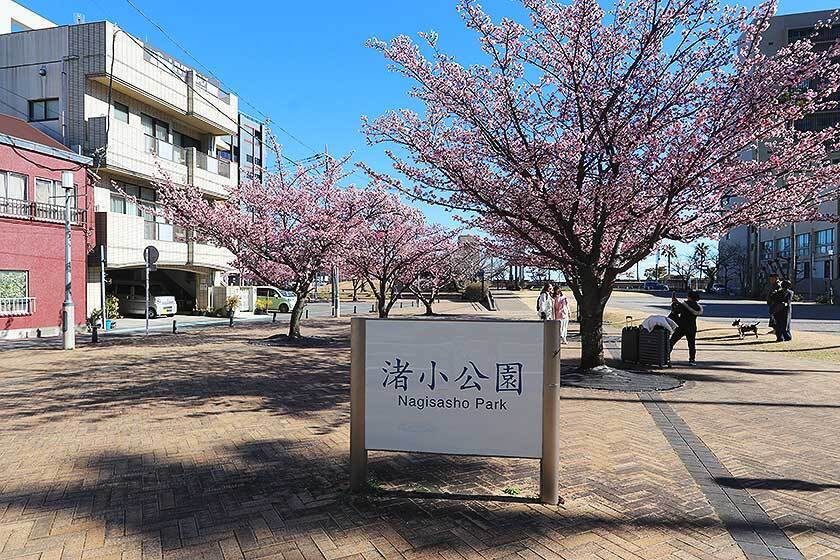
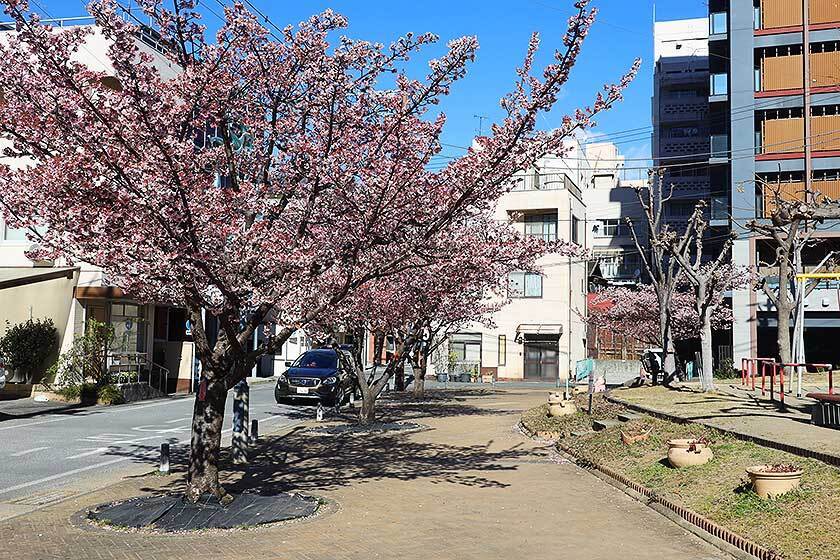
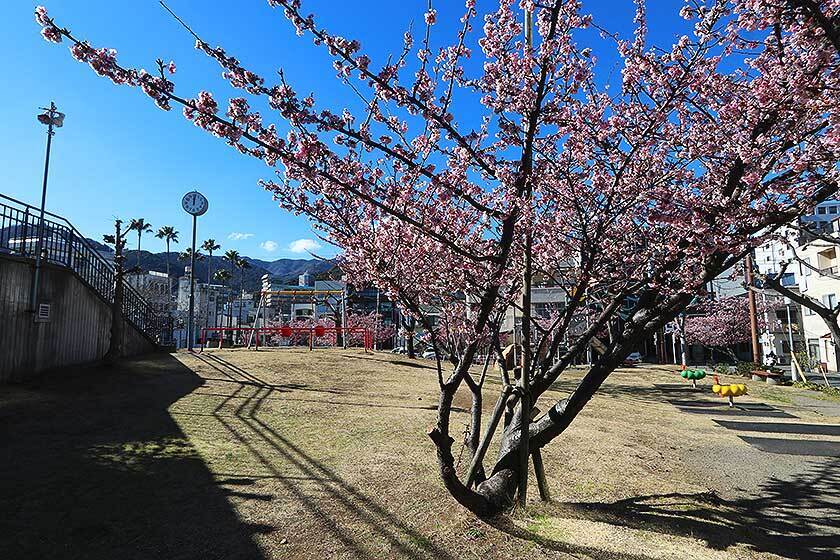
Located at the foot of the hill and 100 meters south along the coast is Nagisako Park, a compact grassy space and playground with 15 Atamizakura trees grouped into three separate clusters. Although a lot less dense with trees than the scenes along the river, the trees here were also in full bloom and just as lovely.
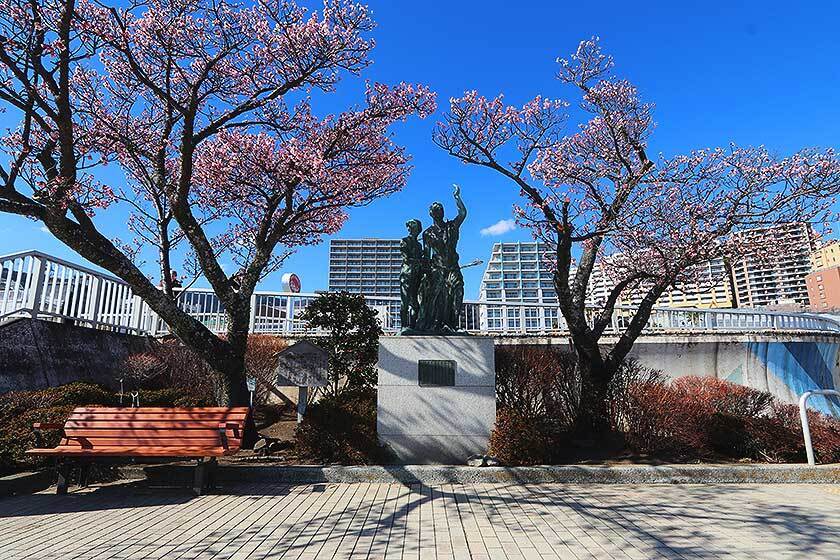
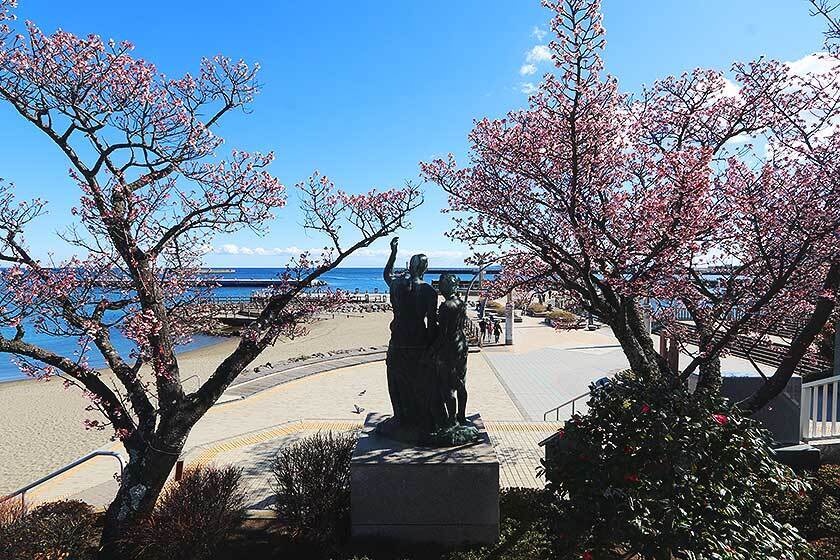
Another nice viewing spot can be found just 200 meters in the opposite direction along the coast, where two Atamizakura trees can be found flanking statues of Kamanariya Heishichi - a local champion of fishermens' rights who later died in exile - and his wife.
The approach to the Atami Plum Garden
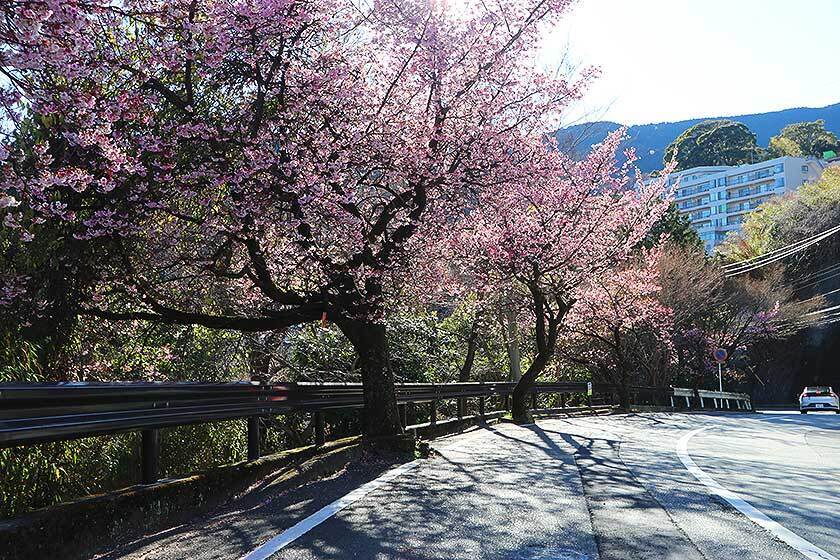
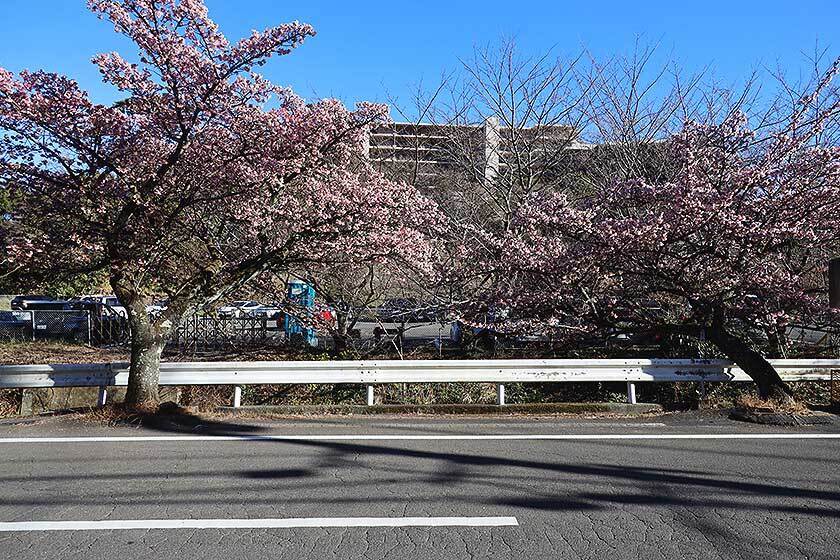
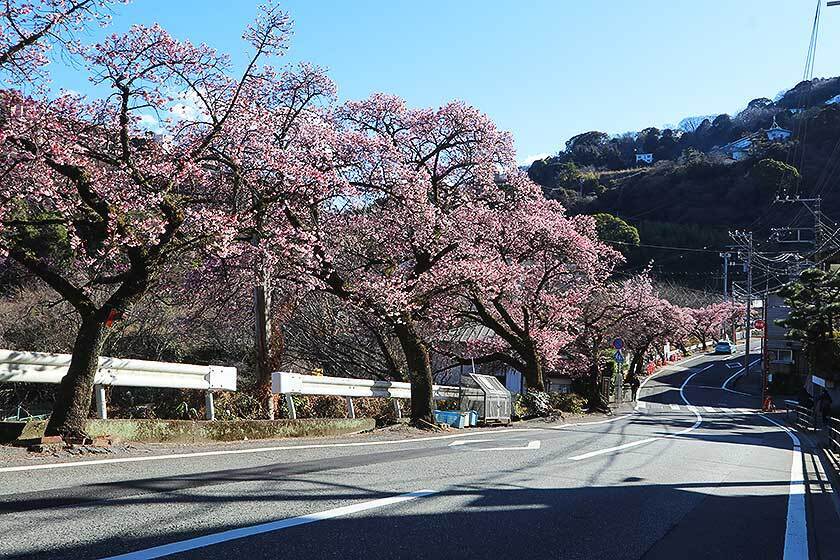
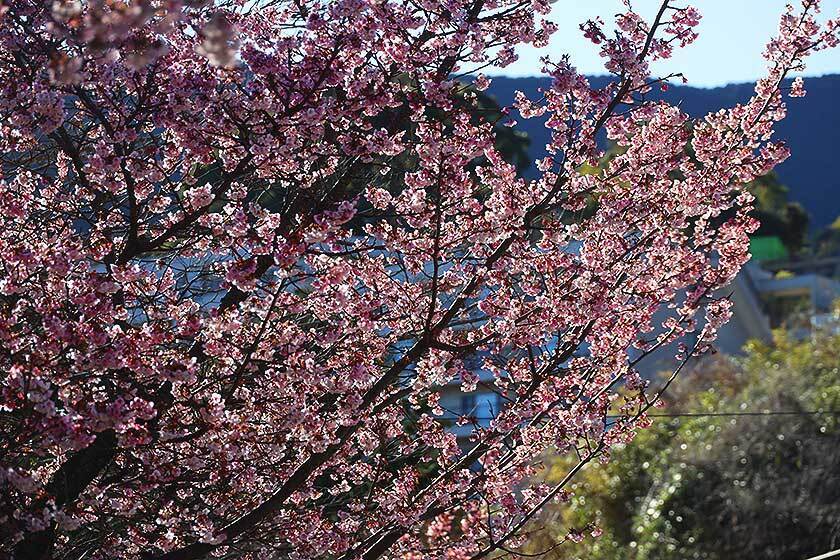
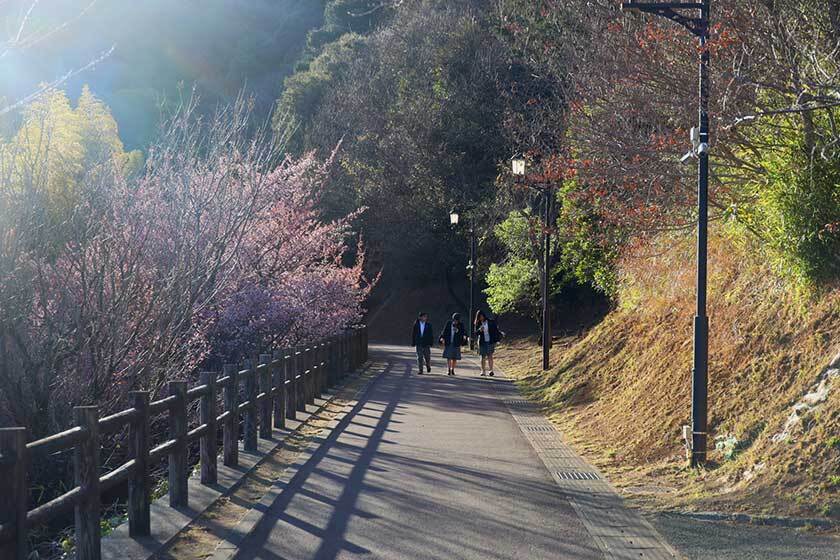
A few hundred meters uphill at the western edge of town, an attractive row of 23 more Atamizakura trees lines the approach to the Atami Plum Garden. While the Atamizakura's staggered way of blooming made it hard to say for sure, overall the blossoms here felt a little less fresh and vibrant, often dangling from noticeably longer stems.
The Shikinomichi Walking Trail
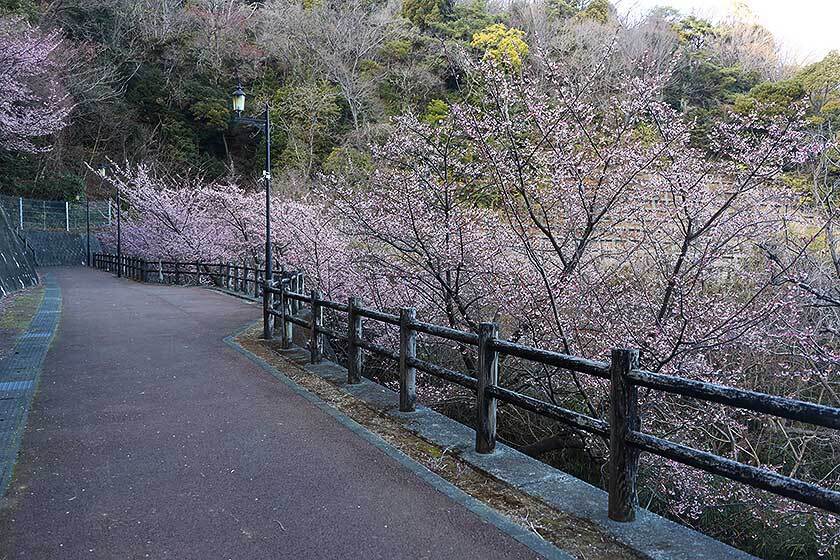
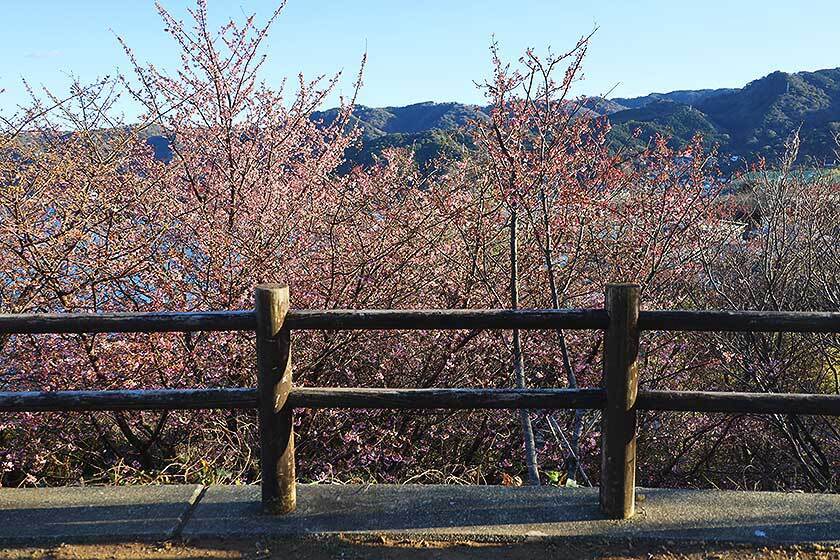
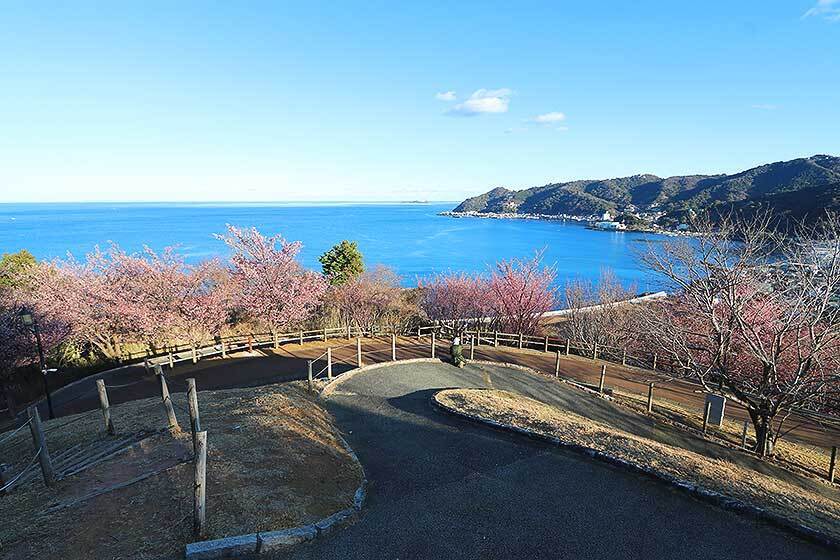
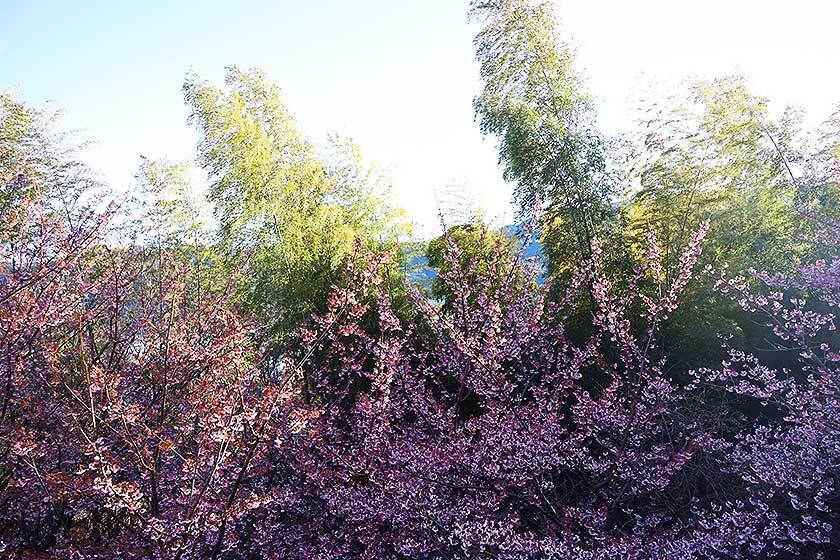
My final stop lay a few kilometers south along the coast, requiring a brief train ride from Atami Station (8 minutes) or nearby Kinomiya (5 minutes) to Izu-Taga. Here, just a short walk from the station and overlooking a sheltered stretch of sandy beach is the Shikinomichi or "four seasons walking trail". Here, relatively fewer of the blossoms had opened yet, putting the overall picture a little behind what I had seen in the city center and just short of full bloom.
Questions? Ask in our forum.